International hospital buyers sometimes request an “ISO certificate” alongside a medical gas equipment quotation. That request can be ambiguous: is the buyer asking about the manufacturer's quality management system, the technical requirements of the product, or the evidence needed for a specific hospital project?
For safe and efficient procurement, those are three different questions. Their evidence should not be combined into one generic statement that a supplier's complete product catalogue is approved.
What does ISO 13485:2016 address?
The ISO 13485:2016 publisher information identifies a quality management system standard for organisations involved in medical devices and related services.
Its emphasis includes the consistent design, production, supply and servicing processes needed for applicable medical devices, with regulatory and customer requirements in view.
A certificate issued against the ISO 13485 quality management framework concerns the defined certified organisation and scope. It does not, by itself, establish the technical performance or regulatory authorisation of every product sold by that organisation.
The published ISO record lists the 2016 edition as current and confirmed in 2025.
What is the role of ISO 14971:2019?
ISO 14971:2019 sets out terminology, principles and a process for medical device risk management.
The official overview explains that risks are identified and evaluated, appropriate controls are applied, and effectiveness is considered over the device lifecycle. It does not prescribe one universal acceptable risk level for every product.
In a supplier assessment, this helps explain why product design controls and the manufacturer's risk process matter. But a general mention of ISO 14971 does not prove that a specific valve, alarm panel or terminal model is suitable for a named hospital project.
What is a product standard?
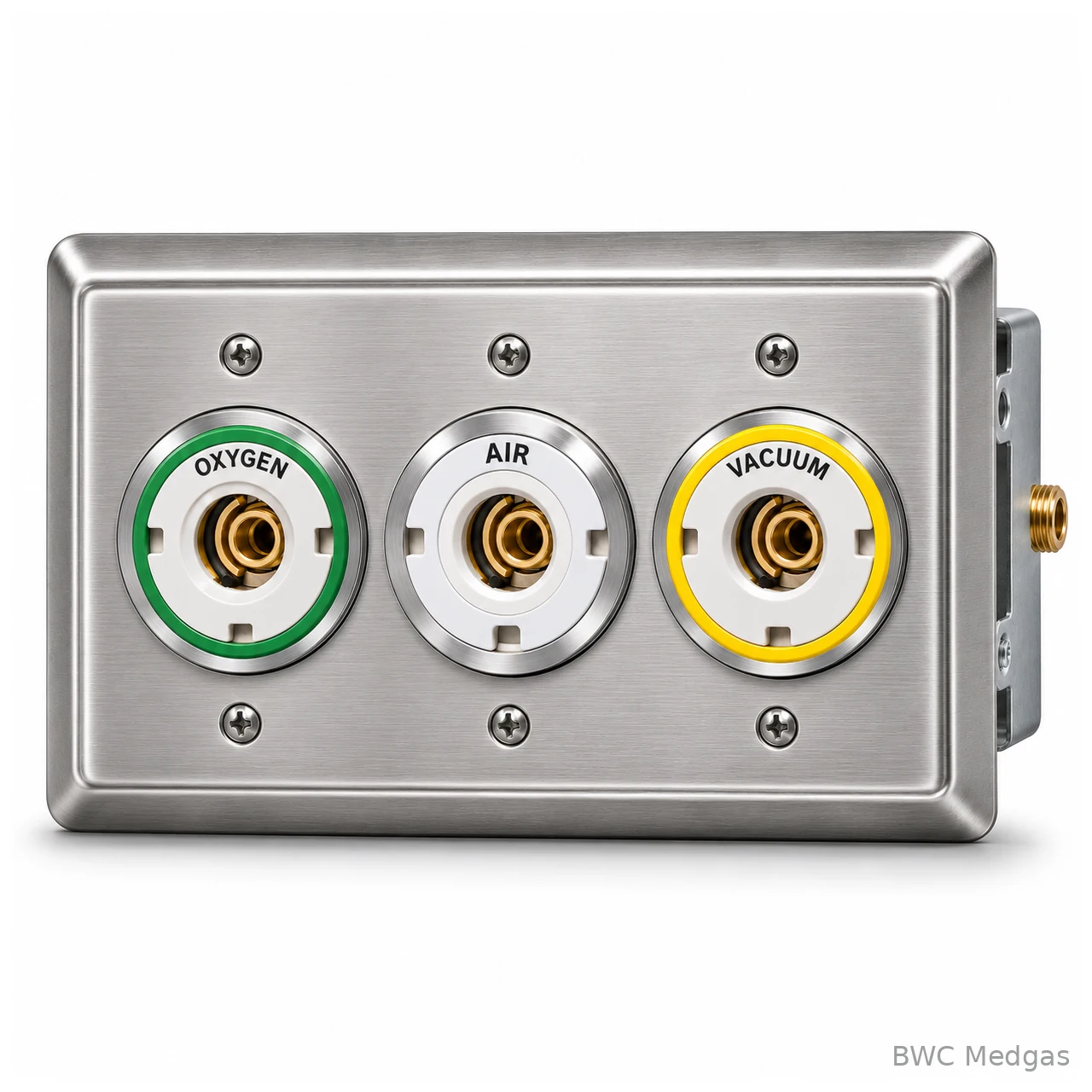
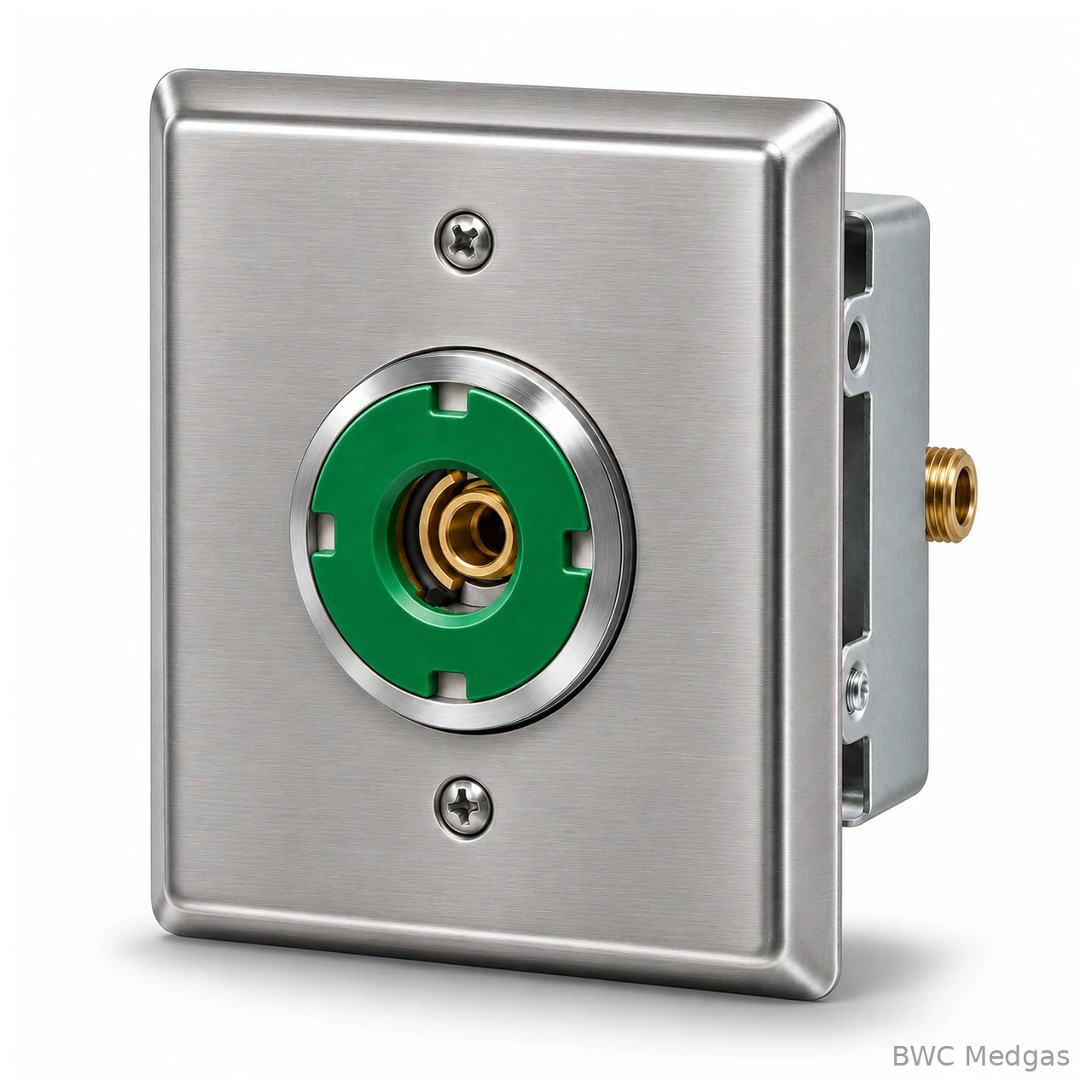
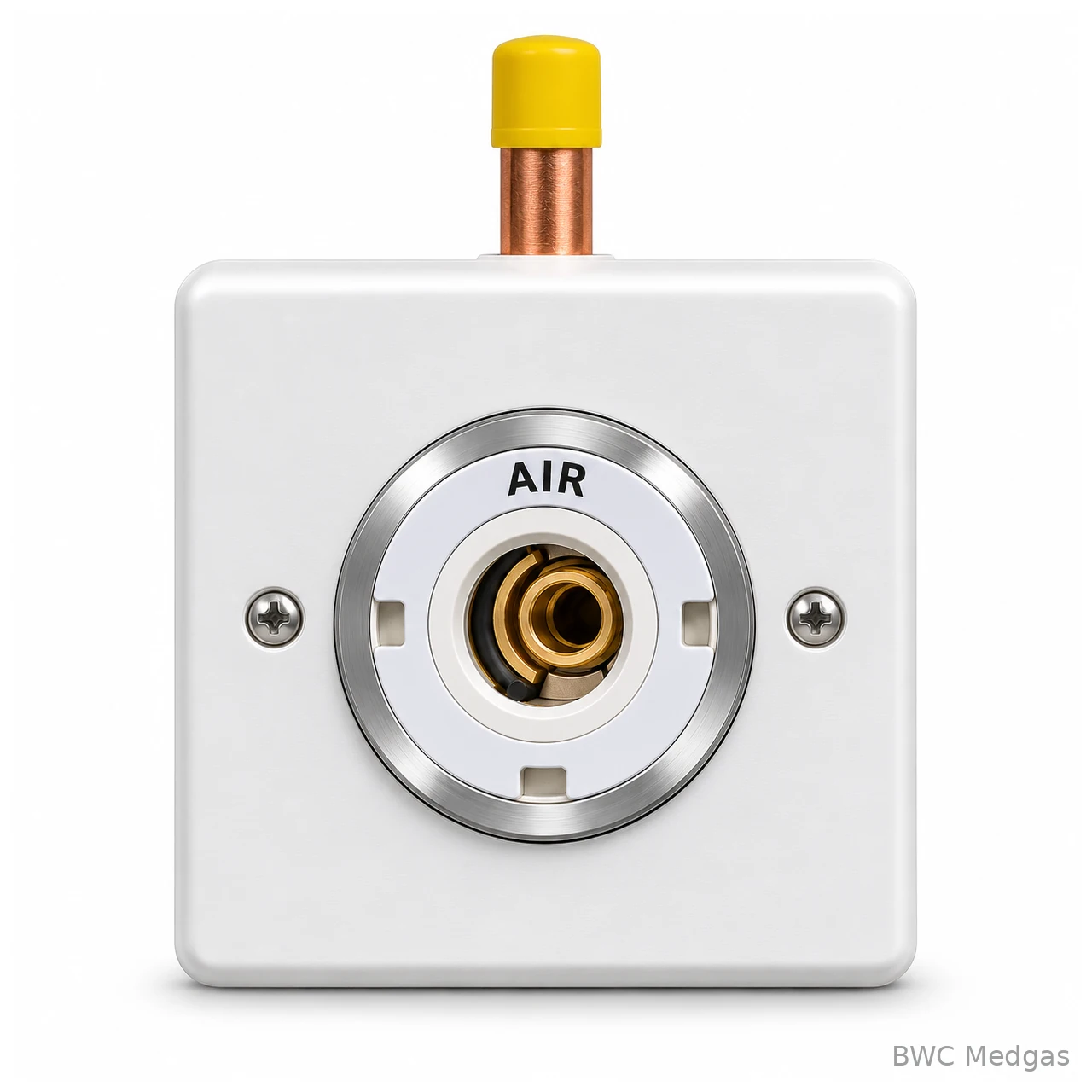
Individual medical gas components have their own technical scope. For example, ISO 9170-1:2017 addresses specified medical gas and vacuum terminal units, including gas-specific construction and performance subjects such as leakage and flow.
A hospital tender may also specify particular connection dimensions, models or other applicable regional standards. Therefore a product-specific technical requirement is different from an organisation-wide QMS requirement.
For a system-wide installation, additional engineering design and verification records are relevant. A product brochure and an installed-system approval remain distinct evidence types.
What should a professional buyer request?
A useful supplier questionnaire distinguishes the following:
- Organisation level: legal entity, manufacturing scope, quality-management documents and certification scope where applicable.
- Product level: precise model, intended use, gas-service application, connection drawing and identified product standard.
- Evidence level: the product-specific documentation required by the purchaser or the destination regulator, including relevant conformity and technical information.
- Project level: the adopted MGPS project specification and installed-system responsibilities.
The buyer should not assume a certificate for one product family necessarily covers a different family, or that the possession of a QMS certificate is the same as local device market authorisation.
Why is this especially important across borders?
US, European, Middle Eastern and Australian customers may have different product categories, documentation expectations and competent authorities. A manufacturer declaration, third-party certificate, quality-system certificate and local device registration can be different kinds of evidence.
The correct set depends on the product's intended use and regulatory classification as well as the contract. A supplier should be asked to identify the exact evidence applicable to the exact item rather than promising a universal approval.
This principle applies whether the item is a terminal outlet, valve assembly, regulator, alarm panel or installation accessory.
BWC Medgas product enquiries
BWC's supply categories include gas terminal units, valve and AVSU assemblies, medical gas alarms, manifolds and pressure devices.
Provide the exact product list and the destination project's required technical documents so BWC can discuss the relevant component range and the information needed for that order.
Submit the project technical document requirements to BWC.
Frequently asked questions
Does ISO 13485 certification mean every product is certified to its product standard?
No. An organisation's quality management system and the conformity of a particular product are separate subjects.
Does ISO 14971 replace a medical gas terminal product standard?
No. Risk management and product-specific technical requirements address different aspects of device development and evaluation.