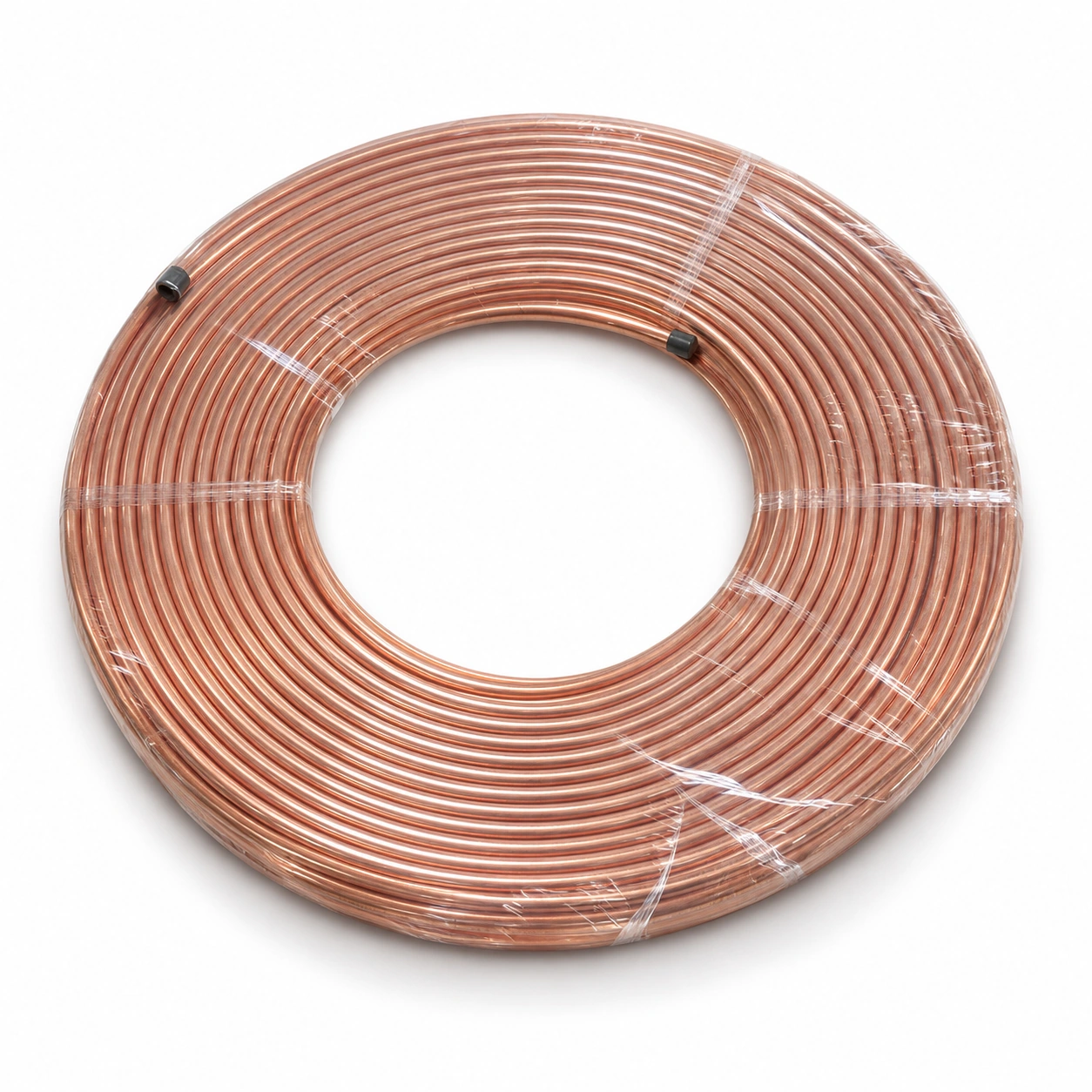


A medical-gas copper bill of quantities can be wrong even when every drawing is technically correct. Straight-tube purchases are often rounded by bundle length, fittings are counted from an outdated route, and installation changes create offcuts that no one records. The resulting invoice may look complete but fail to reflect either the approved design or material actually installed.
A good pipework takeoff register turns drawings into an auditable purchasing and site-material control process. It is not a substitute for a qualified designer's pipe sizing or a contractor's construction method statement.
Lock the drawing issue before measuring quantities
Assign each takeoff a drawing register revision and date. Record every service, building, level, zone and segment ID. If different contractors share a corridor, define which work package supplies which sections and fittings so no pipe is counted twice.
Separate the *design* quantity from the *purchase* quantity and from the *as-installed* quantity. They can legitimately differ, but the difference should be explained.
For example, a nominally 30 m route does not tell the purchasing team how many individually specified straight lengths or joins are required, nor whether fittings and changed routes create additional requirements.
Create a pipe-and-fittings takeoff schedule
| Field | Example entry type | Why needed |
|---|---|---|
| Building / zone / service | Exact drawing-based identifiers | Prevent cross-area mixing |
| Segment and current revision | Piping drawing reference | Supports change control |
| Approved tube specification | EN 13348 or ASTM B819, edition | Establishes product identity |
| Size/form | Diameter, wall, temper, straight/coil | Avoids wrong product |
| Net route requirement | Measured design quantity | Basis for estimate |
| Purchasing length/unit | Supplier's declared packaging | Converts units correctly |
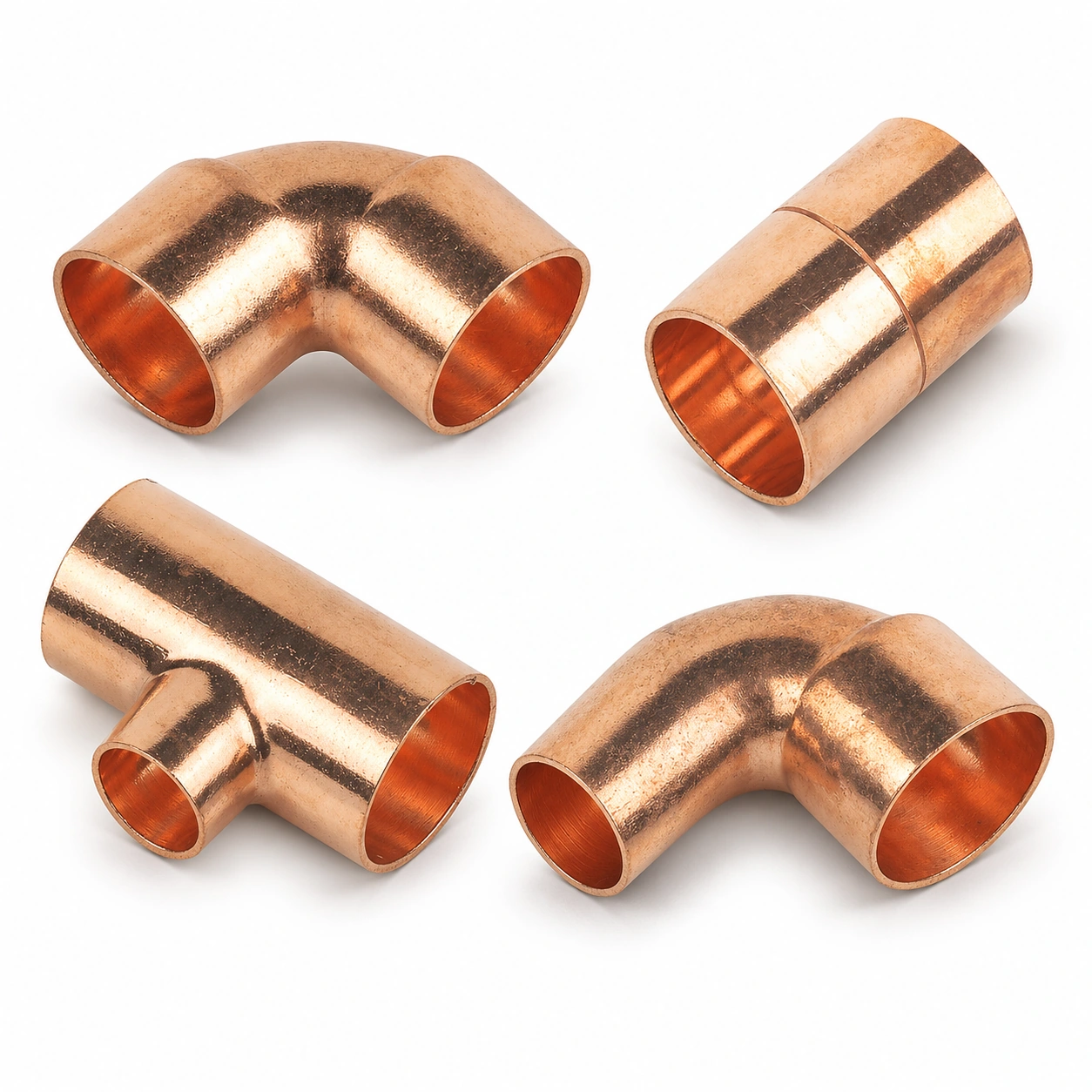
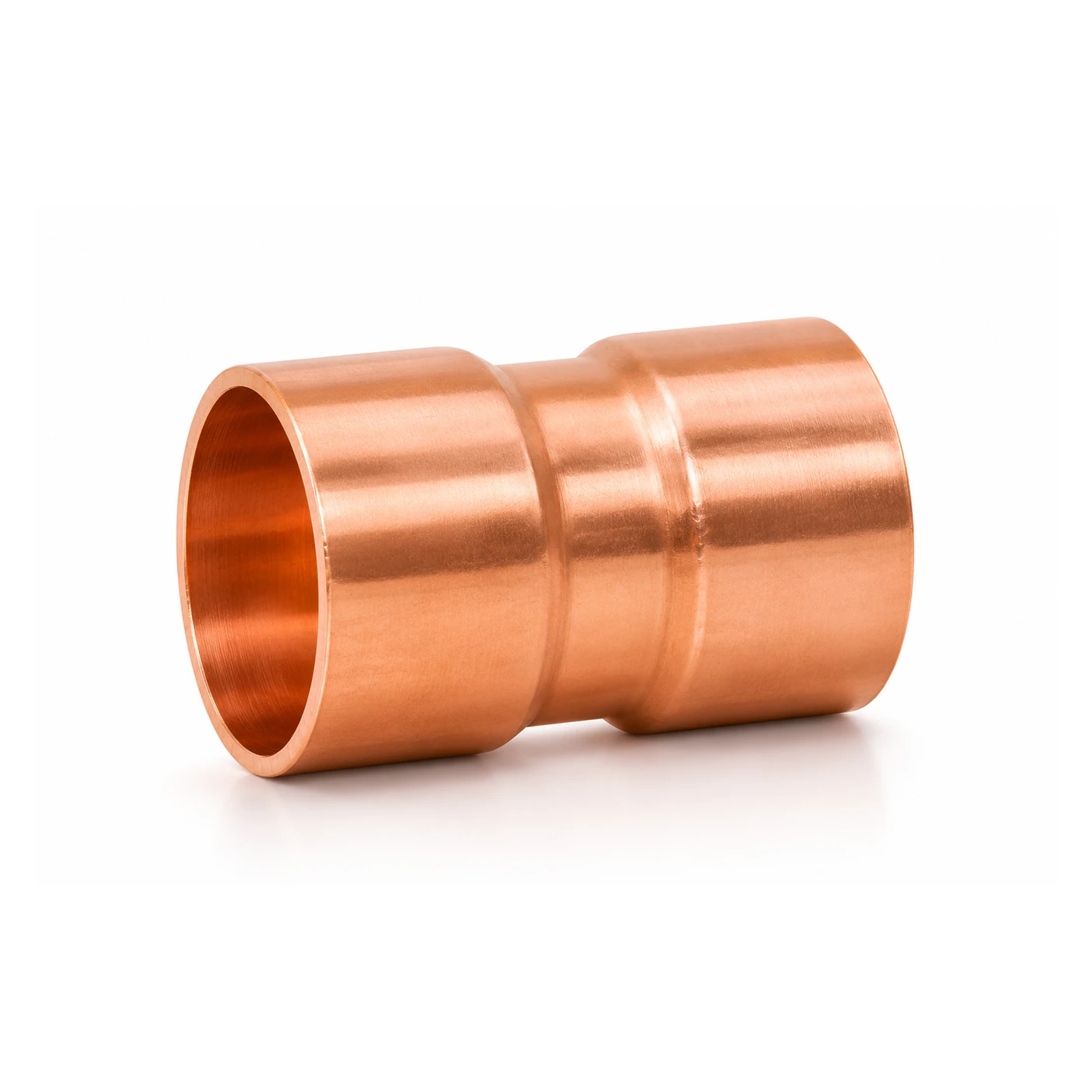
| Fitting count by exact type | Elbows, tees, couplings, reducers | Prevents vague “accessories” |
| Allowance basis | Approved cutting, offcuts or spare rationale | Makes uncertainty visible |
| Ordered / delivered / installed | Separate reconciled columns | Controls reconciliation |
| Unused/rejected stock | Traceable quantity and reason | Avoids silent waste |
Each row should state the unit. Do not mix metres with feet or nominal metric tube sizes with unrelated inch trade designations.
A fully disclosed quantity illustration
Suppose an approved takeoff lists 17 individual straight segments requiring a total 86.4 m of one specific tube. Assume, solely for arithmetic illustration, the supplier sells 6.0 m straight lengths and the project estimator has independently reviewed an 8% planning allowance for this particular work scope.
The allowance-based estimate is 86.4 × 1.08 = 93.312 m. Rounding a simple total to full 6.0 m lengths gives 16 lengths (96 m). This arithmetic is not a cutting plan: real segment lengths and feasible cutting combinations may require a different quantity. A 6 m piece cannot provide two 4 m pieces.
The estimator should therefore review individual cut lengths, bends, offcuts and actual stock allocation before ordering. Neither 8% nor 6 m is a mandated allowance or universal supply length.
Use a cutting and offcut log
For each issued stock length, record the accepted material lot, assignment, planned cuts, actual usable cut pieces, remaining offcut, rejection/damage and responsible work area. A short offcut may be usable only if the project's handling and cleanliness conditions can be preserved and the planned jointing/inspection requirements permit it.
Do not attempt to maximize reuse at the expense of traceability or approved product suitability. The correct cost optimization considers both material use and quality risks.
Price the complete bill, not simply copper mass
A low tube-per-metre quote may omit mandatory cleaning, protective caps, material documentation, packing, export damage protection or specialized fittings. Conversely, paying for every possible accessory may overstate the project's actual approved scope.
Compare quote lines by product designation, length/pack, fittings by exact leg sizes, cleaning/evidence, delivery terms, lead time and handling provisions. If site installation and testing are outside the supplier scope, list those separately.
EN 13348 and ASTM B819 establish different product descriptions. BS EN 1254-1:2021 covers capillary fitting product characteristics and is not an automatic authorization for medical-gas application.
Maintain a revision-to-order link
When a pipeline route or terminal schedule changes, record which drawing issue caused the difference, the changed takeoff quantities, affected purchase orders, stock already delivered and engineering approval. Do not overwrite the original measurement history.
A useful change record is: old revision → new revision → changed segments → net quantity delta → usable stock impact → purchase decision → approved owner.
For multi-phase hospitals, label each ordered bundle to the correct work package; a central warehouse cannot safely infer a clinical service from copper appearance.
Reconcile at handover
At the end of the package, reconcile quantities ordered, accepted, issued, installed, returned and rejected. Link site material records to the as-installed drawing and any traceability requirements. Explain meaningful variances rather than treating every unused piece as theft or waste.
The project's technical acceptance remains governed by the applicable MGPS rules, such as ISO 7396-1 and 2026 NHS HTM 02-01. Material reconciliation does not replace inspection and testing.
BWC Medgas component procurement
BWC can quote specific cleaned medical-gas copper tubes and copper fittings/installation accessories against an approved takeoff. Provide standards, quantities, exact dimensions and required documents so that competing quotations remain comparable.
Submit the completed material takeoff to BWC Medgas.
Frequently asked questions
Can a standard percentage allowance replace a cutting plan?
No. It may assist budgeting but does not model the actual segment lengths, usable offcuts and product availability.
Does a low price per metre necessarily minimize total project cost?
No. Packing, damage, cleaning evidence, fittings, lead time and change-related purchases can materially alter the result.