
A gas regulator quote may specify “oxygen regulator, 300 bar inlet” while the project requires a regulator incorporated into a hospital cylinder manifold followed by a separate distribution pressure-control arrangement. The labels “high pressure regulator,” “line regulator” and “dual-stage” do not establish what has actually been offered.
The effective way to procure these components is to split the source manifold regulator and line regulator duties, then match each to the approved system schematic and ISO 10524-2:2018.
Why two regulating functions may be identified
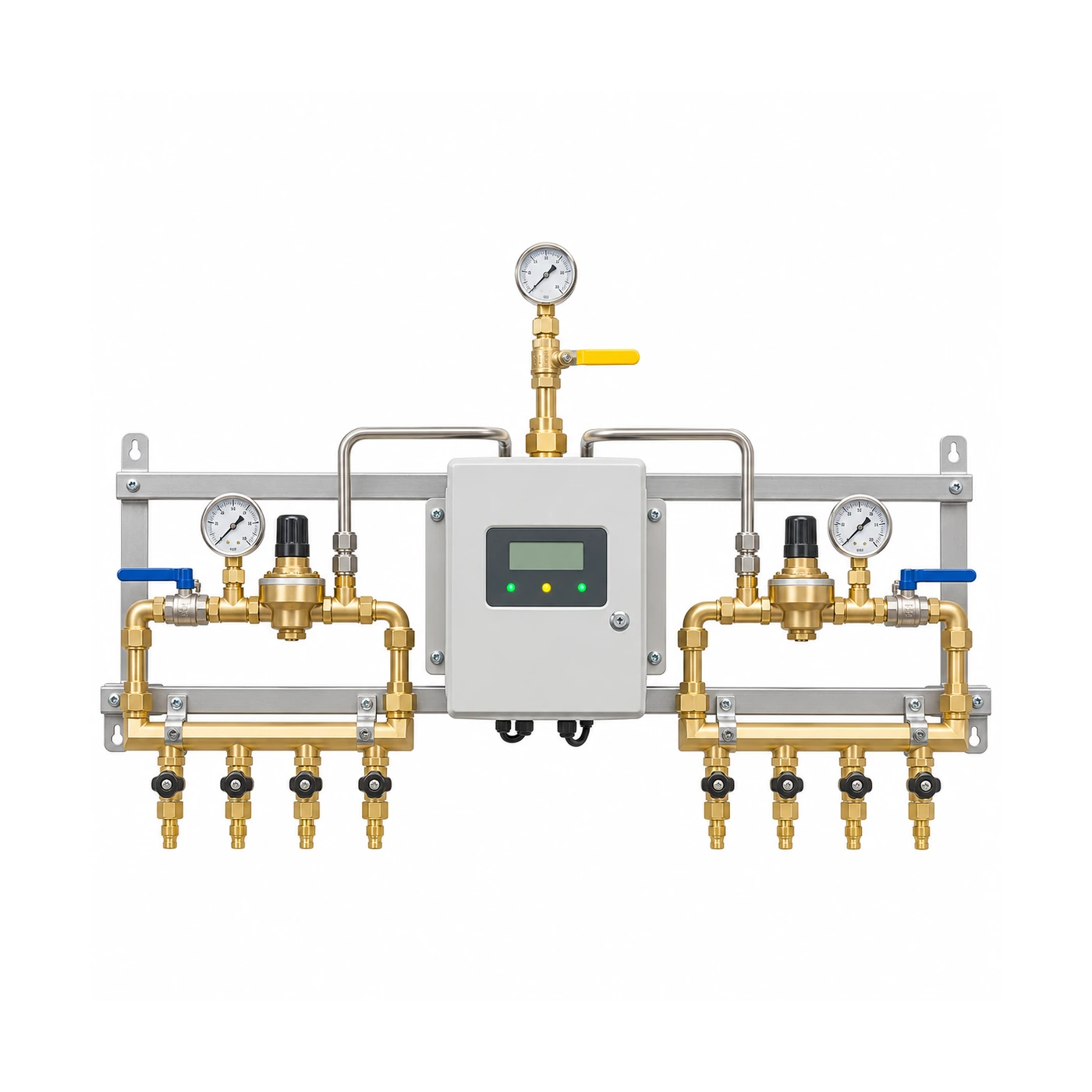
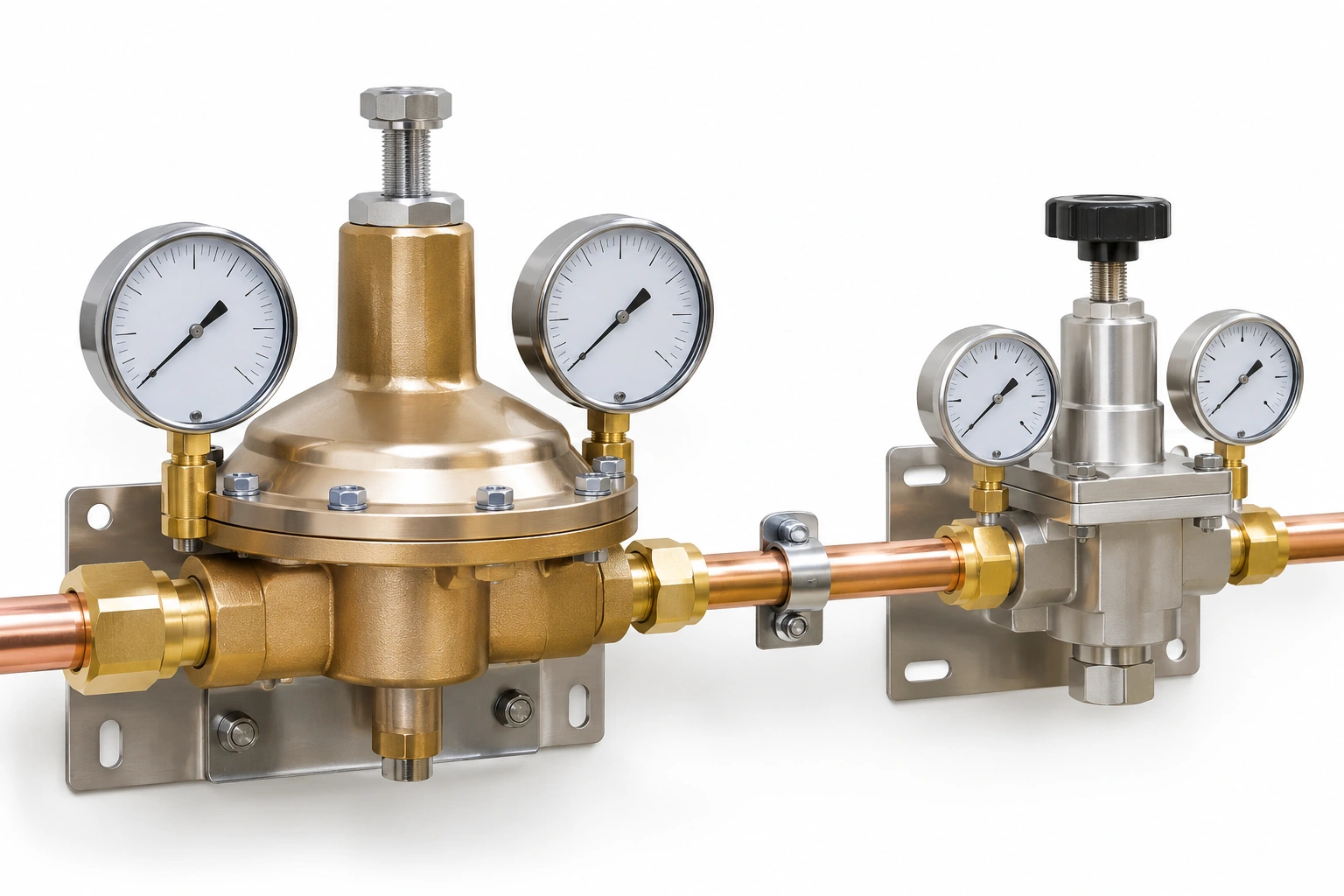
A compressed cylinder bank stores gas at a pressure substantially above that of the downstream distribution. Depending on the designed supply arrangement, an upstream manifold regulator performs the source-side pressure regulation, while a further regulator may manage the conditions for distribution.
The actual arrangement and set of required components are defined by the approved hospital design, not by a universal sketch. Some assemblies integrate multiple functions; separate part numbers may still be useful for documentation, inspection and spares.
Ask the designer to mark each regulating device on the P&ID, with service, tag and performance duty. A sales listing without a P&ID position is an incomplete specification.
Confirm which ISO 10524 part applies
ISO 10524-2:2018 states that it addresses manifold pressure regulators and line pressure regulators used with medical gas pipeline systems, whether supplied as separate devices or incorporated into an assembly. Its stated nominal scope includes manifold regulator inlet pressures up to 30,000 kPa (300 bar) and line-regulator inlet pressures up to 3,000 kPa (30 bar).
These scope limits are not a recommendation to set equipment at those pressures. The approved product rating and hospital design must determine the applicable equipment duty. An oxygen cylinder regulator intended for operator use may instead fall within a different ISO 10524 part.
Do not extrapolate performance from the standard number alone.
Issue separate RFQ fields for each regulating item
Use one row per component:
- Component tag and function as shown on the P&ID.
- Medical gas service and manufacturer-declared compatibility.
- Intended inlet duty, including the approved operating range and upstream source configuration.
- Required outlet conditions and approved flow duty at the defined test basis.
- Approved connection drawing at inlet and outlet.
- Relevant relief and monitoring interfaces in the system design.
- Exact model, revision, materials and cleaning/handling requirement.
- Manufacturer type/production test documentation requested.
- Factory and site acceptance/inspection evidence.
- Required spares, service life/maintenance information and support availability.
Only the design authority supplies operating values. The buyer should never choose a convenient pressure because it appears on a generic regulator photo.
A useful comparison worksheet
| Question | Offer A | Offer B | Required evidence |
|---|---|---|---|
| Manifold/line function stated? | Yes/No | Yes/No | Model datasheet/P&ID |
| Gas service explicit? | Yes/No | Yes/No | Manufacturer declaration |
| Performance at specified duty? | Provided/Pending | Provided/Pending | Technical data |
| Connections match? | Verified/Pending | Verified/Pending | Drawing |
| Exact supplied model documented? | Yes/No | Yes/No | Quotation/model ID |
| Acceptance and spares included? | Defined/Pending | Defined/Pending | Supply schedule |
“Both have two pressure gauges” is not a technically useful comparison.
Treat relief and alarms as system interfaces
Regulators do not operate independently of the source monitoring, approved means of preventing excessive pressure or site alarm architecture. The ISO 7396-1 system requirements and the approved P&ID define those interfaces. They cannot be assumed included because the product is advertised as “hospital grade.”
Identify whether a pressure gauge, electronic sensor, relief component or changeover-related element is included with the quoted regulator or belongs to another equipment package.
Differentiate product evidence from site testing
A manufacturer's type test record may show that a product class was assessed. A supplied-device record identifies the actual model and lot or serial where relevant. Site verification establishes the installed arrangement under the prescribed procedure. These are distinct records.
The hospital's commissioning authority defines site acceptance; a product seller should not claim that one factory certificate proves the performance of the entire pipeline.
Example of a rejected substitution
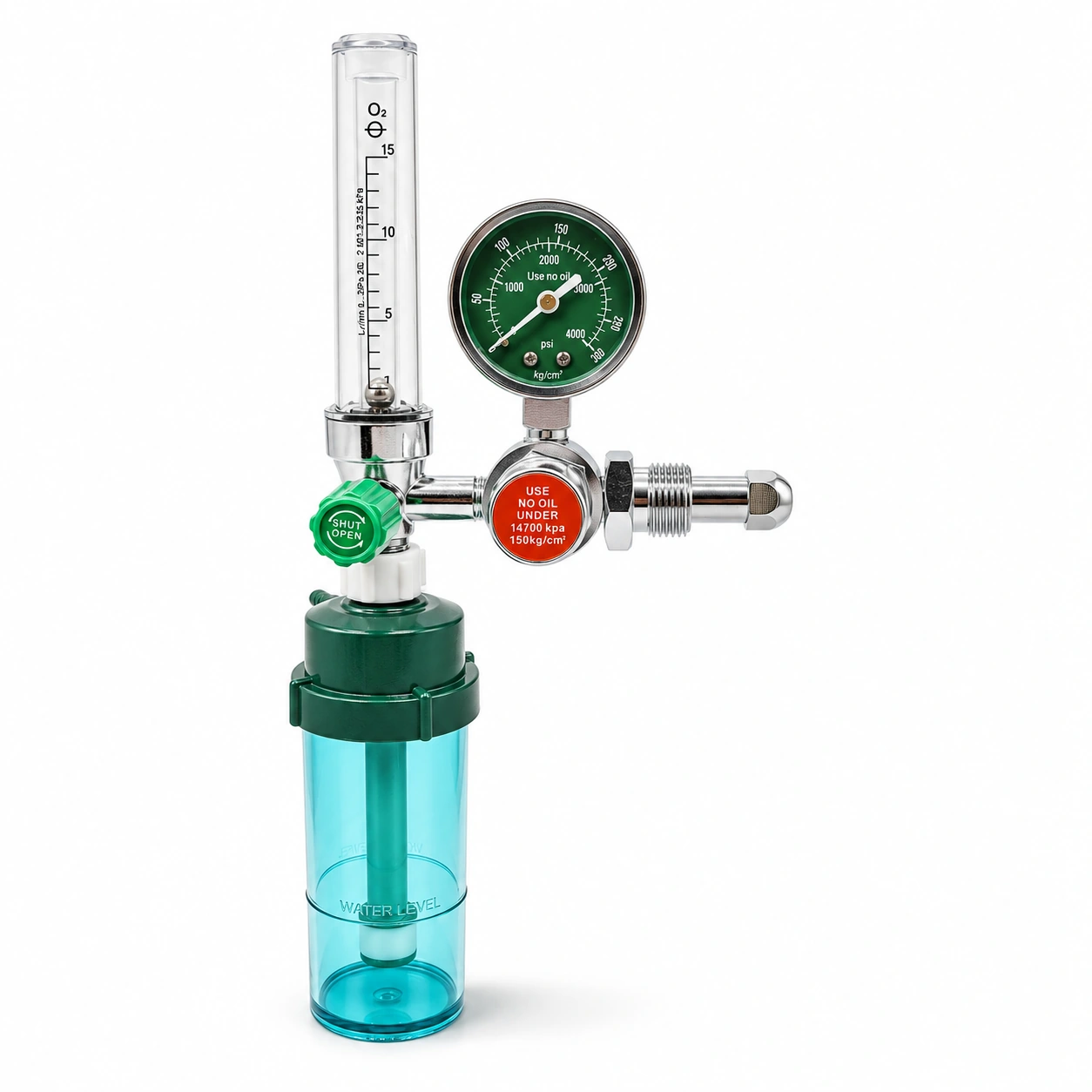
A buyer receives a compact single-cylinder oxygen regulator as a substitute for a manifold regulator. The product may perform a legitimate patient-side function and still be the wrong class of equipment for a source manifold. Verify the intended use, manufacturer classification and ISO scope before considering price.
This is exactly why the RFQ should state function and drawing tag, not merely “oxygen regulator.”
Working with BWC Medgas
For manifold assemblies and pressure regulators, BWC Medgas can discuss the specified component class, connection drawings and product documentation. It does not certify the hospital's completed source architecture on the basis of a supplied regulator.
Submit your regulator schedule to BWC Medgas.
Frequently asked questions
Does a regulator marked “300 bar” meet an ISO medical manifold requirement?
No. The marking by itself does not establish medical intended use, complete performance requirements or test conformity.
Is a manifold regulator automatically interchangeable with a downstream line regulator?
No. Their intended functions and performance assumptions differ.