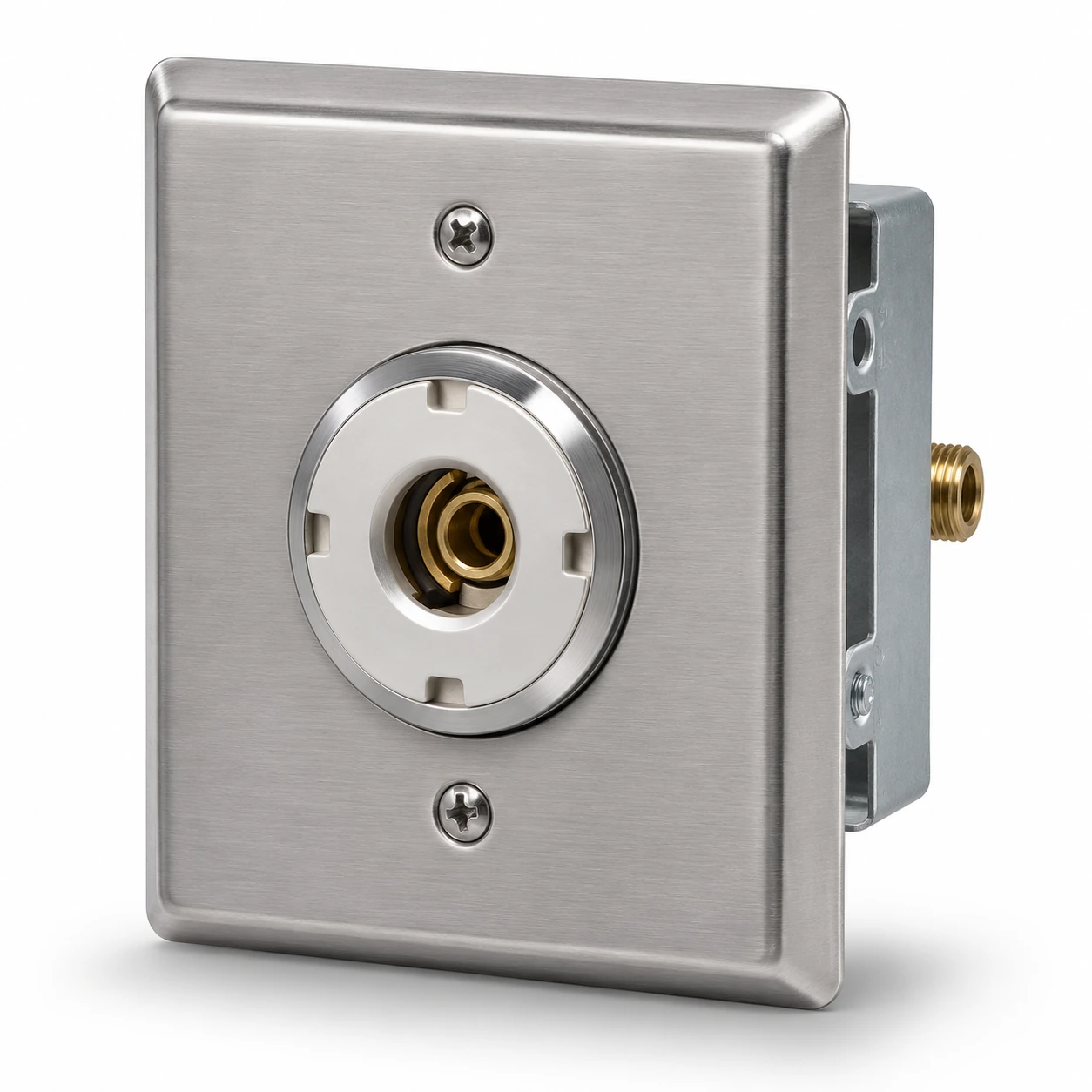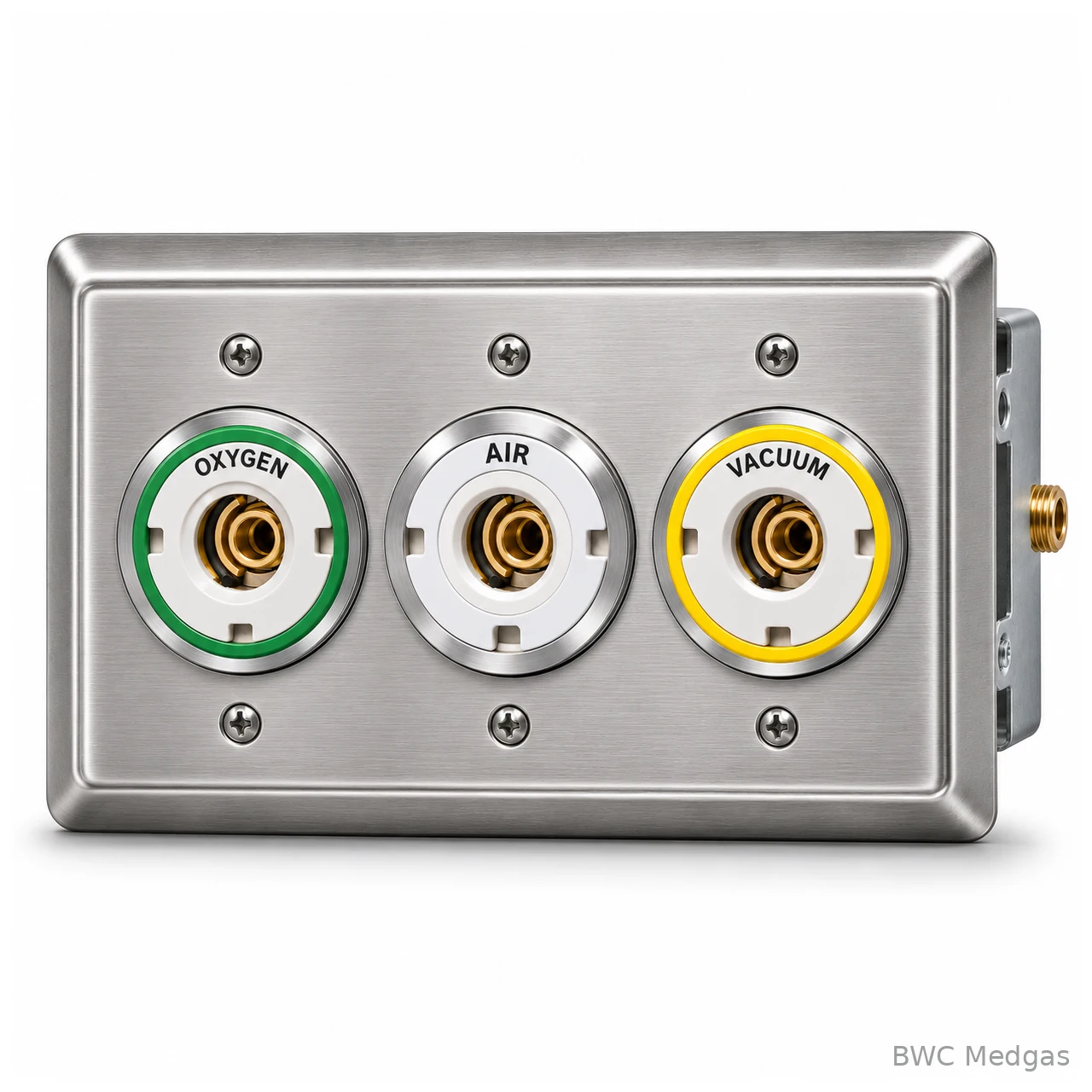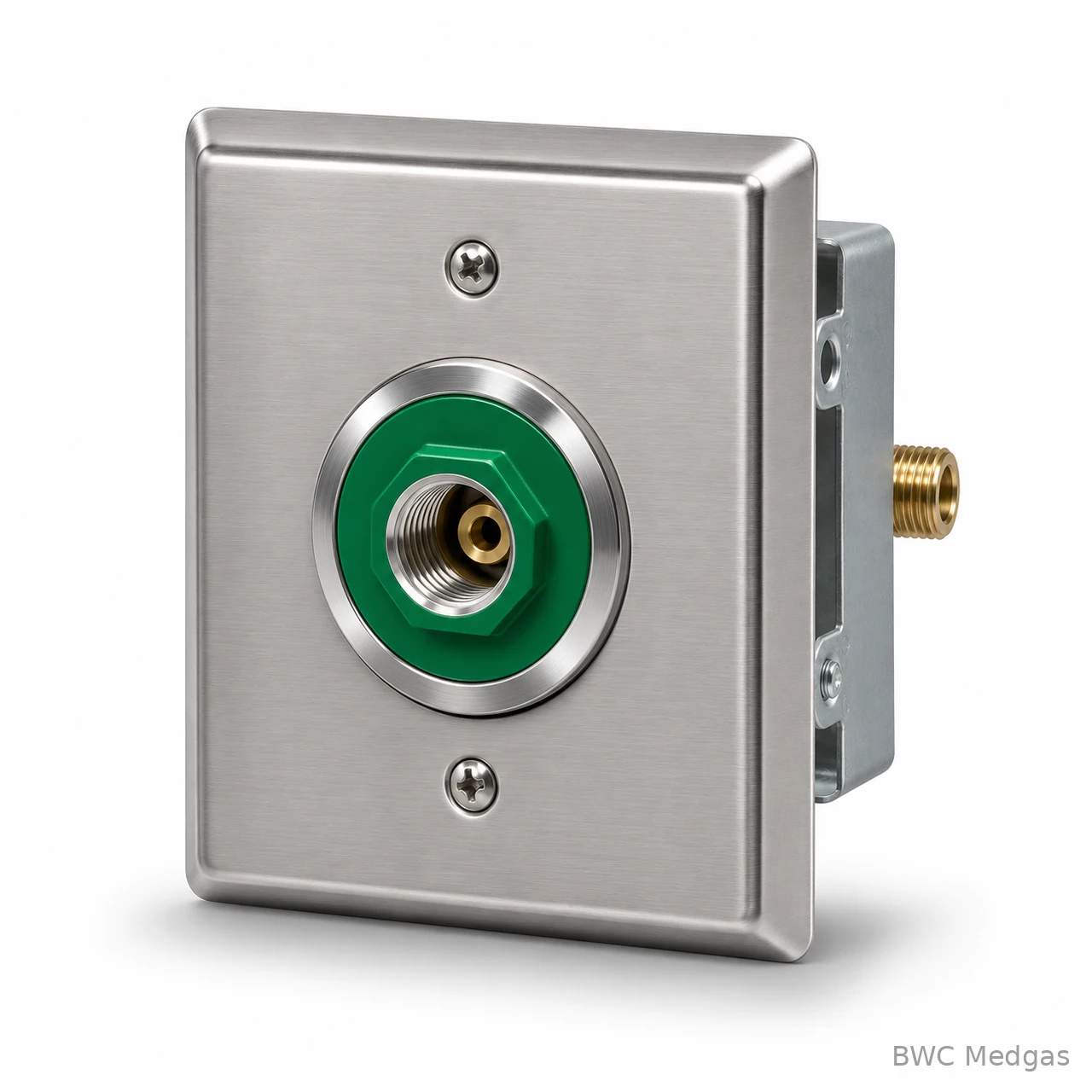
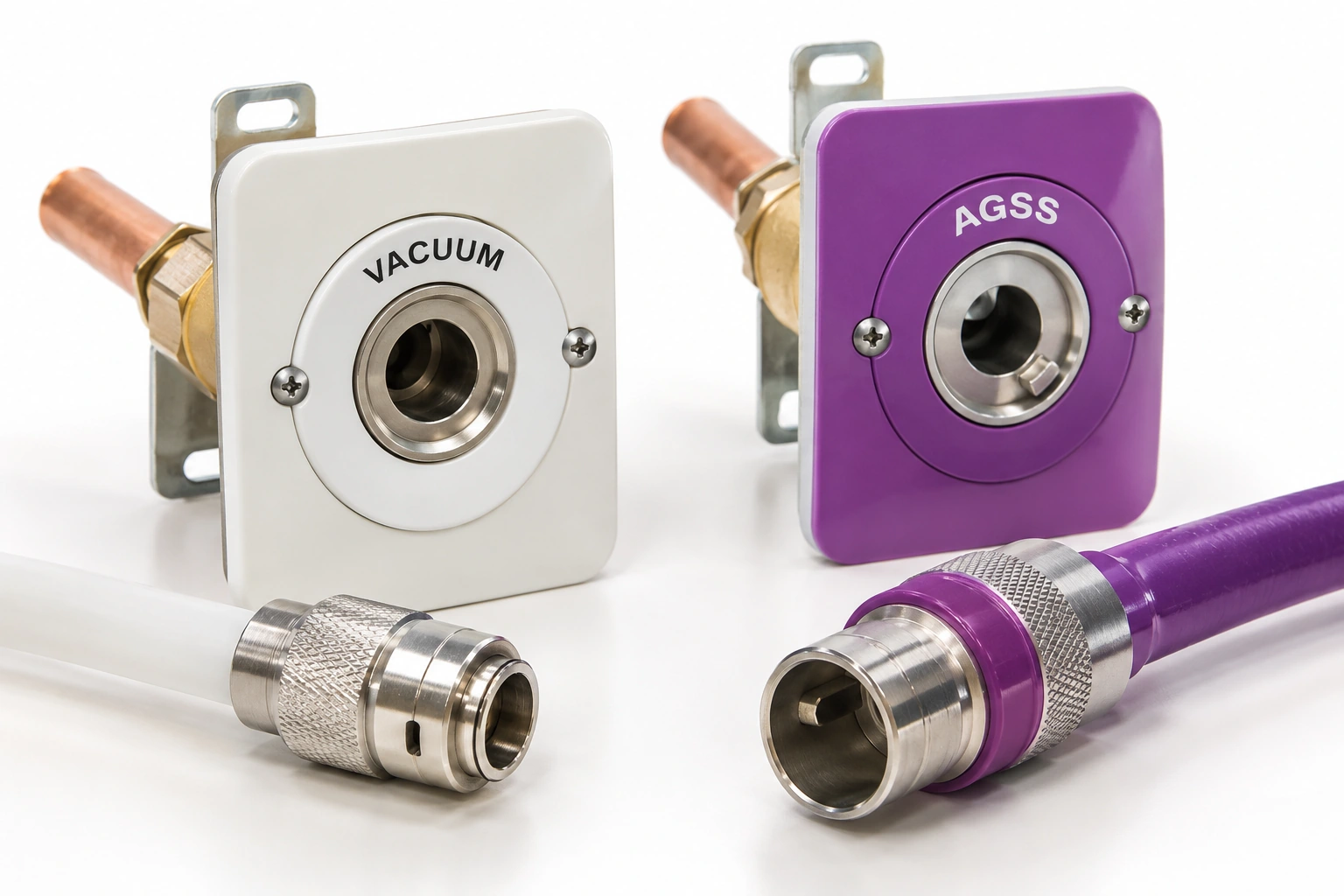
Operating-theatre procurement lists sometimes combine “vacuum and scavenging sockets” as though they were interchangeable outlet options. They are not. Medical vacuum supplies suction as a defined MGPS service, while an anaesthetic gas scavenging system (AGSS) is intended to remove waste anaesthetic gases according to its own system design.
The distinction must appear in clinical schedules, source design, terminal-unit selection, mating connectors and verification records. A faceplate that looks familiar is not proof of function.
Start with the service, not the socket picture
A clinical room schedule should identify medical vacuum and AGSS separately. For each, obtain the approved intended use, system architecture, interface location and downstream medical equipment requirement.
ISO 9170-1:2017 covers terminal units for specified compressed medical gases and vacuum, whereas ISO 9170-2:2008 specifically addresses terminal units for anaesthetic gas scavenging systems. Their scopes are different.
ISO 9170-2:2008 also distinguishes two types of AGSS terminal unit according to whether the power device is upstream or downstream of the terminal. The designer must select the applicable type from the actual AGSS scheme.
Understand the chain of interfaces
For a room with anaesthesia equipment, map the functional connection route: anaesthesia machine/scavenging connection; appropriate interface/hose arrangements; AGSS terminal unit; distribution or disposal infrastructure; power device and discharge as defined by the approved system.
The details depend on system type. The purchasing team should not choose connector dimensions or attempt to improvise cross-system adapters. The accepted source/disposal design and local technical requirements must be documented.
A medical vacuum point connected to a patient suction regulator cannot be assumed to serve the scavenging function. Conversely, a scavenging disposal socket is not an extra clinical suction outlet.
Create a two-service comparison table
| Question | Medical vacuum terminal | AGSS terminal |
|---|---|---|
| Intended service | Healthcare medical vacuum | Waste anaesthetic gas scavenging |
| Core terminal standard | ISO 9170-1 | ISO 9170-2 |
| System-level reference | ISO 7396-1 | AGSS system design requirements |
| Mating connector | Approved medical vacuum family | Approved AGSS type-specific connection |
| Location basis | Clinical suction requirements | Anaesthesia/AGSS system and equipment design |
| Site testing | Required medical vacuum verification | Applicable AGSS-specific functional verification |
This is a scope matrix, not a permission to use either device for the other's function.
Write the AGSS part number properly
An AGSS terminal RFQ should state the designated AGSS service, the approved type, specific mating connector, installed application, outlet mounting, required performance at its accepted system conditions and manufacturer technical documents.
Do not substitute “AGSS oxygen outlet” or “vacuum socket” as product names. Such wording masks the distinction and creates a serious purchasing risk.
The complete AGSS may include an engineered power/disposal arrangement. BWC Medgas does not supply or certify a complete AGSS plant solely by offering selected terminal hardware.
Link to commissioning and operating documentation
NHS Scotland's SHTM 02-01 (2026) lists a separate Form A17 for AGSS tests, alongside other medical-gas terminal, gas-specificity and functional checks. This reinforces that AGSS cannot be accepted by signing off an ordinary oxygen/vacuum terminal schedule.
The relevant healthcare operator and qualified verifier must approve the testing method and operational release. Do not try to demonstrate the difference by connecting mismatched gas equipment.
What changes in theatre refurbishment?
A renovation may replace the theatre pendant and expose a legacy scavenging arrangement. Existing device model, system type, hose assembly and connection details should be surveyed with controlled records before new terminals are ordered.
If the hospital changes equipment or AGSS architecture, the relevant source/disposal and terminal requirements may need review. Preserving a similar-looking socket is not evidence that the theatre remains correctly configured.
An example of a false equivalence
A tender lists “one vacuum terminal per anaesthesia station,” intending to cover both suction and scavenging. One bidder prices only medical vacuum outlets and another includes AGSS. Their quotes are not comparable.
Return the schedule for separate service descriptions, defined connection types, site design and approval. Do not select a supplier based on the lower combined total before resolving this essential ambiguity.
Related BWC component enquiries
For correctly specified terminal units and medical vacuum accessories, BWC can discuss component products matching a documented medical gas or vacuum service. AGSS equipment should be identified and separately verified against the actual AGSS design, with no assumption that BWC supplies the complete system.
Send your gas and AGSS terminal schedule to BWC Medgas.
Frequently asked questions
Can an AGSS unit be purchased as a second medical vacuum point?
No. They are separately specified systems and connection types.
Is ISO 9170-1 sufficient for an AGSS terminal?
No. ISO 9170-2 addresses AGSS terminal units.