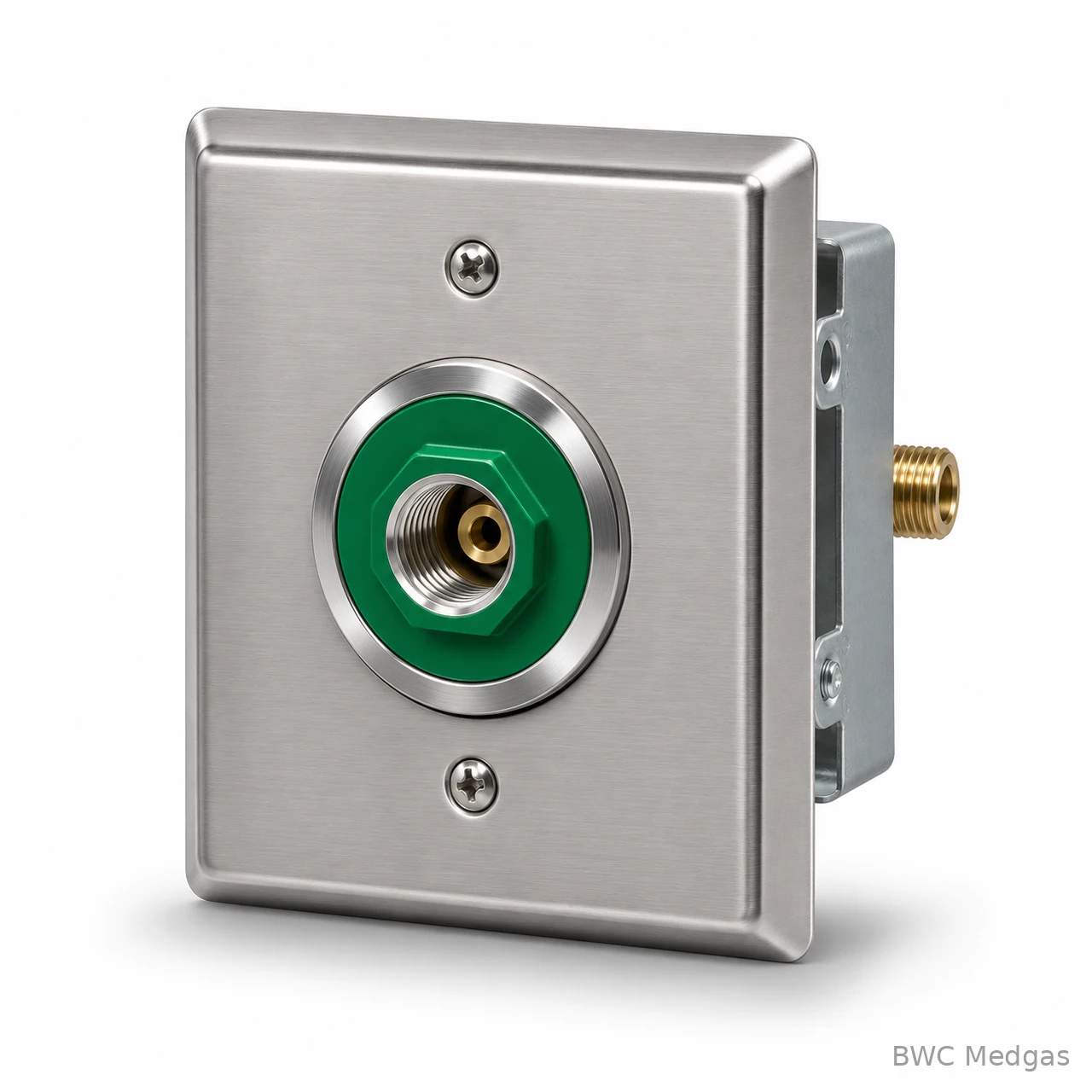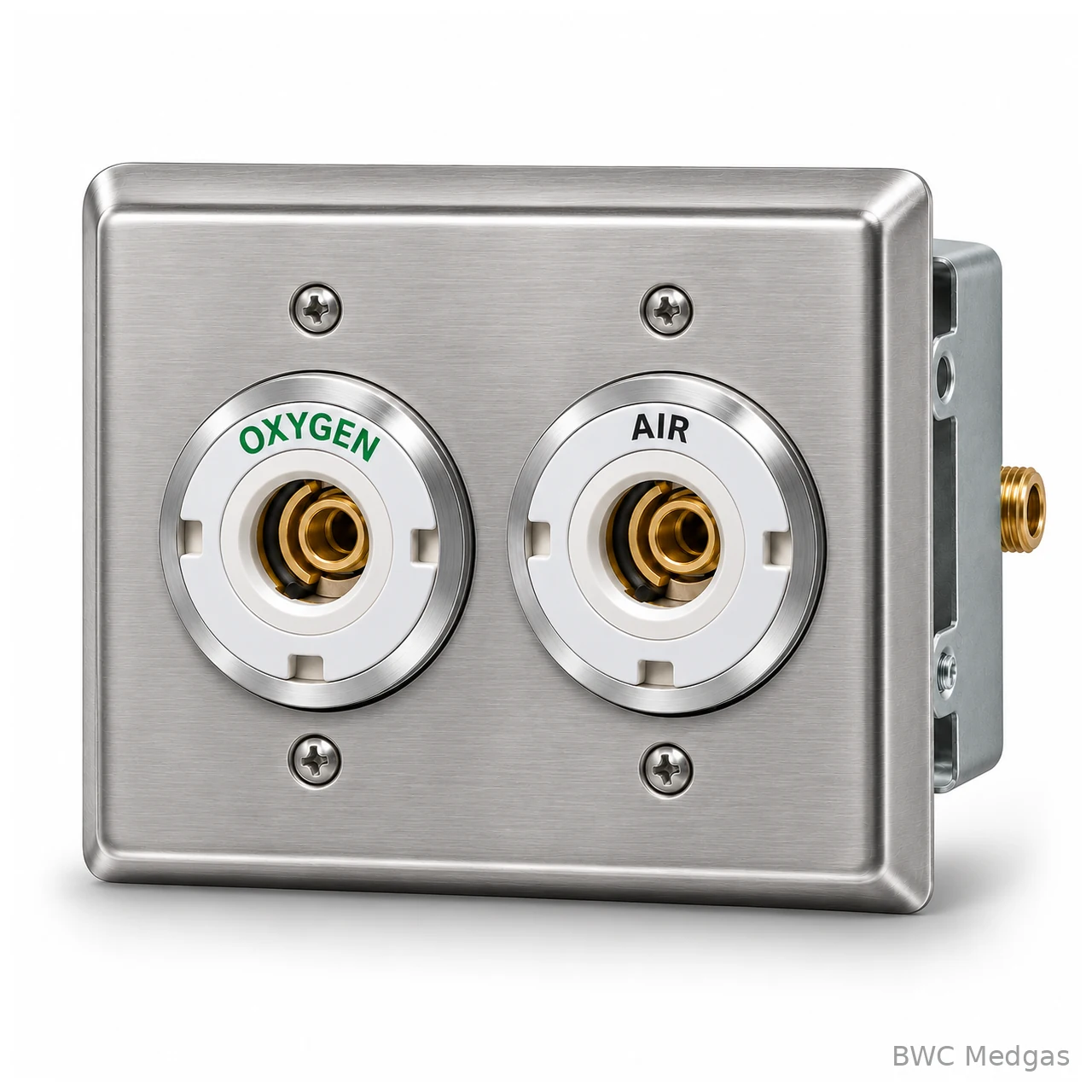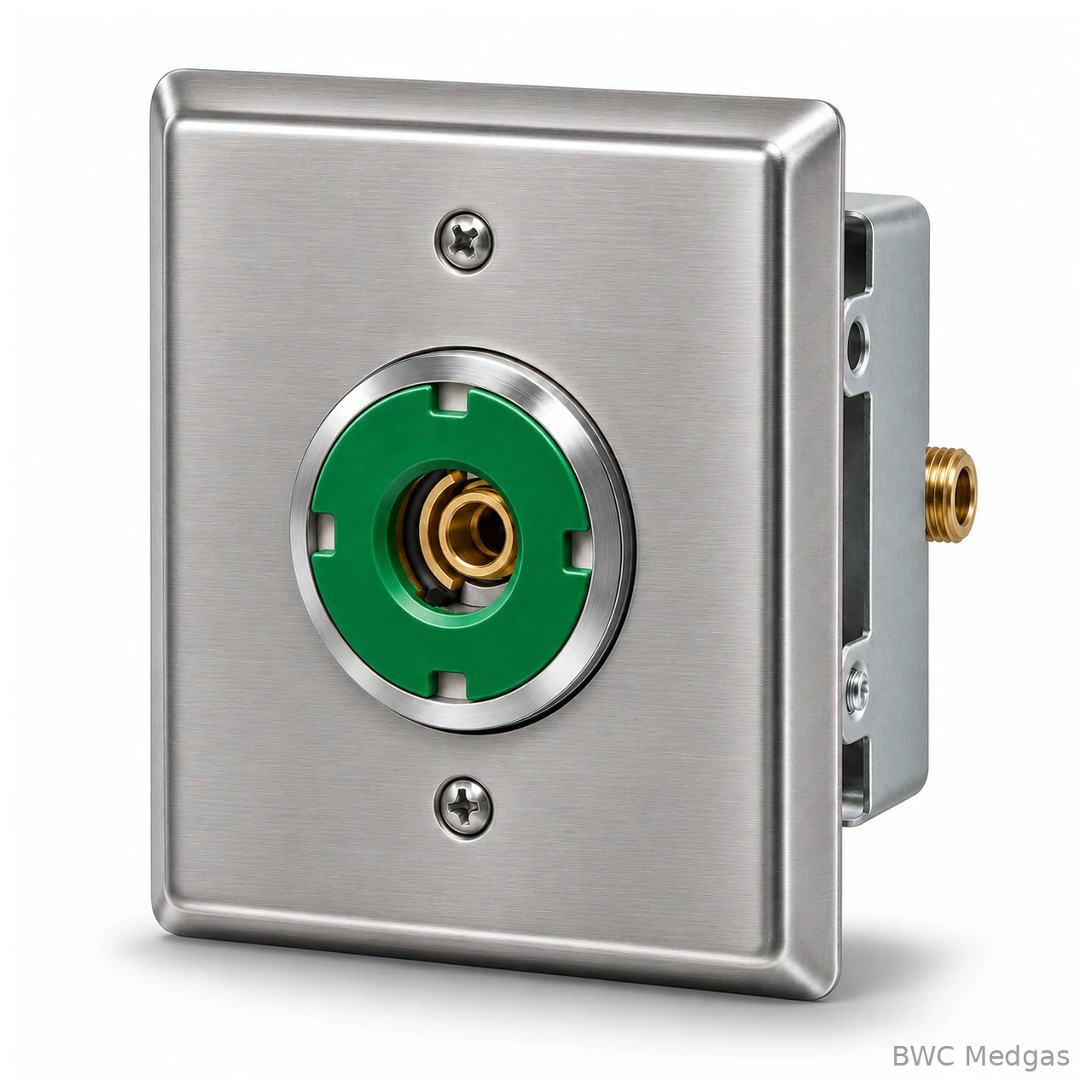
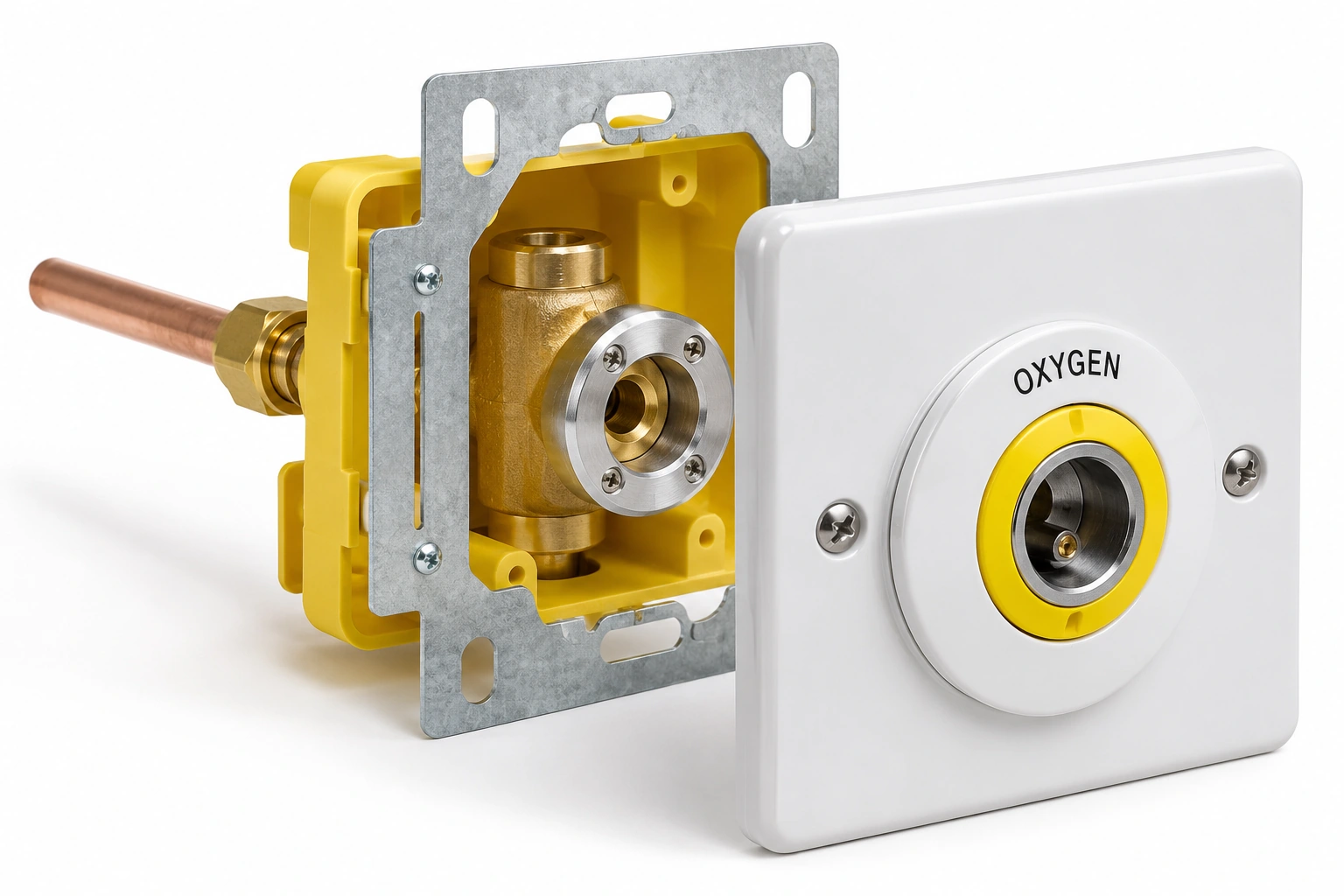
Two medical gas outlet quotations may show almost identical circular faceplates yet require different wall cavities, copper tails, mounting plates or assembly methods. A visible front component does not define the installed product geometry. Mounting decisions made late can force changes to finished walls or leave the terminal misaligned with a bedhead panel.
The most useful procurement deliverable is a terminal interface drawing and responsibility register, not a photograph of the front face. This guide is about design coordination and procurement boundaries, not a field installation method.
Define which product is being installed
Ask the supplier to identify the complete terminal-unit assembly and any constituent parts provided separately: gas-specific socket and probe interface, service mechanisms, rough-in or wall body, mounting/back box, front plate, pipework connection, seals and service labels. Record exactly which parts the offered model includes.
ISO 9170-1:2017 covers terminal unit performance and gas-specificity for the specified services; it is not a universal dimensional drawing for every national probe system. Product-specific drawings are essential.
The designer should separately identify whether the terminal is being mounted directly into a wall, surface assembly, medical supply unit, pendant or an approved prefabricated bedhead panel.
Audit the construction boundary
| Interface | Typical question | Evidence owner |
|---|---|---|
| Wall or panel | Is the required recess and support geometry approved? | Architectural/medical equipment contractor |
| Rough-in body | Does the exact offered assembly fit the planned substrate? | Terminal manufacturer/installer |
| Pipeline tail | Who supplies and joins the approved gas-specific connection? | MGPS designer/installer |
| Faceplate and access | Are final finishes, labeling and service access coordinated? | Equipment/estate coordinator |
| Clinical equipment | Will expected devices connect without compromising access? | Clinical/device team |
| Testing | Who verifies the completed terminal after all trades finish? | Qualified MGPS verifier |
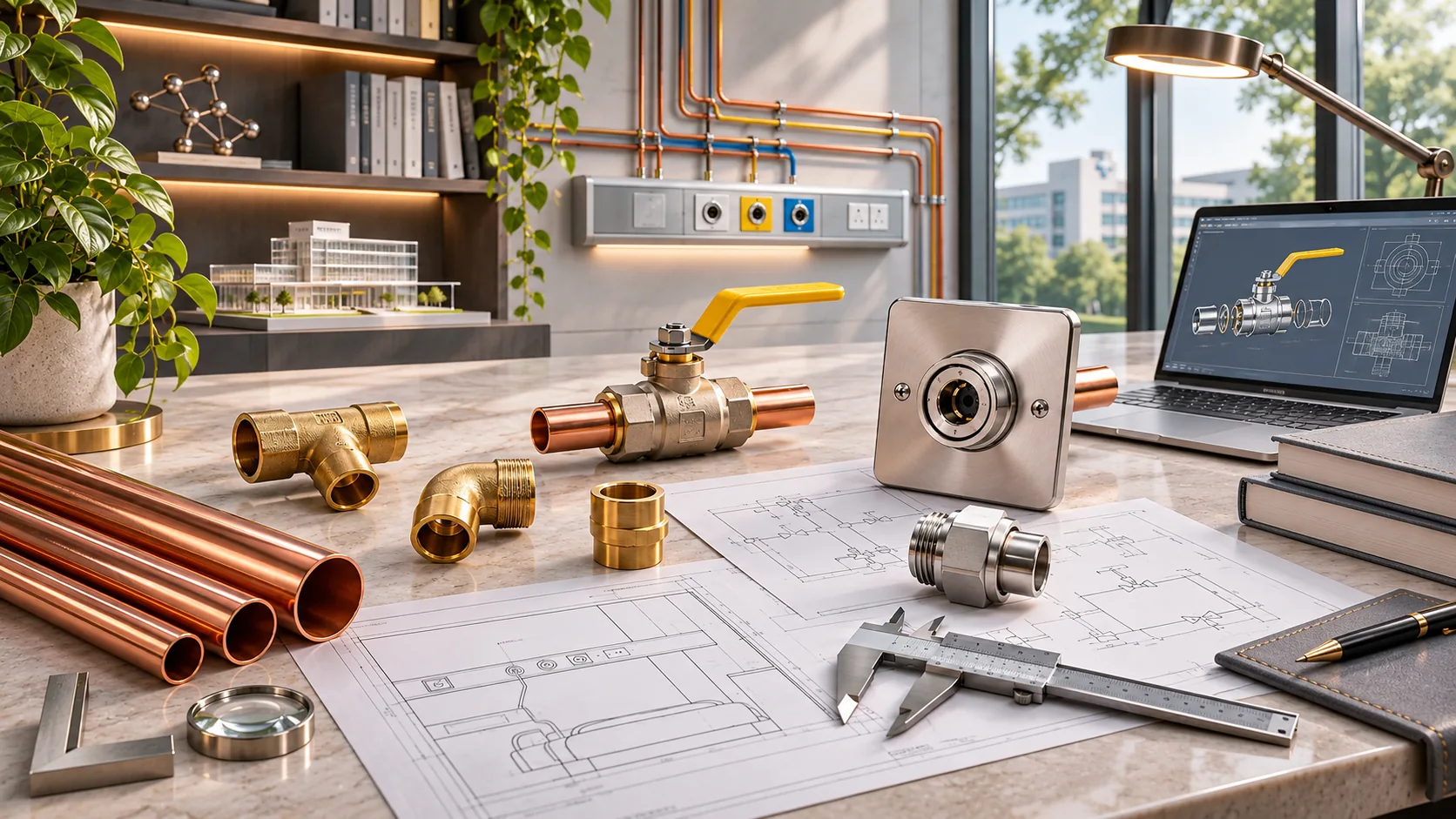
Do not treat an architectural 3D model as complete technical evidence unless it incorporates the manufacturer's accepted details.
Distinguish flush and exposed mounting
A flush-mount option may need an accepted rough-in depth or proprietary back box. Exposed mounting can alter clearances, impact protection, cleaning and the accessible work zone. Neither is universally preferable: evaluate the chosen construction and the approved clinical layout.
A hospital renovation can add special constraints: existing wall thickness, pipe route, fixing substrate and available access can differ substantially from new construction. A model sold in “wall and bedhead” versions may have different part numbers for those applications.
Coordinate prefabricated bedheads and pendants
The system boundary matters where a terminal is built into an ISO 11197:2019 medical supply unit. That standard addresses the medical supply unit as a larger electrical/medical equipment product; the gas outlet retains its own relevant product and connection requirements.
Do not assume the terminal manufacturer also certifies the entire bedhead/pendant. Identify who integrates, tests, documents and accepts the finished assembly. A factory assembly test does not remove the hospital's applicable site verification obligations.
Prevent mismatched delivery packaging
An RFQ that orders only the visible front modules may leave the fitter without a matching rough-in. Conversely, purchasing complete units for a factory assembly where the bedhead manufacturer already supplies back boxes can lead to duplication.
Issue a completeness checklist: front module; body/back box; approved mounting bracket; intended gas-specific connection; seals and labels; pipework connection interface; service instructions; model identification; delivery protection. Fill in “included,” “supplied separately,” “provided by another contractor,” or “not applicable.”
Do not infer that an unlisted component is included simply because it appears in a marketing photo.
Example of a revision conflict
The architect specifies a shallow cavity and the supplier's latest outlet body drawing calls for a deeper installation envelope. The correct response is a design coordination issue with a reviewed alternative, not an installer improvisation to force the product into the wall.
Record revised architectural and MGPS details, affected room locations, commercial change and verification/maintenance implications before purchase.
Quality evidence at the installed interface
The technical package should contain an approved product configuration, dimensional drawings, service/material information, installation instructions for competent personnel, component IDs, connection details and the applicable testing/acceptance responsibility. Where the wall is fire-rated or part of a specialized healthcare enclosure, involve the responsible building/fire discipline.
A terminal can perform correctly as a factory component and still be incorrectly integrated into a built environment. Site acceptance must consider both product and installed-system requirements under the adopted HTM 02-01 or equivalent.
Where BWC can contribute
BWC Medgas can quote gas-specific terminal assemblies by exact variant and mounting configuration. If supplied with the approved construction detail, it can also identify its available compatible assembly parts without claiming responsibility for the complete hospital construction.
Send mounting and connection drawings to BWC Medgas.
Frequently asked questions
Can a front-face measurement alone identify the replacement rough-in?
No. The concealed body and fixing/connection geometry may differ.
Does an integrated bedhead remove the need for gas terminal verification?
No. Product and integrated system responsibilities must be clearly assigned.