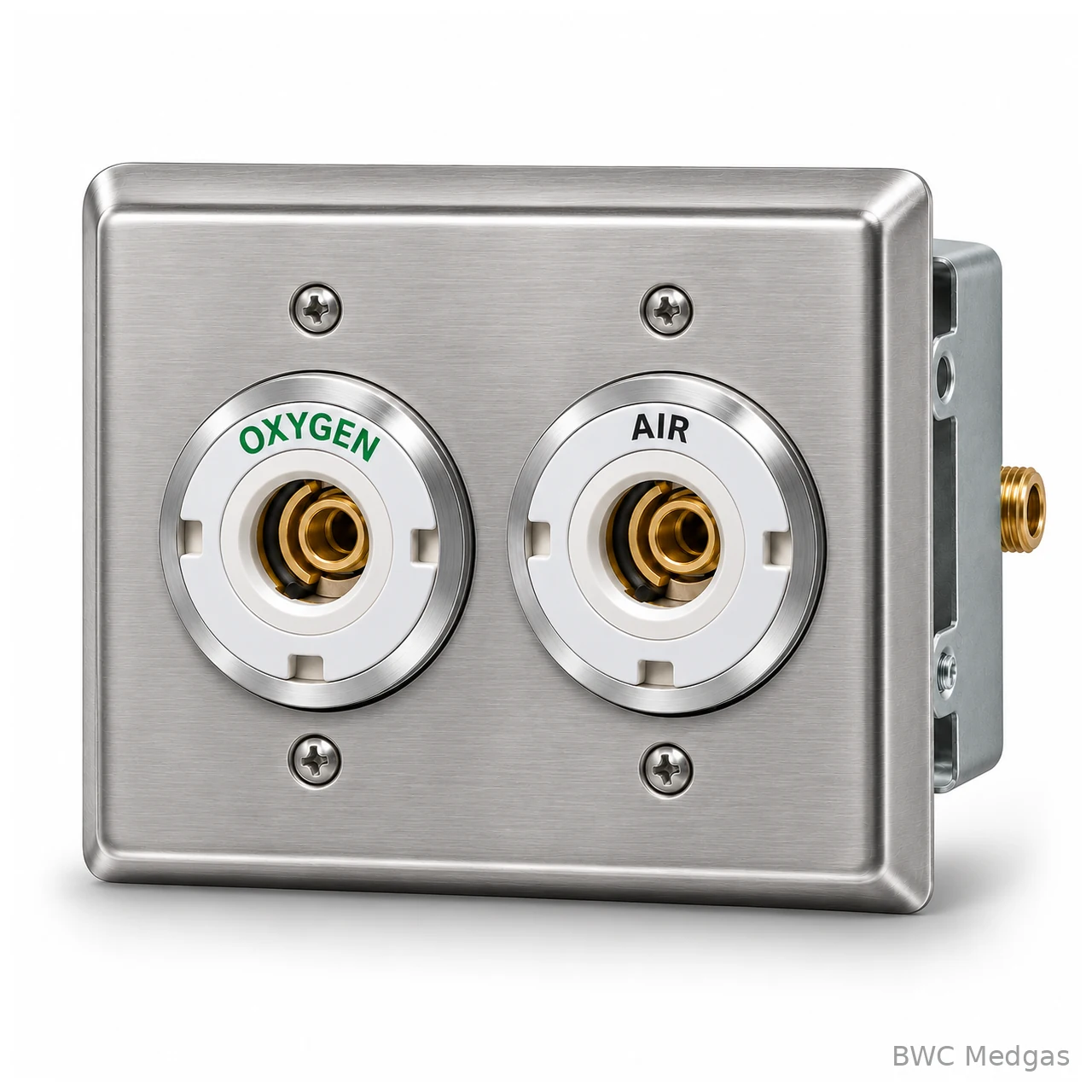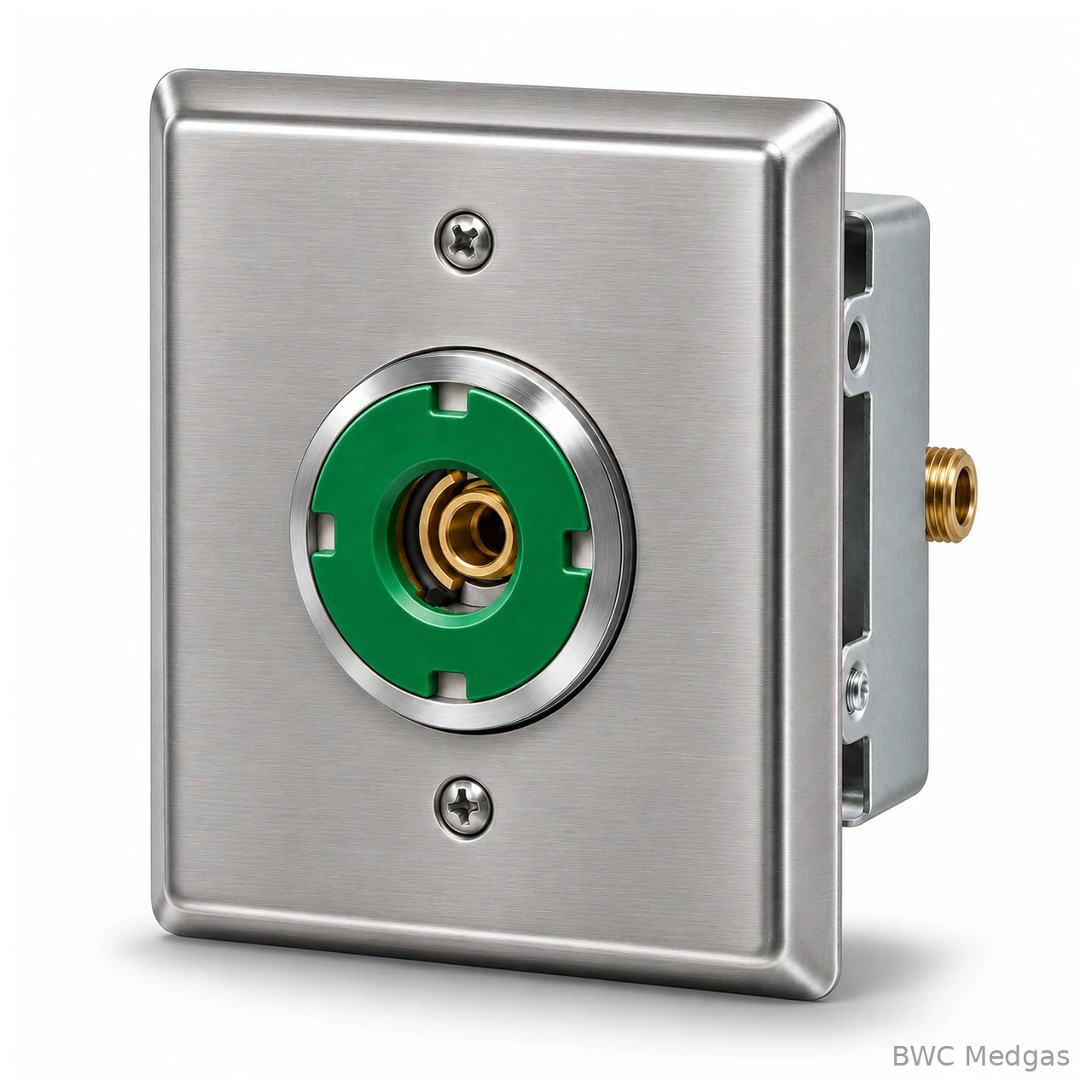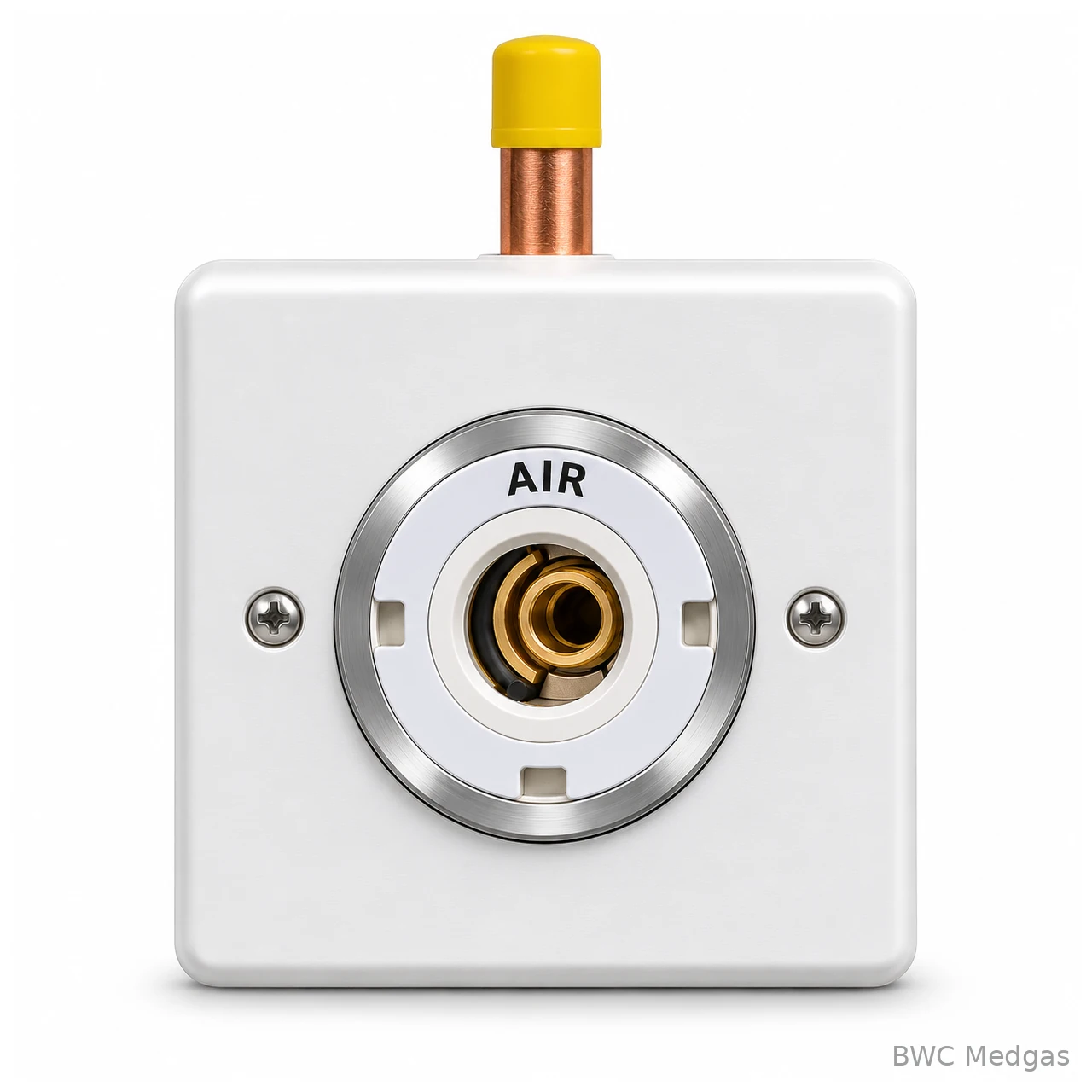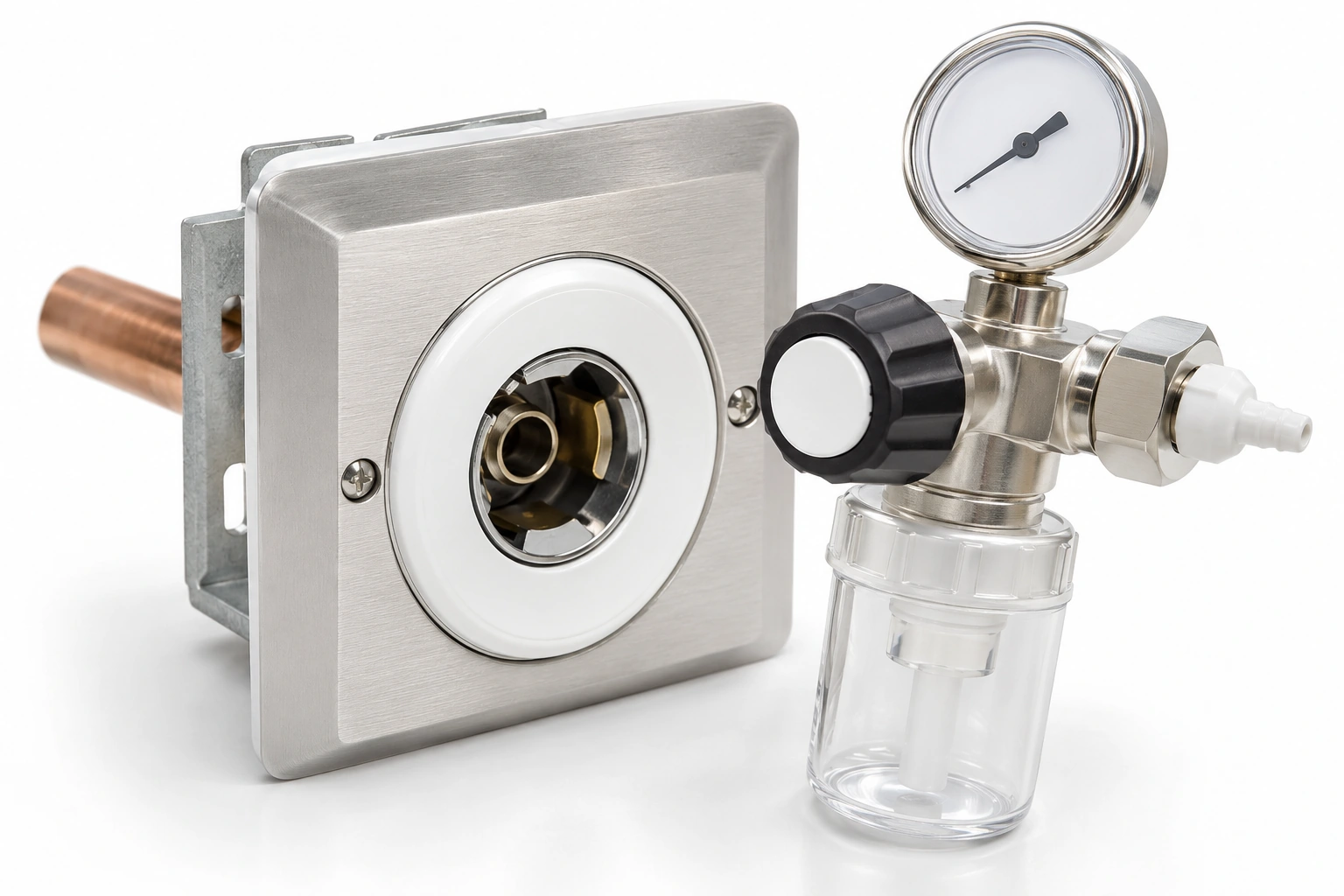
A CE mark shown on a catalogue cover is not the same thing as a traceable conformity package for the exact medical gas component on a purchase order. European buyers need enough identification to connect the device's stated purpose, applicable regulatory route and supporting documentation to the delivered configuration.
The governing starting point is [Regulation (EU) 2017/745](https://eur-lex.europa.eu/eli/reg/2017/745/oj/eng) where the product falls within its scope. Medical gas infrastructure involves different items and assemblies, and product classification or even whether the supplied item qualifies as an MDR device is an item-specific determination—not a blanket conclusion from a website claim.
Verify the product, not the brand slogan
| Buyer check | What usable evidence looks like |
|---|---|
| Manufacturer identity | Legal manufacturer and relevant product contacts |
| Product identity | Exact catalogue/model code, variants, intended application and supplied connection |
| Regulatory route | Applicable legislation, device classification where relevant, and conformity route |
| Declaration | Manufacturer's EU declaration that actually identifies the device |
| Third-party documents | Relevant notified-body certificate where required by the applicable route |
| Technical evidence | Applicable standards and representative tests matched to model/revision |
| Delivered identity | Labels, lot or serial traceability, IFU and change/replacement history |
[EU MDR Articles 19 and 20](https://eur-lex.europa.eu/eli/reg/2017/745/oj/eng) address declarations and CE marking; Annexes II and III describe technical and post-market documentation. A buyer usually does not receive unrestricted access to the full manufacturer's protected technical file, but must still be able to determine whether the supplied device matches its stated conformity evidence.
Distinguish three kinds of document
ISO 13485 QMS certificate: evidence concerning a manufacturer's quality system, not proof that every device complies with every product requirement. ISO describes the management-system scope in its ISO 13485 overview.
Product conformity document: evidence for a defined model or family, tied to its intended purpose and the applicable legislation/standard.
Project acceptance record: a site's installed-system test and handover record. It does not become a regulatory certificate merely because a contractor signs it. ISO 7396-1 addresses pipeline-system requirements, while individual products may have separate applicable standards.
Five procurement red flags
- A declaration omits the actual model, and the offered configuration cannot be connected to the declared family.
- Supplier and legal manufacturer are treated as interchangeable without documentation.
- An ISO certificate is presented as a substitute for required product conformity.
- A document refers to obsolete drawings although the hose/terminal/regulator interface changed.
- The purchaser assumes that EU marketing status alone satisfies third-country import or project rules.
For the United Kingdom, the [MHRA's current guidance](https://www.gov.uk/guidance/regulating-medical-devices-in-the-uk) explains separate UKCA and time-limited CE recognition routes in Great Britain. It must not be confused with EU acceptance, and it is not a substitute for checking classification and placing-on-market obligations.
A simple evidence request to accompany the RFQ
Ask the supplier to return a one-row-per-model schedule with ordered quantity, country of use, specification revision, gas service, connection standard, declaration reference, identification label and accompanying documentation. Then have the hospital's authorised technical/regulatory reviewers reconcile exceptions before approving substitution.
For medical gas outlets, zone valve boxes, regulators and other components, BWC Medgas can work from a precise model and interface schedule. Do not accept a general “all models certified” statement without matching the specific item and market route.