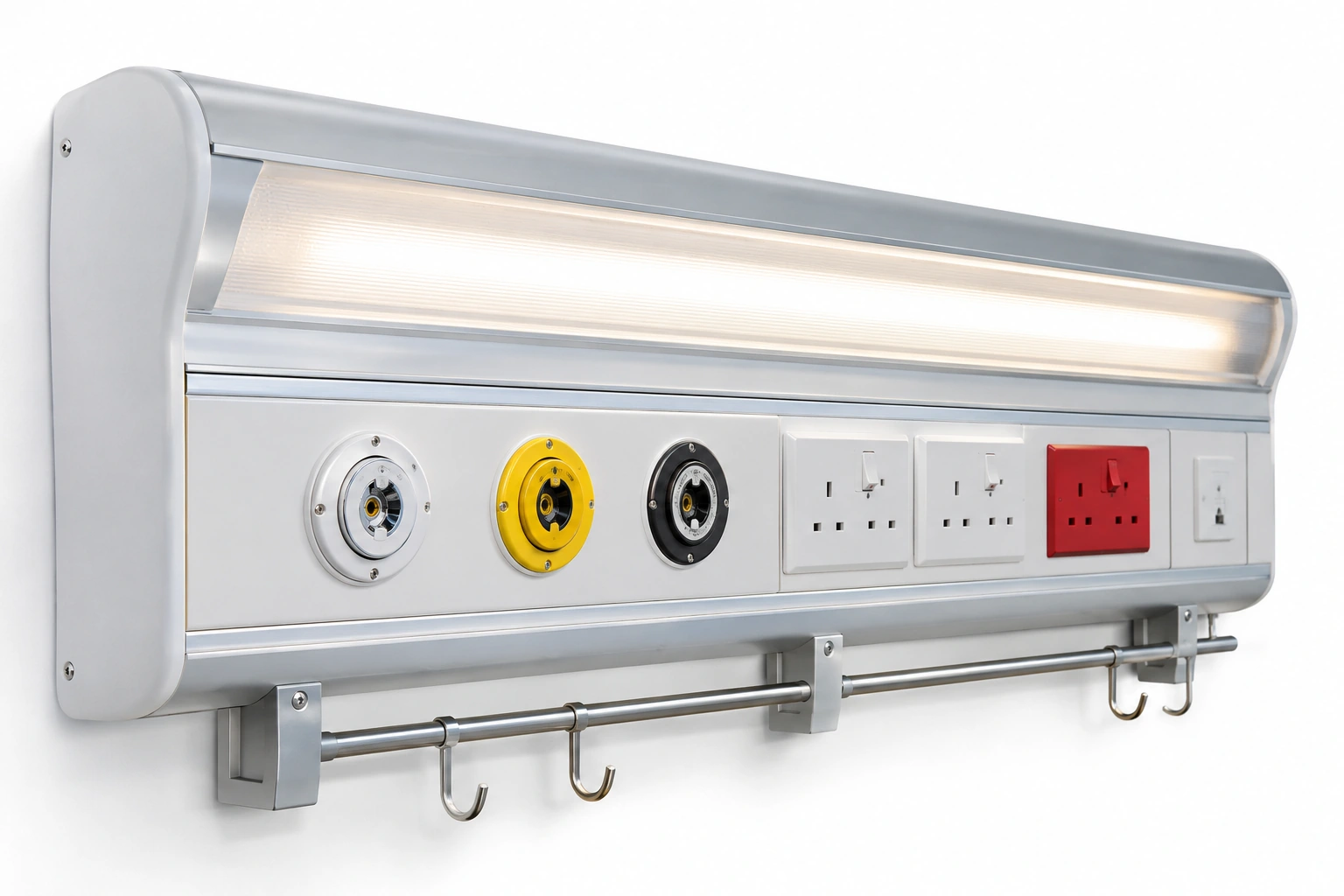
An operating theatre pendant or bedhead panel is more than the sum of its outlets and electrical sockets. Integrating medical-gas terminals, electrical services, mounting structures and accessories creates an assembly-level responsibility that cannot be satisfied by collecting unrelated component certificates.
ISO 11197:2019 addresses medical supply units, including factory-manufactured and site-assembled arrangements that incorporate patient-care services. As of 15 November 2026, a proposed fifth edition is under publication, not yet a published replacement. Record the contractually selected edition.
Define who is the unit manufacturer
The published ISO scope notes that a party assembling patient-care components into an enclosure on site may be considered the manufacturer of the medical supply unit. This creates a fundamental procurement question: is BWC or another supplier delivering a single standalone outlet, or is an approved integrator responsible for the complete bedhead/pendant design?
| Supply boundary | Key responsibility to agree |
|---|---|
| Loose terminal units | Identified gas-specific product standard and model conformity |
| Gas hoses/tails | Correct connection, routing and approved interface |
| Electrical sockets/services | Electrical safety and segregation under applicable design rules |
| Enclosure or pendant | Structural support, access, service clearance and complete assembly |
| Integrated product | Manufacturer/integrator identity, risk analysis and system documentation |
| Installed system | Site pipeline verification, functional acceptance and handover |
A single medical-gas terminal can be governed by ISO 9170-1:2017, but that does not establish overall conformity of an integrated pendant.
Review substitutions before the factory builds
Suppose the hospital's approved headwall drawing locates oxygen and vacuum terminals beside multiple electrical services. The fabricator proposes a smaller enclosure with alternative outlets. Check the approved physical layout, gas-specific interface, access for maintenance, manufacturer instructions and impact on electrical/medical-gas integration. The assembly owner must evaluate any necessary design and conformity implications; a purchase-order substitution is not enough.
For relevant medical devices placed on the EU market, [EU MDR 2017/745](https://eur-lex.europa.eu/eli/reg/2017/745/oj/eng) provides regulatory responsibilities in addition to product standards. Regulatory status depends on the actual assembly, intended purpose and legal placing-on-market arrangement.
Use a unit-level acceptance schedule
- Identify the hospital location and approved model/drawing revision.
- Assign enclosure manufacturer and responsible system integrator.
- List gas terminal service, connector family and quantities by position.
- List electrical/low-voltage services separately and record segregation approach.
- Confirm physical mounting loads, access and service clearances.
- Reconcile component declarations with the complete unit evidence package.
- Agree factory acceptance, delivery inspection and installed-system test boundaries.
- Control later service-kit and outlet substitutions by revision.
Avoid an expensive commissioning surprise
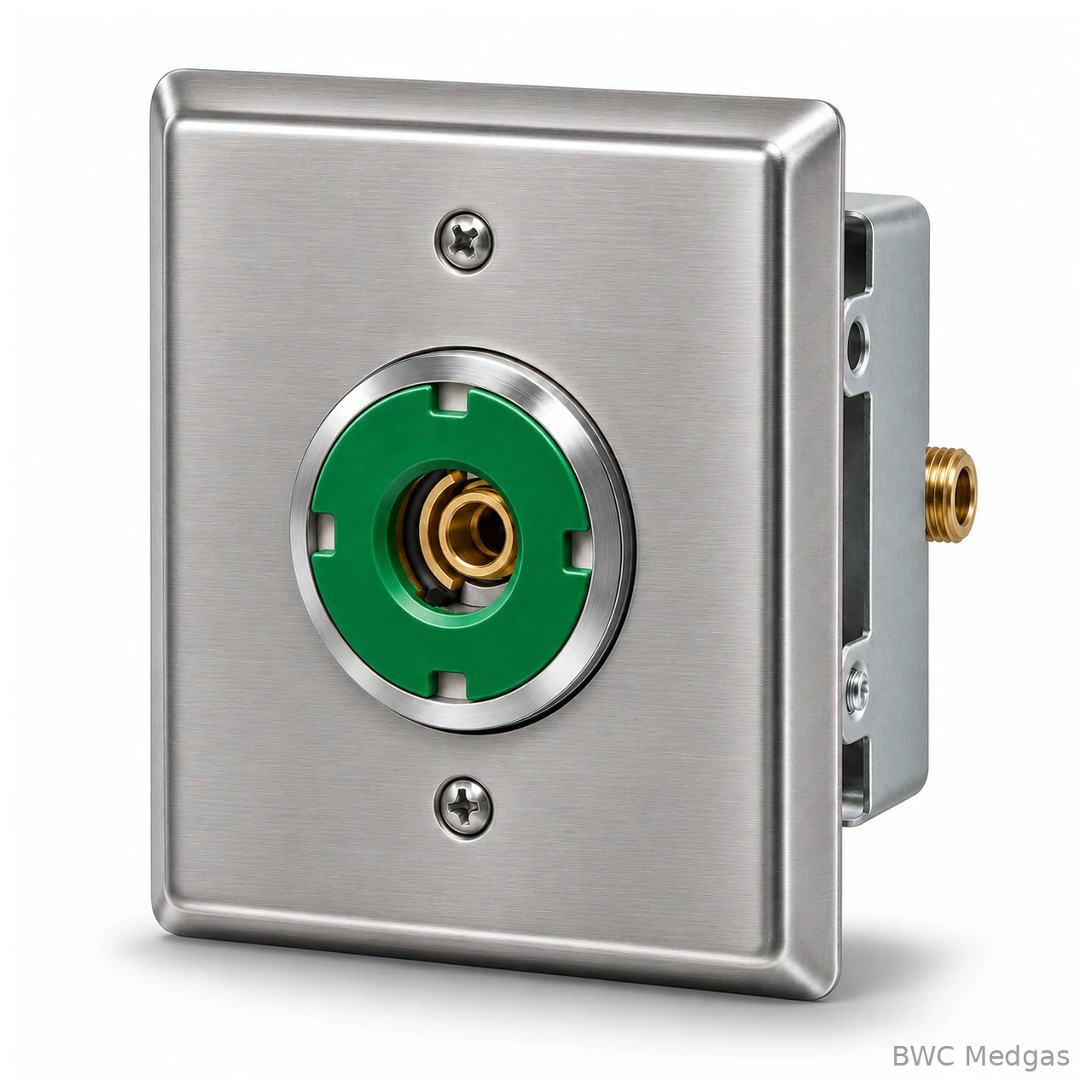
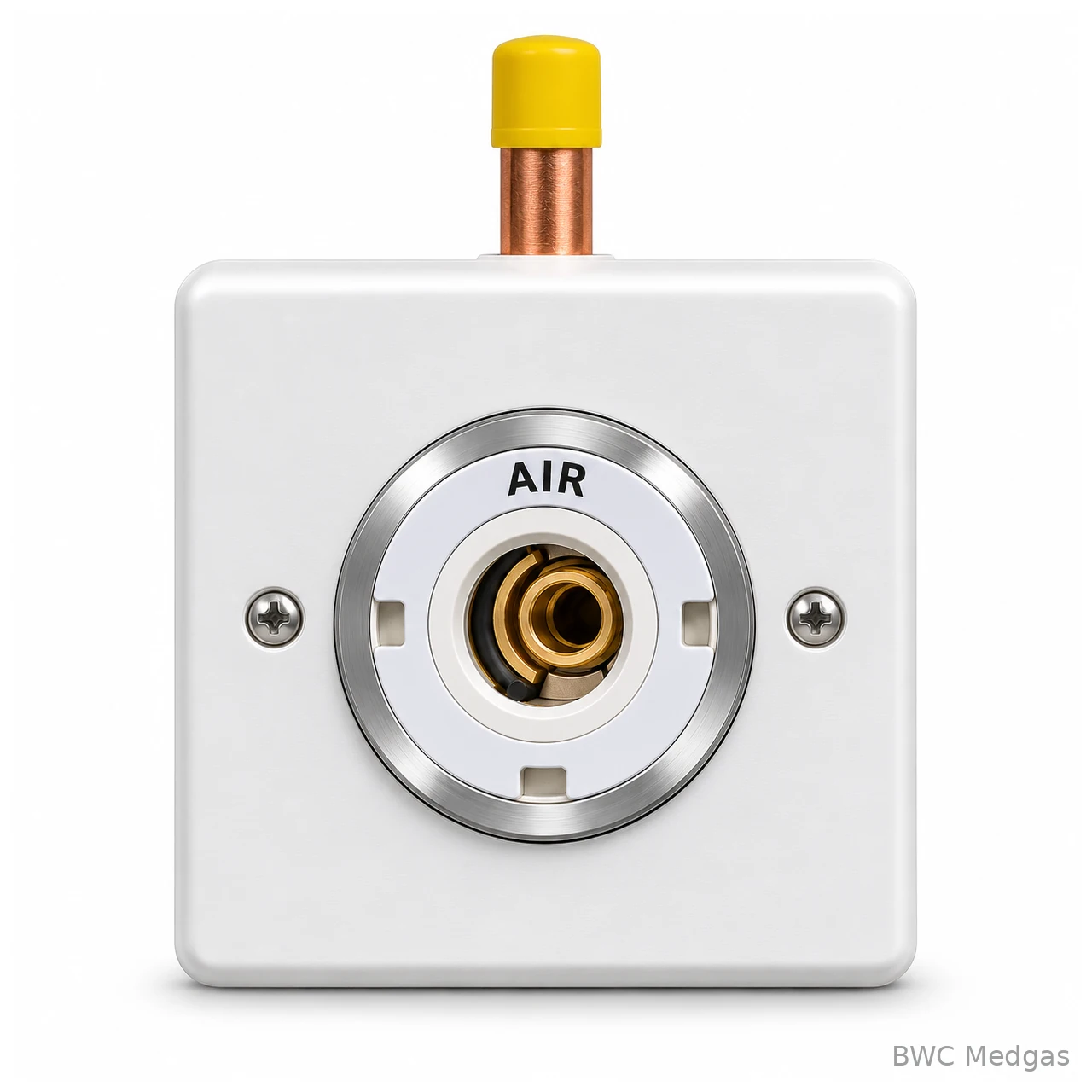
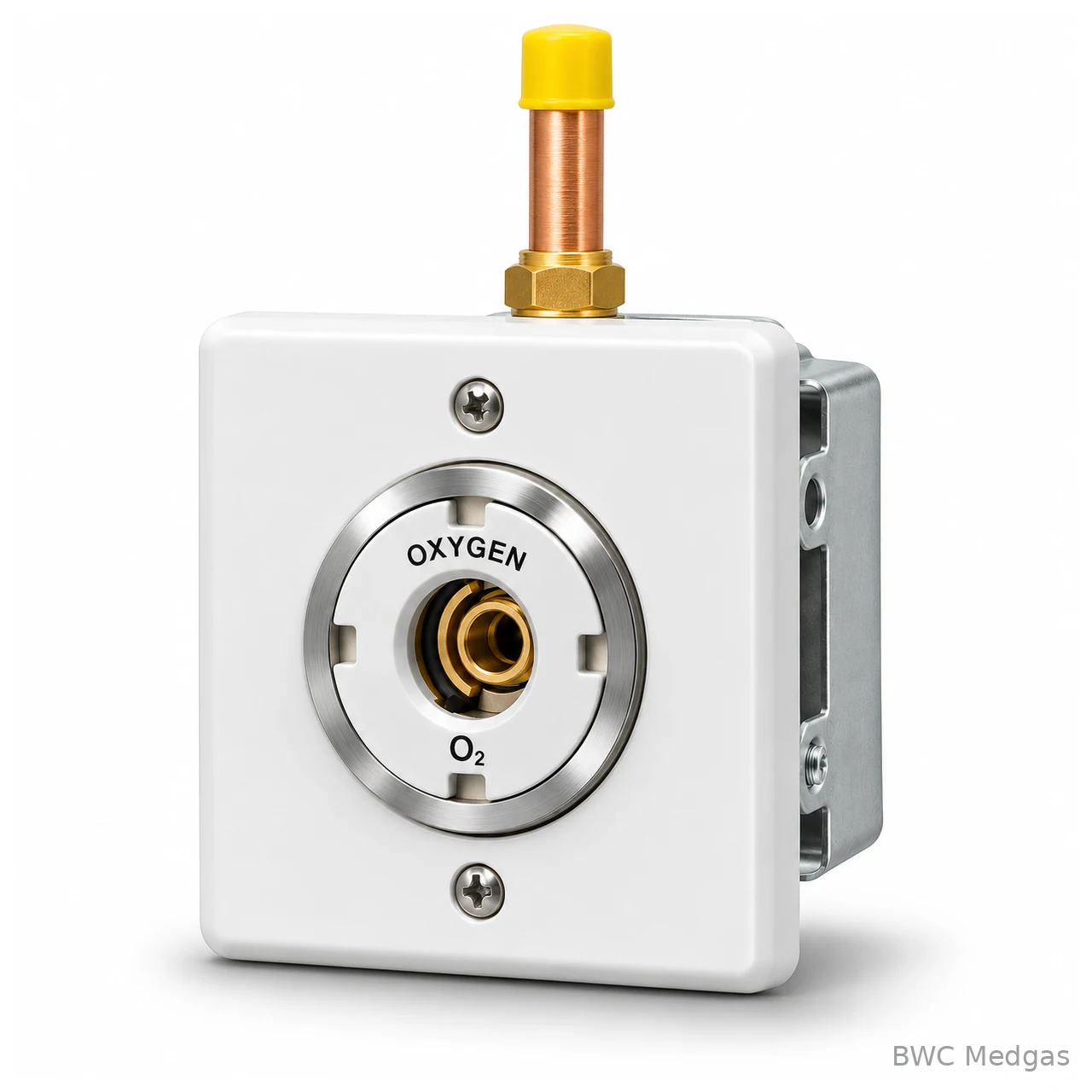
An attractive pendant photograph reveals little about the connection mechanisms behind the panels. Request an interface drawing, exploded view, service schedule and an authorised change-control record. Contractual and regulatory acceptance should rest on the actual supplied configuration, not a reference photograph.
BWC Medgas supplies specified medical gas outlets, valves and related components for approved integration projects; it does not automatically become the manufacturer or site verifier of every assembled bedhead or pendant in which those parts are installed.
Discuss the approved integrated-unit component list with BWC Medgas.