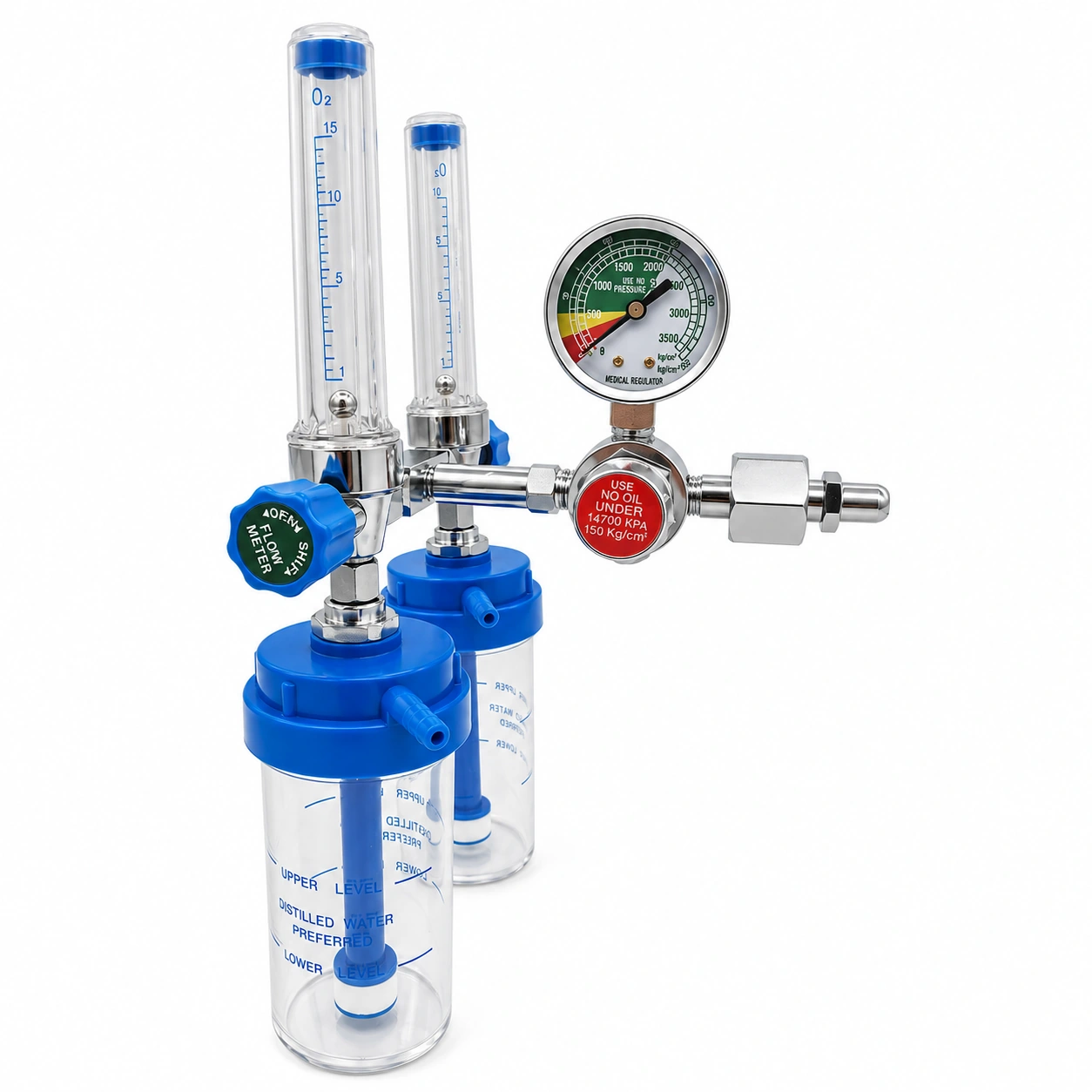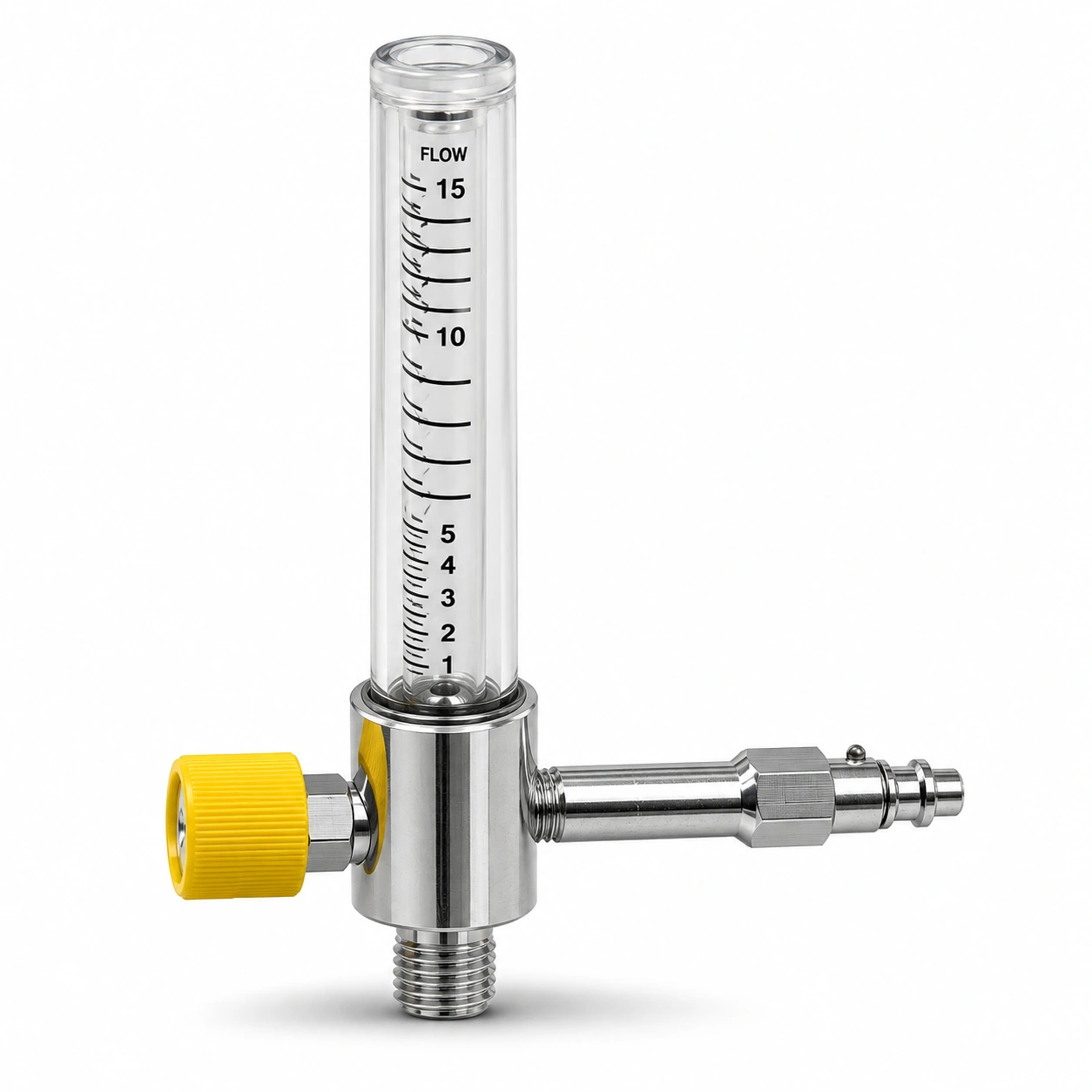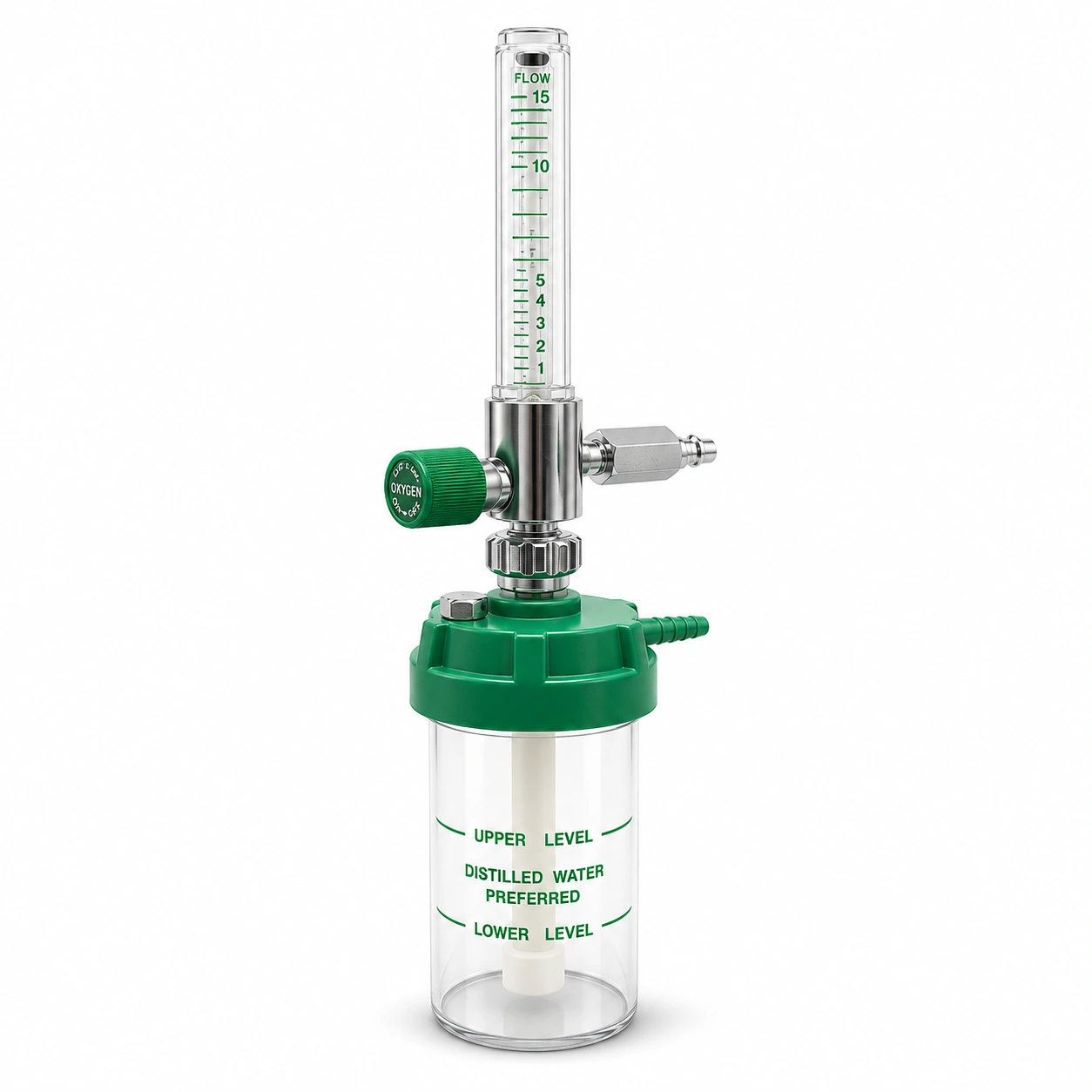
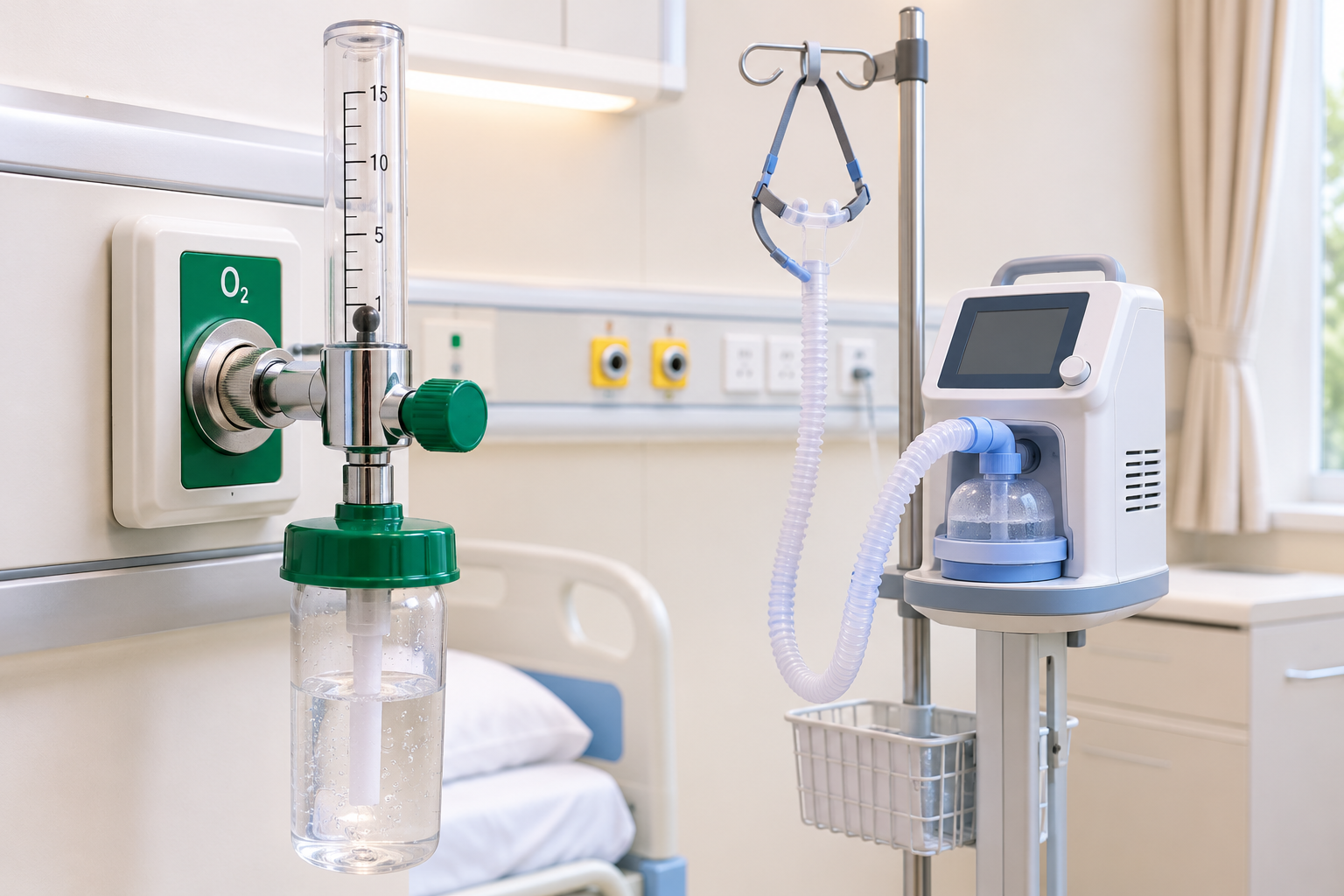
Hospitals sometimes buy one standard 0–15 L/min style oxygen flowmeter for every treatment space. Such a decision may ignore the equipment's required operating band, resolution at the lower end or suitability of the selected flow-control technology. Conversely, a specialty low-range device might be unsuitable for a different required duty.
The purchasing challenge is range and measurement capability, not simply whether a dial or tube bears a high maximum number. This guide addresses engineering and procurement; it intentionally provides no clinical oxygen-flow prescriptions for neonatal, paediatric or adult patients.
Request the clinical equipment specification
The clinical/biomedical engineering team should state the approved device-use cases and required flow conditions for the intended treatment equipment. Procurement then asks which manufacturer device can meet the relevant range, accuracy, adjustment and display requirements.
Do not infer a clinical need from the ward name. A room can support multiple clinical devices, and patient-specific requirements are determined by clinicians.
Distinguish three selection variables
Range: The minimum and maximum values the actual device is intended to control or measure.
Resolution: The smallest practical adjustment or discernible scale increment under specified conditions.
Accuracy/uncertainty: The accepted deviation relative to a reference within the stated range and operating conditions.
A flowmeter with a high top-end scale is not necessarily precise at a low flow. Conversely, very fine graduations do not by themselves establish accuracy.
Practical RFQ assessment
| Purchasing item | What to ask the manufacturer | Why it matters |
|---|---|---|
| Operating band | Guaranteed performance across required points | Avoid inadequate low-end capability |
| Resolution | How small a difference is meaningful? | Readability and control |
| Accuracy basis | Declared tolerance and test conditions | Fair bid comparison |
| Gas | Exact oxygen, oxygen 93 or air suitability | Different gas properties |
| Flow-control class | Flowmeter, flowgauge or fixed orifice | Different functions |
| Supply interface | Terminal/regulator/VIPR pressure outlet | Connection compatibility |
| Output arrangement | Approved tubing/humidifier/device connection | Complete accessory scope |
| Maintenance | Inspection, parts, manufacturer service | Lifecycle support |
ISO 15002:2023 defines several classes of flow-control devices and relevant medical gas scope. It does not mean all classes provide identical adjustment/readout behavior.
Avoid simplistic “high-flow” labels
Commercial product names may use “high flow” to refer to a higher indicated range; in clinical practice the phrase can describe much more complex respiratory therapy systems. A passive flowmeter is not equivalent to an entire high-flow oxygen therapy system.
Ask the clinical department for the underlying compatible equipment specification rather than translating a therapy name directly into a tube maximum.
Example: a scale that is hard to read
A buyer compares two oxygen flowmeters. Model A covers a broad range but the lower part of its scale is visually compressed. Model B provides a narrower range with better readable increments in the project's specified area. The evaluation should ask for performance data at the actual required points, not choose solely by lowest price or largest maximum.
No inference about patient dosing should be drawn from this example.
Review regulator interface and pressure assumptions
A device connected to a cylinder-mounted regulator may see different rated conditions from one connected directly to an approved wall terminal. The exact upstream pressure source and gas-specific connector must agree with the intended flow device.
ISO 10524-1:2018 and ISO 10524-4:2008 address distinct regulator categories; do not assume an accessory rated for one interface is automatically suitable for another.
Oxygen compatibility and cleaning
The installed product must have suitable gas-contact materials, cleanliness/oxygen compatibility evidence and approved cleaning instructions under applicable requirements, including ISO 15001:2010. A clearer plastic tube is not evidence of medical-grade materials.
Record damaged markings, contaminated ends, missing parts or manufacturer discrepancies for quality review.
Create a purchase and handover record
Record model, gas, rated supply conditions, range, unit, resolution/accuracy, connection, included accessories, intended department, instructions and replacement part/stock number. Maintain a single approved change log for model substitutions.
BWC Medgas can quote suitable flow-control devices and pressure regulators after receipt of the hospital's approved technical specifications. Clinical equipment selection stays with the authorized care and biomedical teams.
Send your approved low- and high-range device requirements to BWC Medgas.
Frequently asked questions
Does a 0–15 L/min scale guarantee useful accuracy near zero?
No. Check manufacturer accuracy and usable range at the required points.
Can a flowmeter alone be described as a complete high-flow therapy system?
No. These are different scopes and require separate clinical equipment assessment.