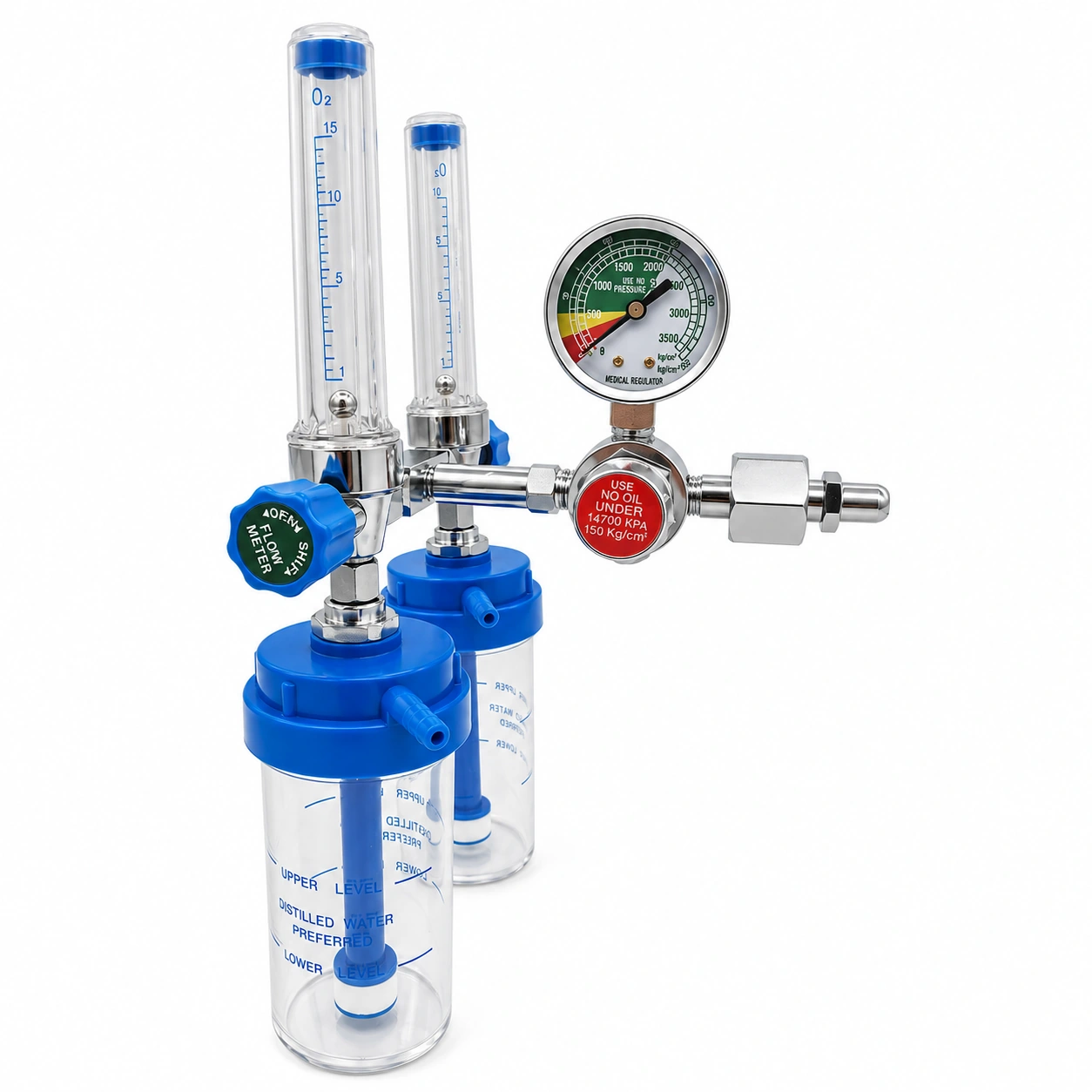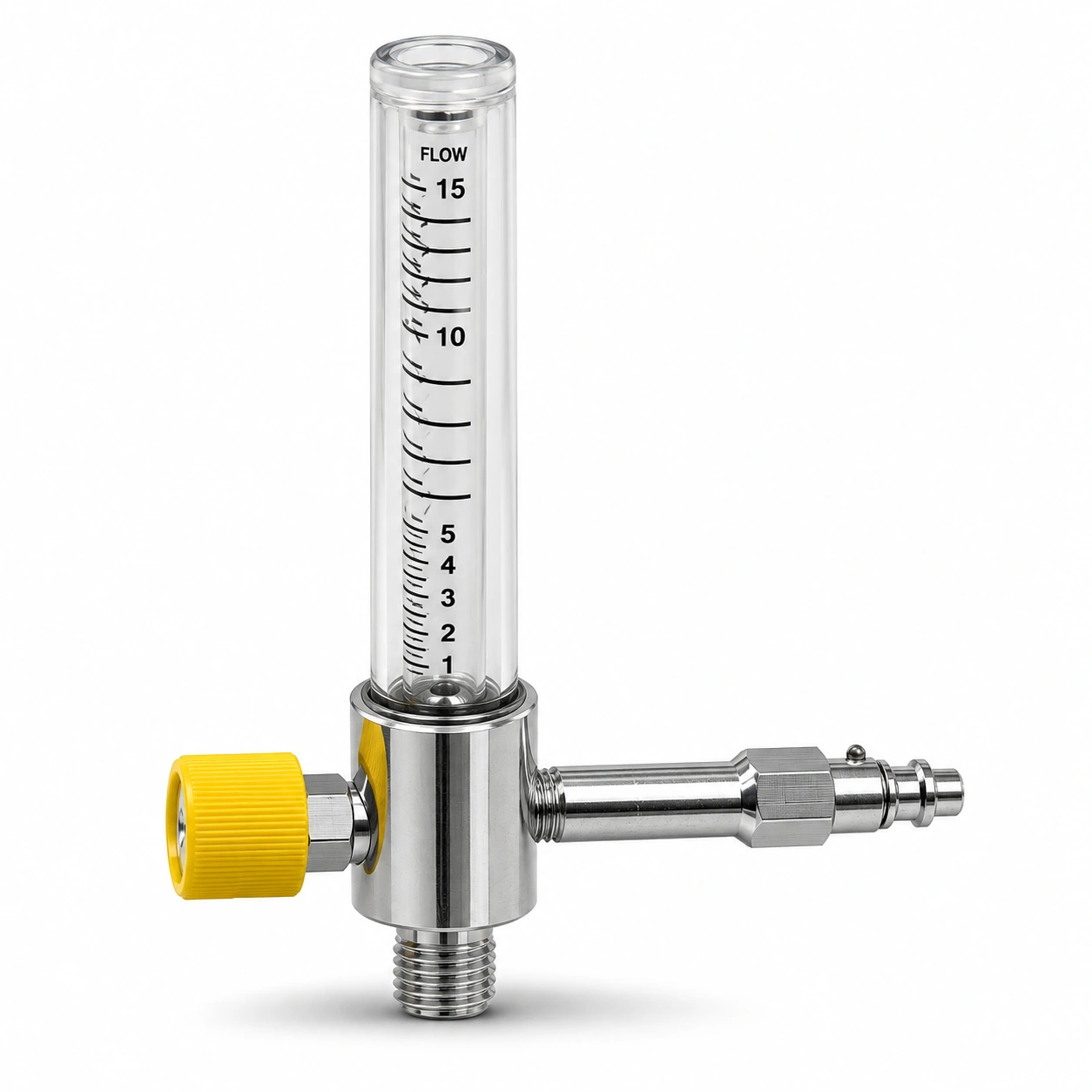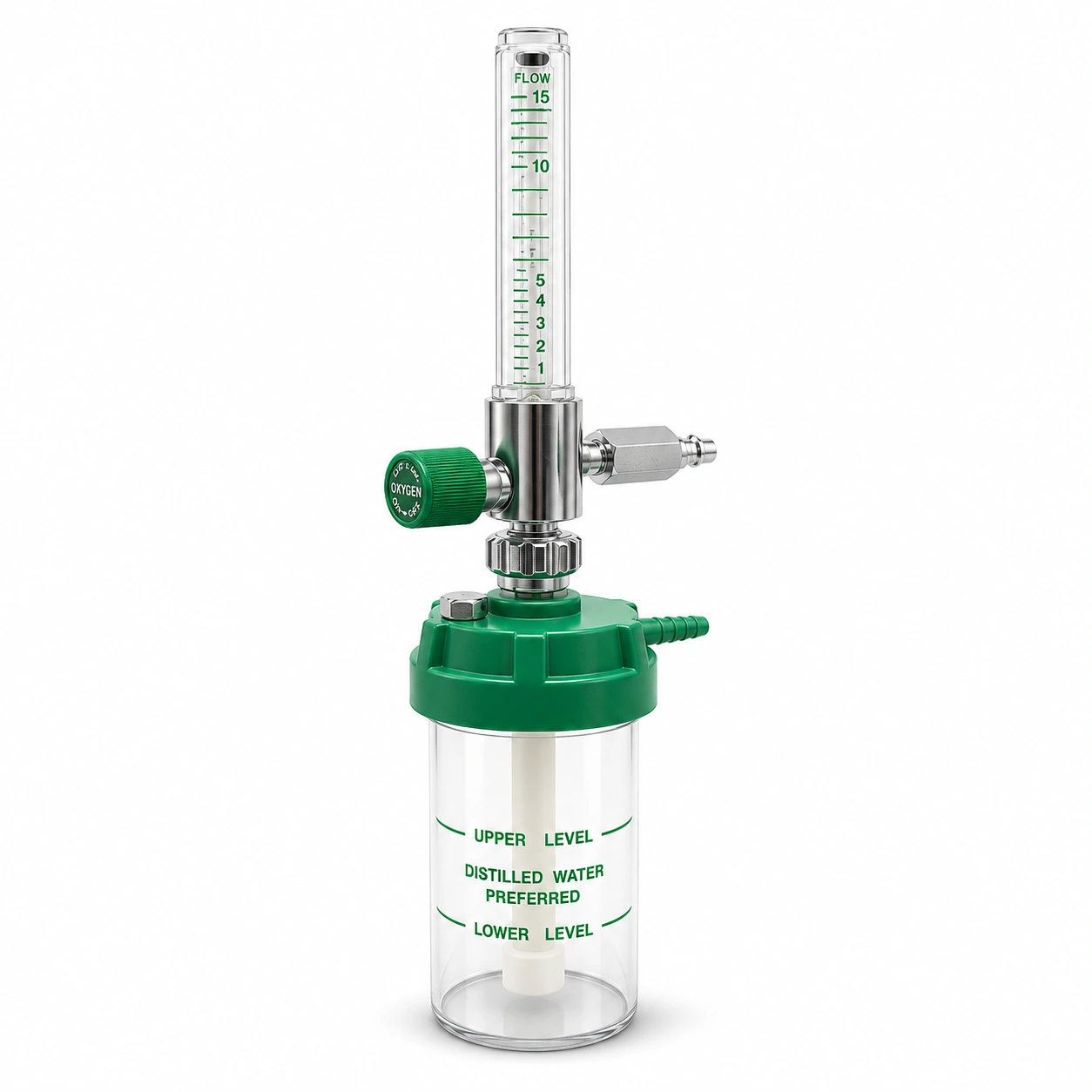


An upright transparent flowmeter can look straightforward to use: a float rises next to a scale marked in litres per minute. Yet inaccurate interpretation can arise from different float shapes, scale conventions, device tilt, gas calibration, backpressure and damaged components.
This guide is for equipment specification and quality management. It does not prescribe oxygen flow settings for patients; only the treating clinical professional and approved equipment instructions determine therapy use.
First identify the correct technology
ISO 15002:2023 covers flowmeters, flowgauge flow-control devices and fixed-orifice devices for specified medical-gas connections. A rotameter is a variable-area flow device, typically using a graduated tube and float. It is not synonymous with a cylinder pressure regulator or with an electronic mass-flow device.
The buyer should document whether the requested item connects to a wall terminal, a regulator pressure outlet or a VIPR pressure outlet, and whether it includes a regulator or humidifier.
Confirm float-specific reading instructions
Some graduated tubes are read at the top of the float; others use the centre of a ball or another manufacturer-defined reference point. No single rule can safely be imposed on all products.
The unit's official instructions and actual float geometry take precedence over photographs, general advice or the marking convention of a different brand. Training materials should show the exact device used by the facility.
Readability and accuracy procurement matrix
| Item to verify | Why it matters | Evidence |
|---|---|---|
| Gas and model identity | Gas and device suitability | Gas-specific label/datasheet |
| Flow range | Required clinical equipment range | Actual calibrated range |
| Scale units | Clear units and increments | Drawing/physical device |
| Float reference | Exact point from which to read | Manufacturer instructions |
| Orientation | Rated mounting/use position | Specified installation orientation |
| Calibration basis | Approved gas and reference conditions | Manufacturer performance record |
| Downstream loading | Pressure/backpressure conditions | Product performance data |
| Cleaning/damage | Clear tube, seals and mechanism condition | Maintenance acceptance |
A photograph with numbers alone does not establish accuracy or an approved clinical range.
Avoid assuming the same scale for every gas
Float devices depend on the physical properties and calibration basis of the specified gas. An oxygen-calibrated flowmeter should not be relabeled for medical air or another gas without supported device design and manufacturer authorization.
Temperature, pressure and downstream conditions can influence the relationship between float position and flow. Obtain accuracy declarations tied to the actual conditions and accepted use.
Illustrative user observation
A clinic notices two units showing different float heights when connected under superficially similar circumstances. One is slightly tilted and its manufacturer reads a ball at the centre, while the other has a different float reference.
The asset manager should identify models and consult their specific instructions, remove uncertain equipment from service under hospital policy if required, and seek qualified verification. A comparison made by eye is not a calibration.
Protect gas specificity across the chain
The upstream terminal or regulator connection must match the selected gas and connection family. Downstream tubing or humidification accessories need an approved connection to the correct outlet function.
Do not swap connectors between gas services or introduce improvised reducers to make a visually similar flowmeter fit. ISO 10524-4:2008 concerns certain low-pressure regulators; it is a different device scope from a bare flow-control item.
Make inspection and recalibration traceable
The facility should record model, installed location, serial/lot, flow range, calibration/reference documents, maintenance observations, tube clarity/damage and qualified acceptance. Follow manufacturer cleaning, inspection and functional verification intervals where applicable.
A stuck or damaged float requires appropriate manufacturer/service action, not self-repair instructions from public content.
Procurement recommendation
Compare usable range, readable graduation, actual intended gas, orientation conditions, connection geometry, cleaning instructions, spare compatibility and performance evidence. Evaluate purchase price only after verifying the correct device class.
BWC Medgas offers selected medical oxygen and air flowmeters. Submit model-specific usage and connection requirements; medical flow prescriptions and clinical use remain the hospital's responsibility.
Send your approved flowmeter schedule to BWC Medgas.
Frequently asked questions
Do all rotameters use the top edge of the ball as the reading point?
No. Follow the instructions for the exact float and manufacturer model.
Is a clear tube marked L/min sufficient evidence of medical oxygen suitability?
No. Gas-specificity, performance, materials and interface documentation are also needed.