An alarm system only delivers value if a designated person receives a meaningful warning and an authorized process determines what happens next. A perfectly functioning medical gas panel can still become ineffective when different teams each assume someone else owns the notification.
A hospital should develop an alarm ownership and escalation register that connects each approved condition with clinical users, estates personnel, engineering support and the facility's medical-gas operational authorities. The register is governance documentation, not a substitute for the hospital's emergency clinical procedures.
Begin with the actual staffed receiving locations
Obtain the approved alarm location schedule, department staffing map and medical-gas management policy. Confirm who is expected to receive area warnings during day and night shifts, and which operational roles monitor central source/plant conditions.
A receiving screen in an unstaffed room is not automatically useful. Equally, an email address belonging to one individual does not demonstrate an appropriate continuous operational response arrangement.
The 2026 HTM 02-01 Part B and Scottish SHTM 02-01 (2026) provide healthcare operational management context; the facility must determine roles within its own approved policies.
Separate notification from permission to intervene
A clinical staff member might recognize a warning and initiate a local escalation, but that does not grant authority to adjust gas equipment. The authorized estates and MGPS teams control diagnosis, operational work permits and technical interventions.
Similarly, a maintenance technician can identify an equipment fault without deciding whether patient-care areas may be used. The clinical and healthcare governing roles retain those responsibilities.
Use the term “acknowledged” separately from “resolved.” Silencing a sounder is not proof that the underlying condition has ended.
Role-assignment register
| Workflow stage | Required ownership decision | Example evidence |
|---|---|---|
| Monitoring | Which staffed role receives the indicated condition? | Coverage/location schedule |
| Initial acknowledgment | Who records seeing the notification? | Event/ticket time and panel ID |
| Escalation | Which authorized clinical and estates roles are informed? | Approved escalation matrix |
| Technical triage | Who investigates sensor, source and pipeline condition? | Competent staff work record |
| Operational decision | Who approves measures affecting clinical service? | Hospital medical-gas governance |
| Defect closure | What evidence demonstrates correction and required tests? | Corrective action/retest ID |
| Return to service | Which authority signs operational release? | Completed controlled record |
These are role descriptions; local hospital staffing and policy decide specific titles and event priorities.
Avoid “one phone number for every alarm”
Different monitored events can require different recipients. A source plant reserve warning may be handled differently from a clinical area emergency indication, even if both are sent to a central system.
The project should preserve the exact alarm categories and designated response roles under its adopted MGPS specification. Do not reassign clinical severity by visual color alone.
Shift handovers are an alarm design dependency
Staff changes can leave an outstanding alarm without clear ownership. The operator should define how unresolved medical-gas events are conveyed across shifts and where the accepted status is recorded.
A displayed “normal” signal after a transient alarm does not automatically close the underlying event investigation. Keep the historical observation and the decision made by authorized personnel.
Example: an alarm seen but not acted on
An area oxygen warning is acknowledged on a local panel, but the clinical team assumes maintenance has been paged. The estates team sees no work ticket because an automatic event-forwarding rule was never configured. The panel did its job, but the organizational process failed.
A governance review should verify notification routes, role ownership and event logging independently of the physical alarm hardware. Follow the hospital's established escalation/clinical continuity procedure, not a generalized online script.
Turn the matrix into a witness test
During project commissioning or operational drills planned by authorized parties, check that the accepted signal appears at required locations and that the designated notification process is documented. Do not propose live gas interruption as a drill method.
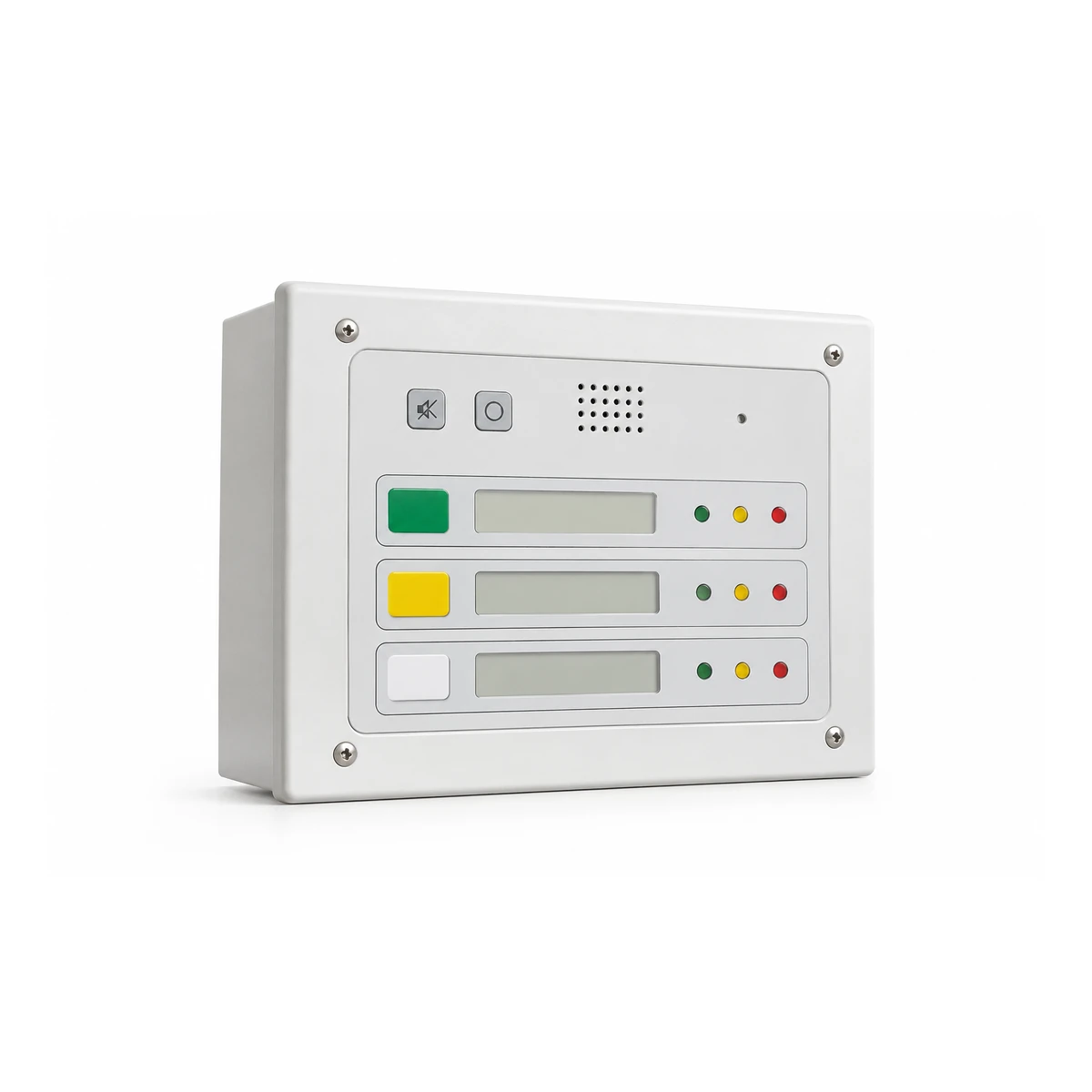
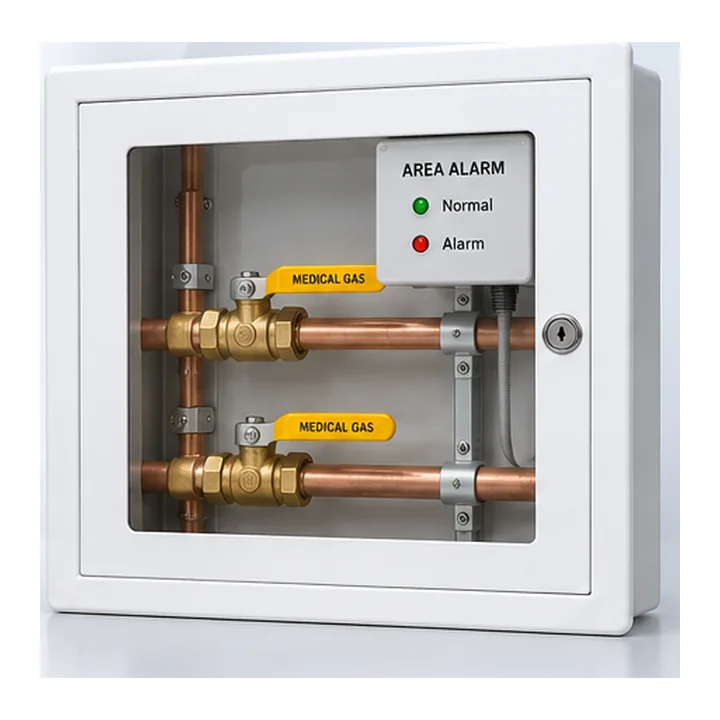
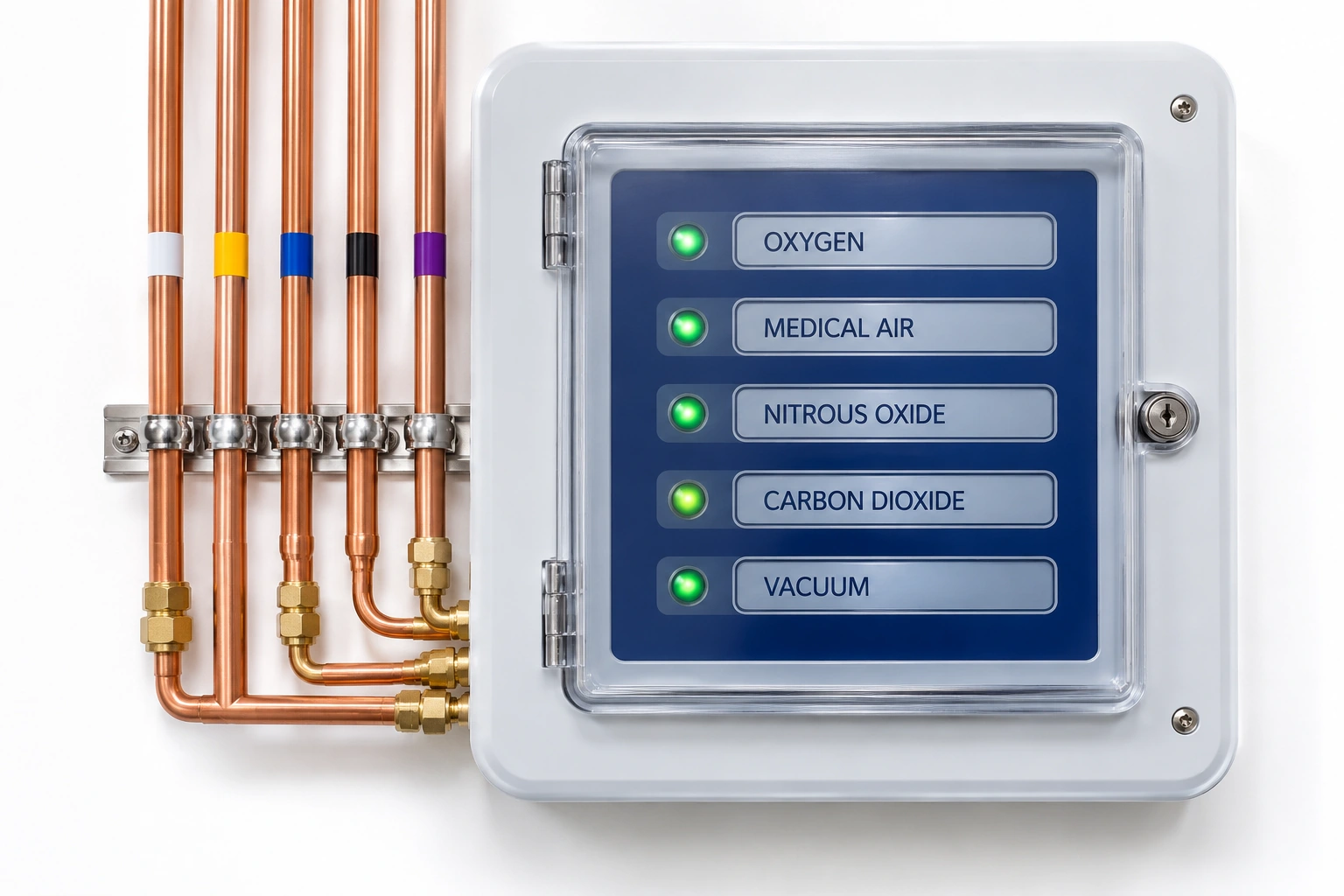
NHS Scotland's A14 and A15 distinguish alarm receiving panels; hospital operational management adds staff procedures and records around them.
Monitor outcomes without gaming metrics
Useful management indicators can include unassigned events, incomplete recipient mapping, overdue defect reviews and repeated recurrence after maintenance. Avoid turning alarm response into an uncontextualized leaderboard that encourages staff to acknowledge warnings prematurely.
The objective is a reliable, traceable route from warning to appropriate authorized action, not a faster click on the silence control.
BWC Medgas equipment role
BWC supplies selected medical gas monitoring and alarm products. An approved escalation map helps specify receiving locations, text/indication and interface needs while keeping clinical responsibility with the healthcare operator.
Send the approved receiving-point and signal list to BWC Medgas.
Frequently asked questions
Does acknowledging or silencing an alarm mean the condition is resolved?
No. Acknowledgment, investigation and formal closure must be distinguished.
Should an alarm automatically trigger a change to live gas supply?
No. Operational interventions require competent clinical and technical authorization.