
An alarm history page can contain thousands of records without answering the facility manager's most important questions: Which physical condition occurred? Who saw it? Was it corrected? Was the installed system reverified when required? Did the same signal recur after maintenance?
A structured medical-gas alarm event log preserves the chronology and meaning of each observation. It can support engineering investigation and service management, but it must not be confused with the hospital's clinical medical record or with authorization to operate the pipeline.
Distinguish event types
A sensor can indicate a defined abnormal condition; a panel may announce an alarm; an operator may acknowledge the notification; engineering may investigate; an authorized person may close a technical defect; and the healthcare operator may approve return to use where required.
These are separate events with different meanings. Avoid storing only one row that is overwritten from “active” to “resolved,” destroying the initial observation and intermediate decisions.
The hospital should establish which event history is necessary under its adopted MGPS and operations requirements, including applicable HTM 02-01 (2026) or local equivalent.
Recommended data dictionary
| Record field | Purpose |
|---|---|
| Event ID | Unique immutable history reference |
| Point ID and installed service | Connects record to actual monitored device/gas |
| Equipment/zone ID | Links source, ward or patient-area mapping |
| Event type and state | Abnormal condition, fault, acknowledgment or resolution |
| Original timestamp | Time of actual event as reported by the source |
| Received timestamp | Time logged at central system |
| Time basis and clock status | Prevents misleading chronology |
| Responsible user/role | Authorized acknowledgment or intervention owner |
| Technical work reference | Connects investigation, corrective action and retests |
| Outcome and closeout | Accepted decision and linked approved evidence |
Retention period and access controls are project/governance decisions. Do not invent a universal medical-gas alarm logging retention requirement from a general IT document.
Preserve the difference between an incident and a notification
An engineering condition can trigger several messages at local and remote panels. The record design should distinguish the physical originating event from its notifications. Otherwise dashboards may count five displays of one event as five equipment failures.
Conversely, different sensor failures can present the same generic text. A unique point identifier allows investigators to determine whether they are related.
The cause-and-effect matrix should be the maintained reference for log interpretation.
Time synchronization is not cosmetic
A source plant controller may record a timestamp in one time basis while a central dashboard uses another. Power loss can reset the clock of an offline controller. The records should preserve original time fields and any known synchronization limitations so chronological analysis remains meaningful.
Do not silently shift historic timestamps after a software update without an audit trail. Changes to clock source or timezone should be handled as controlled configuration updates.
Avoid misleading performance KPIs
A dashboard stating “average acknowledgment in 15 seconds” may hide whether the correct clinical team received the event or whether the engineering issue took days to resolve. Compare separate measures: notification routing, assigned ownership, unresolved faults, repeat occurrence and quality of closure evidence.
Alarm volume may increase due to planned testing; tag approved test events separately from genuine operating incidents so trends are not distorted.
A simple event sequence illustration
An approved sensor condition begins at 09:00. The area panel annunciates at 09:00, the responsible role acknowledges at 09:02, a maintenance ticket is raised at 09:06, corrective work is reviewed later, and the authorized acceptance is recorded with a distinct closeout ID.
The event remained a historical record even after the panel returned to normal. It is not legitimate to conclude “resolved at 09:02” merely from acknowledgment.
This example shows record chronology, not a recommended response target.
Use logs for defect investigations
With an indexed history, the facility can identify repeated alarms after recent repairs, recurring communication losses for one site or events associated with construction changes. Analysts should check the physical evidence and approved technical records rather than infer equipment failure from event counts alone.
[NIST SP 800-82 Rev. 3](https://csrc.nist.gov/pubs/sp/800/82/r3/final) provides an OT-oriented perspective on log monitoring and systems that observe physical processes. It does not replace MGPS acceptance standards.
Protect the records
Document who can view, annotate, export or delete alarm logs. Preserve original events and create separate correction notes rather than rewriting history without reason. Apply the hospital's information governance and cybersecurity controls, particularly where logs become accessible across IT networks.
Do not put personally identifying patient information into engineering alarm logs unless an approved workflow genuinely requires it.
BWC Medgas equipment interface
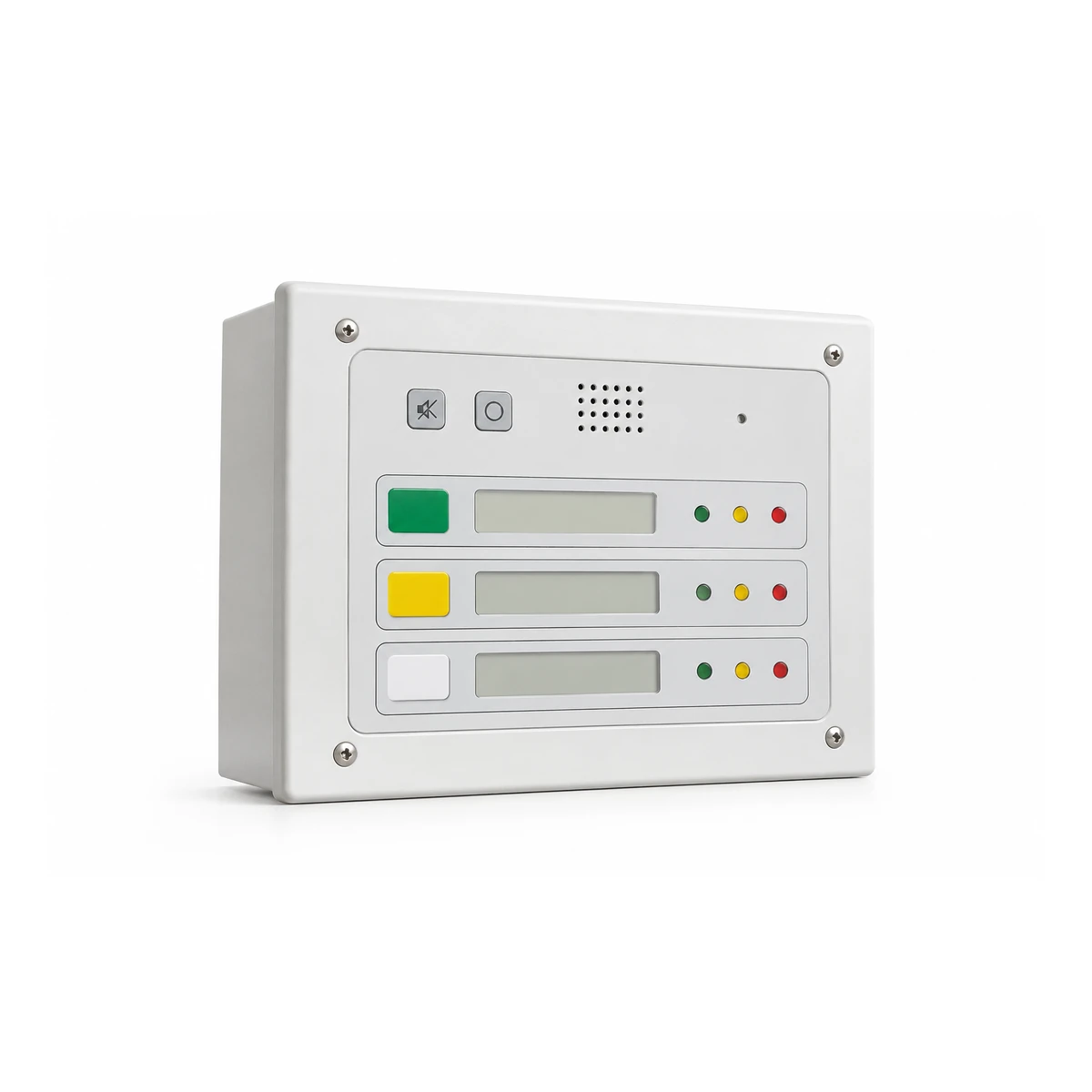
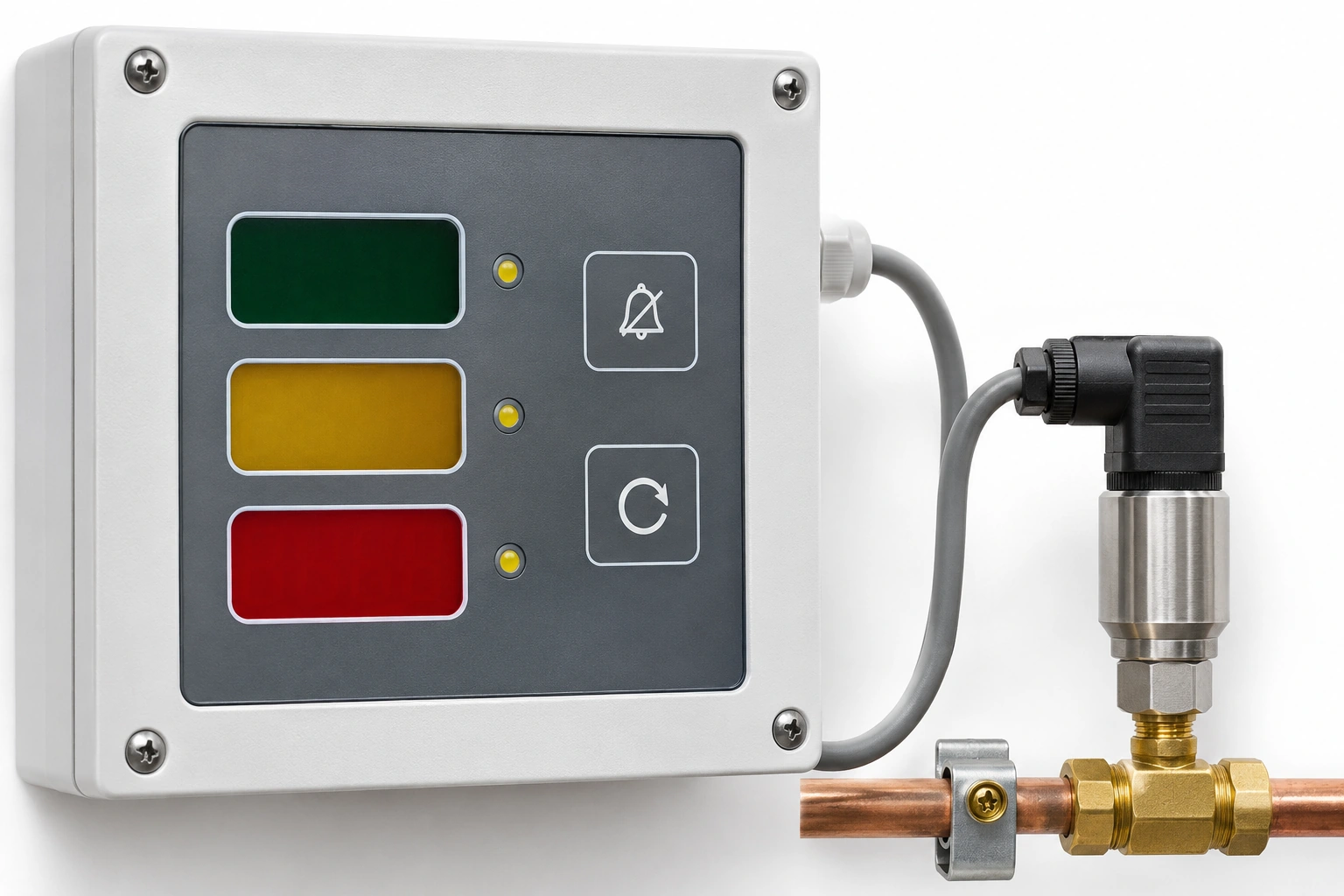
When selecting medical gas alarm panels, ask whether the exact model exposes event history, timestamps, exported records and fault status needed by the hospital. BWC can clarify the quoted component scope; the facility owns the data-governance process.
Discuss the approved event-recording requirements with BWC Medgas.
Frequently asked questions
Does alarm acknowledgment mean the medical-gas fault has been repaired?
No. These must be distinct records.
Is there one universally required number of years for hospital alarm logs?
Not established here; follow the controlling rules and hospital retention policy.
Primary technical references
- ISO 7396-1:2016 — Medical-gas alarm scope
- NHS England — HTM 02-01 (2026), operational management
- NHS Scotland — SHTM 02-01 (2026)
- [NIST SP 800-82 Rev. 3 — OT logging and monitoring context](https://csrc.nist.gov/pubs/sp/800/82/r3/final)