Procurement teams often treat a medical-gas component substitution as a commercial decision: “same size, same material, lower price.” In a critical healthcare system, a replacement may also alter gas-specific connections, cleanability, maintainability, response to failure and the evidence required to release the installation.
ISO 14971:2019 describes risk management for medical devices; its published companion guidance ISO/TR 24971:2020 explains practical application. A hospital should not claim every loose MGPS part is automatically a medical device under every law. Nevertheless, the risk-management discipline is valuable for change review across medical-gas procurement and integration.
A six-column substitution decision
| Field | Questions to answer before approval |
|---|---|
| Original function | What clinical/system service and interface does the approved component provide? |
| Proposed change | Which model, dimension, seal, material, software or connector changes? |
| Hazard | Could there be wrong-gas connection, leakage, oxygen-related ignition, flow loss or alarm failure? |
| Controls | What design rule, supplier evidence or physical protection reduces each risk? |
| Verification | What inspection, type test or site retest proves controls are effective? |
| Decision | Who has authority to accept, reject or require redesign and what is recorded? |
This matrix is not a substitute for a manufacturer’s full risk-management file where legally required. It is a project control that helps avoid undocumented decisions.
Three substitution examples
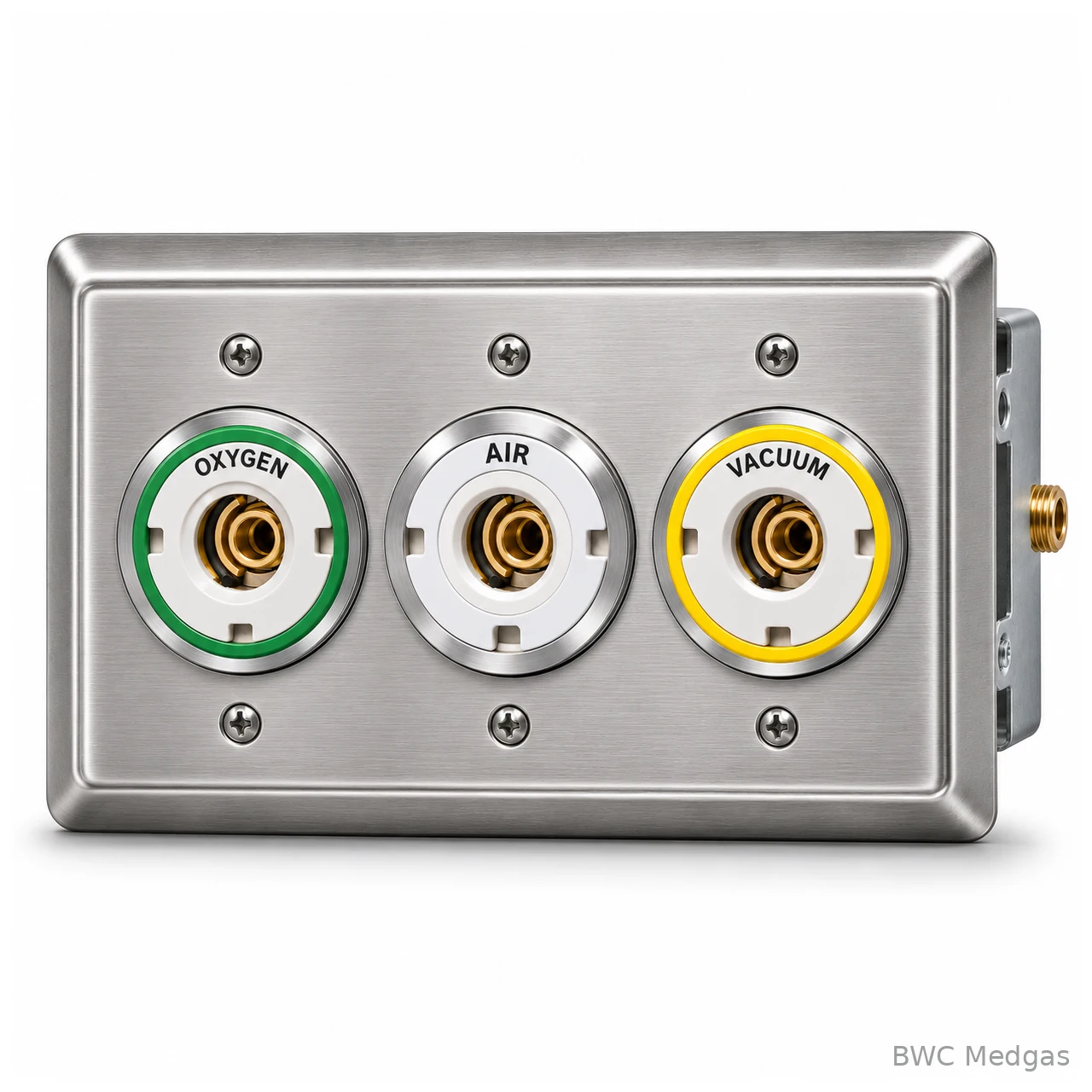
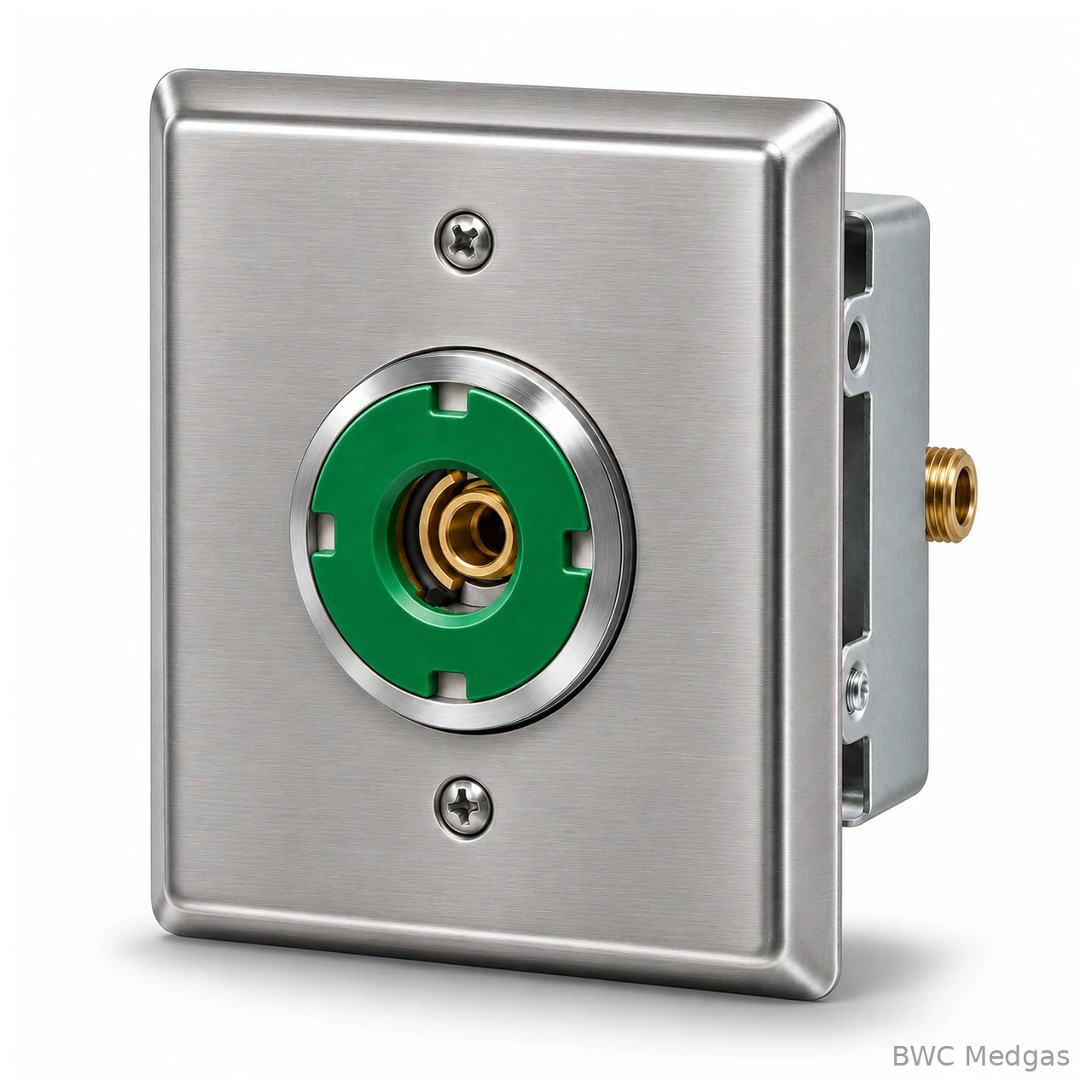
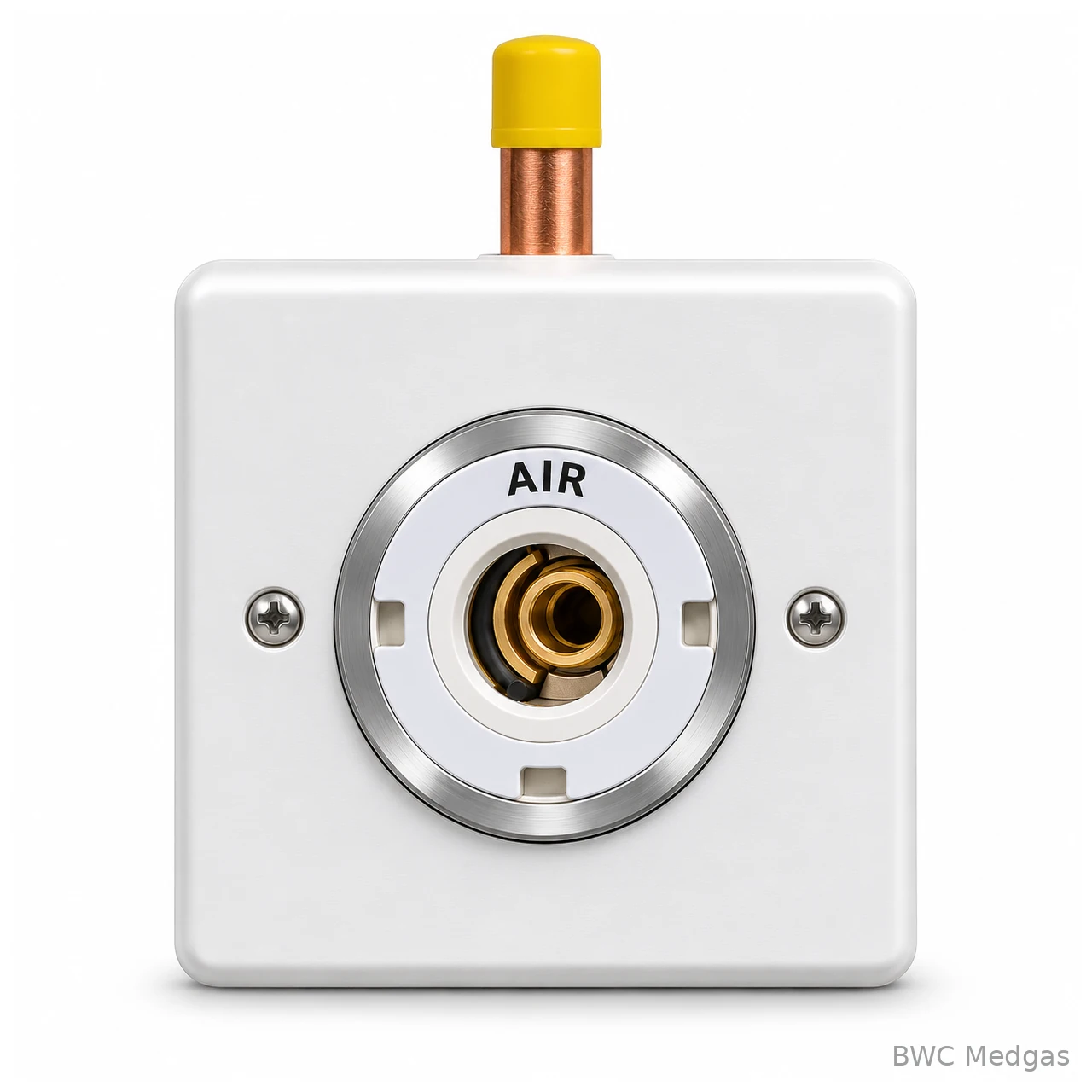
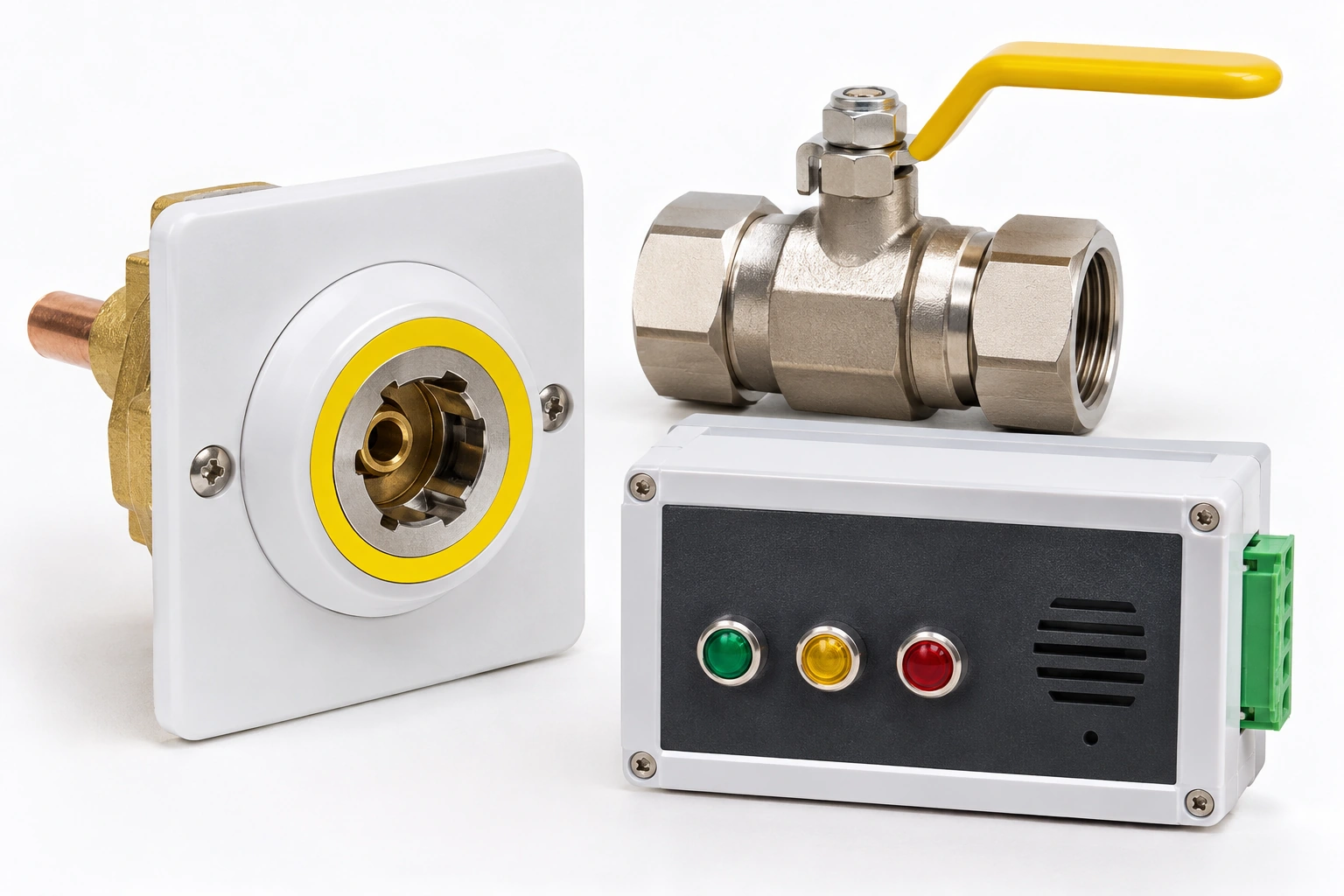
Terminal front mechanism. A replacement outlet fits the wall-box dimensions but uses a different probe index. Hazard: connecting the wrong service or losing compatibility with existing clinical accessories. Control: approved gas-specific interface drawing and competent functional/identity verification.
Manifold line valve. A substitute valve has the same nominal port size but different operational pressure, seal construction or manual operating arrangement. Hazard: inability to isolate a known zone reliably. Control: model-specific technical comparison, oxygen-service suitability where applicable and an appropriate witnessed acceptance step.
Alarm module. A new module displays the same gases but changes inputs or fault reporting logic. Hazard: a critical condition is not transmitted to the expected receiver. Control: review the cause/effect matrix and repeat relevant end-to-end alarm tests after installation.
Manage residual risk and accountability
Rate likelihood and severity using the project's approved method. Identify whether risks are adequately controlled by design, by verification or only by administrative instructions. Keep objective evidence for the claim. The organisation with design and regulatory responsibility must decide whether residual risks are acceptable.
ISO 7396-1 supplies an installed pipeline-system context, and [EU MDR](https://eur-lex.europa.eu/eli/reg/2017/745/oj/eng) may impose further obligations on products within its legal scope. Do not equate a site change approval with a manufacturer's declaration of conformity.
A defensible change-control record
Record the original and replacement part numbers, date, drawing revision, hospital location, reason for change, hazard analysis, supplier evidence, approved retest and closure signatures. A procurement team can retain both rejected and accepted alternatives so a later maintenance engineer knows why a visually similar part was not chosen.
BWC Medgas can help review medical-gas valves, outlets and regulators against a controlled specification. The hospital and qualified designers remain responsible for system modifications and their acceptance.
Share your controlled component comparison schedule with BWC Medgas.