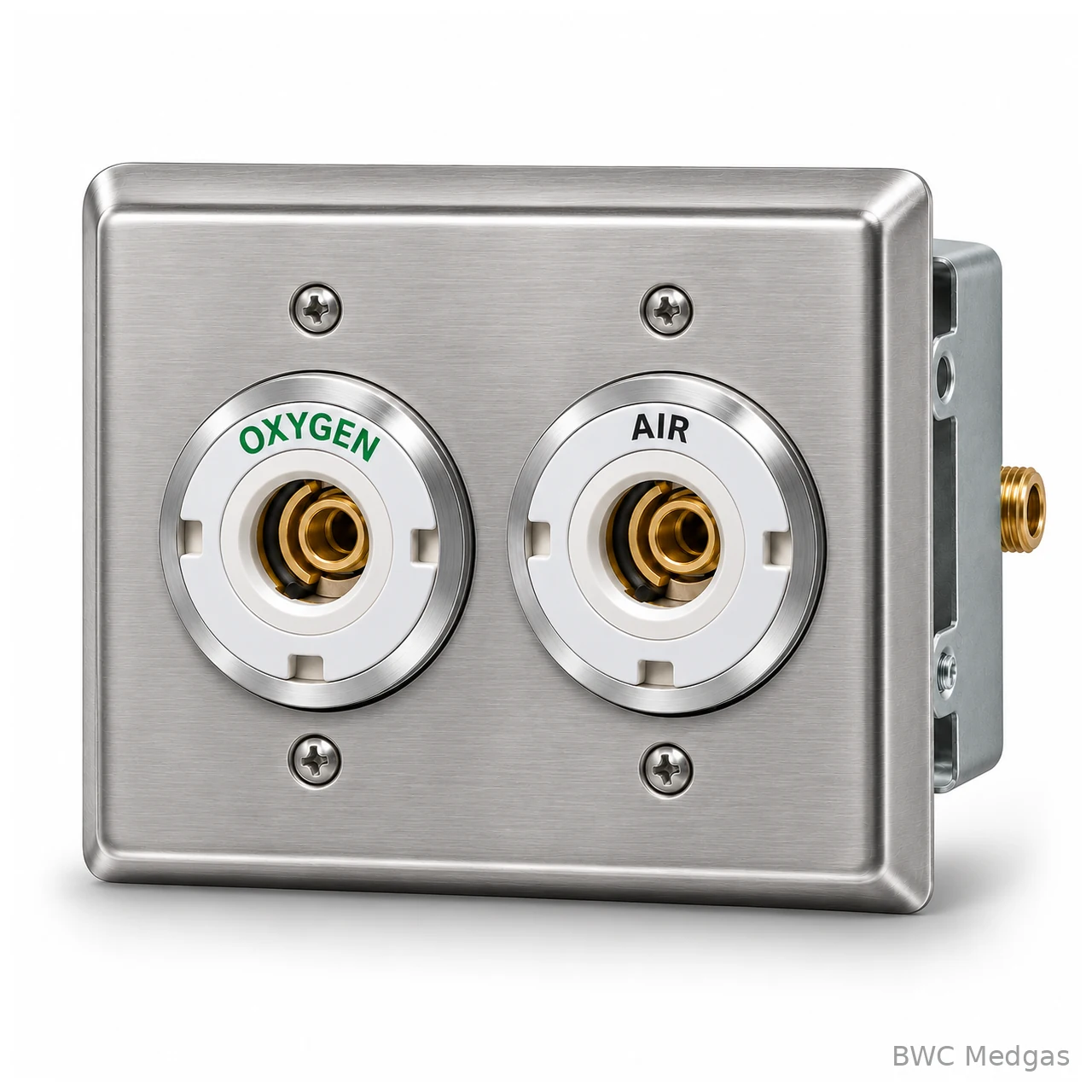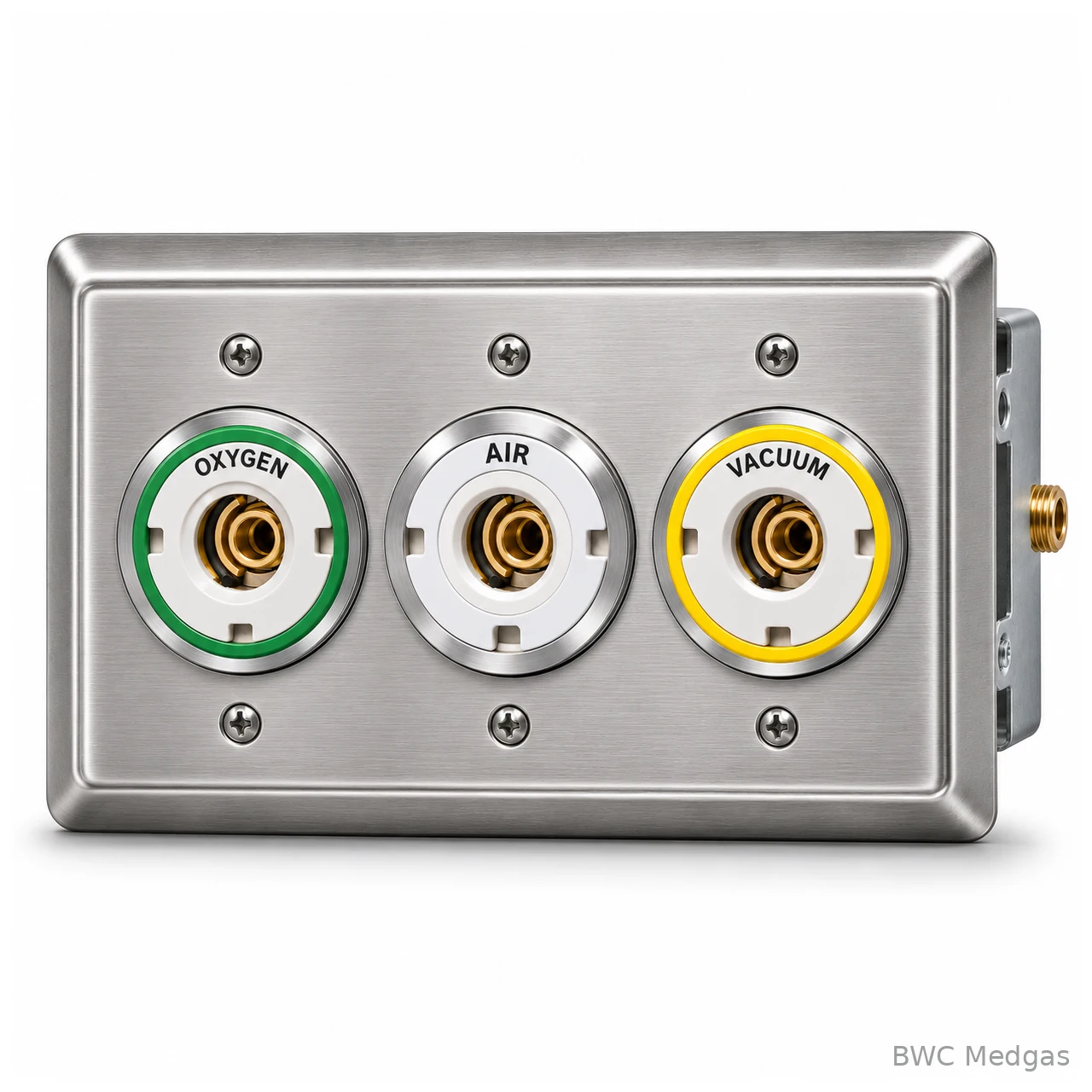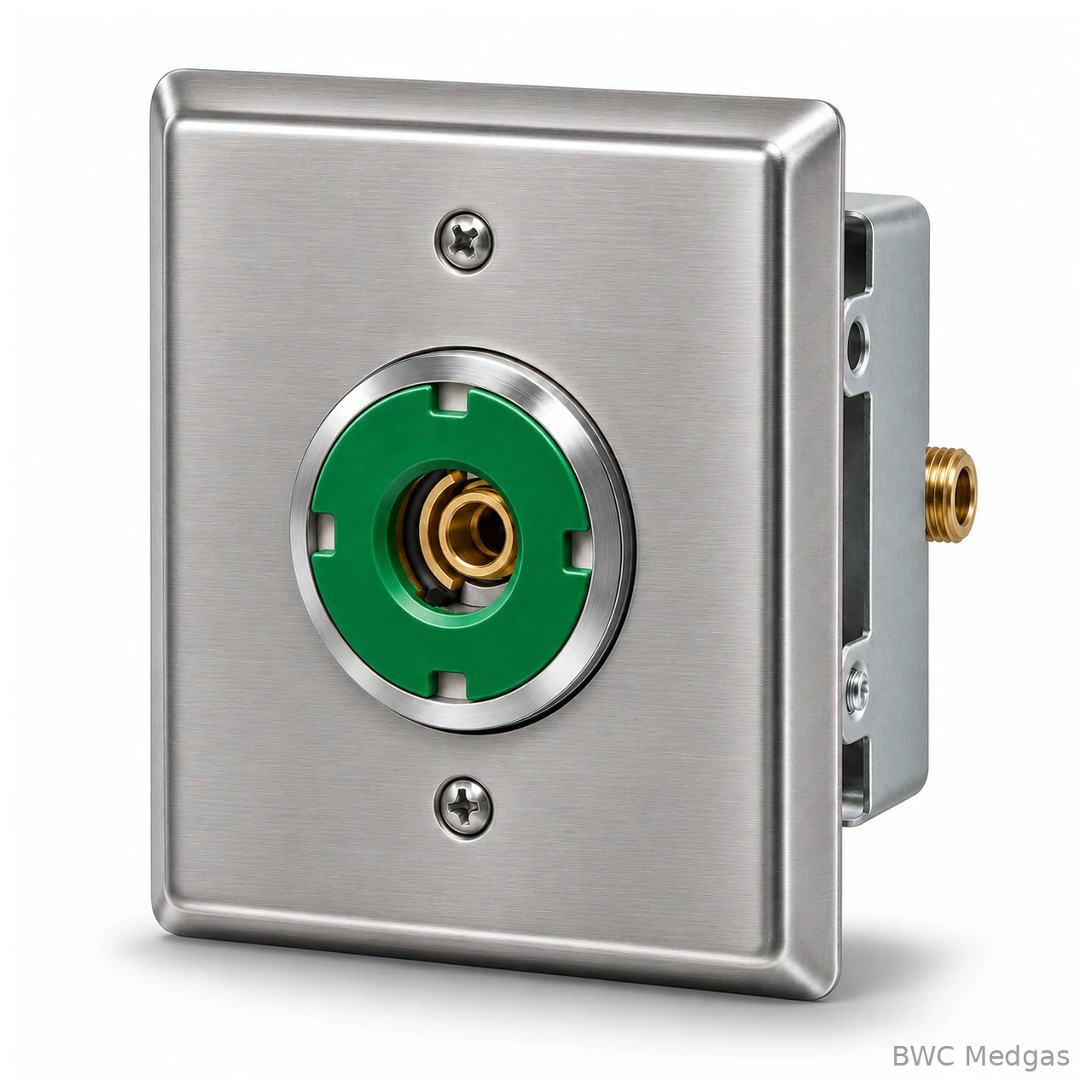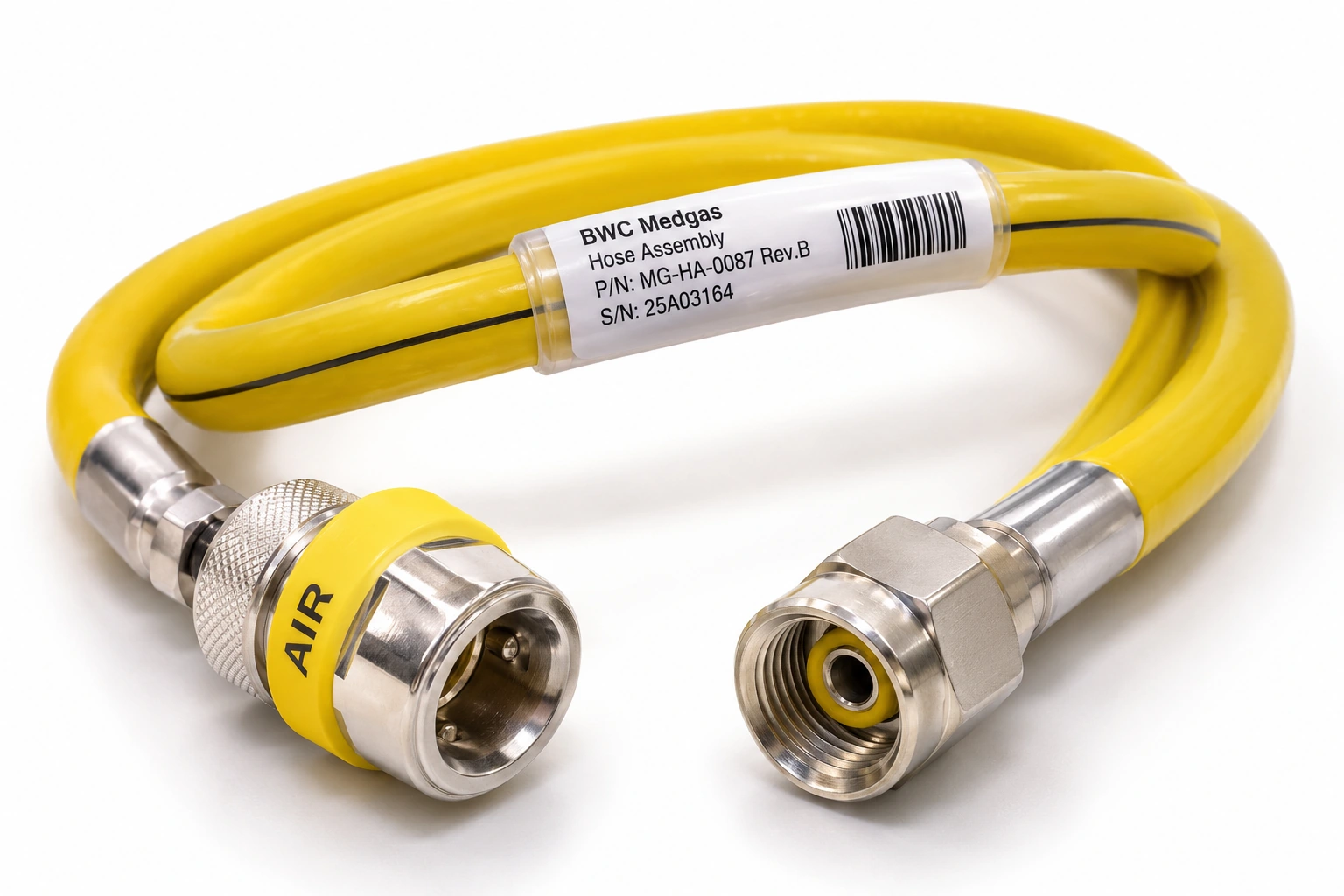
A flexible medical gas hose assembly spans the gap between fixed hospital outlets and clinical equipment. An incorrect end fitting can make an otherwise appropriate hose unusable—or create pressure and service-identity risks when staff improvise adaptors.
ISO 5359:2014, together with its published 2017 amendment, remains the relevant published edition as of 15 November 2026. The next edition is [at draft enquiry stage](https://committee.iso.org/standard/93005.html), not a published replacement. This matters when a quotation casually advertises “ISO 5359:2026”.
Four details that cannot be omitted
- Gas or vacuum service: identify the exact application and any applicable medical equipment interface.
- Both connectors: specify each endpoint's approved gas-specific standard and configuration, including sex/orientation where relevant.
- Assembly envelope: nominal length, routing, bending and expected working conditions; do not invent a single pressure rating for every service.
- Evidence and replacement: hose manufacturer, part code/revision, assembly test information, marking and compatible replacement record.
ISO's scope covers low-pressure hose assemblies for a range of medical gases and vacuum. Its published abstract describes pressure and vacuum ranges, but the correct use and complete conformity details must be taken from the applicable standard and the device manufacturer's instructions, not extrapolated from a marketing summary.
Hose acceptance table
| Purchase field | Procurement question |
|---|---|
| Service | Does the designated gas/vacuum exactly match both ends? |
| Upstream fitting | Which hospital terminal interface and drawing? |
| Downstream fitting | Which medical-equipment inlet and connection standard? |
| Length/routing | Can the hose be installed without unacceptable strain? |
| Assembly | Is the delivered unit a tested assembly, not loose mixed components? |
| Labels | Does marking show identification and traceability as required? |
| Spare policy | Are approved replacements recorded at the bedside/asset level? |
A connector designation such as NIST or DISS should not be assumed to prove full system interchangeability. The country, gas service and mating component specification still matter. ISO 9170-1:2017 addresses relevant terminal units and gas-specific probes but does not establish every national connector dimension.
Case: imported equipment meets a local wall outlet
A hospital imports a ventilator using a hose assembly fitted for a different national medical-air connection than its existing wall terminals. Corrective action is not to fabricate a generic adaptor without design verification. Obtain the exact manufacturer-approved interface, confirm the medical-air service and intended routing, and have the hospital's responsible engineer approve the correct assembly.
For projects governed by ISO 7396-1, the pipeline remains a separately verified system. A certified hose does not prove that a wall point supplies the correct gas, pressure or purity.
What to send in the RFQ
Attach pictures only as supplementary identification. The mandatory schedule needs gas, fitting design at both ends, full drawing revision, overall length, working envelope, marking, required documentation and quantity. Classify each item by bedside location or device model so facilities teams can maintain matching spares.
BWC Medgas can help discuss compatible outlet interfaces and associated installation accessories using an approved schedule. It is the specified and verified assembly—not a similar-looking hose—that should be ordered.