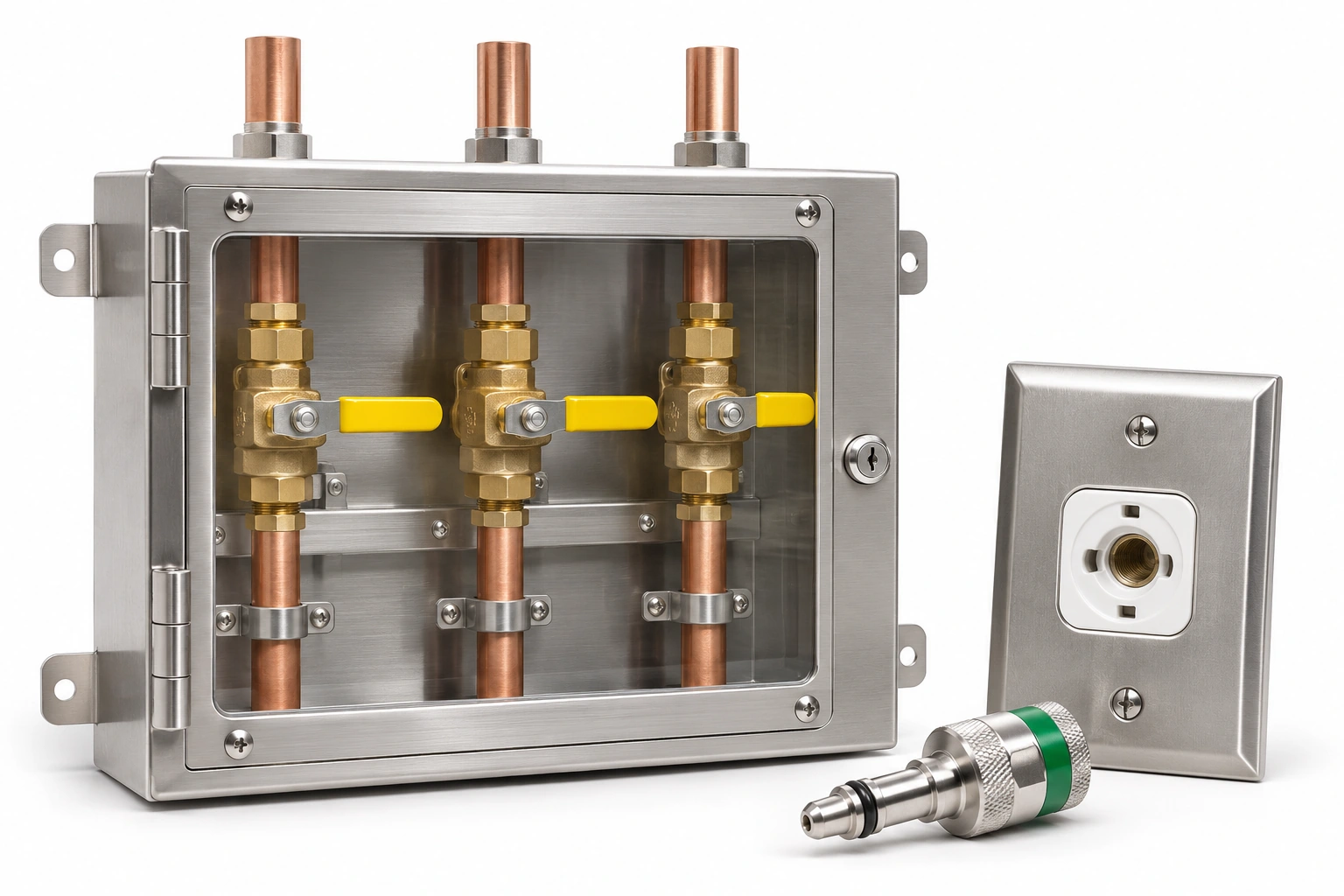
US medical gas purchasing teams often receive equipment schedules that combine terminal outlets, zone isolation valves, area alarms and accessory parts. These items are connected, but they are not interchangeable. For an accurate quotation, each product line needs its own service, configuration and interface details.
NFPA 99 and the edition used on a project
The National Fire Protection Association lists NFPA 99:2027 as the current edition of its Health Care Facilities Code. NFPA 99 addresses medical gas and vacuum systems as part of healthcare facility safety. However, the edition used for a particular job depends on the documents adopted by the project and the authority having jurisdiction. A supplier should work from that project edition, not assume that publication of a new code means immediate adoption in every location.
For a US component RFQ, start with the project's medical gas and vacuum schedule and its approved design drawings. The code reference does not replace the need to identify each physical connector.
Medical gas outlets: specify the connector, not just 'US type'
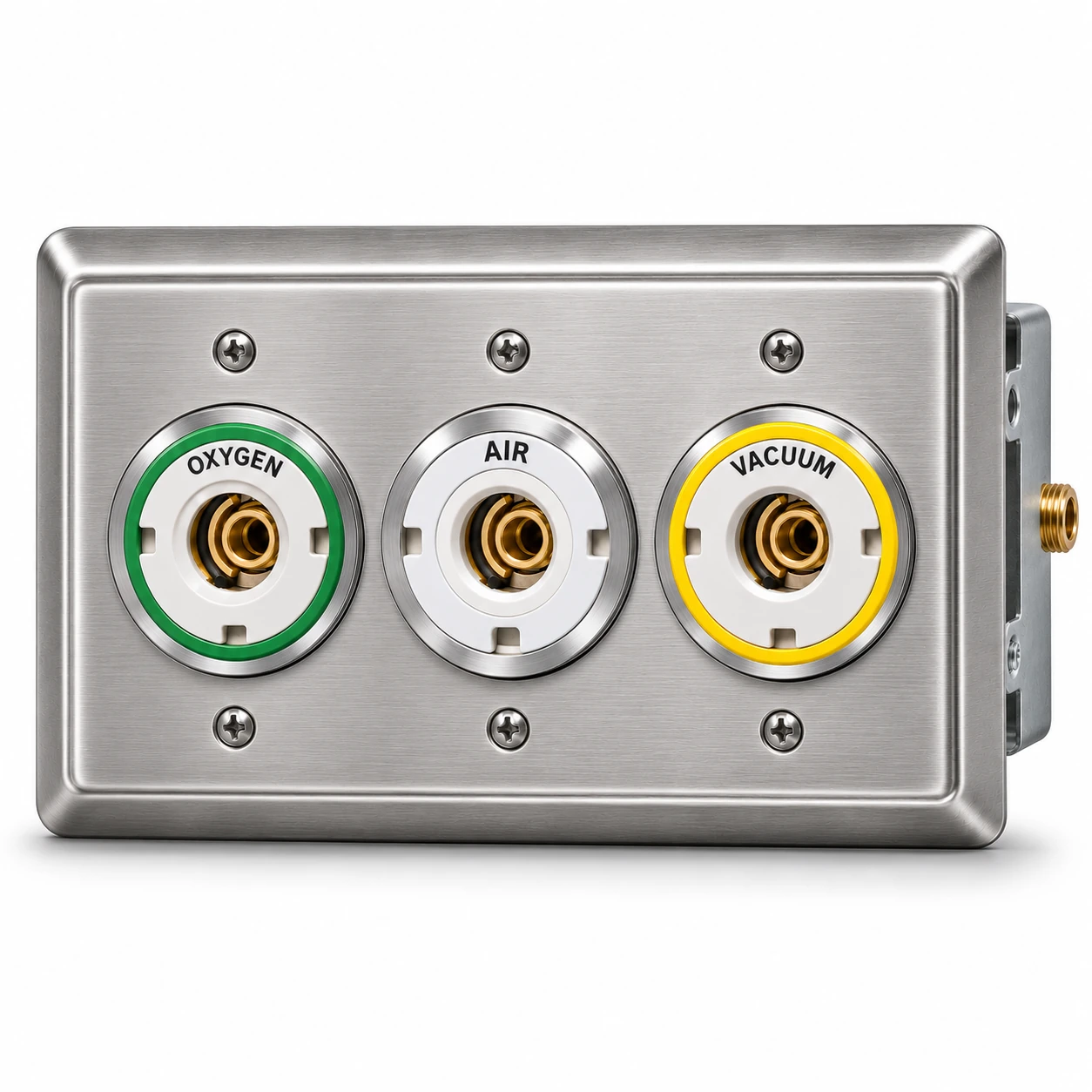
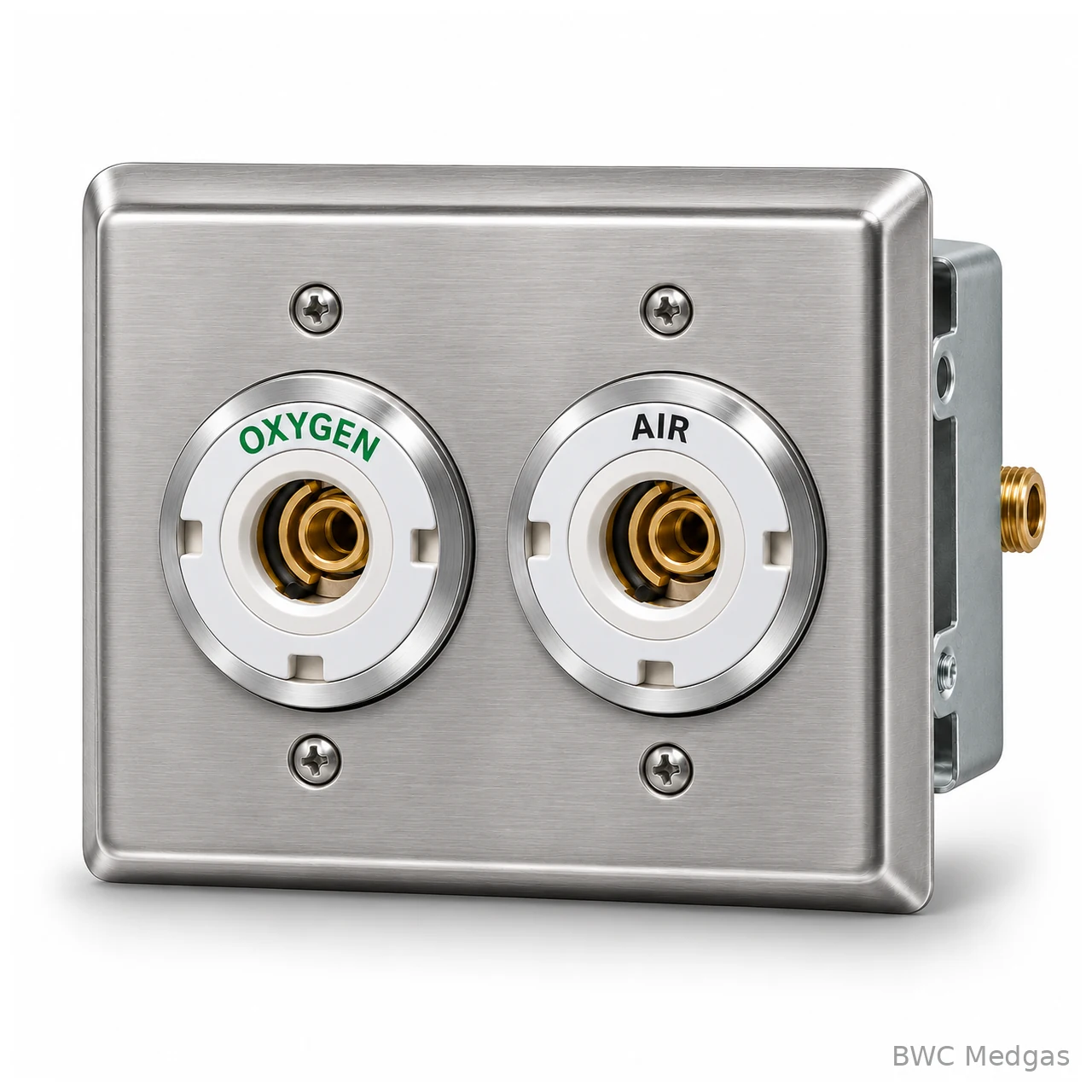
US terminal-unit specifications may identify DISS, Ohmeda-type, Chemetron-type or another interface family. These are not one universal connection. State the medical gas or vacuum service, the exact mating connector family, the mounting arrangement and whether the project is replacing an installed outlet.
BWC Medgas lists an American-style dual-gas wall outlet, a three-gas wall terminal unit and other medical gas outlets. Matching the interface to the approved project schedule comes before model selection.
Zone valve boxes and area alarms
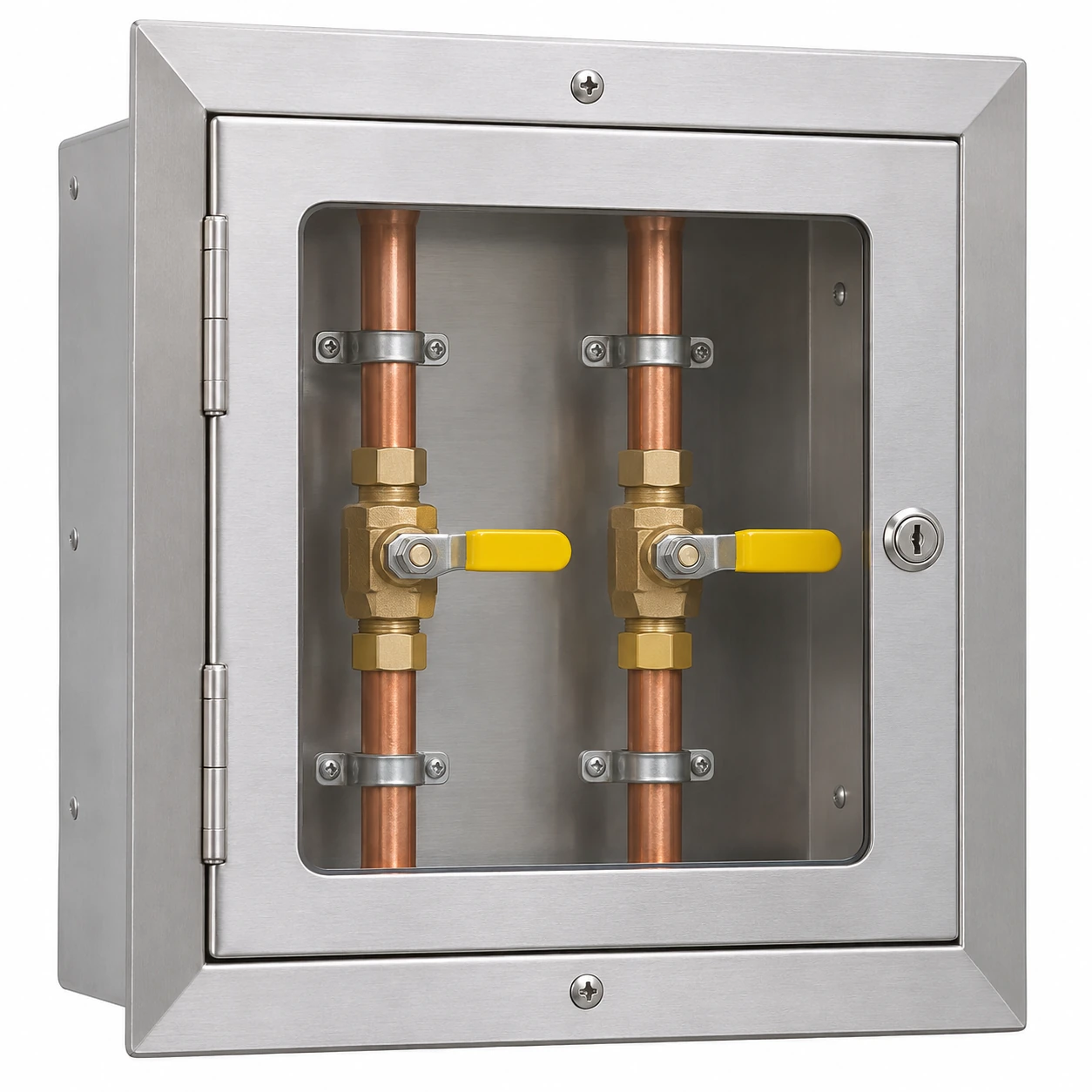
A zone valve box provides access to selected gas-service isolation valves. An area alarm panel monitors designated signals. A quotation should distinguish an enclosure with valves from an assembly that also includes sensors or other monitoring hardware.
For valve boxes, identify the number of services, gas labels, pipe connection dimensions and wall access arrangement. For alarms, identify monitored services, sensing interfaces, electrical supply and integration requirements.
Suggested US RFQ fields
- Facility type, location and project code edition.
- Drawing number and equipment item reference.
- Gas service (oxygen, medical air, vacuum or other specified service).
- Outlet connector family, required compatible probe and mounting method.
- Zone valve count, service arrangement and copper pipe connection sizes.
- Alarm inputs, panel location and supply requirements.
- Quantity, delivery terms and the required document package.
Replacement versus new installation
Replacement projects need one extra step: record the installed mating devices and the physical first-fix dimensions. A terminal with similar gas labeling can still have a different probe interface or rear mounting arrangement. For new construction, a consistent system-wide specification is usually more useful than buying outlet models one room at a time.
Frequently asked questions
Does NFPA 99 define a single outlet connector for all US hospitals?
The project should state the selected interface and the applicable code requirements. 'US-style outlet' by itself does not define all connection and mounting details.
Can a valve box quotation include alarm equipment?
It can if explicitly included in the equipment scope. Ask for valve assemblies and alarm hardware to be listed separately so there is no ambiguity.
What is the best first document to send a supplier?
A marked-up outlet and valve schedule with the approved drawings, service list and connector details gives the most reliable starting point.
Related BWC Medgas resources
See the outlet compatibility guide, zone valve selection guide and contact form.