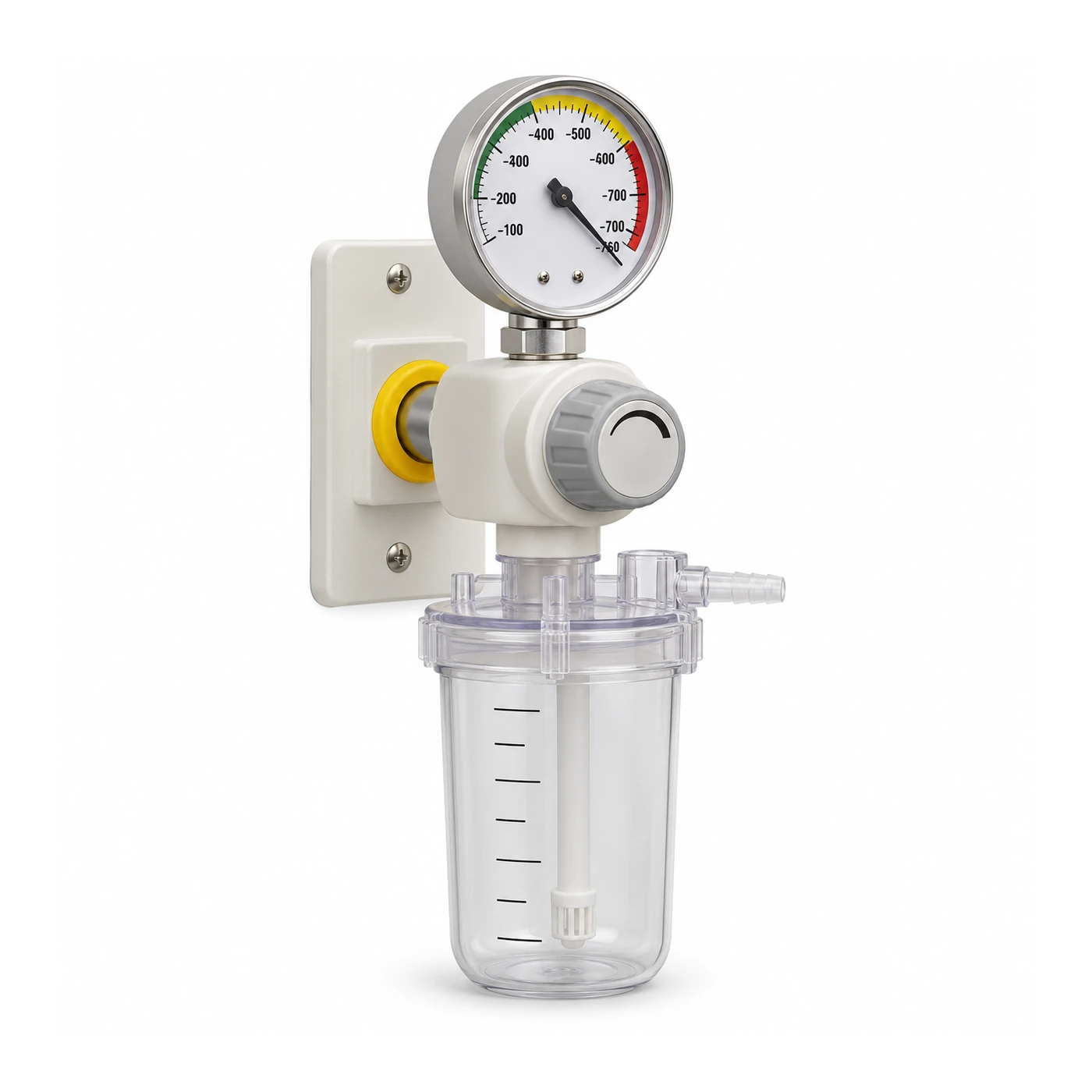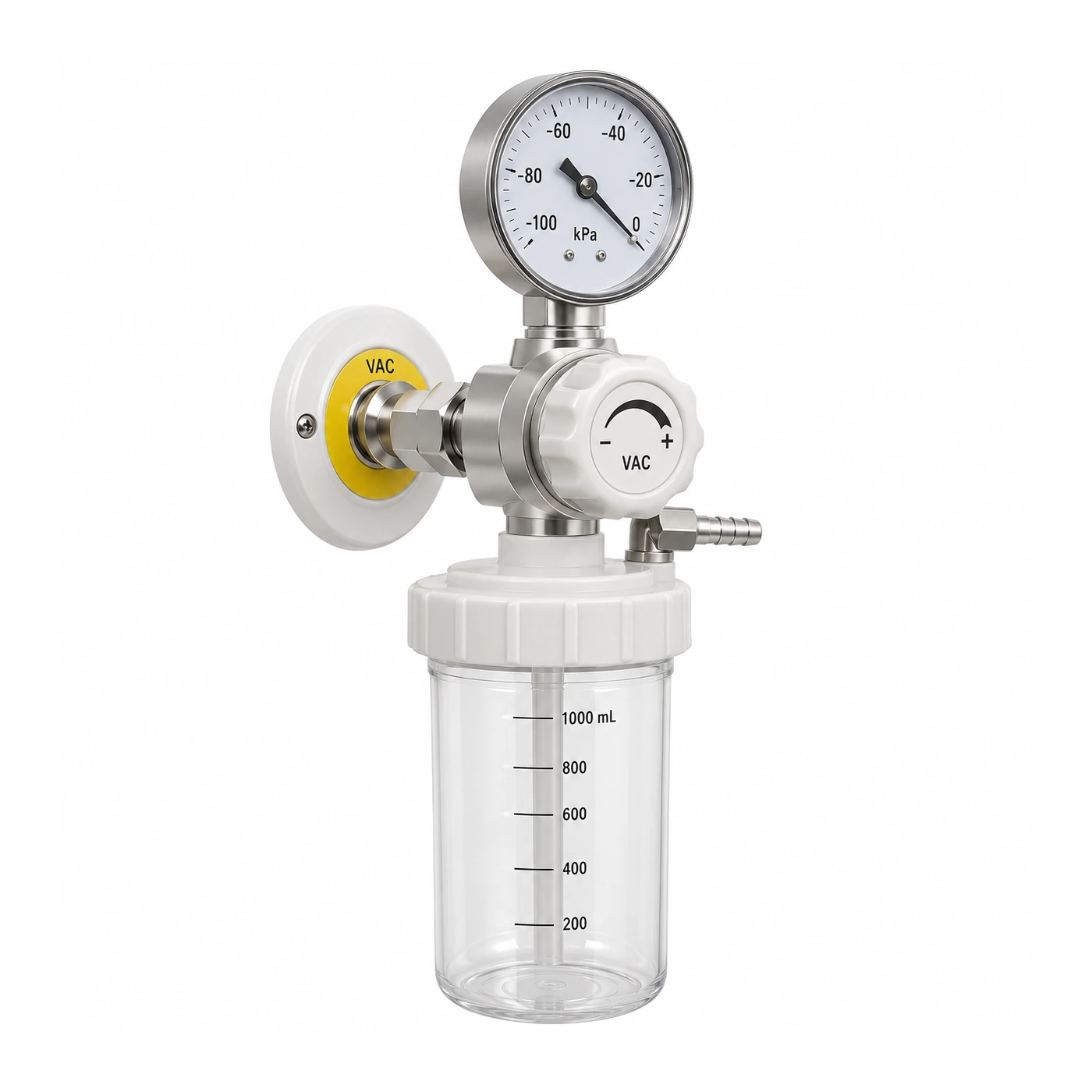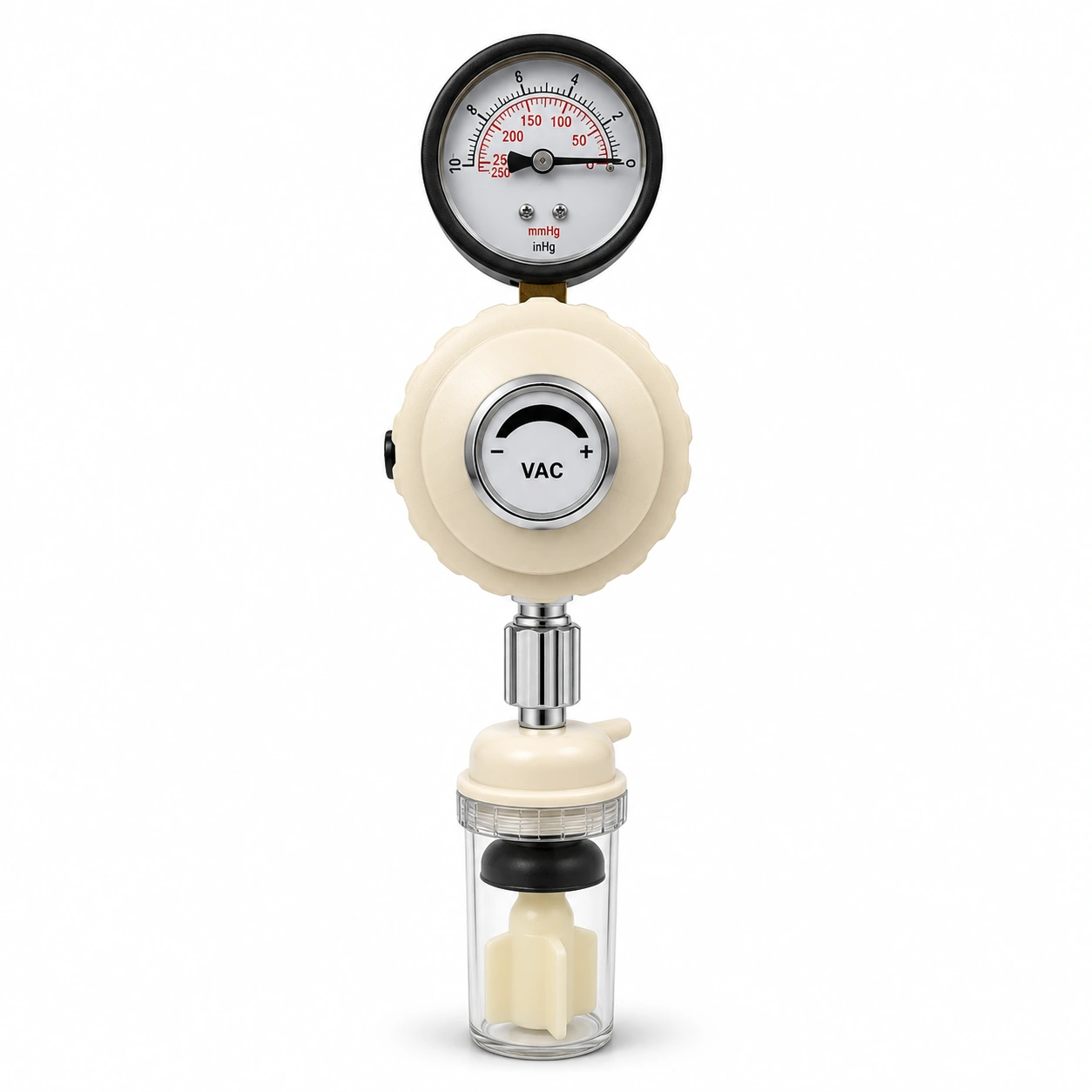
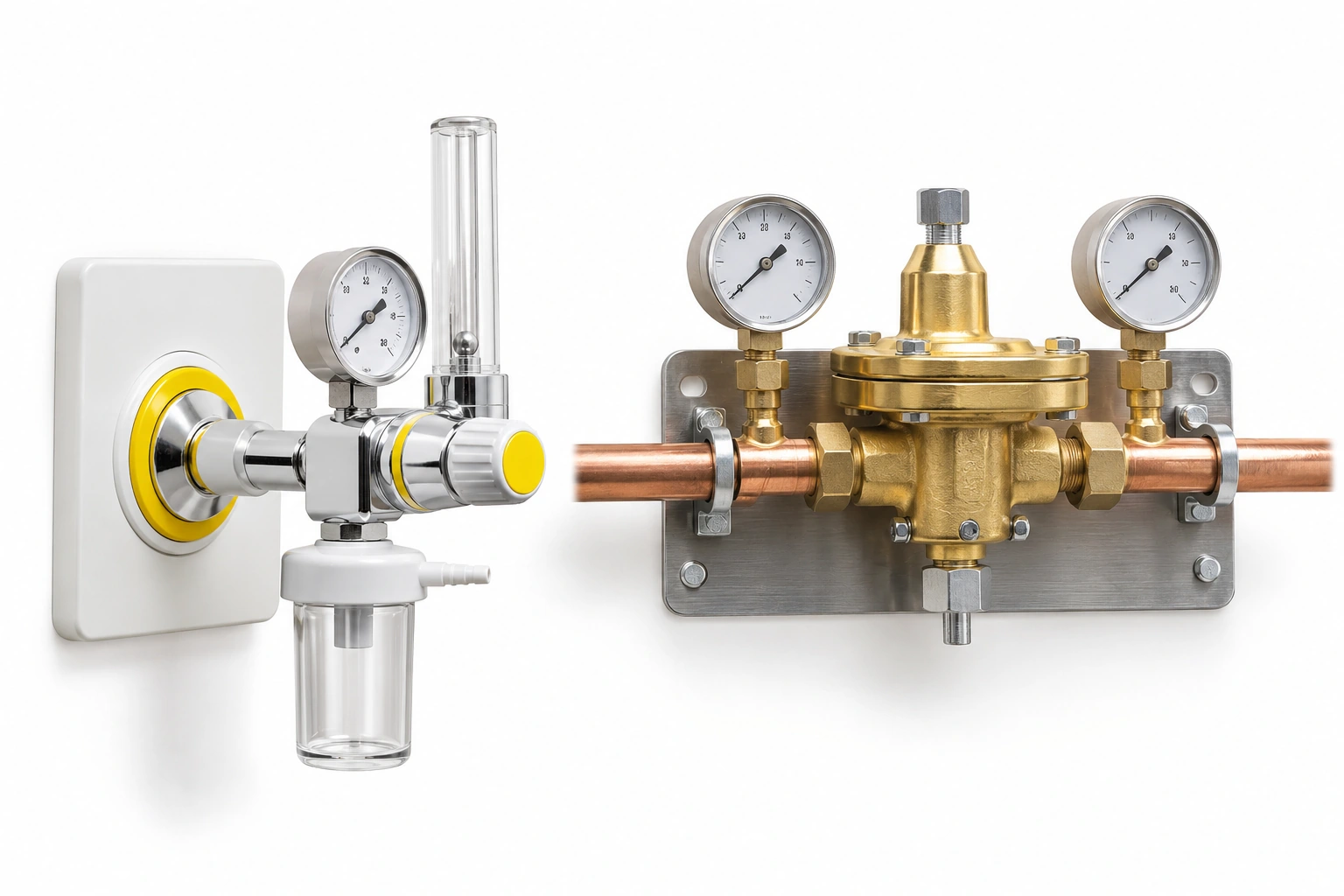
“Medical gas regulator” is an incomplete product description. Some pressure regulators connect to medical gas terminal units at the point of use, while others form part of the medical gas source or downstream pipeline arrangement. The international standard family separates them.
ISO 10524-4:2008 specifically concerns defined low-pressure regulators, while ISO 10524-2:2018 addresses manifold and line pressure regulators. Treating the two as interchangeable is a purchasing error.
What belongs within ISO 10524-4?
The ISO 10524-4:2008 publisher summary covers low-pressure regulators intended for specified medical gases and services. It lists devices connected to terminal units of medical gas pipeline systems and certain terminal units attached to other specified pressure regulator assemblies.
The listed scope also includes low-pressure regulators with integral flow-metering devices that connect to terminal units, and operator-adjustable low-pressure regulators for air or nitrogen used to drive surgical tools under defined circumstances.
This means a wall-terminal low-pressure regulator has a distinct product application from a regulator attached to a cylinder or installed in a manifold.
How is a manifold regulator different?
ISO 10524-2:2018 addresses medical gas manifold pressure regulators and line pressure regulators. In a procurement schedule, the phrase “line regulator” must not be replaced with “wall outlet regulator” merely because both are pressure-related products.
The role of the regulator in the engineered system, its intended inlet/outlet conditions and its connection interface all matter. The project engineer determines what equipment is required for the approved system.
A supplier's catalogue image or an identical gauge appearance does not establish interchangeability.
Where do terminal standards enter the comparison?
ISO 9170-1:2017 specifies the scope of medical gas terminal units and their gas-specific connection requirements. For a low-pressure regulator intended for terminal-unit connection, the exact mating arrangement is part of the purchase specification.
International terminology alone may not define every connector dimension. The customer should identify the mating outlet or probe family and the relevant regional specification from the project drawings.
A regulator with the right intended function but the wrong terminal connection is not a satisfactory substitute.
How should the buyer write the equipment description?
Begin by identifying which of these applications is required:
- Low-pressure regulator connected to a medical gas terminal unit.
- Regulator with integral flow-metering device in that application.
- Manifold regulator forming part of a source arrangement.
- Line regulator associated with pipeline distribution.
For the selected product, state the medical gas service, intended model/class, inlet and outlet connections, functional requirements from the approved specification, requested accessories and quantities. State the relevant standard part and edition.
This approach prevents quotations that price one regulator type while the project expects another.
What documents should accompany a quotation?
The buyer should request the exact product datasheet or model drawing, a clear included-accessory list and the documents required by its contract.
Do not treat a generic manufacturer-wide certificate as a substitute for specifying the regulator actually supplied. An installed MGPS assessment also remains a separate engineering responsibility.
This article deliberately does not provide pressure-adjustment instructions or settings for working medical gas systems.
BWC Medgas related products
BWC provides medical gas regulators and pressure accessories, manifold-related hardware and gas-specific outlets.
Send the intended regulator position, service and connection drawing so BWC can discuss the appropriate component type, rather than quoting against the ambiguous word “regulator.”
Request a specification-based medical gas regulator quotation.
Frequently asked questions
Does ISO 10524-4 replace ISO 10524-2?
No. They address different product scopes within the medical gas pressure-regulator family.
Can a regulator for a terminal unit automatically replace a manifold regulator?
No. The intended equipment class and system duties are different.