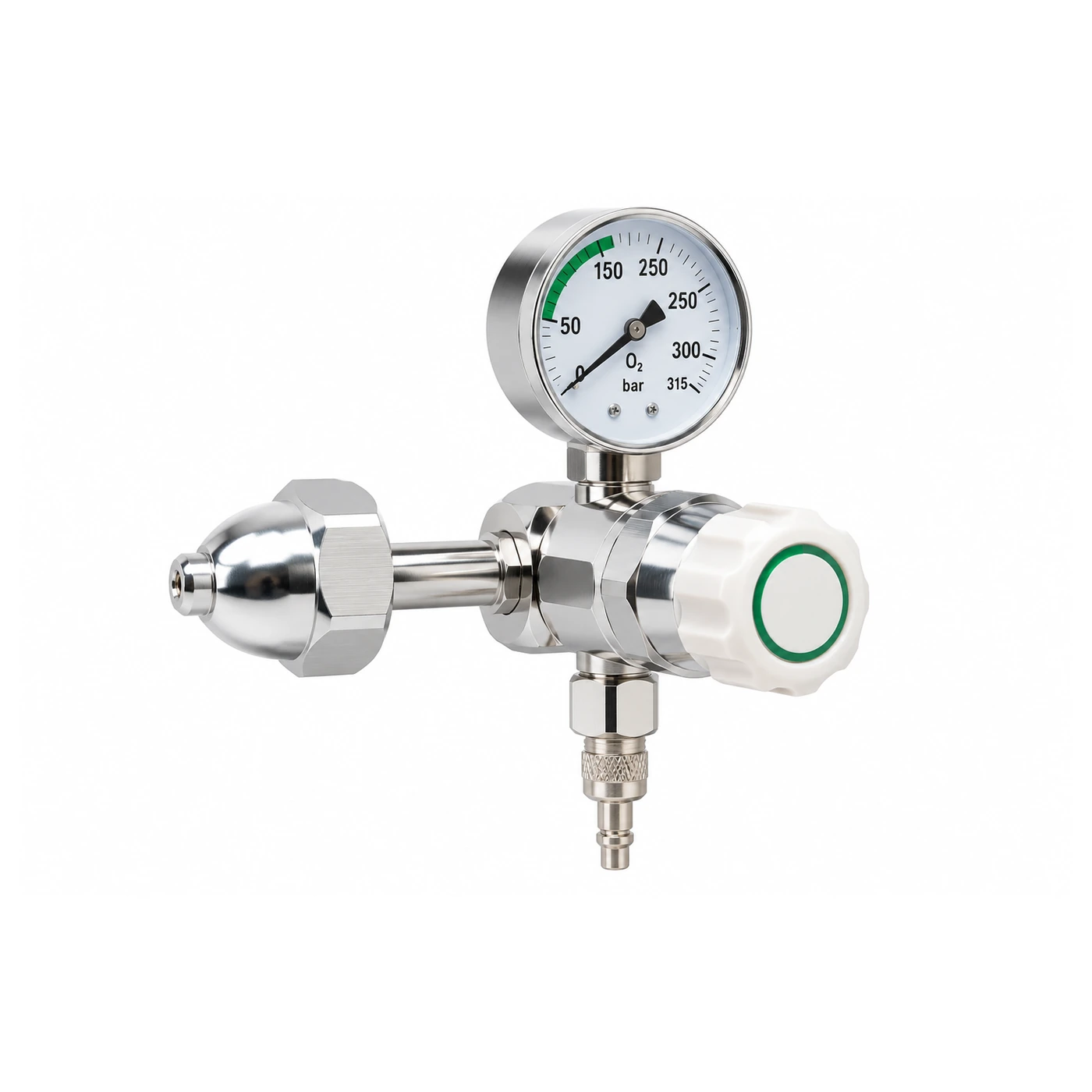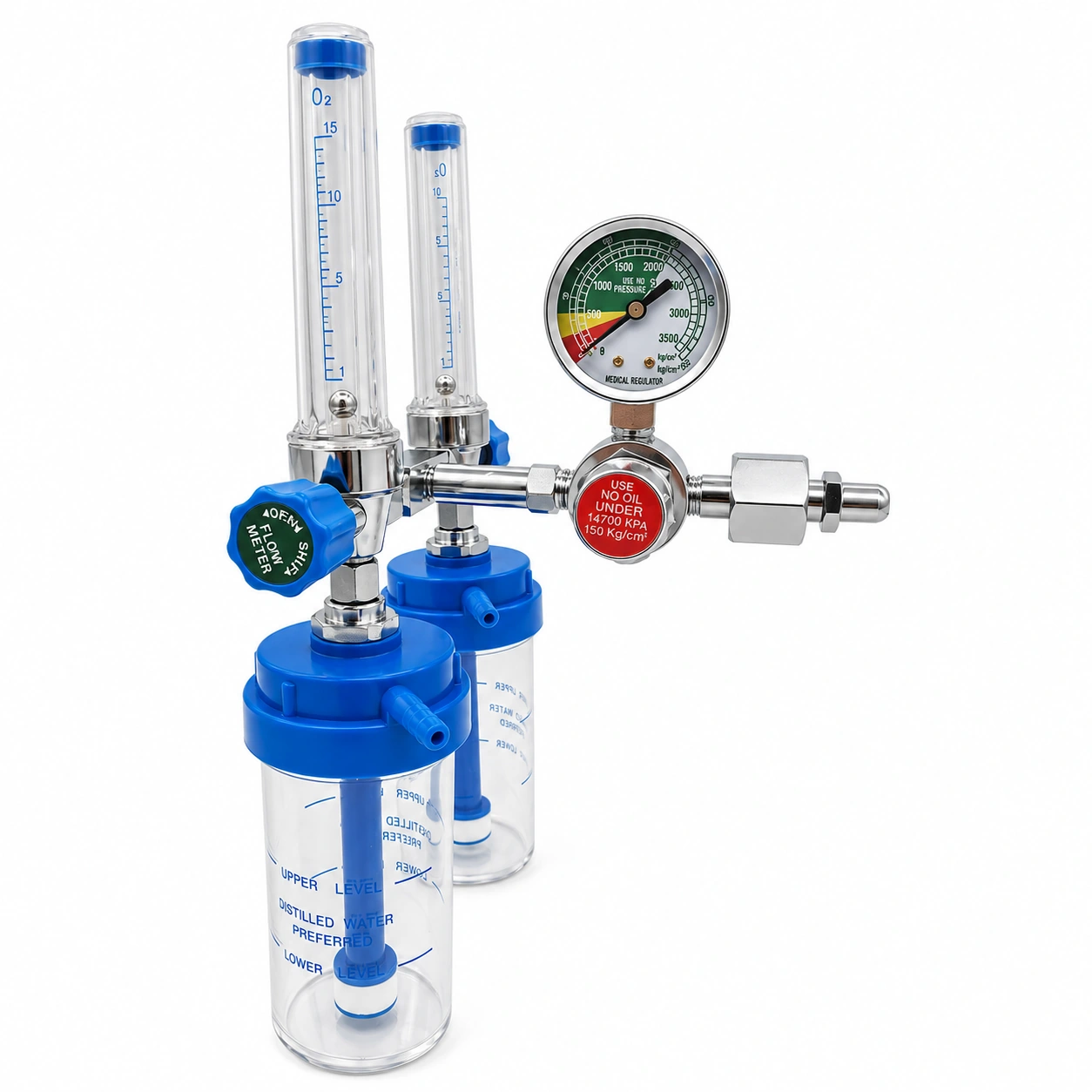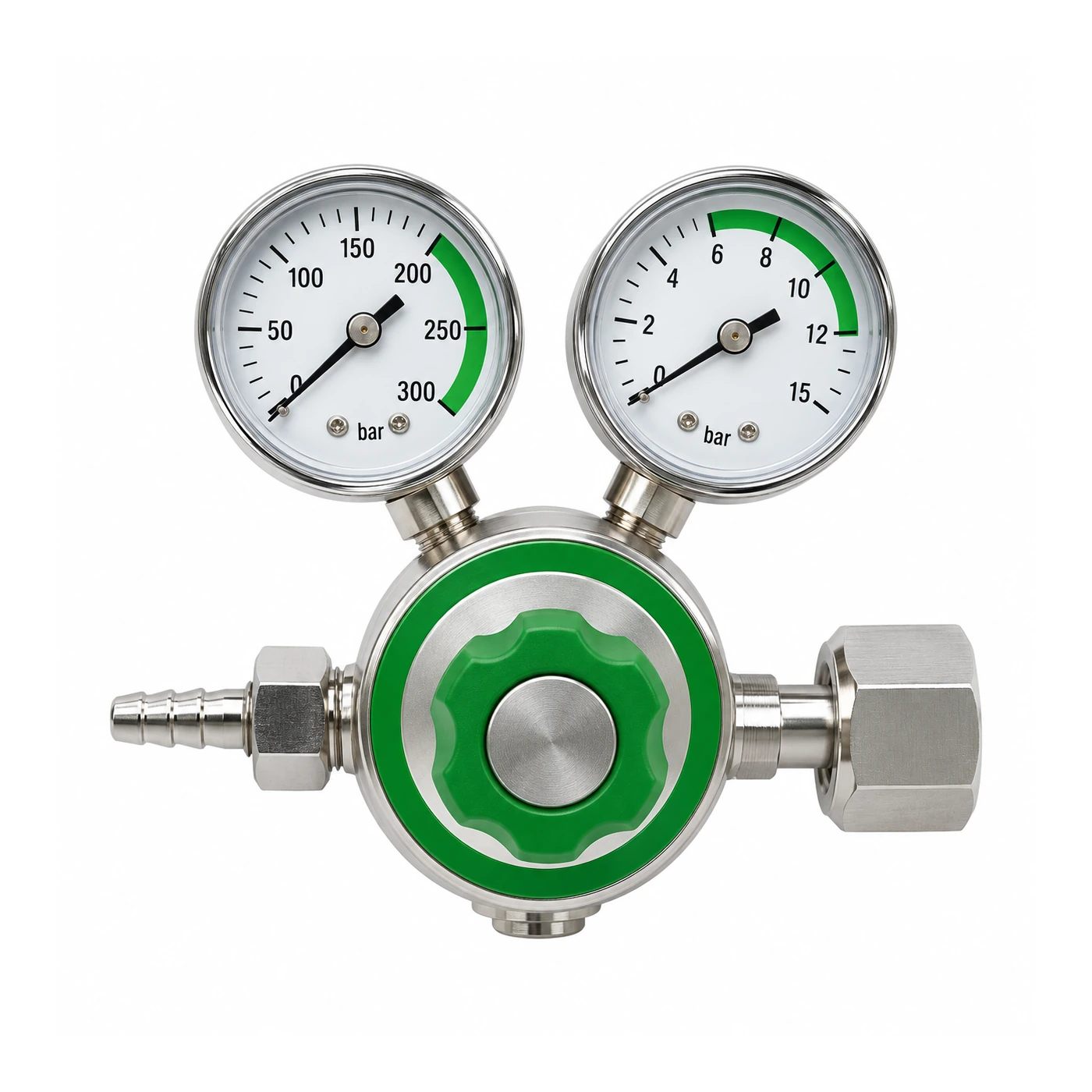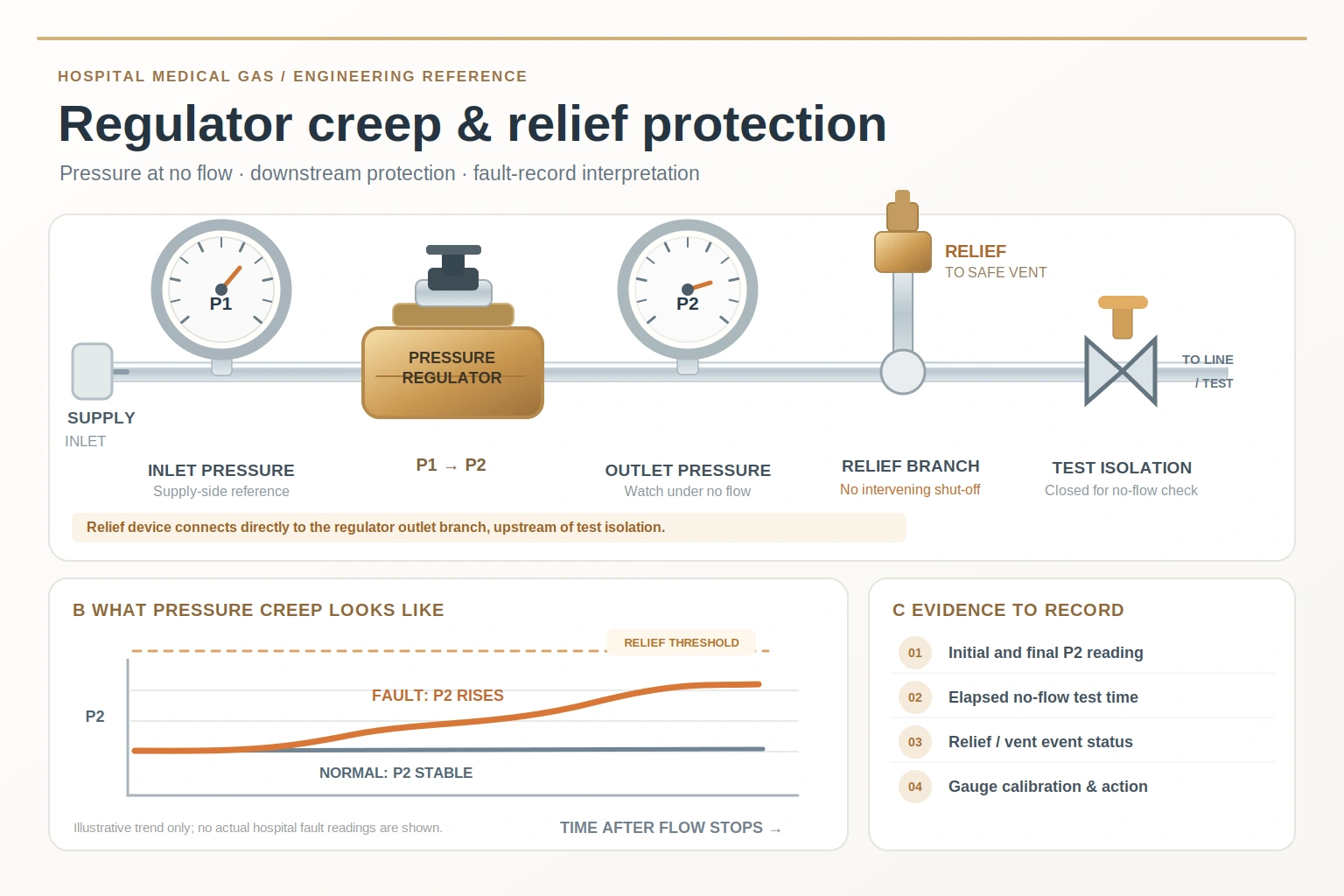
Hospital staff may report that a regulator's indicated outlet pressure rises unexpectedly or that the downstream value differs from what is expected under a changing demand. These symptoms cannot safely be diagnosed from the needle position alone.
A useful facility document separates observed pressure behavior, underlying design/measurement conditions, potential component faults and required authorization. This article is a fault-management reference; it does not provide a method to provoke, adjust or bypass regulator safety functions on an operating medical-gas system.
Use precise terms in the report
*Droop* is the change in downstream regulated pressure associated with increased flow under defined test conditions. *Creep* is a gradual rise in regulated downstream pressure when a pressure-regulating device should otherwise maintain the intended near no-flow condition. Manufacturers may use further terms such as lock-up or seat leakage with model-specific definitions.
These descriptions are not diagnoses by themselves. A faulty gauge, incorrect instrument basis, changed inlet conditions or another system component can produce apparently similar observations.
Start with engineering identification
Record the exact gas, model and asset ID, installed stage, inlet and outlet pressure indication locations, measurement reference (gauge/absolute), known relevant demand state, time and any associated alarms. The facility's qualified team must determine what observations can be collected without disturbing service.
For an oxygen regulator, material and cleanliness suitability remain part of the component's technical identity. ISO 15001:2010 provides oxygen compatibility context; it is not a field troubleshooting procedure.
Structured fault ticket
| Observation | Record instead of guessing | Follow-up owner |
|---|---|---|
| Reported trend | What was actually seen and when | Reporter/estates |
| Measurement point | Exact instrument, connection and scale | Qualified engineer |
| Regulator role | Cylinder, manifold, line or terminal-side | Approved P&ID |
| Operating context | Known demand/source condition | Authorized project team |
| Other indications | Relevant central/area alarm references | MGPS operator |
| Safety features | Approved relief/monitoring design | Engineering reviewer |
| Work authorization | Healthcare permit and clinical coordination | Facility authority |
| Outcome | Tested component, documented repair/replacement, release | Competent personnel |
Avoid creating a ticket that asserts “regulator broken” without evidence.
Distinguish a relief device from a substitute regulator
Some assemblies include specific protective relief functions, which the designer and manufacturer define for the intended system. A relief feature must not be treated as a means to routinely control downstream pressure or as justification for using a regulator outside its approved rating.
Never suggest blocking, readjusting or opening relief components to silence a fault. Such work can affect patient gas supply and requires authorized specialist controls.
Read manufacturer test evidence against the actual fault
ISO 10524-2:2018 concerns manifold/line pressure regulators; ISO 10524-1:2018 covers relevant cylinder regulators; ISO 10524-4:2008 covers low-pressure versions within its scope.
The corresponding manufacturer data should establish intended duty, pressure–flow behavior, maintenance and appropriate approved testing. An industrial regulator datasheet from an unverified model is not enough.
Example: apparent creep after a gauge change
An engineering team receives several reports of rising downstream pressure after maintenance. The valve has not been otherwise changed, but the installed gauge's scale basis and calibration records are unclear.
The authorized technical team should reconcile the measurement chain and approved operating state before attributing the problem to a regulator seat. Replacement or adjustment decisions require qualified evidence, not guesswork from appearance.
Organize safe escalation and service continuity
Treat suspected pressure-control problems under the facility's medical-gas operational policy, including clinical involvement where supply might be affected. Do not test by disconnecting patient gas lines, closing unrelated valves or altering supply pressure without the approved plan.
The 2026 NHS HTM 02-01 separates operational management from design and verification. Maintain evidence linking the reported event to qualified corrective work and any necessary return-to-service tests.
Preserve traceability across replacement
If a regulator is replaced, record original model/revision, new model, gas-contact material and pressure/flow suitability, connections, accepted deviations, factory records, installed tests and operational release.
A visually similar replacement may have a different rated inlet or relief configuration. Technical acceptance must precede procurement substitution.
BWC supply and advice scope
BWC Medgas can supply specified medical gas pressure regulators and related gauges against the site's approved equipment schedule. Diagnosis of a live MGPS and clinical return-to-service decisions belong to the qualified facility team.
Send a regulator model and approved replacement specification to BWC Medgas.
Frequently asked questions
Is a gradual pressure rise always evidence of regulator seat leakage?
No. Instrument and operating conditions need qualified investigation.
May a protective relief device be adjusted to compensate for a poor regulator selection?
No. Any change requires a permitted technical design and operating process.