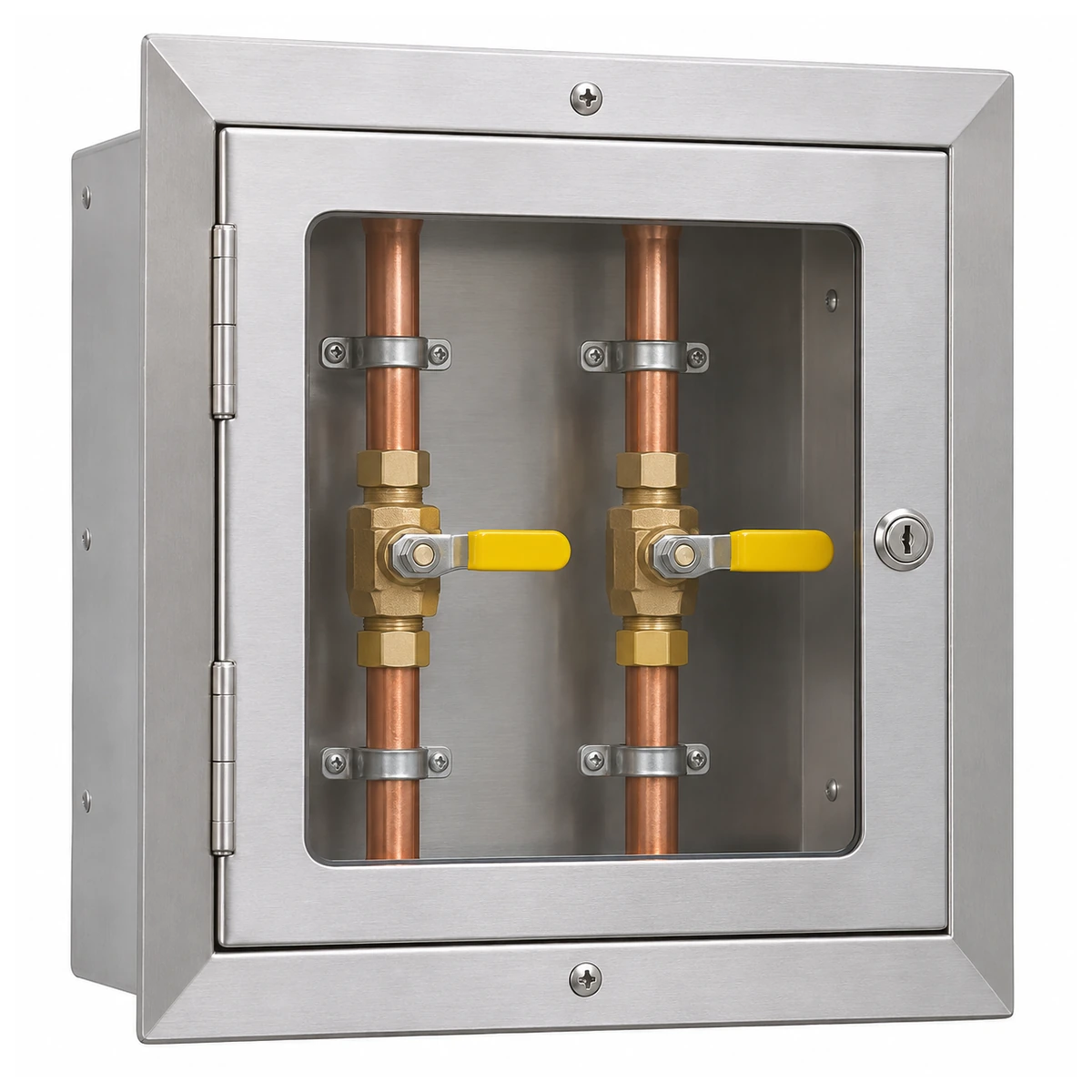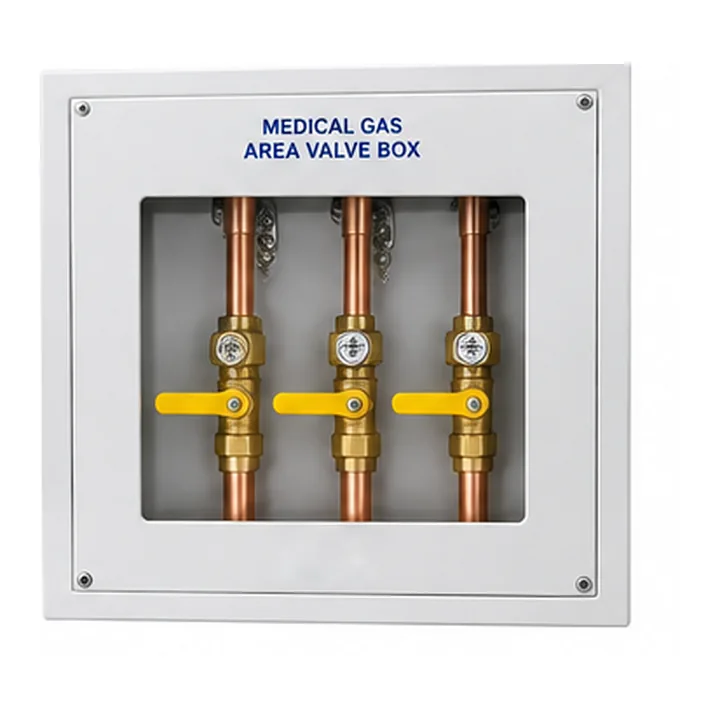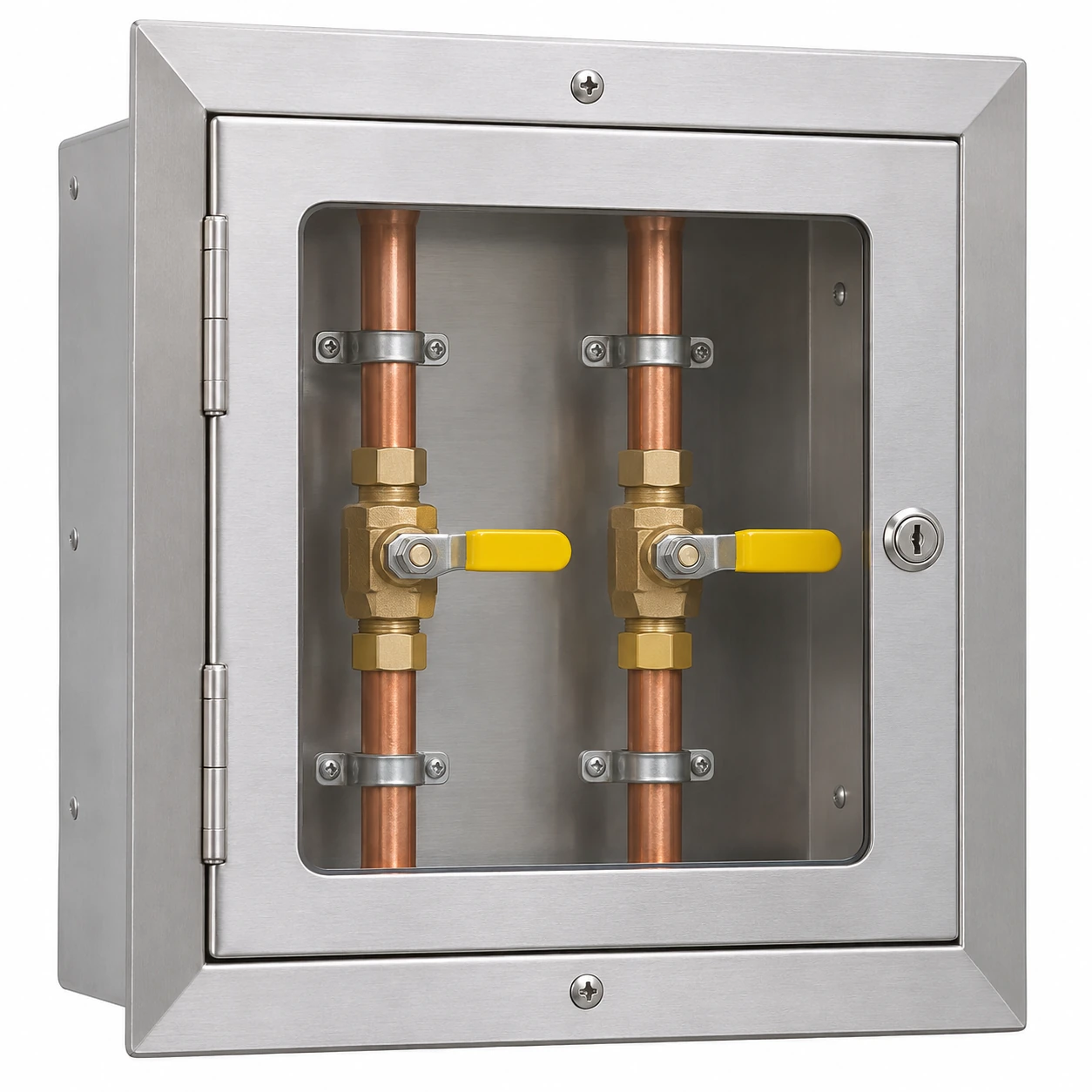

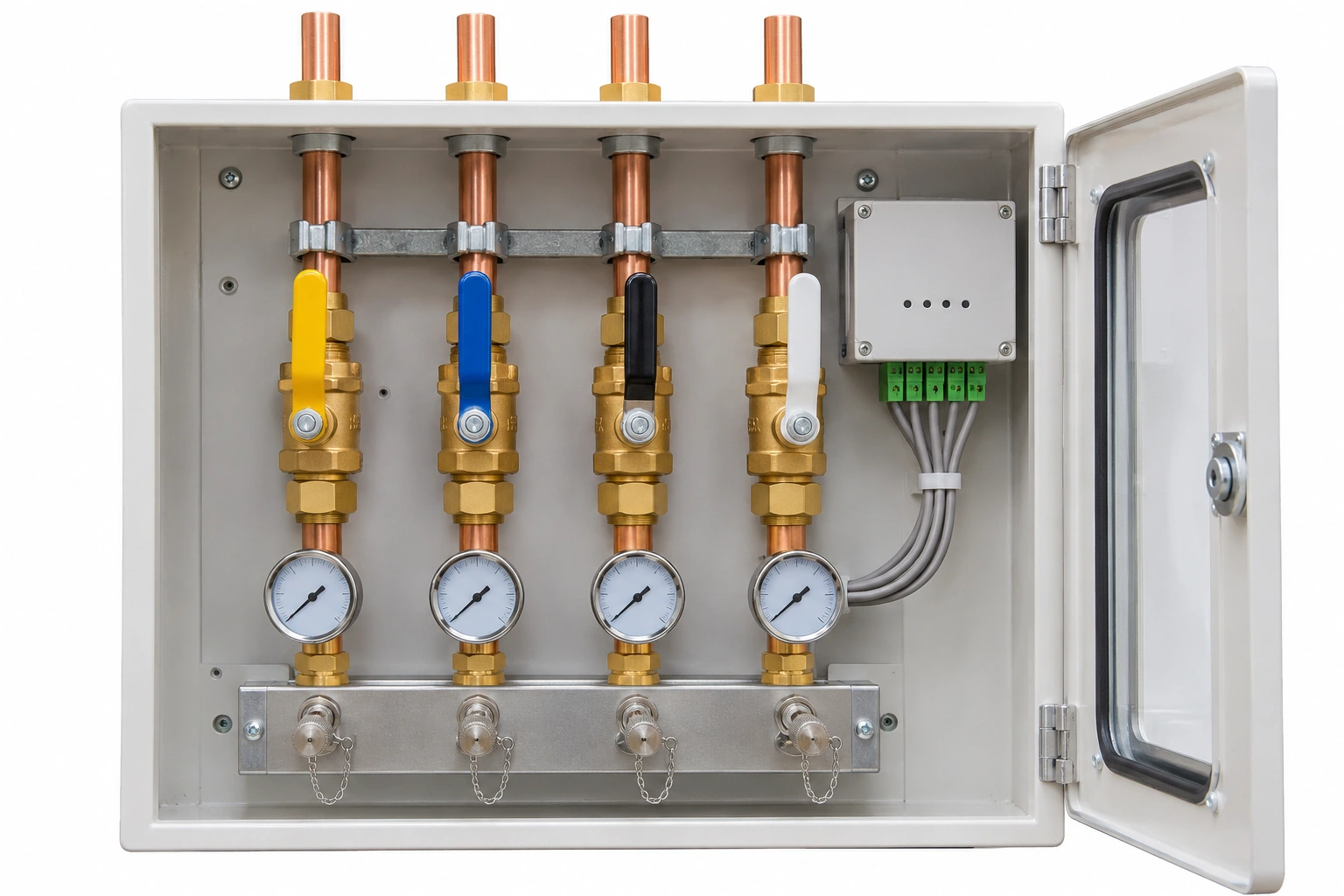
Two suppliers both quote a “four-gas hospital zone valve box.” Supplier A includes four valve bodies and an enclosure; Supplier B adds approved pipe tails, pressure indication, required test connections and a documented monitoring interface. Comparing the unit prices without normalizing scope can select an incomplete product.
A technical-and-commercial comparison matrix makes inclusions, interface responsibilities and compliance evidence visible before purchasing. It does not assume a US zone valve box, UK AVSU and a generic valve cabinet are identical products merely because they have the same number of valves.
Build the RFQ from a design-approved schedule
Begin with the applicable medical gas services and valve asset roles from a current approved P&ID and room-zone schedule. List exact sizes and connection types separately for each gas.
For a complete assembly request, define number of gas services, intended isolation duty, enclosure type/size, access, gas identification, monitoring/pressure indication, NIST or other specified connections, pipe tails, brackets and required product records.
A catalogue photo cannot establish which options are fitted. Request a controlled model configuration sheet.
Compare like-for-like line items
| Scope item | Bid A | Bid B | Decision/evidence |
|---|---|---|---|
| Exact valve/gas models | Declared / unclear | Declared / unclear | Approved P&ID compliance |
| Complete valve assembly | Included / optional | Included / optional | Define interface boundary |
| Connections, tails and brackets | Included / excluded | Included / excluded | Approved dimension drawing |
| Gauge or sensor provision | Specified / absent | Specified / absent | Engineering alarm schedule |
| NIST/test connection where required | Model specified / pending | Model specified / pending | Project-specific verification |
| Labels and cabinet | Details/size | Details/size | Access and zone mapping |
| Factory documentation | Exact model tests | Generic statement | Evidence quality |
| Installation/SAT | Included / excluded | Included / excluded | Separate contract duty |
| Spares/support | Defined / unknown | Defined / unknown | Lifecycle risk |
A “not included” is a useful commercial answer, but it cannot cure omission of a mandatory safety function.
Apply a technical conformity gate
First verify service suitability, connection compatibility, isolation duty, relevant oxygen materials/cleanliness, monitoring interfaces and adopted code requirements. ISO 7396-1:2016 establishes a system-level context; [ISO 15001:2010](https://committee.iso.org/standard/44250.html) addresses oxygen compatibility within its scope.
For UK projects refer to approved HTM 02-01 and SHTM 02-01 details. For US projects the hospital must specify the applicable adopted NFPA 99 edition; the current publisher edition is not necessarily the legally controlling edition for an existing installation.
A seller's “CE and ISO” marketing line is not an adequate replacement for exact model and project acceptance evidence.
Normalize total evaluated price
Use a consistent currency, Incoterm and project scope. Separate equipment, approved optional components, packing/freight/import, local mounting, connection works, commissioning/verification, spares and longer-term service support.
Illustrative arithmetic only (not market prices): Quote A lists USD 1,500 for a cabinet and valves, USD 270 for the required associated components, and USD 230 for approved integration/document support, totaling USD 2,000 before local work. Quote B lists USD 1,850 including the same components and documentation, before the same local work. The normalized price gap is USD 150.
This arithmetic does not prove either design is technically acceptable. A missing required gas-service connection cannot be priced away.
Evaluate maintainability and future replacement
Ask if individual valve models are readily identifiable, if spare parts and compatible replacements can be supported, whether gauges or monitoring devices are accessible under the approved design, and whether the enclosure can be inspected in its planned wall location.
An attractive box price may cause later integration costs if a special wall cavity or proprietary spare is required. Get dimensional and maintenance drawings before award.
Review project-specific deviations
A bidder may propose a different gas count, combined enclosure or connector family. Have the designer evaluate the effect on zoning, installation, servicing, monitoring and test records. Retain the accepted/rejected decision and revised bill.
Do not use one supplier's catalogue dimensions as a substitute for the full project specification when re-issuing a competitive tender.
Protect the release documentation
Require final configuration list, actual manufacturer/models, gas-specific labels, material and cleanliness evidence where needed, factory test record, installation/maintenance instructions, approved deviation register and relevant warranties.
Site testing and release are independent project obligations. The SHTM 02-01 (2026) distinguishes AVSU, LVA and alarm tests using separate forms A4, A5 and A14; a vendor's “passed factory” note cannot replace them.
Example: missing pressure interface
The hospital expects a three-service box with monitoring connection points; the low bid includes three valves but no sensor ports. Before commercial award, the owner must determine whether a compliant alternative assembly/interface is available and technically approved.
Do not authorize a site fitter to drill ports into an unspecified valve body to preserve a low purchase price.
BWC Medgas commercial scope
BWC can quote defined zone valve boxes, medical gas isolation/line valves and alarm interface components. Clearly differentiate what is supplied as components from site construction, clinically controlled changeover and hospital verification.
Send the completed zone valve RFQ to BWC Medgas.
Frequently asked questions
Is the lowest quote for a four-gas box necessarily the cheapest project option?
No. The supplied scope, required accessories, integration, verification and lifecycle support must be evaluated.
Is a factory test certificate enough for an installed zone valve box?
No. Applicable site zoning, closure, gas-specificity and alarm evidence remain separate.
Primary technical references
- ISO 7396-1:2016 — MGPS pipeline valves and monitoring
- NHS Scotland — SHTM 02-01 (2026), A4/A5/A14 test distinctions
- NHS England — HTM 02-01 (2026)
- NFPA 99 — Health care facilities code editions
- [ISO 15001:2010 — Oxygen compatibility of medical equipment](https://committee.iso.org/standard/44250.html)