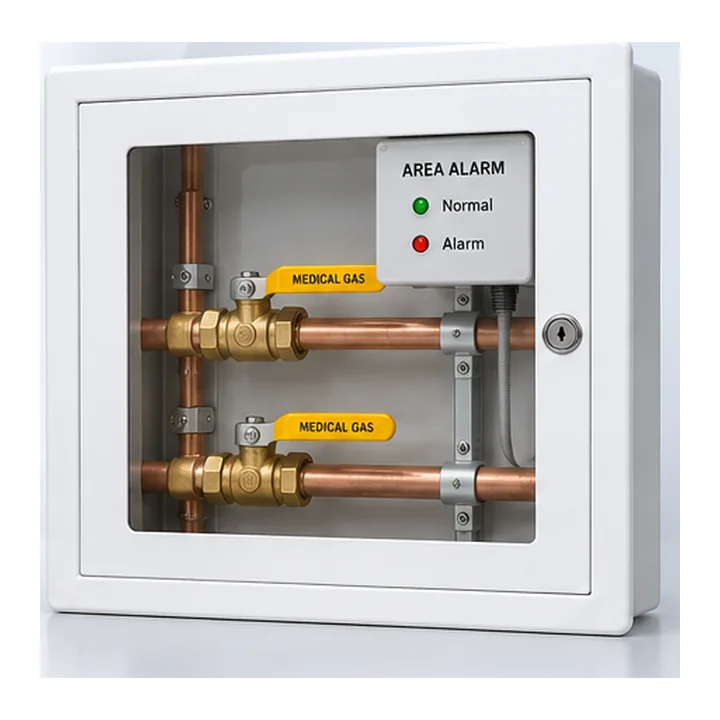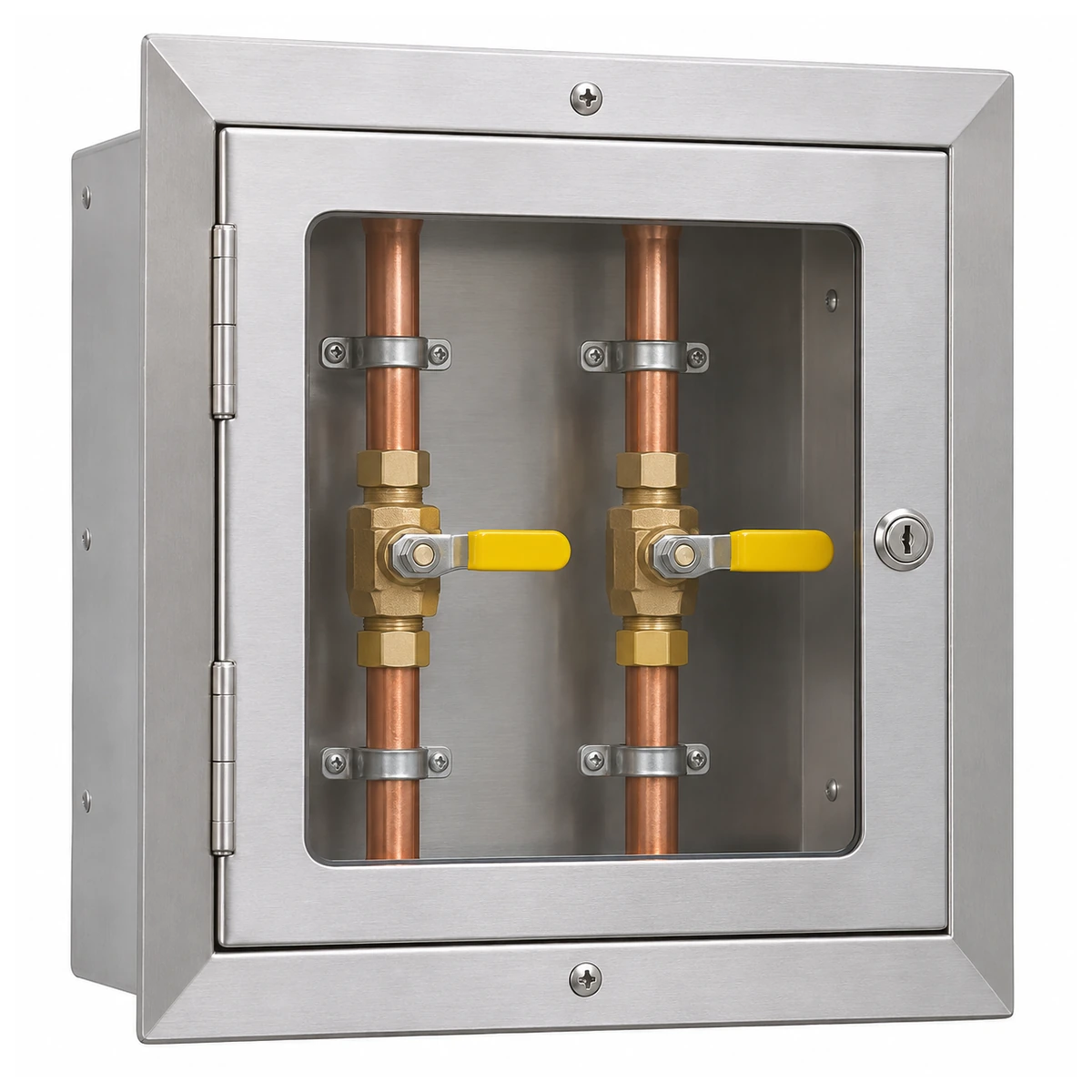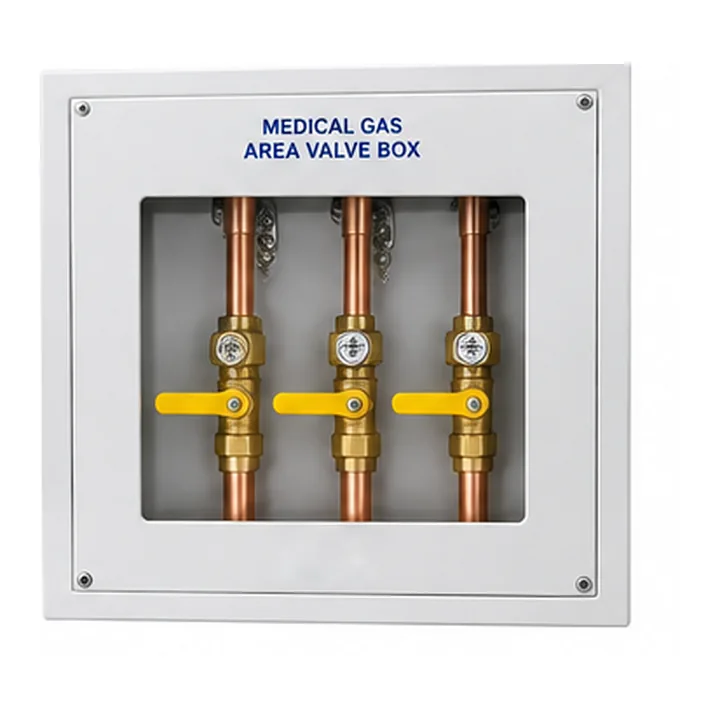
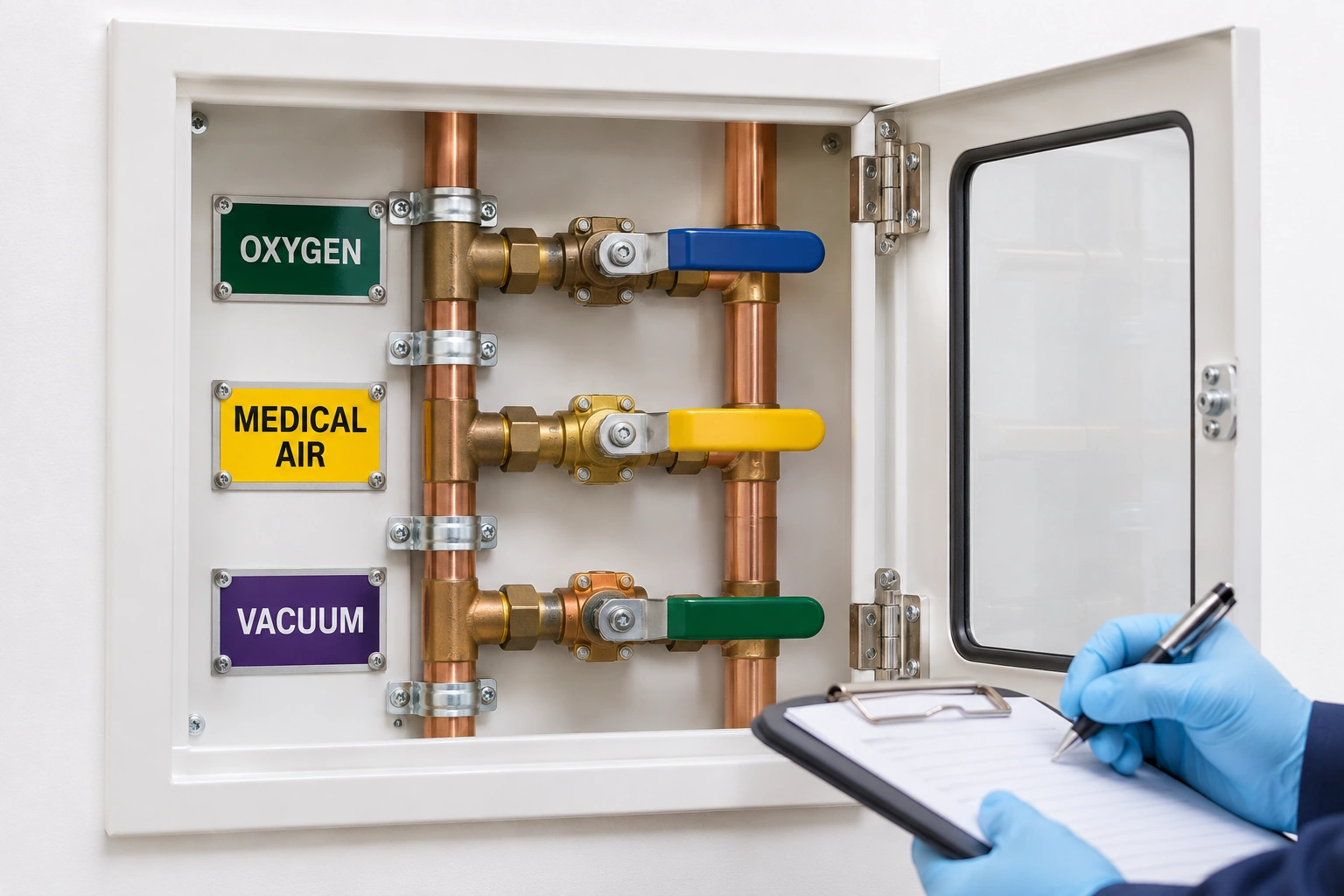
An emergency medical-gas valve location that is technically correct on a construction drawing may become hard to find after renovations, movable furniture, corridor displays or equipment storage obstruct the cabinet. In a safety-critical situation, uncertainty about what a valve serves can be as serious as difficulty reaching it.
An access-and-identification inspection register helps hospital estates and clinical leadership keep location, visibility and zone information current. It is not an instruction to operate medical gas valves during an emergency; the hospital's approved clinical and safety protocols govern decisions.
Start with jurisdiction-specific access requirements
The [Joint Commission's NFPA 99 edition FAQ](https://www.jointcommission.org/en-us/knowledge-library/support-center/standards-interpretation/standards-faqs/000001338) explicitly highlights requirements referenced in CMS Tag K909 for zone valve boxes to remain visible and accessible, including relevant existing installations. This is useful US regulatory context, but it should not be treated as a universal rule for every hospital globally.
The NFPA 99 current edition is 2027. Facilities must determine which edition is actually adopted or referenced by the controlling authority. NHS HTM 02-01 (2026) and SHTM 02-01 (2026) provide separate UK operational and installation requirements.
Avoid inventing a universal mounting height or corridor dimension; the local design, accessibility rules and manufacturer requirements need engineering approval.
Design an inspection record from real locations
| Review item | Evidence to record | Owner |
|---|---|---|
| Valve box location | Building, level, corridor and physical reference | Estates asset team |
| Visual identification | Visible, legible service and box ID | Approved site schedule |
| Clear access | Approved access path free of relevant obstruction | Facilities/clinical coordination |
| Served rooms | Current verified service-specific room map | MGPS design/verification |
| Door/enclosure condition | Damage, access or tampering observation | Authorized maintenance |
| Emergency information | Posted and controlled relevant site references | Facility policy owner |
| Last inspection | Date, inspector, finding and corrective record | Maintenance system |
A photograph can support a defect record but should not be the only proof of accessibility or zone accuracy.
Treat labels as controlled engineering information
A box marked “Ward 3” may serve multiple rooms outside that ward after a building change. A label and any nearby zone schedule should agree with the verified as-built system. If they disagree, record the problem for authorized resolution.
Different gases inside the same cabinet should be clearly identified under the approved rules. Color, alone, is not evidence of correct service identity; do not infer the pipe connection from the paint.
Review access after every relevant refurbishment
New wall cladding, doors, display boards, nursing stations and temporary storage can all alter access. Include zone valve box locations in MEP and architectural change review. A planning team should not approve a storage layout that accidentally hides the access to essential medical-gas controls.
Where furniture is routinely rearranged, the hospital should include the valve box in periodic location/access checks. Records should capture issues and assigned corrective action without encouraging informal relocation of the equipment.
Distinguish physical access from operational authority
A visible valve box is not permission for any passer-by to manipulate it. The hospital's approved procedures determine who is trained or authorized to act, what clinical notification is required and how service continuity is protected.
Engineering personnel and clinical leadership must jointly review the relevant zone impact and communication. Avoid publishing general instructions about “what to turn off first” in a public procurement guide.
Example: accessible on plan but obscured in practice
A cabinet remains at its approved corridor position, but a fixed information board is added directly in front of it. The asset register shows correct coordinates, yet site staff cannot see the valve door.
The corrective task is a documented accessibility and building coordination issue assigned to the relevant authority. It is not solved by simply attaching a second arrow label to another wall without reviewing the approved wayfinding and access needs.
Apply the review to purchasing
New valve box specifications should identify the exact installed location, door/opening arrangement, visible markings, enclosure size, service labels and any required maintenance access. Ask for manufacturer dimensions and actual model drawings rather than assuming all “four-gas boxes” fit the same recess.
The project team should review the effect of enclosure choice on visibility, inspections and future replacement components.
Handover and regular assurance
Retain the as-installed valve location plan, service/zone schedule, approved sign and label descriptions, maintenance access notes and inspection history. The register should flag changes to room or corridor names rather than silently update the valve map.
BWC supplies selected medical gas area valve boxes and line valves against approved site and component schedules. The facility controls accessibility and emergency governance.
Discuss enclosure and identification requirements with BWC Medgas.
Frequently asked questions
Does a current floor plan prove valve boxes are actually accessible?
No. Physical access and visibility need site review.
Does a visible box authorize an untrained person to close a medical gas line?
No. Authorized action follows the healthcare facility's procedures.
Primary technical references
- [Joint Commission — NFPA 99 edition/adoption and accessible zone valves](https://www.jointcommission.org/en-us/knowledge-library/support-center/standards-interpretation/standards-faqs/000001338)
- NFPA — NFPA 99 current edition and scope
- NHS England — HTM 02-01 (2026)
- NHS Scotland — SHTM 02-01 (2026)
- ISO 7396-1:2016 — Medical gas shut-off valve context