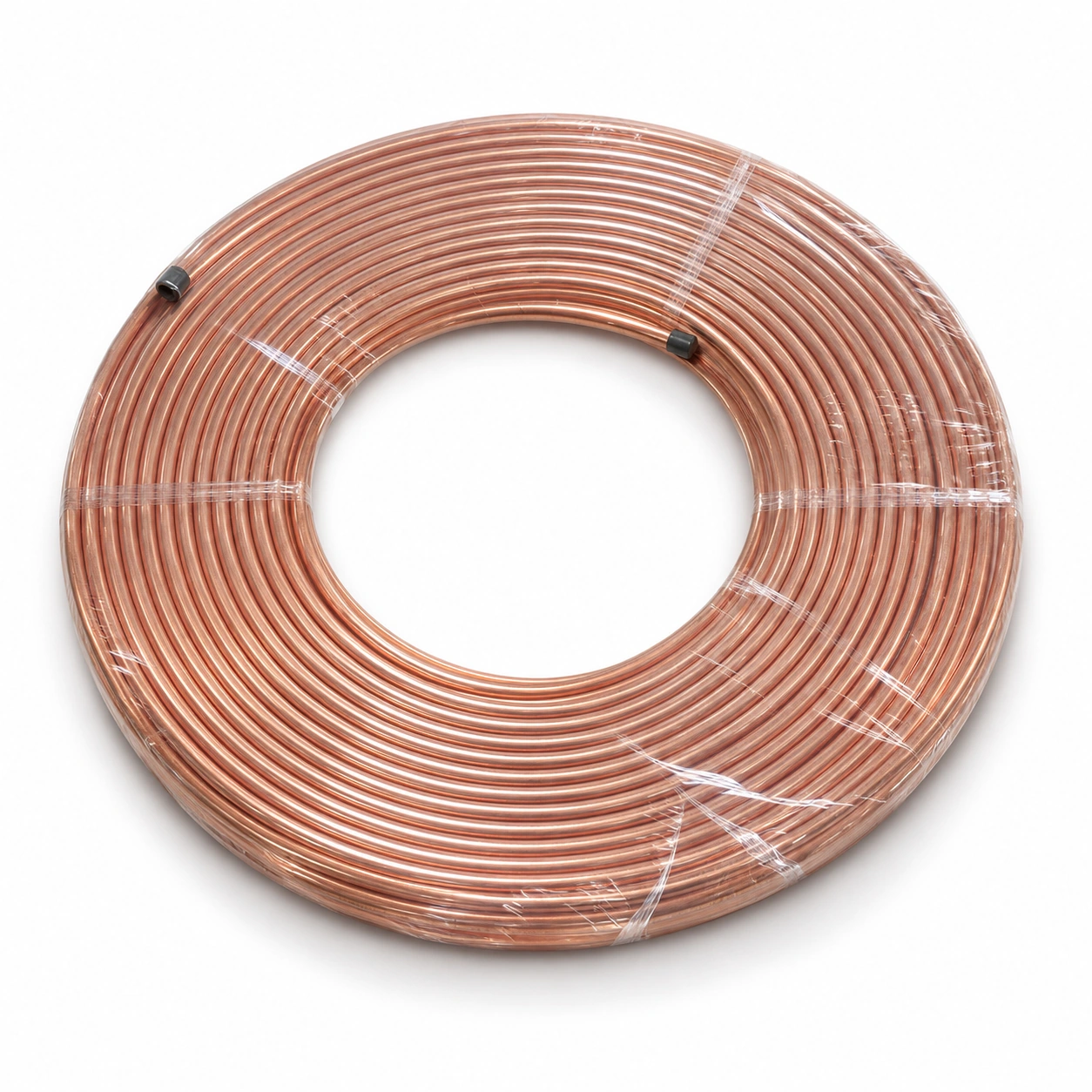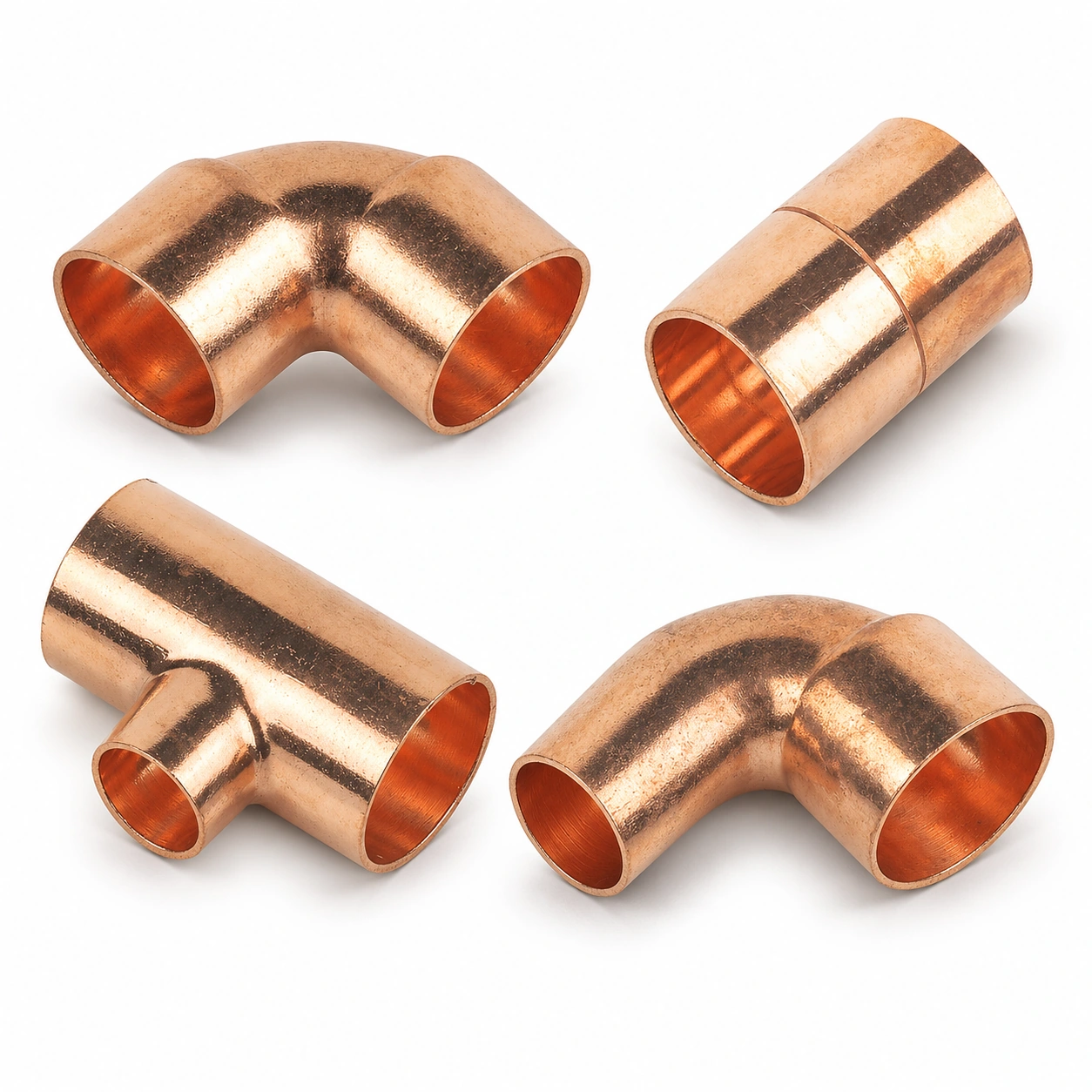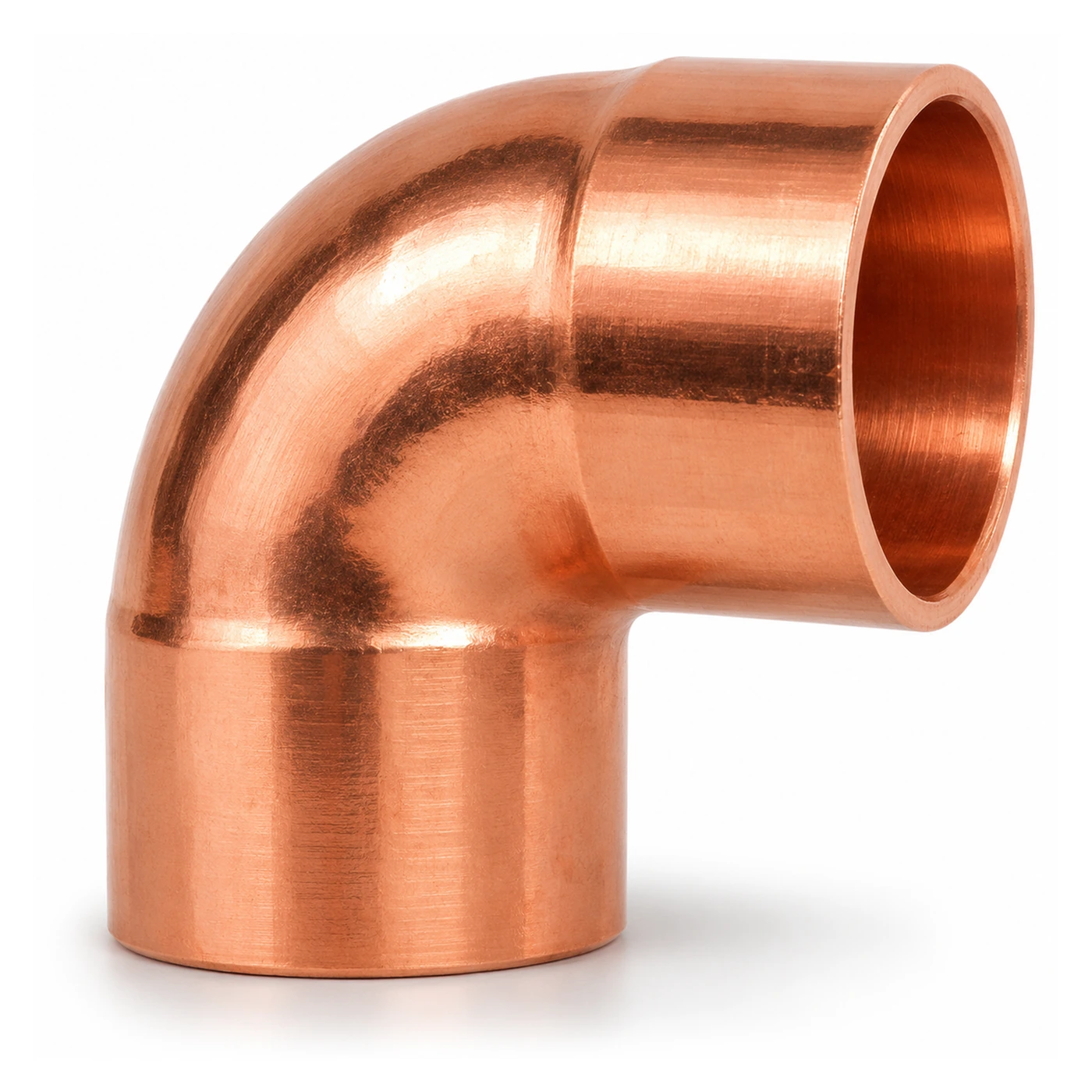

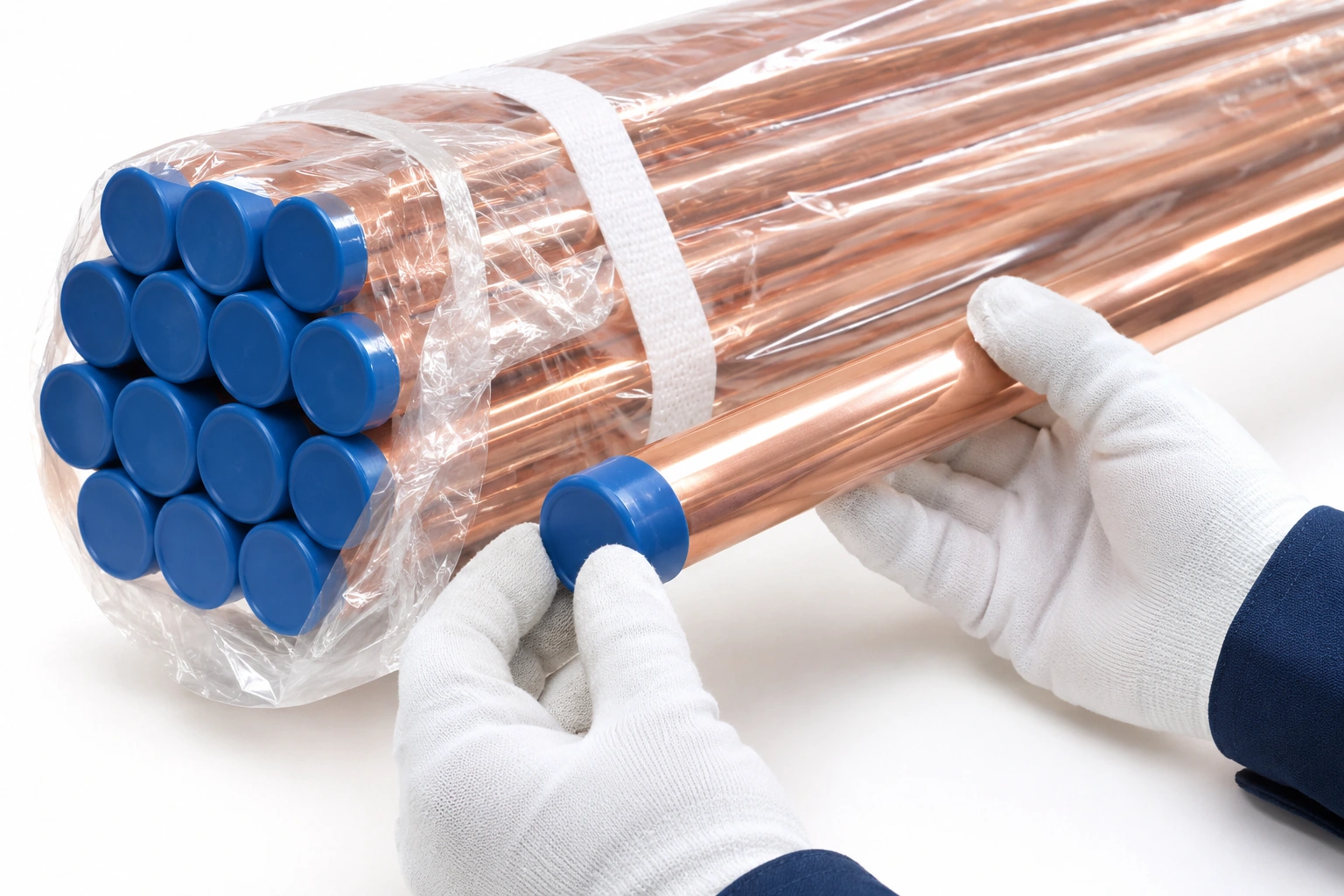
Medical gas copper tubing is purchased for a system that demands more than ordinary plumbing appearance. A bundle can arrive with the right outside diameter but the wrong specification, uncertain surface cleanliness or damaged protective caps. Those errors are inexpensive to identify at goods receipt and difficult to resolve once the tube is concealed in a clinical building.
Use a receiving-and-quarantine register before releasing any batch for the installation team. The purpose is to preserve source identity and cleanliness evidence, not to claim that a visual inspection alone certifies oxygen service.
Establish what the purchase order actually requires
For each line identify the project, service, adopted standard and edition, material designation, outside diameter, wall thickness or schedule, temper/form, nominal length, quantity, packaging, cleaning requirement and documentation. Keep the manufacturer and original lot or batch reference separate from the distributor's order number.
European procurement commonly cites EN 13348:2016 for seamless round copper tubes for medical gases or vacuum. US projects may specify ASTM B819-19, which addresses specially cleaned straight lengths of Type K or Type L seamless copper tube. They are not interchangeable descriptions simply because both use copper.
Ask the design authority to decide the applicable specification. The purchasing team should not silently convert one national tube designation into another.
A repeatable goods-inwards checklist
| Inspection item | Evidence expected | If different or missing |
|---|---|---|
| Tube identity | Marking or manufacturer's traceable packing identification | Hold the lot for clarification |
| Size and form | Ordered diameter, wall specification, straight/coil form | Segregate the affected stock |
| Material/standard | Exact stated edition and product designation | Obtain controlled manufacturer evidence |
| End protection | Appropriate intact caps or other approved closure | Do not release until disposition |
| Packaging condition | Clean, dry, undamaged package as specified | Document damage and identify affected pieces |
| Cleanliness statement | Supplier's model/lot-specific cleaning assurance | Seek required evidence from authorized supplier |
| Quantity | Count or measured lengths matched to packing list | Record the discrepancy |
| Lot traceability | Manufacturing lot tied to delivered bundle | Maintain quarantine until matched |
These are inspection questions, not a claim that any single inspection method is a prescribed acceptance test under every jurisdiction.
Differentiate external appearance from internal cleanliness
A shiny copper exterior cannot establish the condition of the internal bore. Nor can a label reading “degreased” replace required manufacturer processing controls and evidence. Confirm the exact cleanliness requirement in the project documents and the manufacturer-supplied declaration or test record appropriate to that requirement.
The ASTM B819-19 abstract explicitly identifies specially cleaned medical-gas tubing. The EN 13348 listing identifies material and delivery requirements. The complete relevant product and system requirements, not an online photograph, determine acceptance.
If caps are missing or packaging has been breached, label and isolate the affected pieces. The project-approved quality authority must decide the inspection or reprocessing route; do not simply tape open tube ends shut and mark them accepted.
Preserve traceability through cutting and installation
A manufacturer lot can disappear from the visible pipe once the installer cuts a bundle into individual runs. Agree beforehand how the pipework installer will record which accepted material lot was used in defined work areas. The required granularity depends on the project QA plan.
At minimum consider logging the material receipt batch, source document, assigned storage location, issue-to-work reference and the installation drawing/area. The link can be maintained electronically even if the physical pieces are not individually printed with a lot number.
Do not add a claim of “full traceability” to a delivery certificate if the installer has not defined how installation records are retained.
Protect approved material while it is stored
Review the proposed store for contamination exposure, damage, mixing of accepted and rejected lots, and management of protective closures. Separate product categories or tube forms if that reduces misidentification. Assign responsibility for issuing the correct items against the current construction revision.
What matters is a controlled condition from factory to point of use. A correctly manufactured tube can still be compromised by careless storage or handling.
Worked nonconformity example
Purchase order MG-T-014 requests a specified metric, medical-gas cleaned copper tube. Delivery shows the right dimension, but a subgroup has missing caps and no matching lot on its packaging. The receiver should record the count, package photos, batch identifiers, supplier notification and hold status. Engineering or QA must document the disposition.
Do not mark the entire shipment accepted merely because some pieces remain intact, and do not reject unrelated clean lots without evidence. The decision is traceable to the affected stock.
A practical record to hand over
Create a receipt record with: line-item ID; standard/edition; size; manufacturer; lot; packing/delivery references; cap and packaging status; documented cleanliness evidence; inspector; action; release decision; linked material certificate.
Use the accepted lots in the as-built or QA dossier as required by the project. The 2026 NHS HTM 02-01 places installation, validation and verification within the management of the complete MGPS.
Component specification for BWC Medgas
BWC Medgas can discuss degreased medical-gas copper tubing, copper fittings and related project components against a controlled bill of materials. Include the size schedule and documentary requirements with the RFQ instead of asking only for “medical copper pipe.”
Send the pipework schedule to BWC Medgas.
Frequently asked questions
Does a closed end cap prove internal cleanliness?
No. It is a protection/handling feature, not by itself proof of the manufacturing cleaning process.
Can ASTM Type L and an EN 13348 metric dimension be assumed equivalent?
No. The applicable product designation, dimensional requirements and design approval must be checked explicitly.