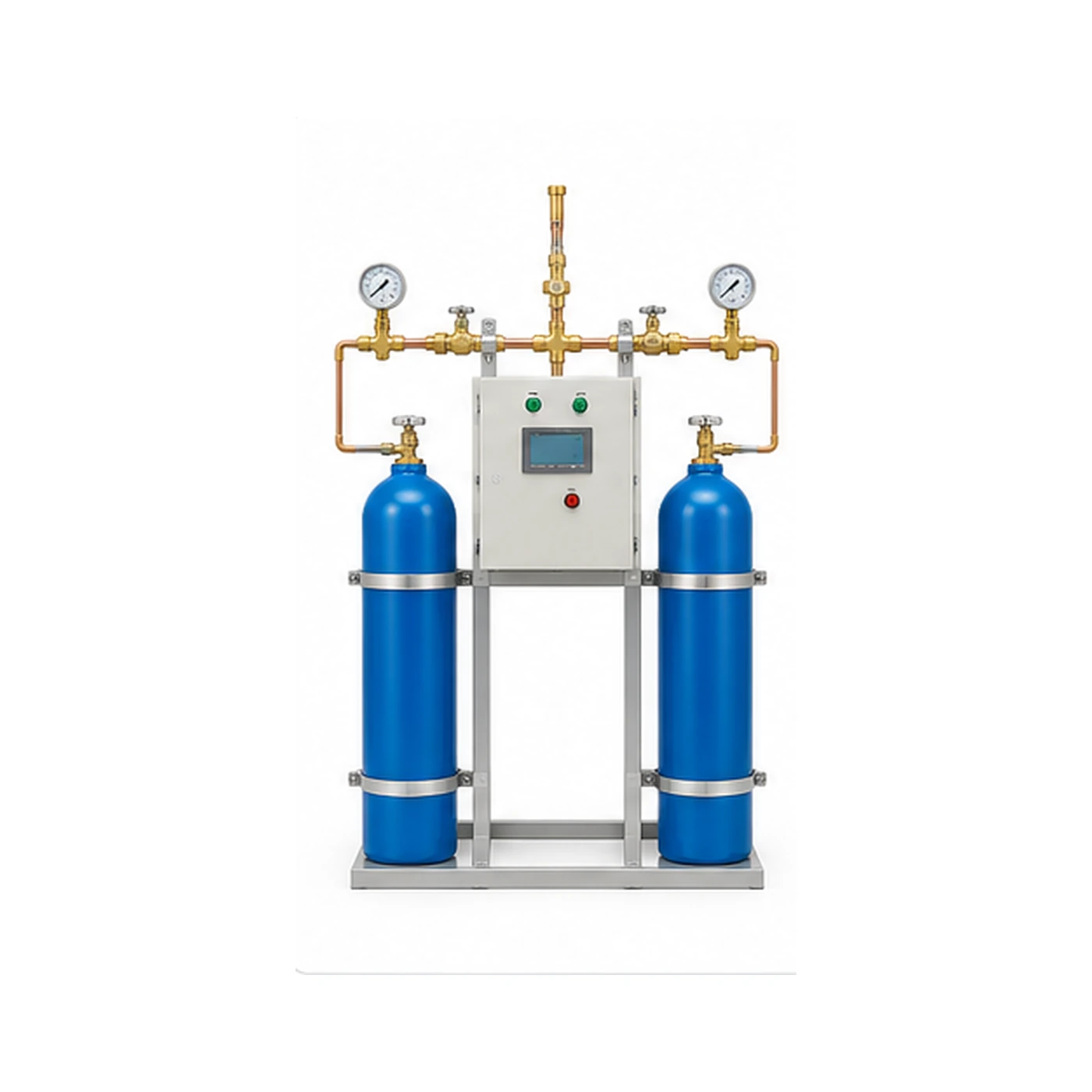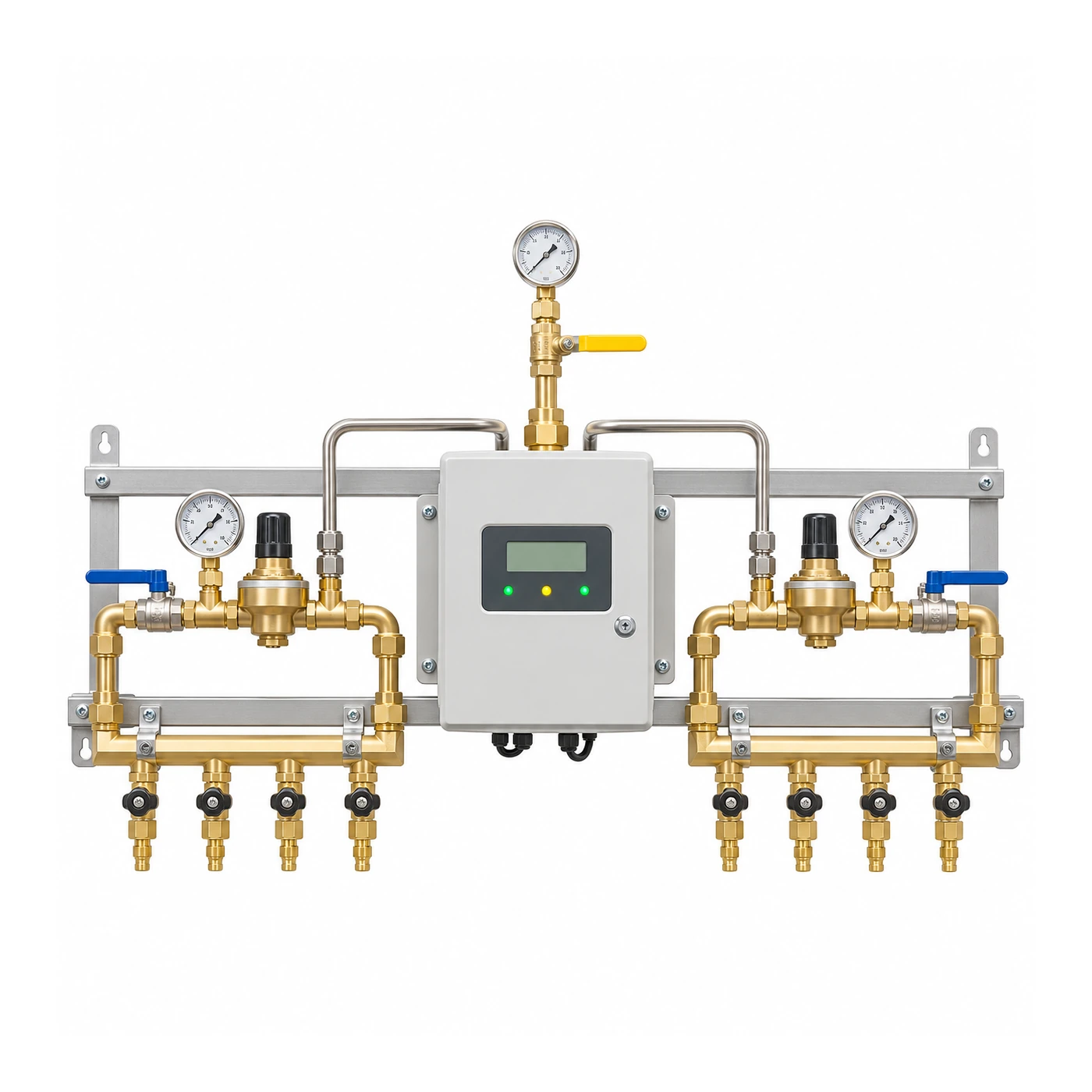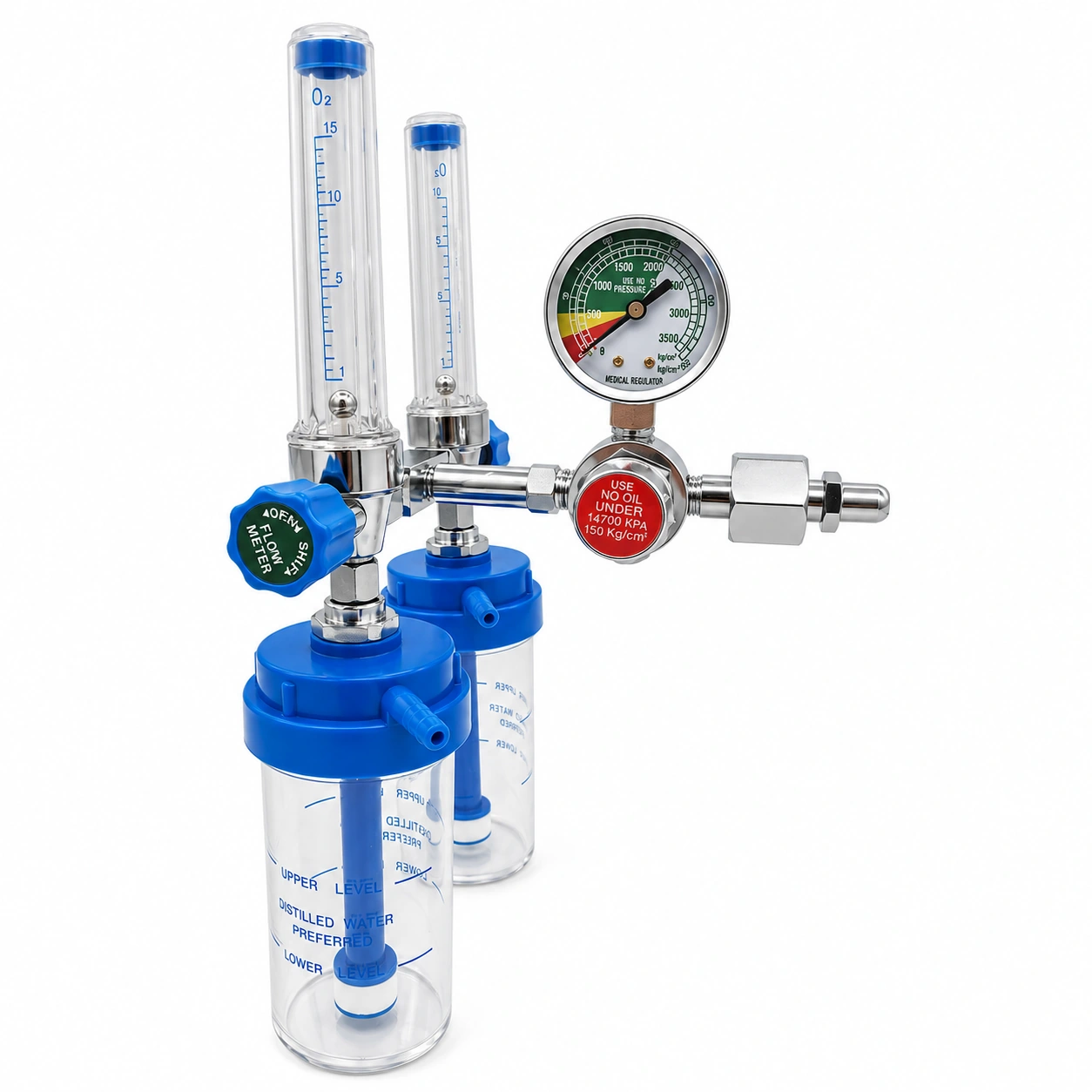
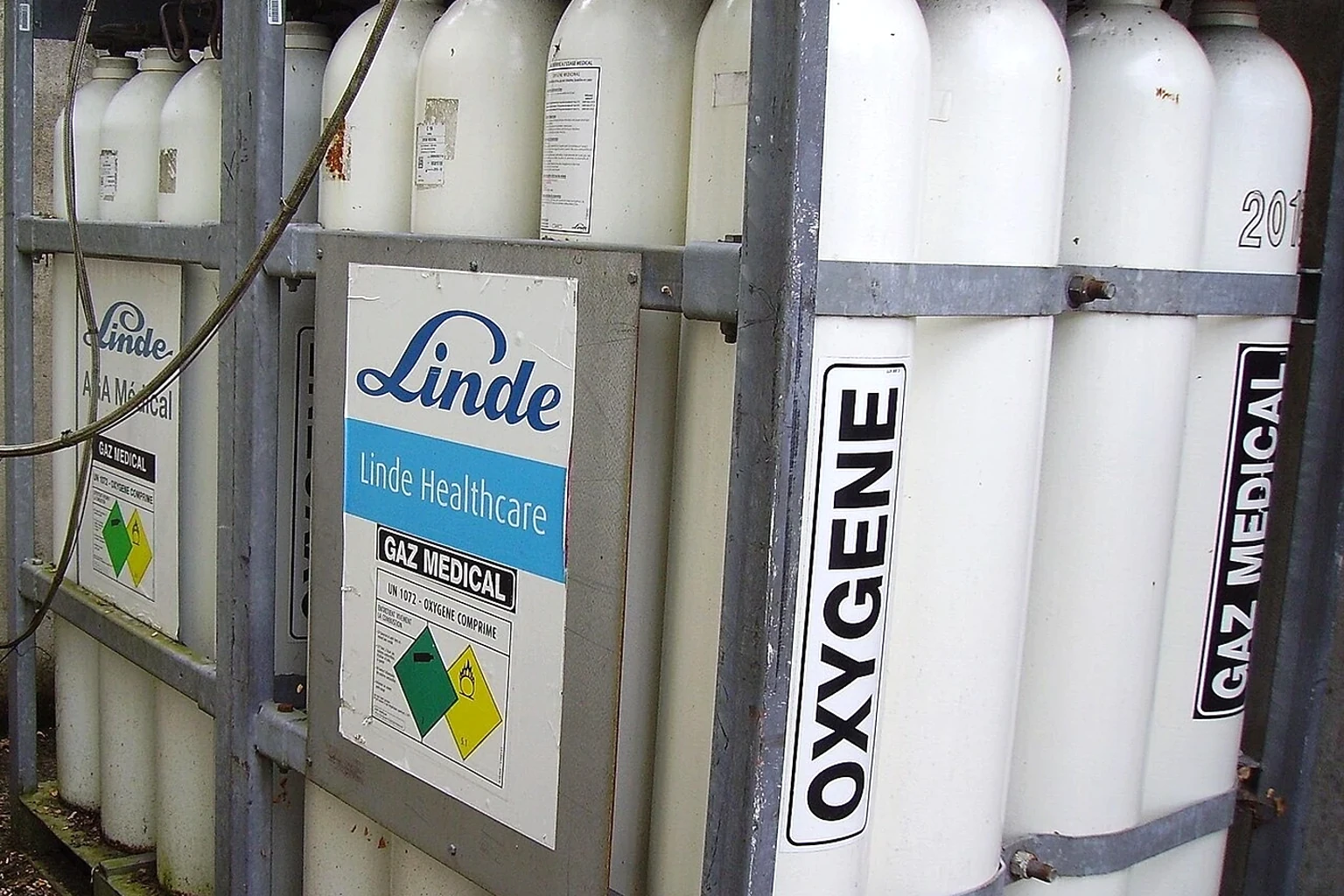
A tender may describe a medical oxygen manifold as “2 × 10 cylinders” without explaining why ten cylinders were selected per bank. The same physical arrangement can perform very differently depending on cylinder specification, approved gas demand, usable inventory assumptions and replenishment arrangements.
A reliable bank-capacity worksheet exposes these inputs. The result supports a discussion among hospital engineering, the medical-gas designer, the gas supplier and procurement; it is not a substitute for the source capacity and resilience design required by applicable regulations.
Define what a bank must accomplish
A cylinder bank may be part of a primary, secondary or reserve source arrangement, depending on the hospital's approved source design. A two-sided automatic-changeover manifold is not automatically equivalent to a fully independent reserve source.
Before counting cylinders, the design authority must identify: the gas service; the intended role of each bank; the required performance at the manifold outlet; the defined maximum demand cases; any operation during source changeover; and which separate source components provide continuity.
Ask the supplier for the exact medical-gas cylinder model, nominal service pressure, accepted gas contents, valve connection family and the local gas supply contract.
Do not confuse geometric volume with gas contents
Cylinder *water capacity* is the internal container volume. The usable gas contents for a compressed medical gas depend on the gas, filling condition, temperature, relevant conversion/measurement method and practical operating limits. These values are not interchangeable.
Use the supplier's documented gas-content or inventory method rather than multiplying nominal cylinder water volume by nominal filling pressure without checking assumptions. Do not apply compressed-gas relationships indiscriminately to liquefied gases such as nitrous oxide or carbon dioxide.
The worksheet should record whether values are expressed as gas volume at defined reference conditions, mass or another recognized measurement unit, and should carry that unit through every calculation.
Define the worksheet columns
Use one row per bank/configuration:
- Gas and required medicinal-gas specification.
- Cylinder supplier, exact cylinder/valve type and approved connection family.
- Number of cylinders in the bank, individual declared contents and inventory unit.
- Usable contents after the project-approved allowance for unavailable inventory and relevant operating constraints.
- Approved demand scenario and average consumption in consistent units.
- Estimated bank endurance for that scenario, marked explicitly as a planning estimate.
- Changeover and reserve-source design reference.
- Delivery/replenishment lead time and whether a full replacement bank is practically available.
- Approver, revision and uncertainty/evidence notes.
Avoid labeling the resulting endurance “guaranteed operating hours”; demand and availability can vary.
Illustrative arithmetic with deliberately hypothetical inputs
Suppose a planning model has six identical cylinders and a verified usable inventory assumption of 6,000 litres per cylinder at the same defined reference condition. The model inventory is:
6 cylinders × 6,000 litres = 36,000 litres.
For an *illustrative* constant usage of 300 L/min, arithmetic endurance is:
36,000 L ÷ 300 L/min = 120 minutes.
These figures are purely mathematical examples and not design capacities, cylinder ratings, pressure settings or clinically acceptable operating duration. Real bank sizing must consider the proper duty, pressure regulation, usable inventory, changeover behavior and the required source architecture. A different demand case can yield a very different result.
Model time and volume separately
A common spreadsheet error is to assume a four-hour nominal gas inventory proves the system can provide the approved high flow for those four hours. Capacity and rate are separate questions: the manifold and regulators must deliver the specified flow and pressure under the applicable operating conditions, while cylinders and logistics determine the available inventory.
Ask the design authority to verify both. Document relevant regulator/manifold performance evidence and the accepted engineering calculation.
Review replenishment and the next bank change
A left/right bank configuration provides a visible practical unit for replenishment planning. The gas supplier still needs time to deliver, collect or exchange cylinders. The hospital must define how bank status is supervised, when replacement is requested and how abnormal conditions are escalated.
Do not place invented “order at X bar” advice in the public procurement document. Any actual changeover, connection/disconnection or operating action belongs to the hospital's approved procedures and competent personnel.
A useful planning review asks what would happen if the expected delivery does not arrive. The answer should reference the independent source and contingency strategy, not merely another estimated cylinder count.
Common procurement errors
- Counting empty, quarantined or incompatible cylinders as usable inventory.
- Comparing two quotes whose “10-cylinder bank” uses different cylinder sizes or gas contents.
- Assuming nominal regulator inlet capability establishes complete system endurance.
- Ignoring who supplies pigtails, cylinder restraints and bank identification.
- Treating a standard two-bank manifold as proof of an independently protected source system.
- Omitting actual refill and exchange lead-time evidence from the decision.
A transparent worksheet makes these differences commercially visible before the hospital signs an order.
Component documentation and BWC Medgas
BWC Medgas can quote specified manifold components, medical gas regulators and appropriate valves when supplied with the project-approved duty and connection schedule. System capacity calculations and medicinal-gas supply contracts remain the responsibility of the appointed project parties.
Discuss a component schedule with BWC Medgas.
Questions from procurement teams
Is the number of cylinders on each bank itself a performance specification?
No. Cylinder contents, delivery duty, pressure-regulator performance, source configuration and replenishment obligations must also be identified.
Can the same cylinder capacity arithmetic be used for oxygen and nitrous oxide?
Not automatically. Gas properties, storage conditions and the accepted inventory measurement method differ.