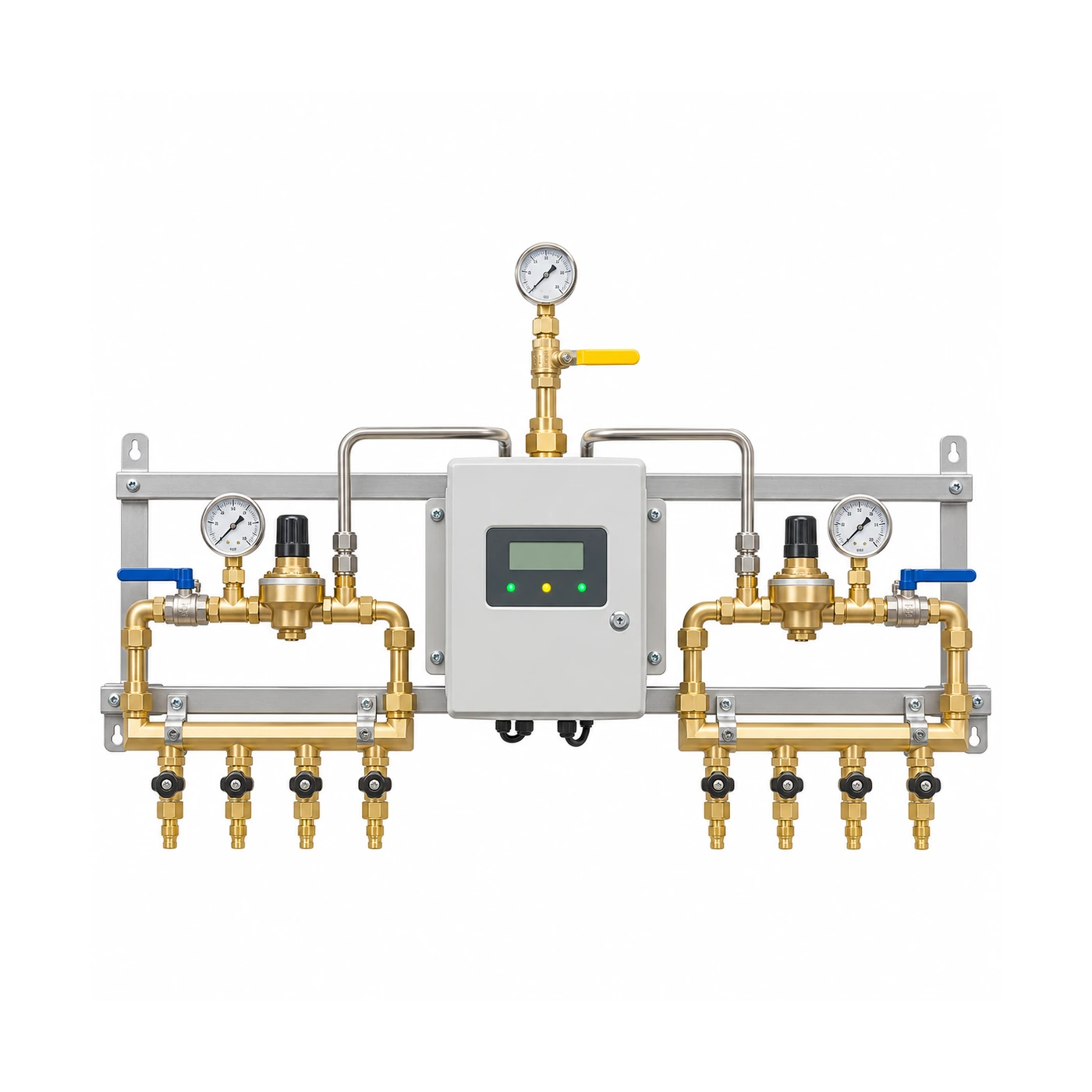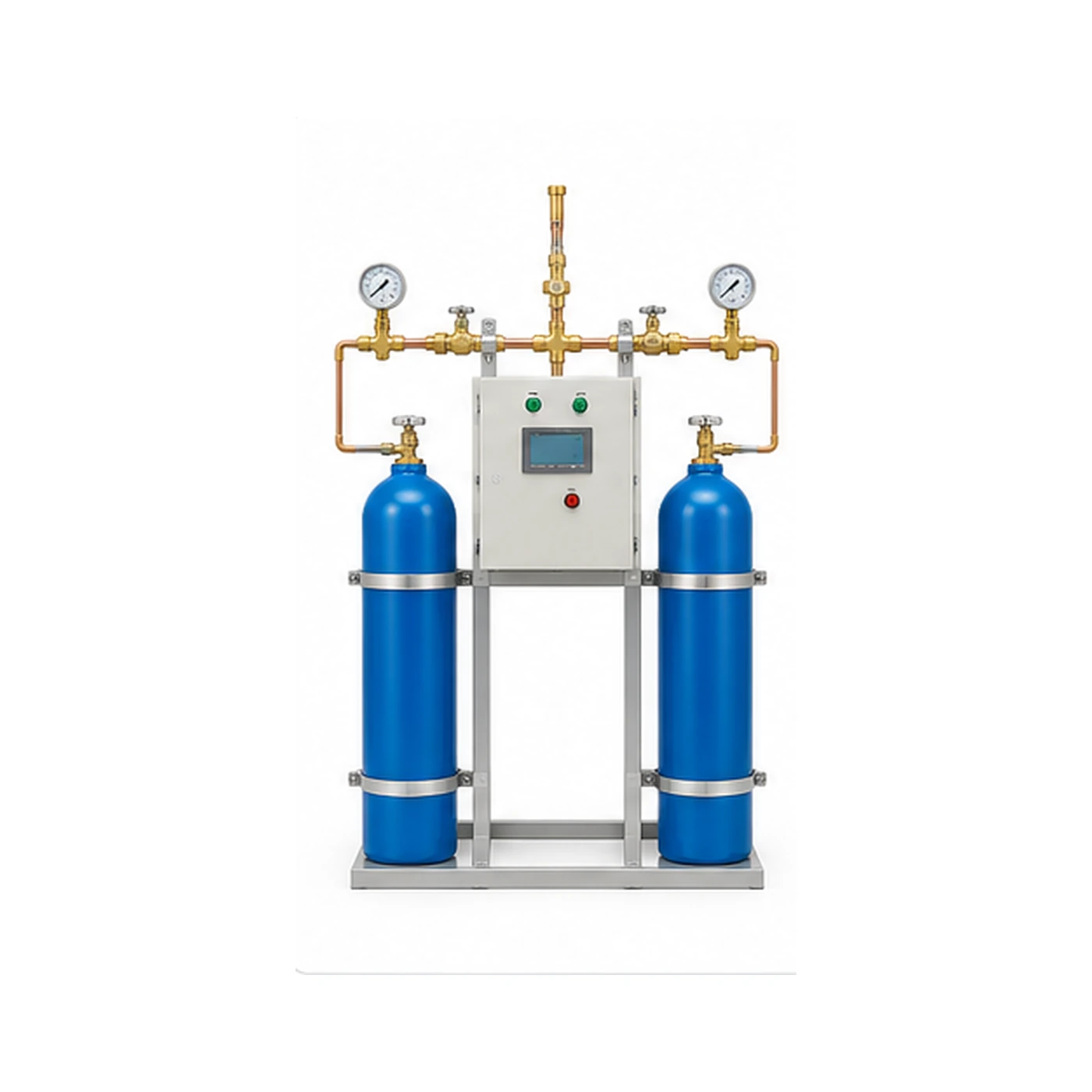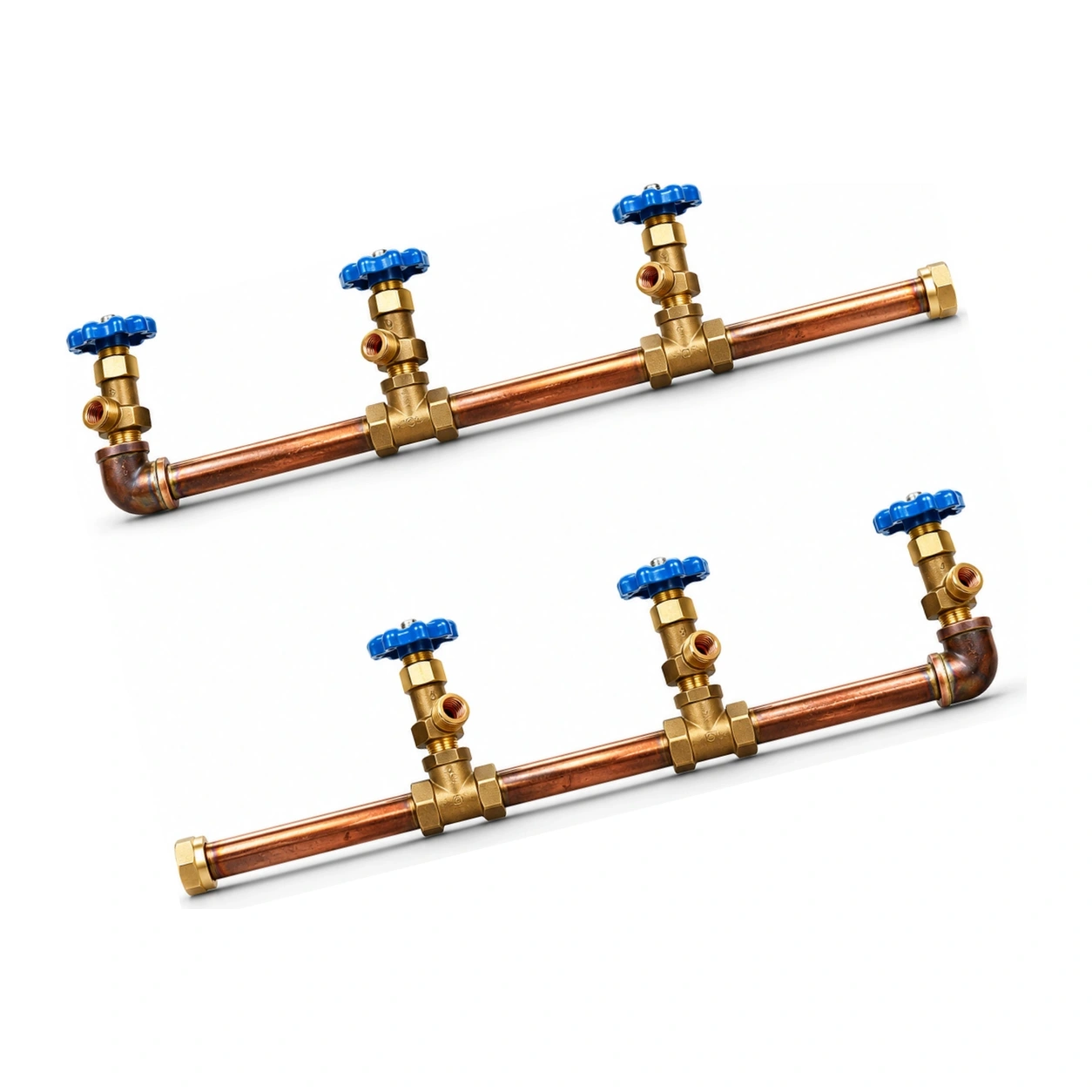

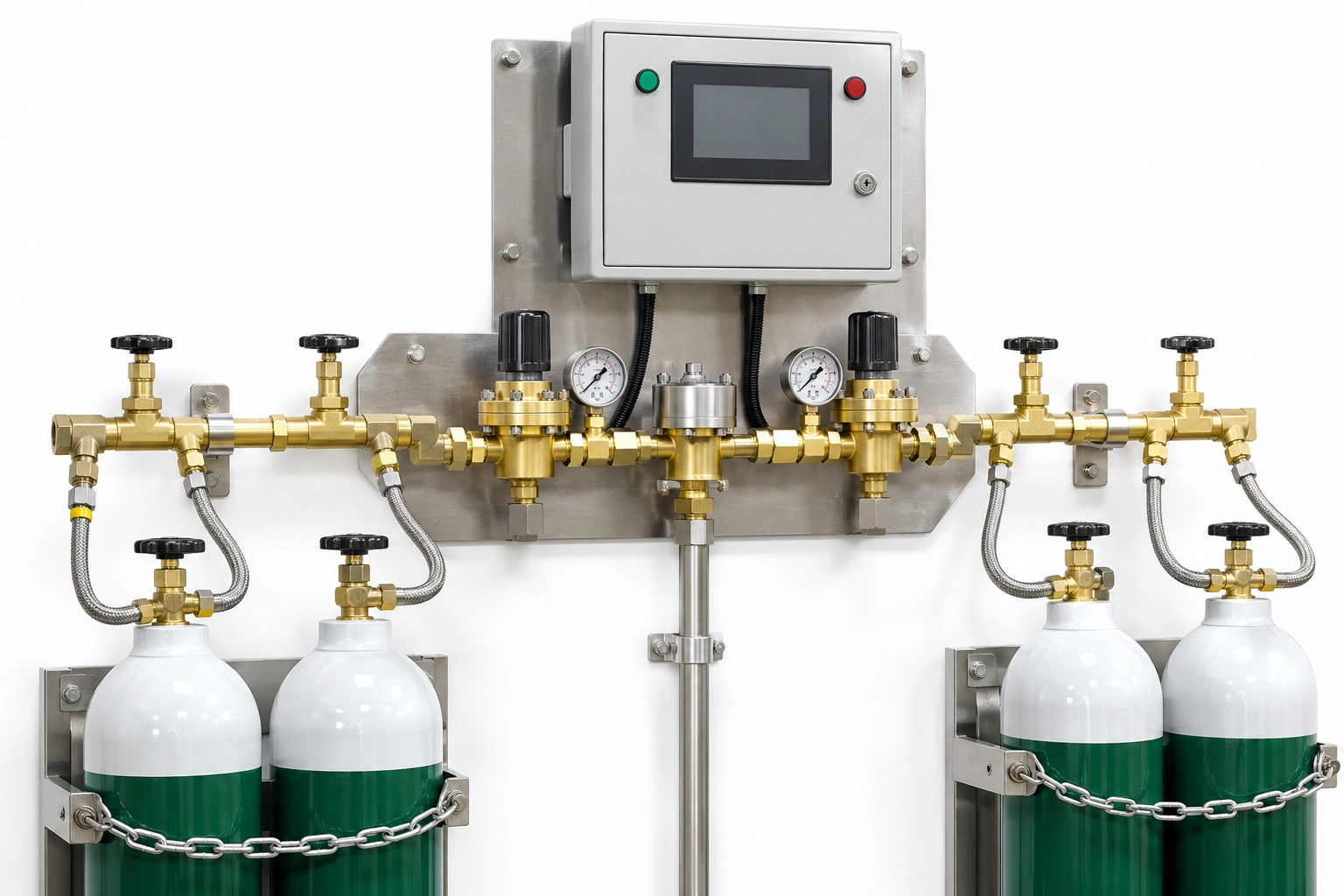
Comparing medical gas manifold tenders by “price for 2 × 10 automatic oxygen manifold” can lead to a misleading award. One supplier may include connectors, pressure regulators, alarm relays, required documents and service support; another quotes only a header, controller and display.
The tender committee needs a normalized bill of scope and a technical risk assessment before ranking commercial offers. The objective is not to reward the most expensive quote, but to make every exclusion and performance assumption visible.
Make every bidder price the same deliverable
Build the tender from the approved system source design and an interface schedule. Each response should identify:
- Exact gas service and intended source role.
- Number of specified banks, supported cylinder configuration and approved cylinder connection family.
- Changeover function and declared operating principle.
- Manifold pressure regulators, relevant line regulation and included accessories.
- Pigtails, headers, valves, gauges, restraints and other explicitly specified hardware.
- Monitoring/alarm panel and signal interfaces, if applicable.
- Required factory product evidence, drawings and tests.
- Packing, transportation, delivery conditions and any on-site services.
- Warranty, maintenance support, spare part identification and lead times.
For an item omitted or offered separately, require excluded, optional with price or not offered—not a blank cell.
Use a technical compliance gate before prices
The committee should define mandatory attributes that require approval before commercial ranking: medical intended use, correct gas-specific interfaces, declared duty, product-level conformity evidence, system compatibility and any local authorization or project-specific requirements.
A supplier's statement “CE and ISO certified” may be useful background but cannot replace exact model and configuration evidence. Ask for the relevant technical data and the issued drawings, and compare them with the correct standard scopes.
ISO 7396-1:2016 governs MGPS system functions. ISO 10524-2:2018 applies to manifold and line pressure regulators. ISO 21969:2009 applies to certain high-pressure flexible medical gas connections. They are complementary, not interchangeable certification labels.
Normalize prices by line item
A useful table:
| Scope line | Vendor A | Vendor B | Normalization action |
|---|---|---|---|
| Complete source assembly as defined | Included | Partially included | List missing items |
| Approved pigtails/connectors | Included | Optional | Add approved option cost |
| Alarm/interface outputs | Documented | Unconfirmed | Technical hold |
| Factory evidence | Included | Generic certificate | Request model-specific records |
| Installation/site verification | Excluded | Excluded | Separate project allowance |
| Spares and service | Offered | Not offered | Request comparable plan |
A low bid with an unapproved technical gap should not become a compliant bid simply because the purchaser can assign an estimated repair cost.
Compare total evaluated cost and scope ownership
Use the same currency and commercial terms. Record equipment price, freight/import cost where relevant, project integration expenses, site-specific commissioning/witness costs, planned spares, annual maintenance and potential replacement costs over a clearly stated planning period.
Illustrative example, not market pricing: Offer A costs USD 18,000 for the supplied assembly, plus USD 3,000 of necessary separately priced compatible accessories, plus USD 5,000 of explicitly budgeted installation and integration. The normalized baseline is USD 26,000. Offer B costs USD 24,000 including accessories but excludes the same USD 5,000 site package, producing USD 29,000. These subtotals exclude warranty differences, operating expense, taxes/risks and other factors until separately evaluated.
The difference is a useful calculation, not evidence that either offer is technically acceptable or commercially superior.
Evaluate warranty and operational support
Source equipment may need technical support years after commissioning. Compare warranty start, exclusions, locally available parts, response time, permitted maintenance arrangements, spare availability and the scope of troubleshooting documentation.
Where the gas cylinder supplier differs from the manifold vendor, separately evaluate replenishment and connector compatibility. A convenient warranty is of little value if the manufacturer cannot support the exact source hardware in the customer's country.
Create a weighted evidence log
A tender committee can use weightings determined before bids are opened. Suggested criteria are technical conformity, documented functional acceptance, interface completeness, total evaluated cost, service capability and supply risks.
Do not invent a universal percentage weighting. The owner and procurement rules determine the trade-offs and mandatory pass/fail gates.
Each score should cite the relevant document and revision. A five-star rating based on sales presentations cannot withstand later technical scrutiny.
Record deviations and final acceptance conditions
If a bid proposes a different manifold connection or control method, identify the deviation, its effect on drawings and site tests, the responsible design reviewer and the acceptance/rejection decision. Add approved deviations to the contract.
Ask for an as-supplied component register, final drawings, factory evidence and a statement of open tasks before delivery. The hospital's site verification remains a separate obligation.
BWC Medgas component scope
BWC supplies selected manifold products, medical gas regulators and related valves, under exact project specifications. It is important to compare these component offers with a project that may also include source plant, cylinders, gas delivery and site services.
Submit your technical procurement schedule to BWC Medgas.
Frequently asked questions
Can a lower bid be accepted before a gas-connector discrepancy is resolved?
A mandatory compatibility issue must be assessed and formally resolved by the competent project authority; price alone does not settle it.
Does a product quotation normally include site commissioning?
Not necessarily. The buyer must identify explicitly which parties perform and document site work.