
A medical gas manifold may remain in service for years while its original supplier catalogue and model details become difficult to find. Maintenance workers may have an old drawing, a box of unidentified pigtails and an alarm-history printout, yet lack the equipment-specific information required to plan a safe authorized intervention.
A manifold asset register should connect installed equipment, current documentation, planned inspections and controlled replacement parts. This guide focuses on asset management and assurance. It does not instruct readers to disconnect cylinders, open high-pressure fittings or adjust regulators.
Record the installed asset, not the product family
Create a unique tag for every manifold assembly and source bank, linked to the healthcare facility's approved gas service and source schematic. Record exact manufacturer, model, revision, installed configuration and serial/batch details where applicable.
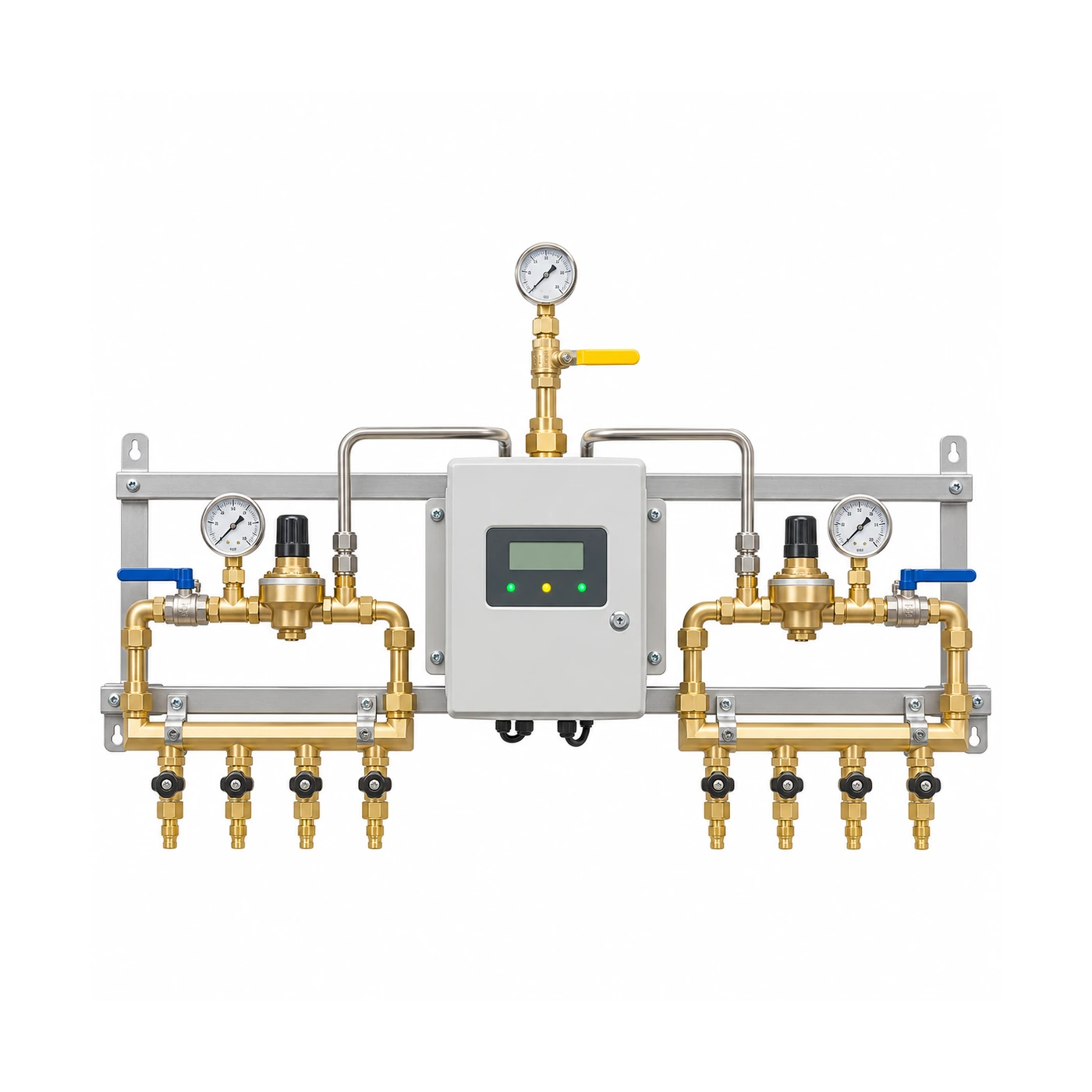
Break the assembly into critical maintainable items appropriate to the vendor and approved maintenance plan:
- Source cabinet or changeover mechanism.
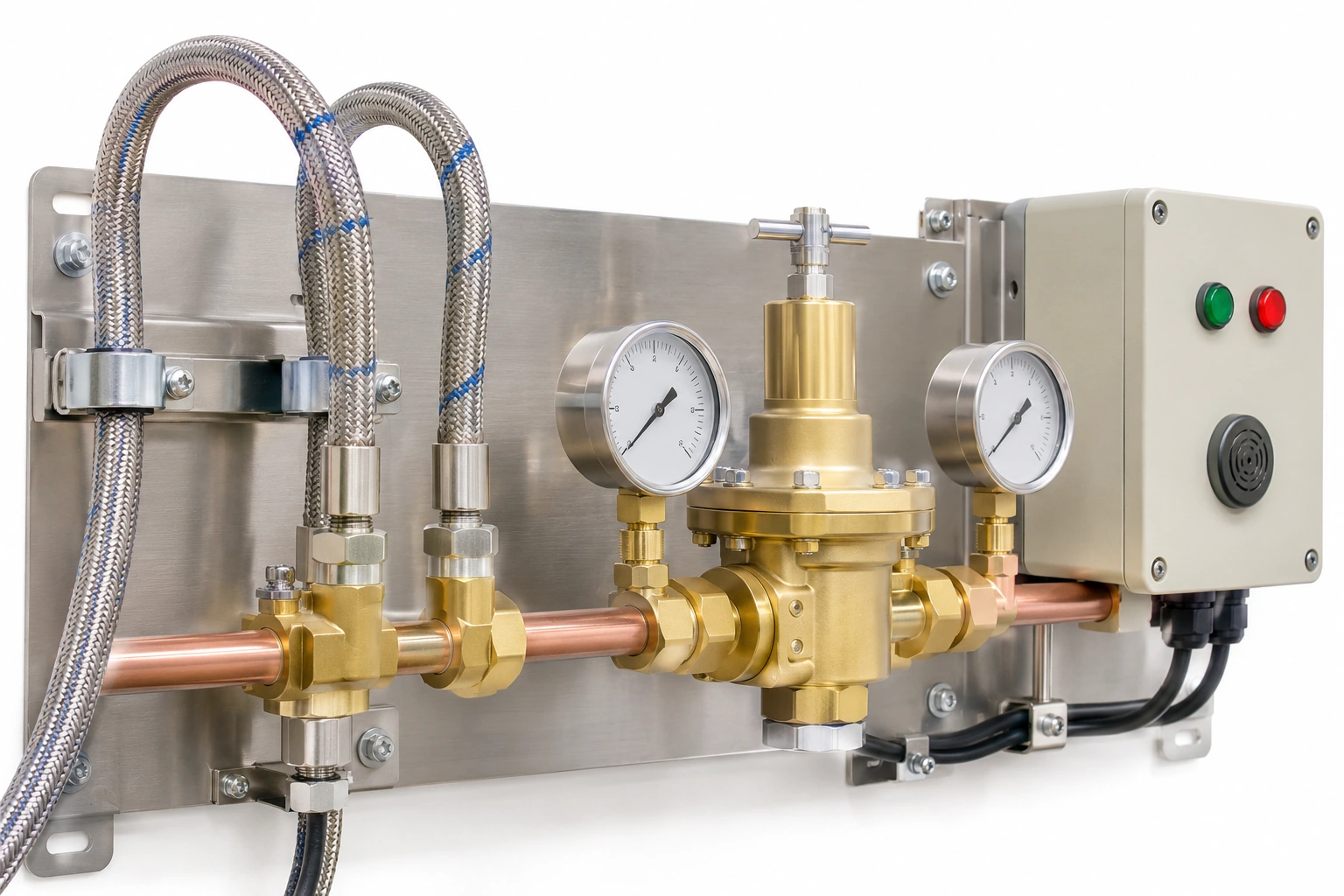
- Manifold and any downstream pressure-regulating component.
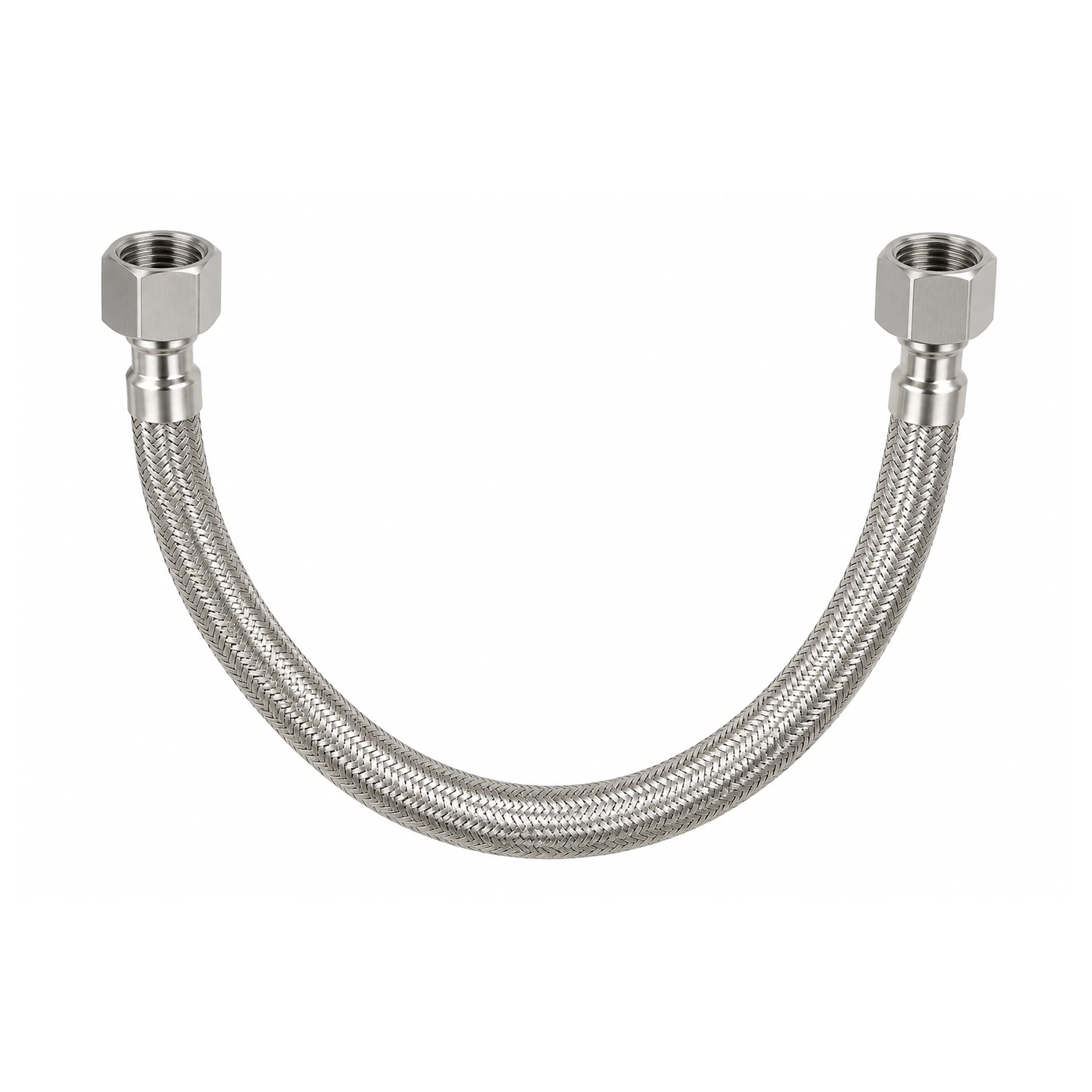
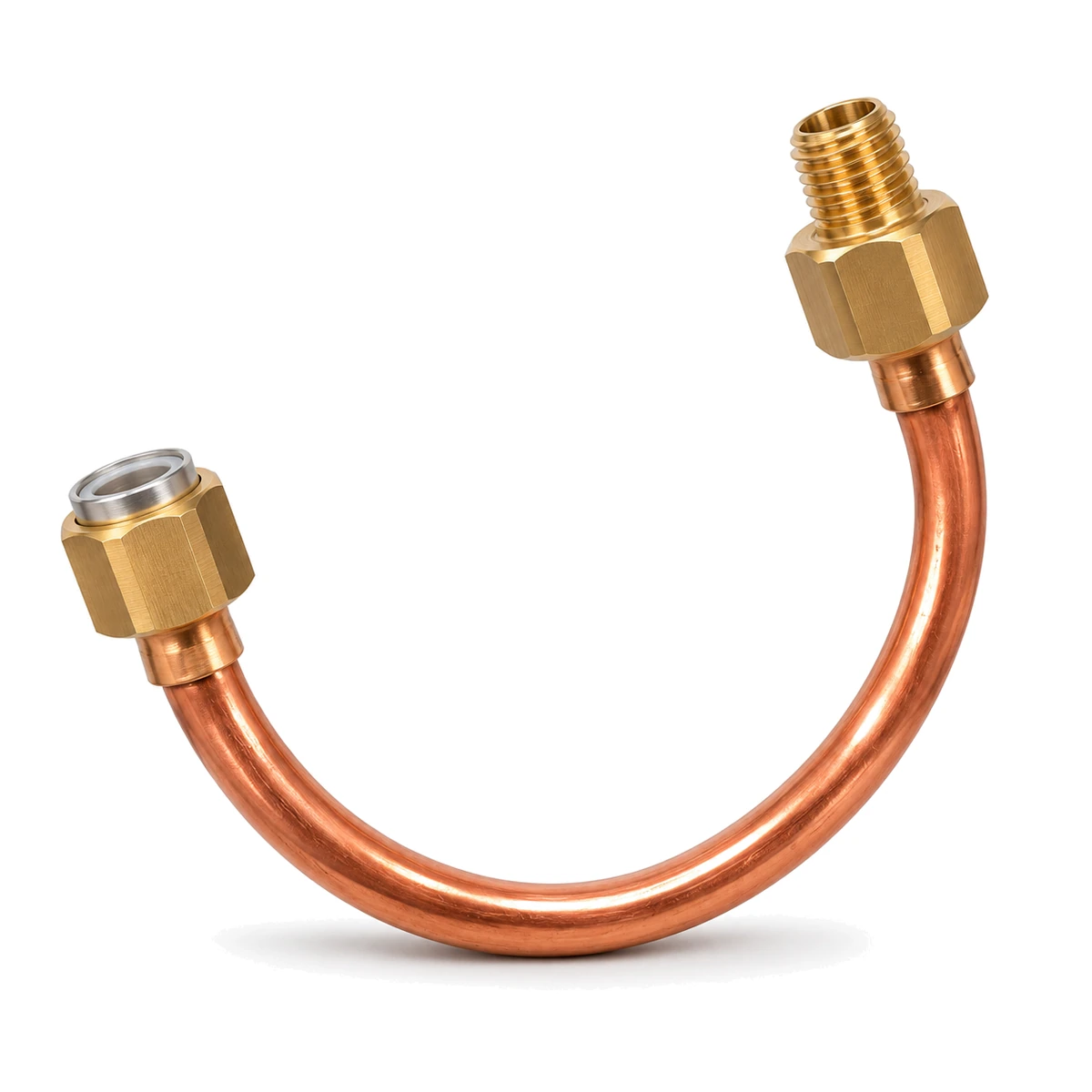
- High-pressure flexible connectors/pigtails, header interfaces and restraints.
- Pressure indication/transmitters and agreed monitoring/alarm interface.
- Electrical/control components where relevant.
- Gas-specific labels and equipment documentation.
- Manufacturer-defined wear/replacement parts.
A register that says only “oxygen manifold, 20 bottles” is not sufficient for component-specific maintenance.
Keep a version-controlled document bundle
Link each asset to the latest accepted P&ID, approved connection drawings, equipment manual, performance specifications, factory/site test records and maintenance instructions.
If the manufacturer changes a component model, record the new model, change approval, effect on compatibility and updated documentation. An old PDF should remain identifiable as superseded rather than silently disappearing from the records.
Equipment-specific maintenance intervals and allowable interventions come from the approved manufacturer instructions, applicable standards and facility management system. This article intentionally does not invent universal changeout dates.
Design a useful inspection record
A controlled inspection form can include:
| Field | What to record |
|---|---|
| Equipment tag and location | Exact asset and source service |
| Date and authorized person | Who completed the approved inspection |
| Document revision | Procedure and manufacturer guidance used |
| Observable condition | Findings against approved checklist |
| Status and risk | Acceptable / action required / unavailable |
| Defect reference | Unique issue and affected component |
| Corrective work owner | Designated competent personnel |
| Closure evidence | Approved report, replacement identity, required test |
The record should capture facts and approvals. It is not a public step-by-step procedure for live high-pressure source work.
Manage replacement parts by compatibility
A pigtail or regulator with similar external dimensions is not necessarily an approved replacement. For spares, record the exact gas service, compatible model, drawing revision, approved supplier and product documentation.
Separate genuine compatible substitutes approved by the project authority from merely “similar” commercial offerings. A valve connection adapter proposed as an emergency shortcut should not be introduced by procurement without a formal safety and compatibility review.
Create a spare-part matrix that identifies lead time and criticality. The cost of a spare is not the only consideration: an unavailable part can extend operational restrictions.
Review alarm and event histories
If the system records changeover events or source alarms, retain them according to the facility's policy and review relevant trends with responsible staff. An increase in unexplained events, recurring warnings or incomplete records can justify a competent technical investigation.
Avoid treating alarm acknowledgment as evidence that the underlying equipment condition was corrected. Link each finding to the defect register and documented resolution.
The hospital's operational manager should have defined who may acknowledge, investigate and close events.
Maintenance planning must respect service continuity
A planned intervention can affect clinical supply availability even if it targets a small component. Coordinate any such work under the hospital's medical-gas management and permit-to-work arrangements, with the approved source continuity and testing requirements.
Maintenance approval and the technical execution of high-pressure work are distinct from simply creating a work order in the asset management system.
Example: an unidentified spare connector
An engineer finds a spare braided connector marked only “medical oxygen.” It looks identical to an installed pigtail, but no drawing or part number confirms the connection on both ends. The appropriate action is to quarantine it from use pending documented compatibility review, not to test-fit it onto a cylinder bank.
The lesson is to control spare specifications before a repair becomes urgent.
Use the asset register to improve procurement
A replacement tender can reference the installed source ID, original equipment, exact connection drawing, desired component function and approval record. This is much clearer than asking a supplier to “send the same valve as last time.”
BWC can discuss specified manifold parts, regulators or valves against a verified asset/part reference. Operational maintenance remains with authorized personnel.
Request model-matched components from BWC Medgas.
Frequently asked questions
Can all braided pigtails be used as interchangeable spares?
No. Intended gas service, connection, pressure duty and manufacturer compatibility must match.
Does recording a maintenance task establish source acceptance?
No. Required technical checks, verification evidence and the hospital's operational release decision are separate.