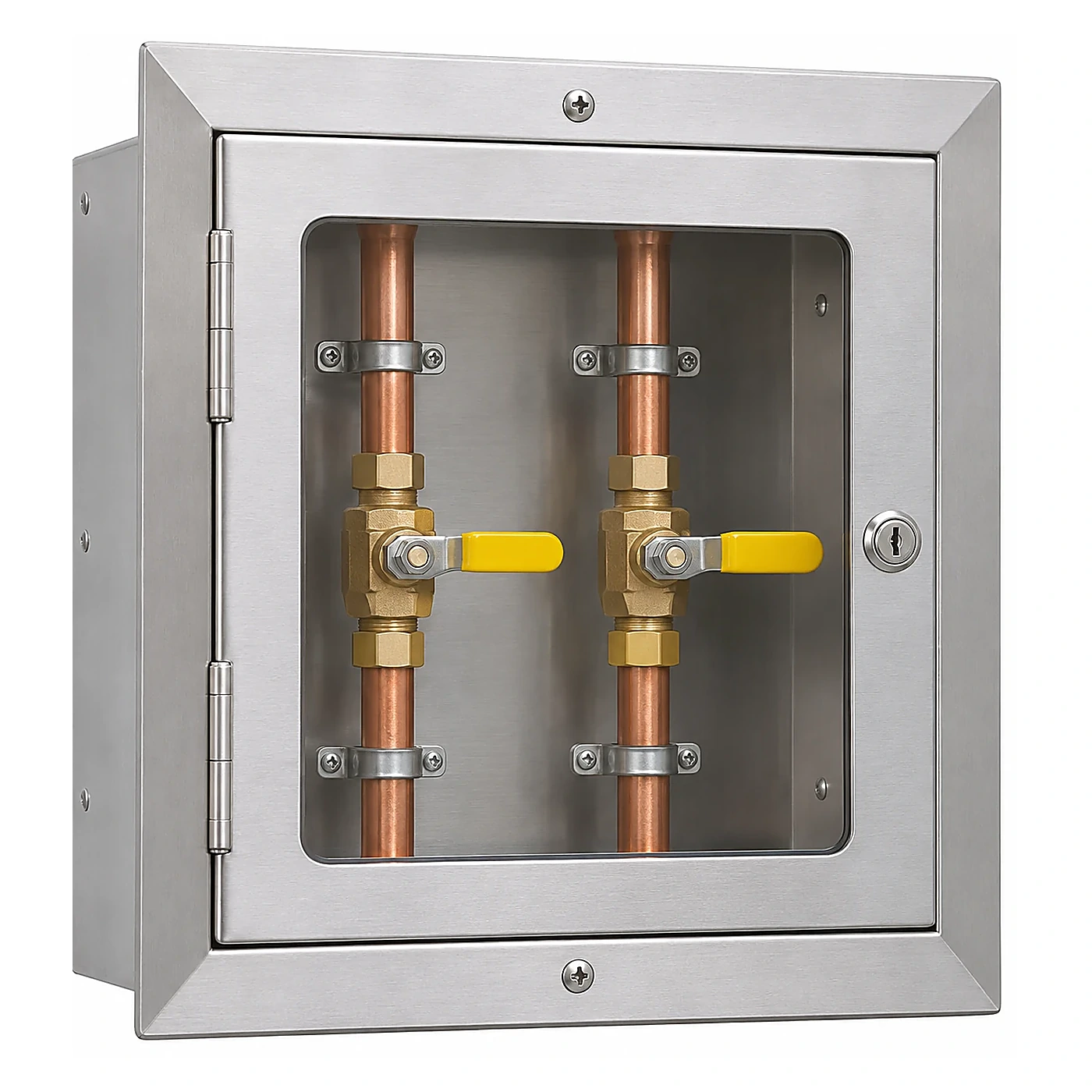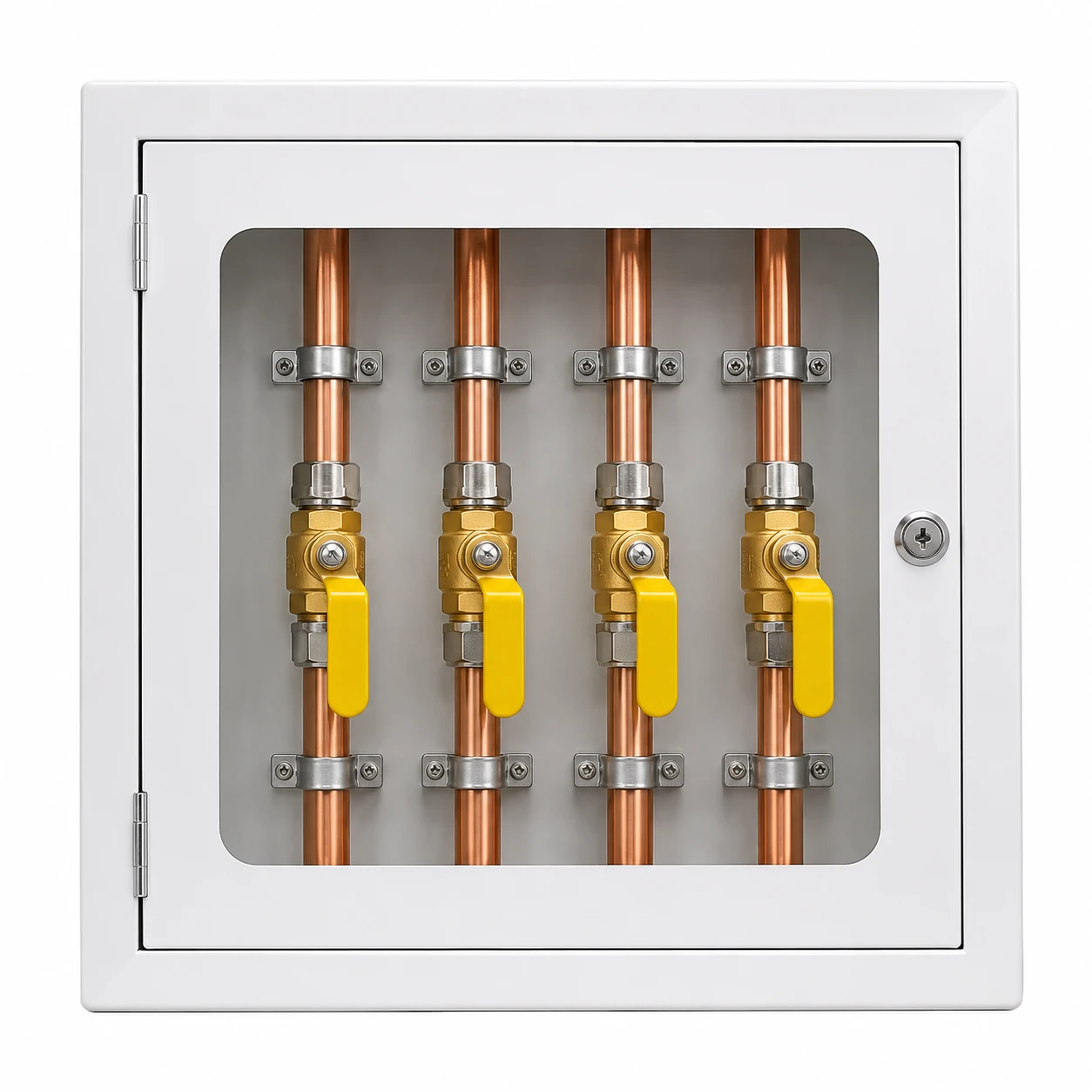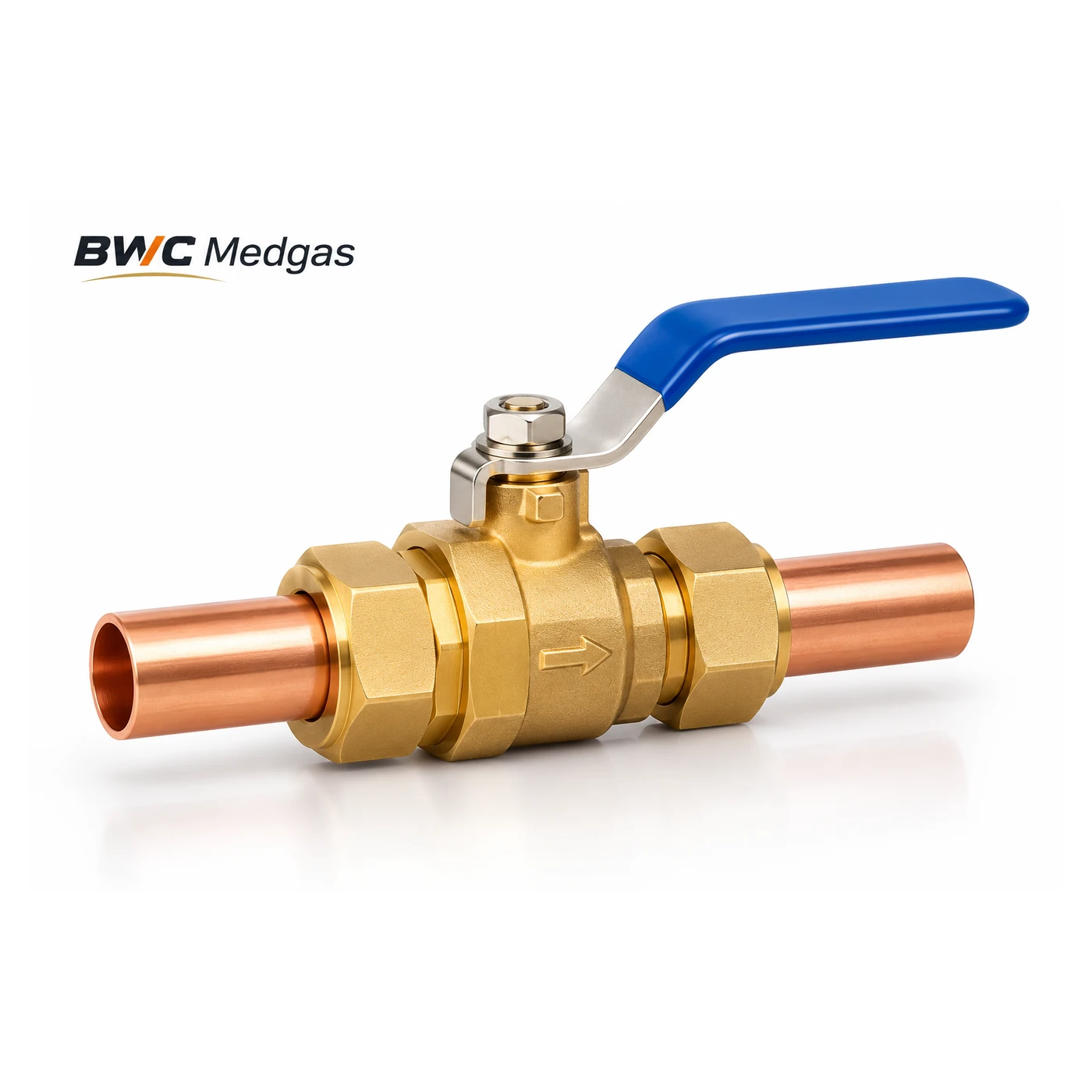


A supplier may receive a request for “medical gas valve, 22 mm” and offer a spring-loaded non-return valve when the design actually calls for an area shut-off valve—or the reverse. Both can look like small pipeline fittings, but their intended functions are different.
A non-return/check valve is intended to limit reverse flow under its specified conditions. A shut-off valve provides the intended deliberate flow isolation function when closed. Neither should be selected merely by pipe size. The approved MGPS design determines which function belongs at each location.
Identify the function on the P&ID
The correct starting point is the controlled system schematic. Record the symbol/asset tag, gas service, pipeline location, required function and acceptance criteria. Do not rely solely on a loosely translated commercial name such as “one-way stop valve.”
The ISO 7396-1:2016 system framework includes shut-off and non-return valves within its pipeline/supply arrangements. The specification should be reviewed under the actual project design rather than inferring purpose from generic supplier inventory.
Compare functions without treating them as interchangeable
| Question | Shut-off valve | Non-return/check valve |
|---|---|---|
| Intended main function | Deliberate isolation of flow when operated/closed | Restriction of reverse flow |
| Typical control concept | Defined operationally controlled open/closed state | Automatic response to direction/pressure conditions |
| Directionality | According to specified valve/installation design | Direction-specific orientation is central |
| Service/zone significance | May form part of approved isolation map | May form part of approved system backflow control |
| Testing/documentation | Specific shut-off/closure and installed-system evidence | Model-specific backflow performance and installed acceptance |
| Correct procurement data | Service, duty, approved connections, actuation/locking | Service, flow direction, performance, ends and model |
This is a conceptual procurement comparison. Actual design suitability and testing are governed by the adopted standard and manufacturer documents.
Do not infer performance from shape
Two brass bodies with similar threaded or copper connections might contain entirely different internals. For non-return valves, orientation and the manufacturer's declared behavior under specified conditions matter; for shut-off valves, the intended closure and manual/controlled operation must match the system design.
A proposal to replace a check valve with a standard ball valve must be handled as a design deviation, not a procurement discount.
Record gas and material compatibility
For the selected gas service, obtain materials, pressure and flow duty, compatible connections, cleanliness/oxygen suitability where relevant, product labeling and traceability. [ISO 15001:2010](https://committee.iso.org/standard/44250.html) addresses oxygen compatibility within its scope but does not make all valves interchangeable.
Do not assume the medical oxygen line, medical vacuum and tool-air line can share identical internal arrangements.
Separate different locations in the system
A non-return device in a source arrangement and a zonal isolation valve in a clinical corridor may have different monitoring, access, maintenance and criticality. The design must specify the exact function and location. A bill of materials that groups both as “gas valve” should be revised.
Use unique tags and distinct catalogue items. The supplier's quotation must state what is included and what is explicitly excluded.
An example of ambiguous specification
A tender lists “check ball valve for oxygen line,” without a P&ID. Vendor A quotes a non-return device; Vendor B quotes a lockable isolation valve. Their prices cannot be compared as equivalent.
Ask the designer to resolve the needed flow/control function, project service and connection, then reissue the technical item schedule. Choosing the cheaper model before that review could deliver the wrong safety function.
Define inspection and acceptance evidence
Ask for an exact model datasheet, intended use and installed function, suitable materials, relevant test evidence, dimension/connection drawing and supplier traceability. Site verification remains with qualified personnel under the applicable MGPS programme.
NHS HTM 02-01 (2026) and SHTM 02-01 (2026) provide healthcare system design and testing contexts. A manufacturer's generic valve test does not prove the completed network functions correctly.
Avoid prohibited field workarounds
A missing non-return valve should not be replaced temporarily by closing an unrelated live-zone valve without authorized design and operational review. Similarly, turning a directional check valve around to “see what happens” is not an acceptable verification procedure.
Commissioning tests and any affected clinical supply controls must be designed and executed by competent authorized people.
BWC Medgas product selection
BWC has selected check valves and medical gas shut-off valves plus area isolation assemblies. Provide the correct approved function, service, model duty and drawing instead of requesting an unspecified “medical valve.”
Discuss a valve-function-specific purchase schedule with BWC Medgas.
Frequently asked questions
Is a check valve a substitute for an emergency zone isolation valve?
No. One-way flow control and accessible deliberate isolation are different functions.
Can valve size alone determine which device should be supplied?
No. Service, function, direction, duty, connections and design approval all matter.
Primary technical references
- ISO 7396-1:2016 — Medical gas and vacuum pipeline systems
- NHS England — HTM 02-01 (2026)
- NHS Scotland — SHTM 02-01 (2026)
- [ISO 15001:2010 — Oxygen-service compatibility](https://committee.iso.org/standard/44250.html)