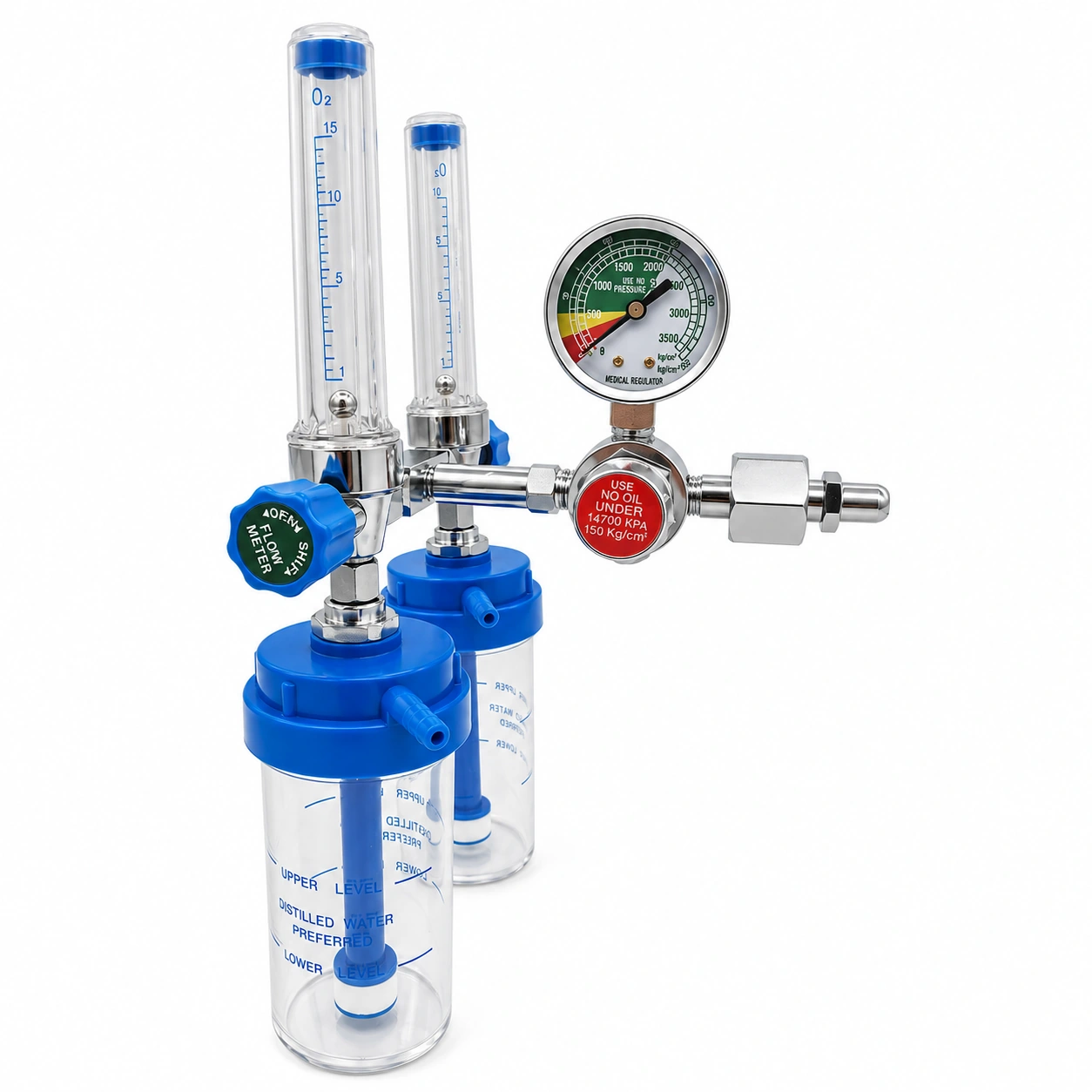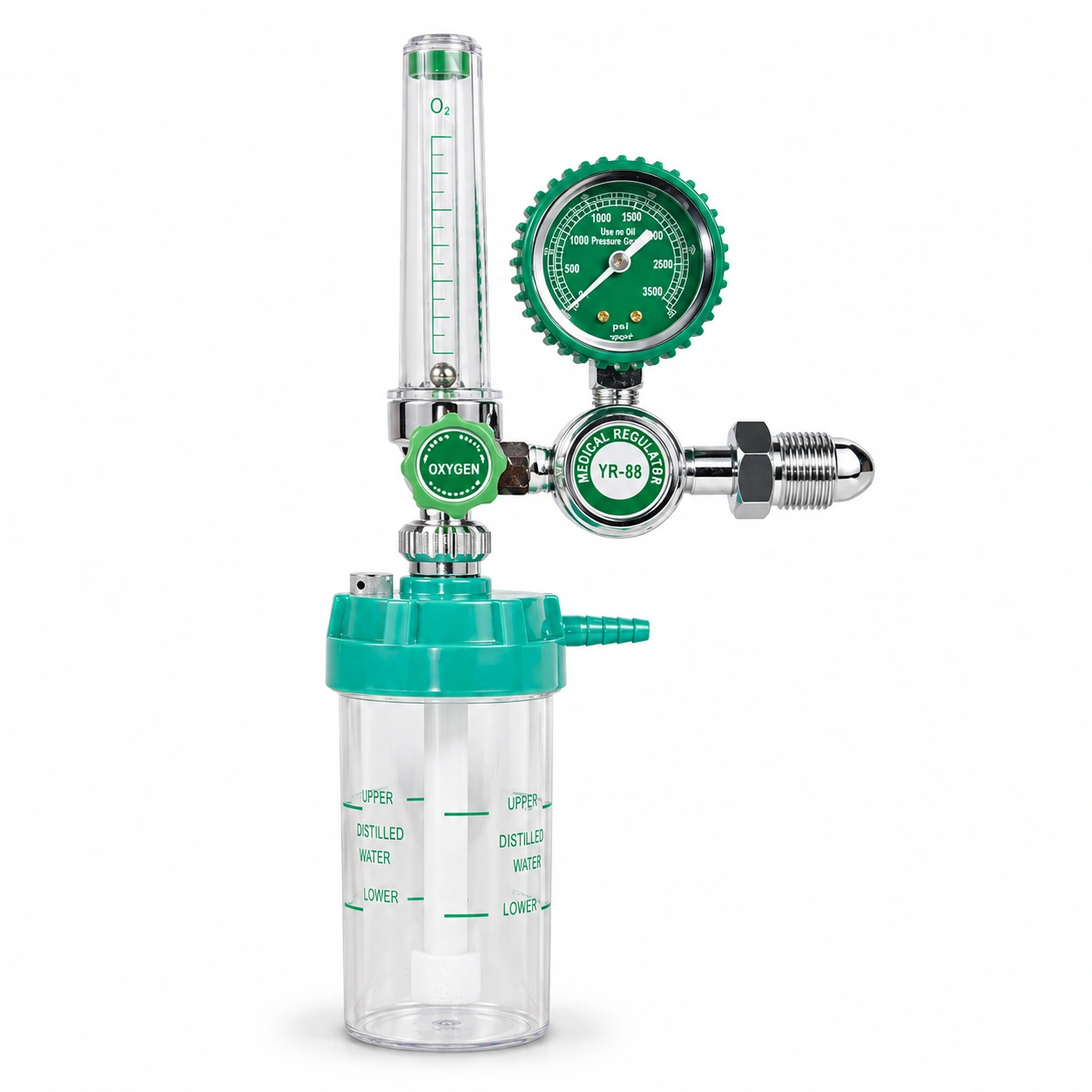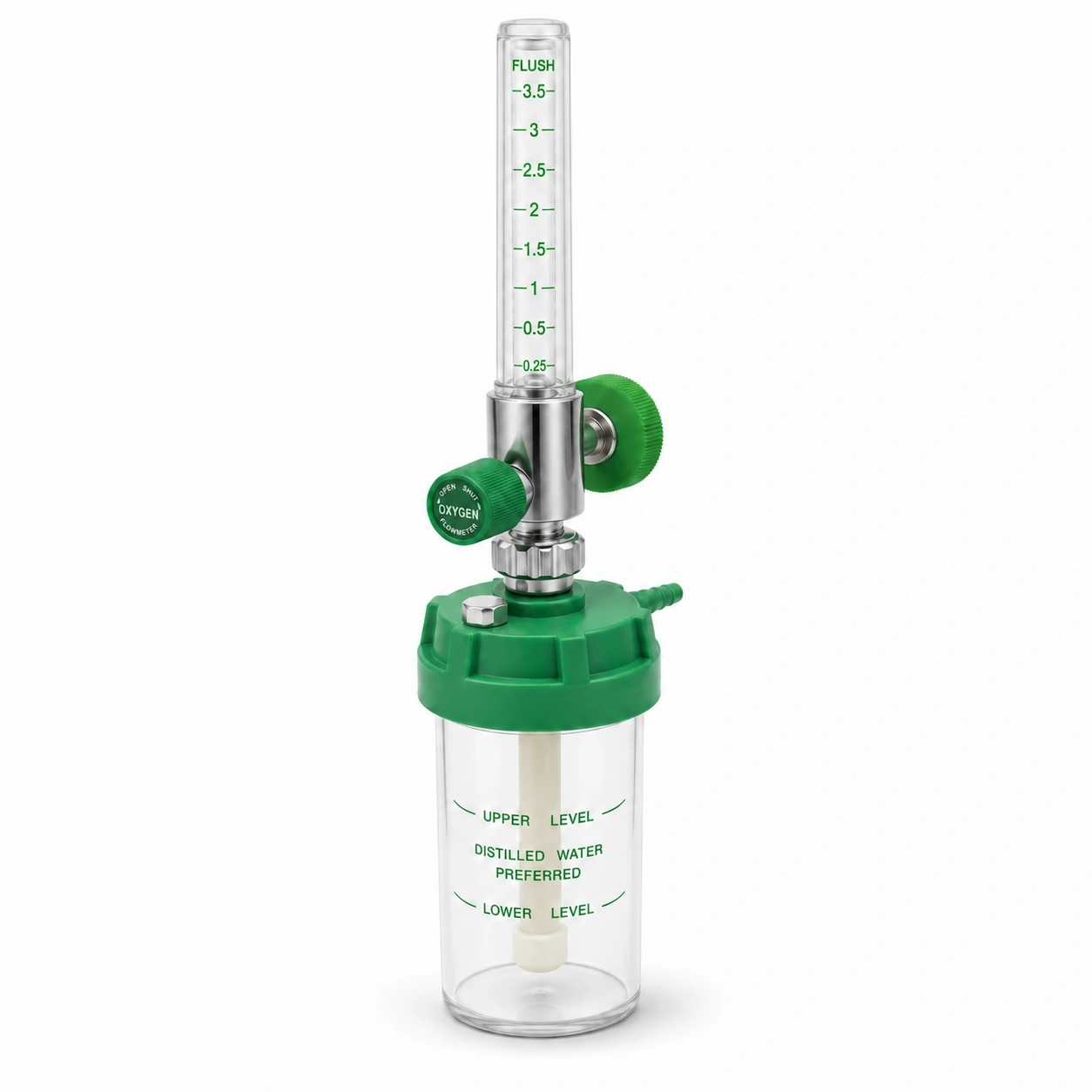

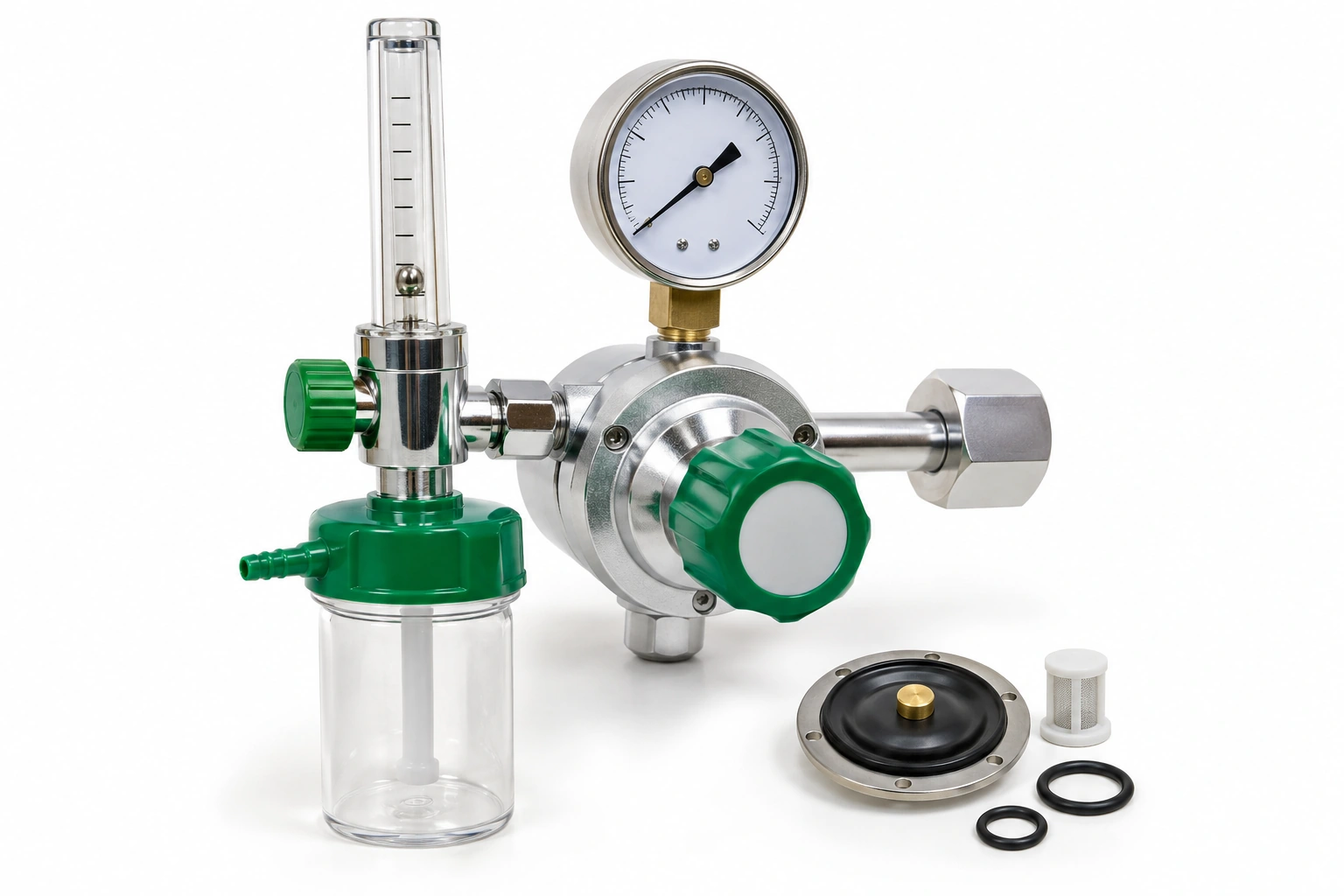
Hospital tenders frequently request “medical oxygen regulator with gauge” or “flowmeter kit” without defining exactly which inlet, outlet, accessories, regulator duty, supported gas and test documents are included. Comparing prices from those phrases rewards incomplete quotations.
A normalized bid matrix separates technical eligibility from commercial evaluation, and makes the replacement-parts burden visible. The same approach applies to distributor procurement, hospital renovations and multi-hospital framework agreements.
Start with a technically complete reference item
Specify the actual device class and relevant standard; for example a cylinder regulator under ISO 10524-1:2018, a manifold/line regulator under ISO 10524-2:2018, a defined low-pressure regulator under ISO 10524-4:2008, or a flow-control device under ISO 15002:2023.
The item's purpose, inlet source, pressure/flow duty and connection drawings must be approved by the hospital design or clinical equipment authority. A buyer should not replace this engineering definition with a product photo.
Build a five-column comparison
| Item | Bidder 1 | Bidder 2 | Required decision |
|---|---|---|---|
| Correct device standard/scope | Claimed model basis | Claimed model basis | Technical acceptance |
| Exact gas and connections | Model-specific drawing | Model-specific drawing | Connection approval |
| Pressure and flow | Performance envelope | Performance envelope | Design matching |
| Oxygen cleaning/compatibility | Actual item/lot evidence | Actual item/lot evidence | Quality sign-off |
| Gauges and flow control | Included, optional or excluded | Included, optional or excluded | Complete assembly bill |
| Humidifier/tubing | Explicitly included or omitted | Explicitly included or omitted | Clinical scope approval |
| FAT and documentation | Test data and manuals | Test data and manuals | Traceability |
| Site duties | Clearly by others or included | Clearly by others or included | Contract responsibility |
| Spares/warranty | Exact models and lead times | Exact models and lead times | Lifecycle risk |
A blank cell is not compliance; request a definite response with supporting evidence.
Separate the technical gate from price
First confirm that each offer meets the approved function, applicable local requirements, pressure/flow range, materials, connector identity, clinical device boundaries and required product documents.
A claim such as “CE certified” cannot replace an exact product specification and configuration review. Likewise, a comprehensive catalogue does not establish the quoted item's included parts.
Normalize delivered cost
Illustrative arithmetic only—not observed market prices. Suppose Bid A quotes a regulator at USD 160, a required gauge at USD 25, the approved connection kit at USD 30 and model-specific delivery documentation at USD 15. The complete comparable equipment subtotal is USD 230.
Bid B includes the same approved scope for USD 215. The normalized equipment difference is USD 15 before freight, tax, site installation and any service contracts.
Price calculations should exclude unneeded accessories as well as capture missing mandatory ones. If either offer fails a technical requirement, it should not be treated as the cheaper compliant bid.
Look beyond first purchase
Ask how replacement diaphragms, seals, gauges, flowmeter tubes, connector components or full replacement units are supplied, and whether an approved service kit exists for the exact variant. Record the manufacturer's replacement/obsolescence process and site repair restrictions.
A model that requires specialist calibration or proprietary accessories may have different long-term support needs. Hospital engineering, not generic marketing language, decides the importance of each factor.
Assess logistics and evidence preservation
For imports, separate ex-works equipment cost from shipping terms, customs, regional conformity, protected packaging and the purchaser's documentation requirements. A model exported to another market may use a different connection family or labeling.
A supplier who offers lower price but no exact batch traceability can increase receiving holds and project risk.
Tie the PO to an accepted configuration
The final order should contain manufacturer/model and revision, gas, quantity, fittings, range, exact included accessories, accepted deviations, factory records, delivery instructions and warranty/spares support.
If the vendor offers a later model substitution, require technical approval before shipment rather than assuming an equivalent catalogue appearance.
BWC procurement contact
BWC Medgas supplies selected pressure regulators, gauges and medical gas flow-control devices. Submit the actual device and connection matrix; BWC can price the specified supplied components rather than silently expanding the project into site commissioning or clinical acceptance.
Request a component-specific BWC Medgas quotation.
Frequently asked questions
Is a regulator plus gauge automatically a complete hospital oxygen kit?
No. The specified source, gas connectors and approved accessories determine completeness.
Does a quoted “oxygen cleaned” description replace model and batch evidence?
No. Verify the actual manufacturer's intended-use, material and traceability records.