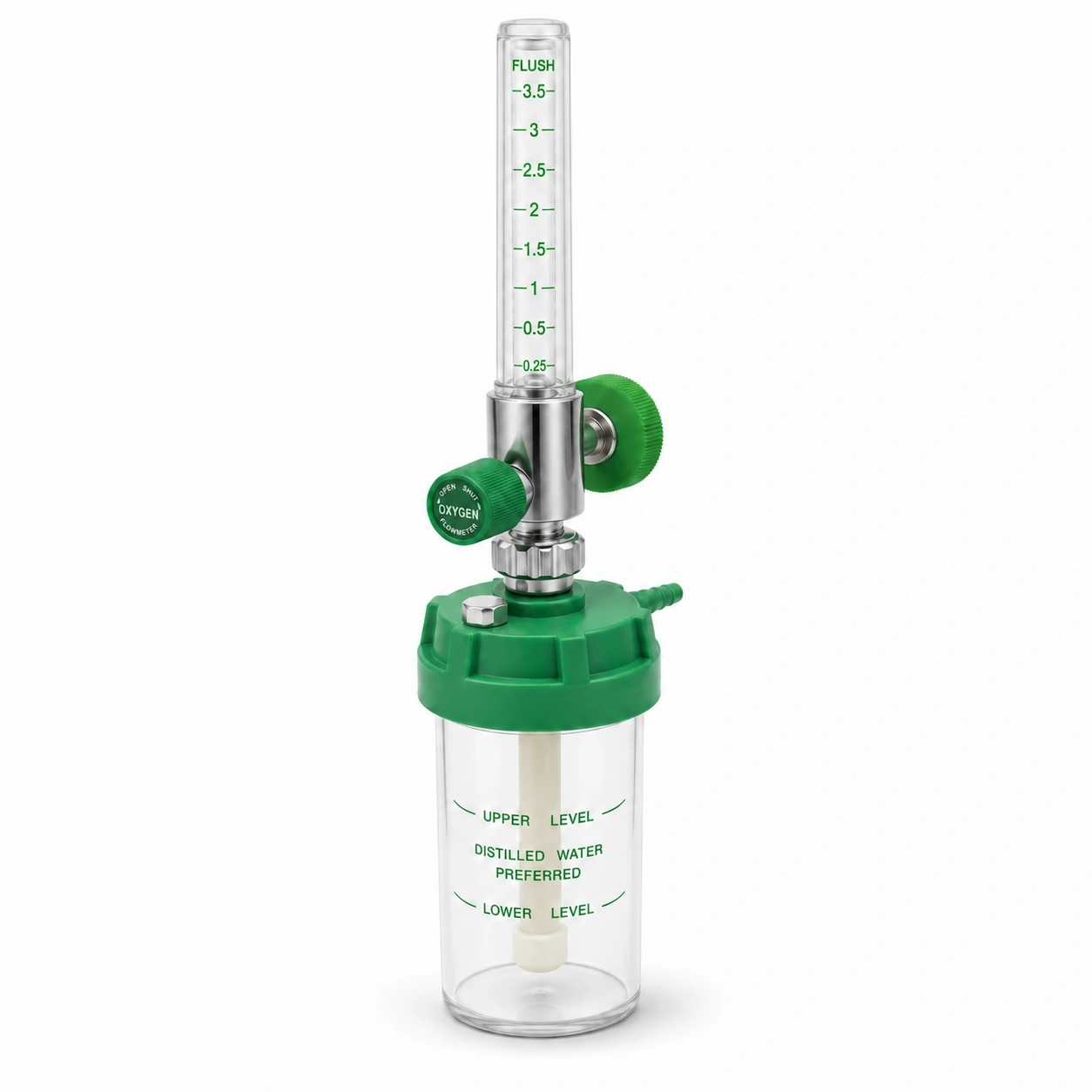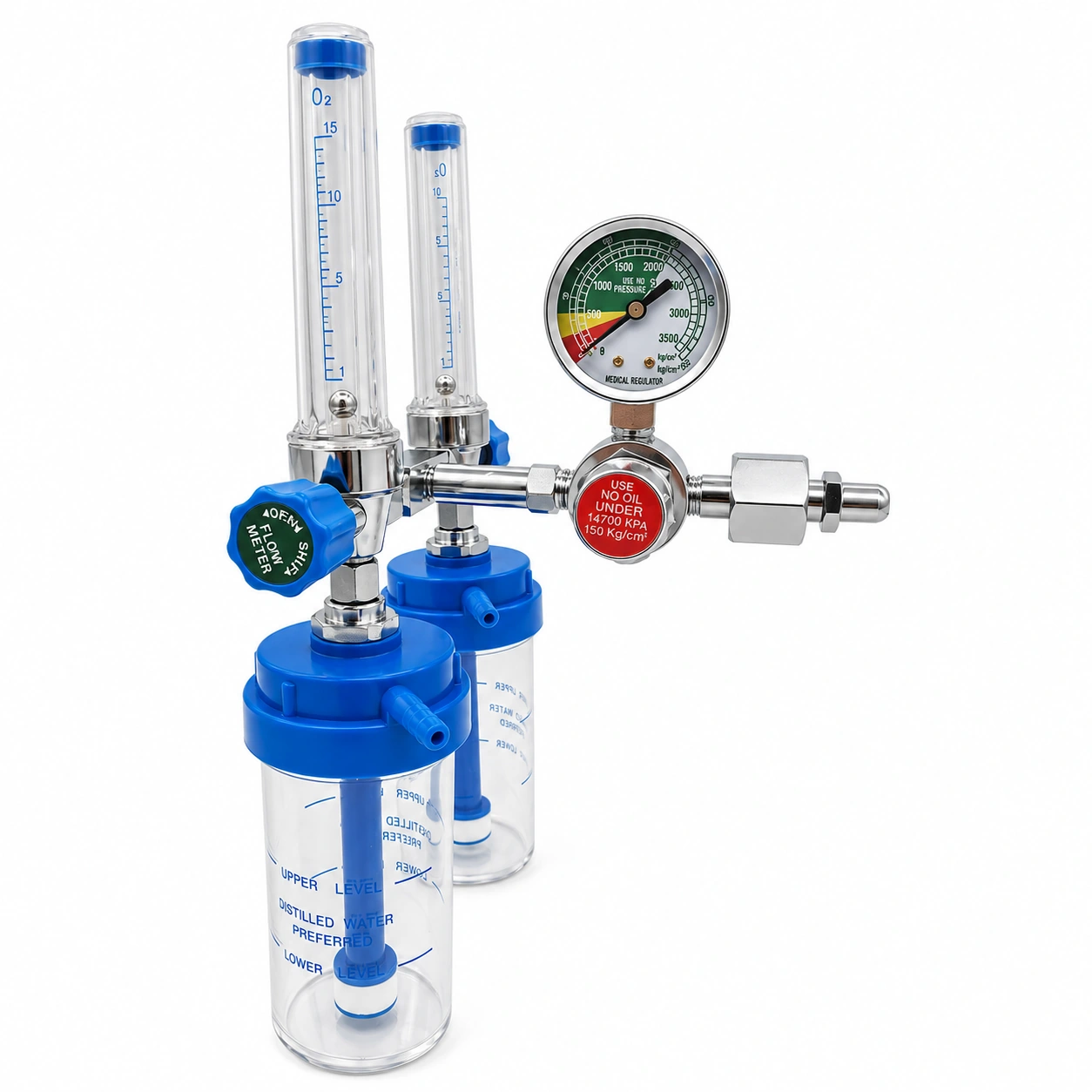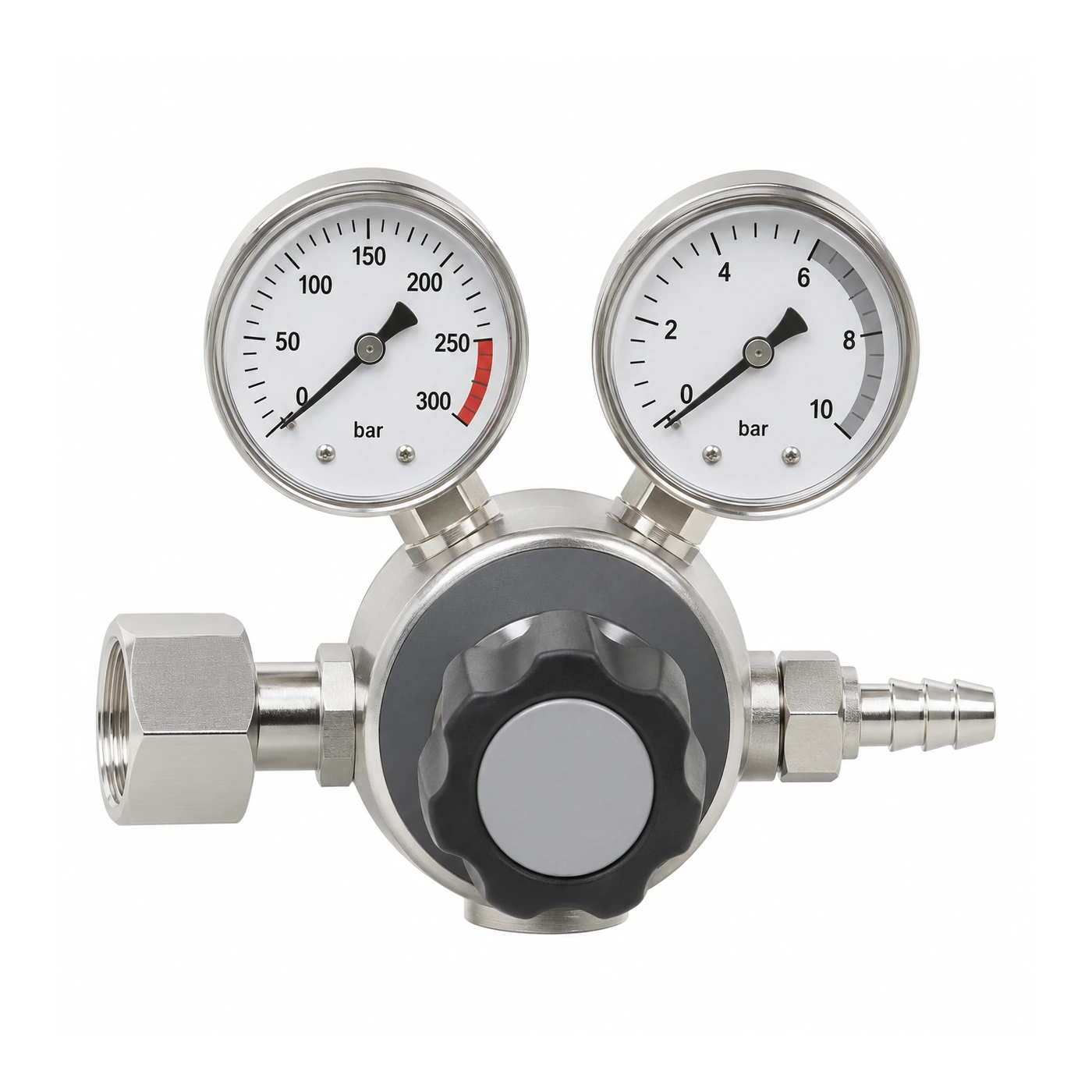
A supplier may provide a factory quality certificate for a pressure regulator or a flow-control device, while the hospital installer still lacks evidence that the actual device is correctly connected, labeled, associated with the right gas and suitable at its installed duty.
A FAT/SAT evidence matrix identifies which requirements can be verified at the product factory and which belong to the approved installed-system programme. Acceptance is not a single tick box.
Establish the exact supplied boundary
A factory test for a standalone regulator is not a test of an entire manifold, pipeline or terminal-side device chain. Record what was assembled, which ports were included, the gas service, rated operating conditions, final model/revision and the manufacturer's declared test scope.
For cylinders and integral flow devices consult the relevant ISO 10524-1:2018; for manifold/line regulators ISO 10524-2:2018; for user-connected flow controls ISO 15002:2023. Determine applicable national amendments and device instructions.
Map evidence across project stages
| Requirement | Factory/product evidence | Installed/hospital evidence |
|---|---|---|
| Exact identity | Model, lot/serial, marked gas | Installed asset and service tag |
| Materials/cleanliness | Approved manufacturer controls | Protected handling/site QA |
| Pressure/flow duty | Specified performance test/curves | Approved site functional context |
| Connectors | Correct model drawings | Actual accepted gas-specific interfaces |
| Indicator/scale | Calibration/range/units document | Installed reading/mapping review |
| Alarm integration | Control/sensor interface if supplied | End-to-end receiving test where required |
| Site performance | Not established by isolated product test | Qualified system acceptance record |
| Clinical release | Not a manufacturer's product approval | Authorized hospital operational decision |
A product passed test does not itself certify patient-side suitability or release a clinical supply zone.
Build test IDs from real components
For every device, maintain a unique unit/assembly ID, P&ID location, test plan reference, equipment revision, applicable instrument calibration reference, actual observations and authorized witness. If one failed test is repeated, retain the original discrepancy and approved retest.
Do not put a universal test pressure or calibration flow into public guidance. The actual values and safe methods depend on the model, gas, intended use and accepted project specification.
Avoid mixing flow and pressure acceptance
A regulator performance test may examine downstream pressure under defined loads. A flowmeter test concerns its indicated flow performance and stated operating conditions. An integrated regulator-flowmeter assembly can require both distinct kinds of evidence.
A good witness register names the property tested, its actual acceptance criteria and equipment model, rather than recording “flow and pressure OK.”
Example: factory compliance, site mapping failure
A batch of oxygen flowmeters has appropriate manufacturer performance documents. At site, the delivered inlet connector family differs from the actual approved wall terminal arrangement.
The correct disposition is an engineering/procurement non-conformity; a satisfactory flow test cannot make the incorrect connector acceptable. The team should revise the approved supply/connection plan or order the correct model and retain the decision evidence.
Document subcontractor responsibility boundaries
The factory provides product data and approved manufacturer testing. The installer handles installation and workmanship under project specifications. The independent verifier or authorized commissioning personnel conduct required system tests; the healthcare operator approves use under local governance.
Do not assume the vendor who supplied a component is authorized to sign for the complete MGPS, or that the electrician's gauge demonstration proves clinical release.
Use current healthcare engineering guidance
ISO 7396-1:2016 covers MGPS system verification. The 2026 Scottish SHTM 02-01 has a suite of test forms that separate source and pipeline systems from other components and functions. Use the correct forms or adopted equivalents rather than copying a form number into every project.
Where a building is modified in phases, record which zone and devices have been accepted and what still remains outstanding.
Create the final handover index
The dossier should include manufacturer model records, gas-specific connection drawings, batch traceability, applicable product tests, actual installed location, approved performance/functional tests, deviations and remedies, maintenance instructions and formal acceptance.
BWC Medgas can quote regulators, flowmeters and gauges with model-specific documentation requirements. The completed system's testing and clinical release remain with the authorized project parties.
Discuss the exact factory evidence schedule with BWC Medgas.
Frequently asked questions
Does a manufacturer test report verify an entire installed medical gas pipeline?
No. Product and system verification have different acceptance boundaries.
Is one generic “passed” note sufficient for regulator and flowmeter tests?
No. Record each intended performance property and model-specific evidence.