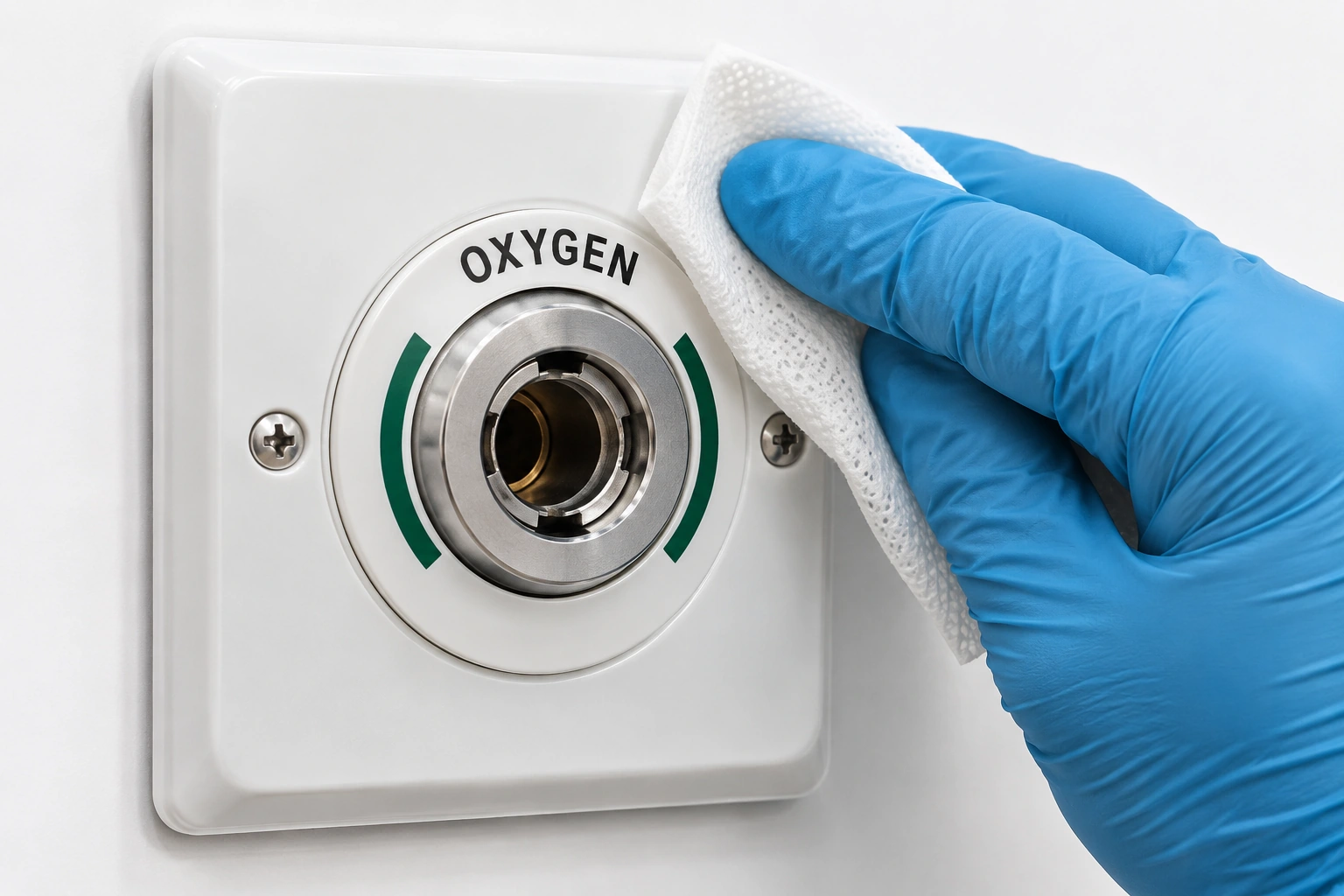
Medical gas outlets sit at the intersection of patient-care infection prevention and safety-critical gas supply equipment. Front plates and nearby bedheads may be cleaned frequently, but the outlet opening, internal seals, gas-specific mechanisms and labels have constraints that differ from an ordinary wall fixture.
A cleaning compatibility and responsibility checklist helps healthcare estates, infection prevention and cleaning contractors coordinate approved procedures. It does not prescribe a disinfectant concentration or allow chemicals to be sprayed into a gas terminal.
Define the cleaning boundary
Separate external surface cleaning from work inside the terminal mechanism. Routine environmental cleaning should follow the facility's infection-control rules and the manufacturer's approved instructions for the exact model. Opening a terminal or using parts of a gas system for cleaning is not ordinary housekeeping.
Ask the supplier which external materials, faceplate finishes, markings and accessible surfaces are compatible with the intended cleaning method. Do not infer chemical resistance from one test on an unrelated product.
The surrounding wall or bedhead may have its own cleaning specification; these materials should not be assumed to have the same compatibility as the medical gas terminal.
Create a surface-and-action matrix
| Area | Cleaning responsibility | Required information |
|---|---|---|
| External faceplate | Authorized environmental cleaning workflow | Manufacturer-approved agents and method |
| Identification/label | Inspection and approved replacement as needed | Durable service marking requirements |
| Around outlet opening | Manufacturer- and hospital-approved procedure | Avoid contamination/ingress hazards |
| Internal service mechanism | Competent medical gas service personnel only | Approved maintenance and verification procedure |
| Surrounding bedhead/wall | Facility cleaning team and equipment owner | Surface-specific cleaning instructions |
| Patient connected equipment | Clinical/device team | Device manufacturer instructions |
The matrix is a boundary map, not a list of procedures to improvise at the point of use.
The wrong assumption: more disinfectant is always safer
A concentrated solvent or aggressive cleaner might alter a coating, seal, labeling or adjacent equipment. A product suitable for general hospital floors is not necessarily suitable for a terminal unit. Manufacturer compatibility evidence and the hospital's infection prevention approval are needed.
Do not recommend lubricants or solvent treatment of internal connectors to make a probe engage more easily. Oxygen-service materials and device internals are safety-related, and unauthorized chemical applications can introduce additional hazards.
Handle suspected contamination systematically
If a spill or inappropriate chemical application is reported near an outlet, record the terminal identity, substance if known, affected area and time. Refer the issue through the facility's designated operational and technical authority. A qualified assessment determines whether the terminal or attached equipment requires restriction, inspection or other action.
Visible wiping does not demonstrate the internal gas path is unaffected. Avoid making unqualified clinical safety conclusions from a clean-looking faceplate.
Coordinate cleaners and clinical teams
The cleaning contractor needs a clear boundary for work near oxygen, vacuum, medical air and other terminals. Clinical and estates staff should agree how defects, damaged labels or abnormal outlet behavior are reported without encouraging untrained workers to disconnect or open the equipment.
The documentation can include site-specific visual cues showing what part of the faceplate is cleaned and which areas are reserved for specialist service. Such diagrams should come from the actual manufacturer or approved facility procedures, not a generic AI picture.
Inspect the service identification after cleaning
Faded or detached labels can create confusion even when a connector retains its intended mechanical gas-specificity. Include label legibility and physical damage in the approved routine observation process.
A lost label should not be replaced based only on adjacent color or a guess about service identity. The approved records and qualified verification determine the correct identification.
Example: new cleaning chemical adopted hospital-wide
An infection prevention team proposes switching environmental cleaning products. Before a blanket rollout near medical gas terminals, confirm the new product's compatibility with the exact installed terminal and bedhead models, evaluate the manufacturer's guidance and document any needed restrictions.
A procurement contract for cleaning agents should not silently override the device manufacturer's maintenance instructions.
Differentiate hygiene, equipment performance and gas quality
A clean outer faceplate is not proof of terminal gas-specificity, leakage performance or the quality of gas delivered by the installed system. Those are addressed through equipment performance requirements and the hospital's specified testing/verification process.
ISO 9170-1:2017 defines the relevant terminal unit performance scope, while ISO 7396-1:2016 governs the medical-gas pipeline system. HTM 02-01 (2026) and SHTM 02-01 (2026) support operational management.
Supplier documentation to request
Ask for the exact terminal model, housing/faceplate material statement, approved cleaning instructions, chemical compatibility limitations, marking/label replacement procedure for competent personnel, applicable service instructions and spare-part identity.
Keep these linked to the installed equipment register, especially if multiple brands are present.
BWC Medgas reference
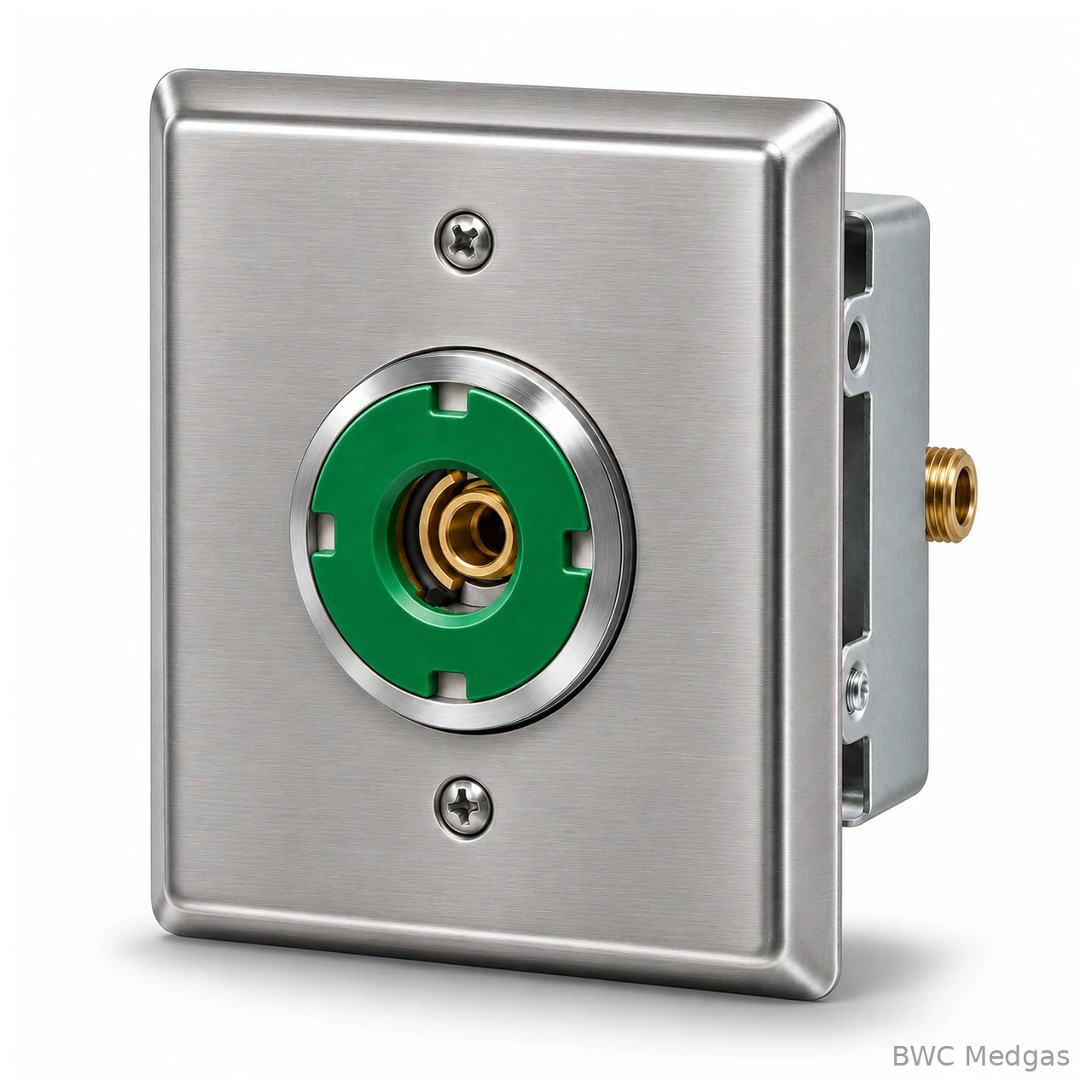
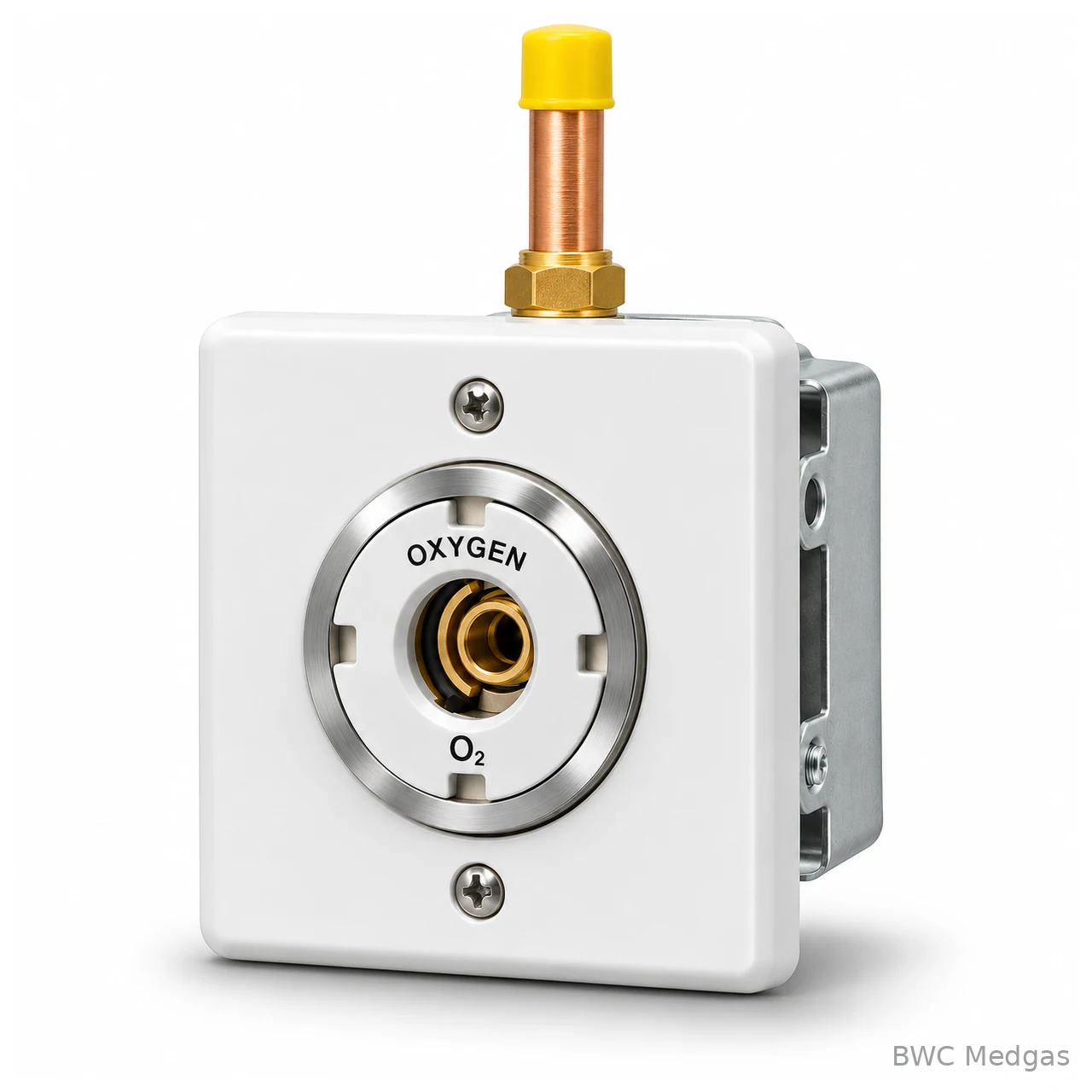
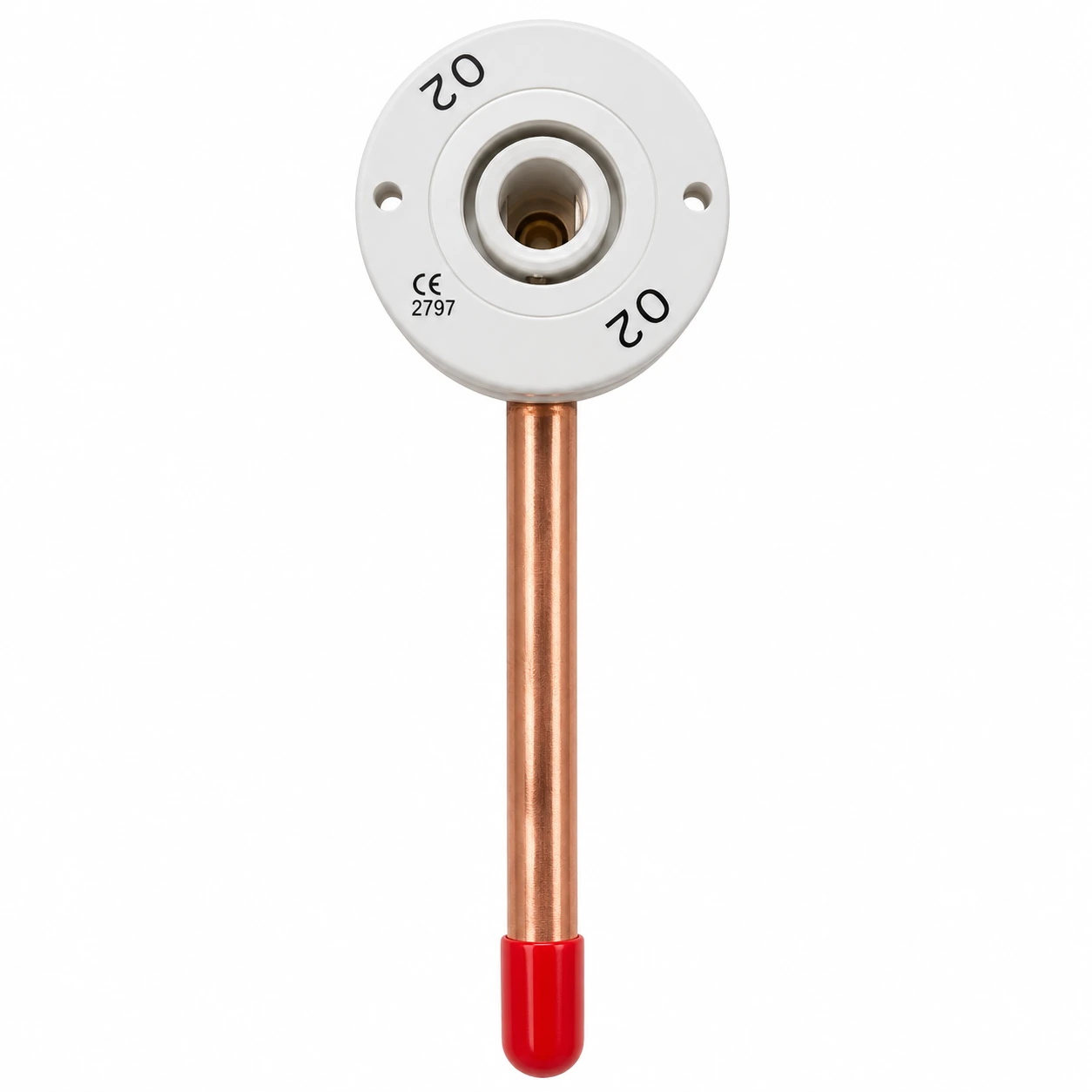
BWC offers selected medical gas terminal units. For procurement, specify the intended cleaning environment and obtain the relevant product documentation for the exact model and finish. Cleaning protocols and infection prevention acceptance remain with the healthcare operator.
Discuss the required terminal model and finish with BWC Medgas.
Frequently asked questions
Can a generic hospital disinfectant automatically be used on every gas outlet?
No. Check the manufacturer-approved surface and material compatibility for the installed product.
Can cleaning confirm the correct gas is delivered?
No. Gas identity and terminal functionality require their own approved verification.