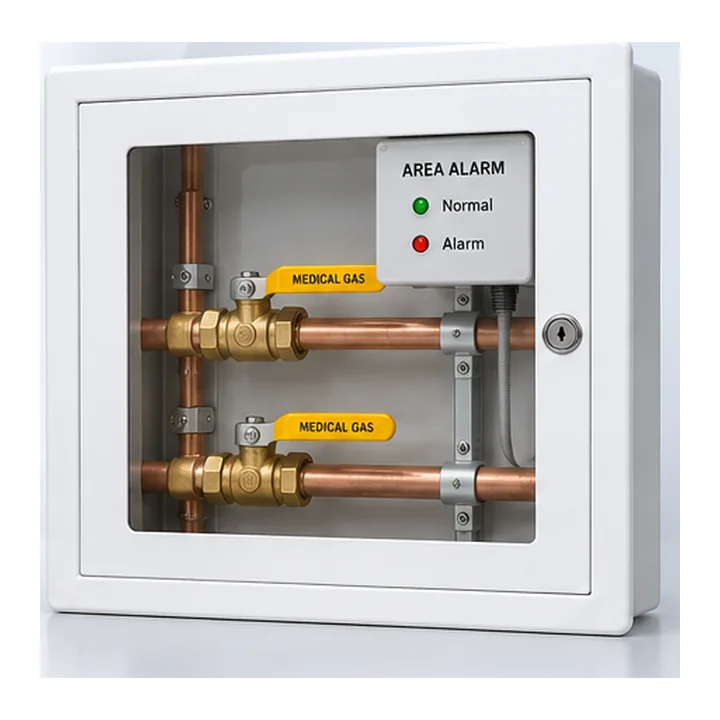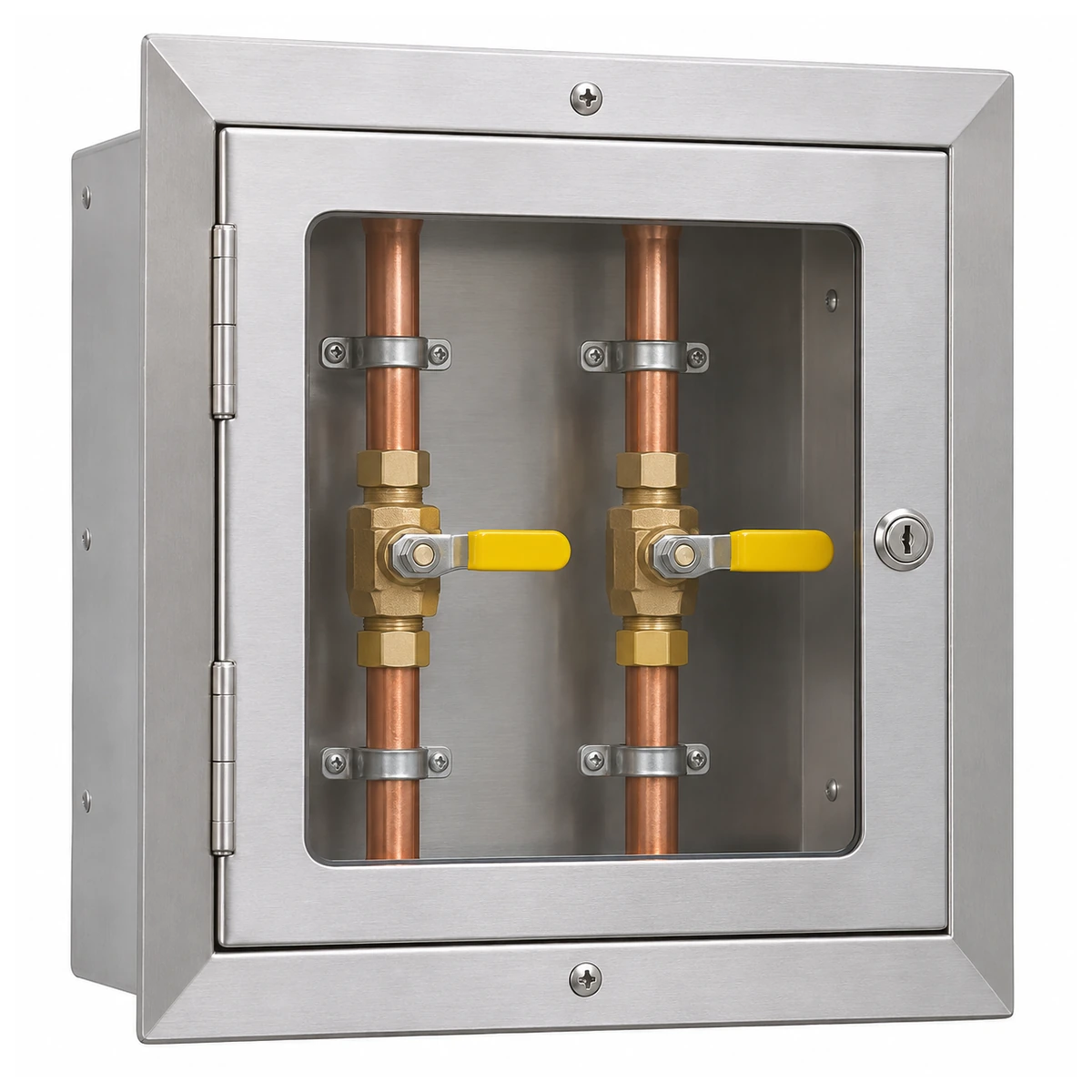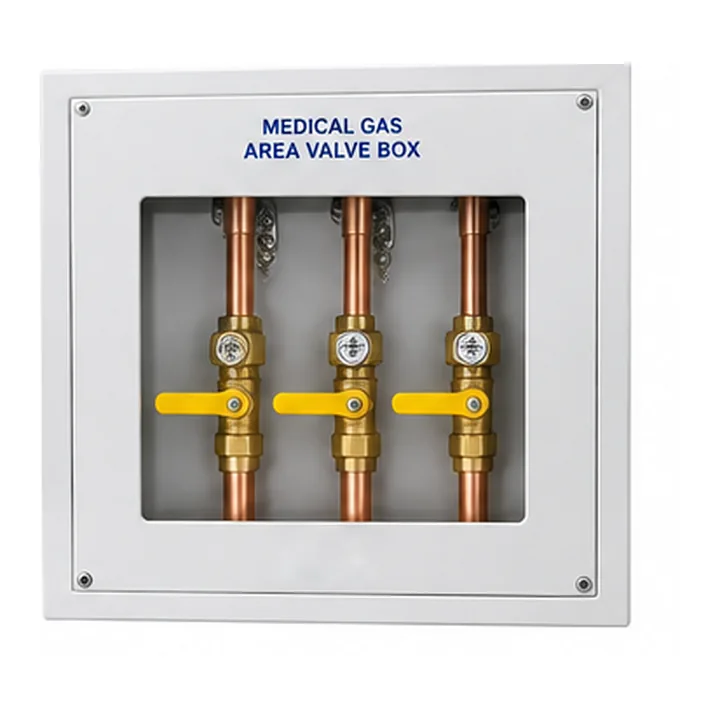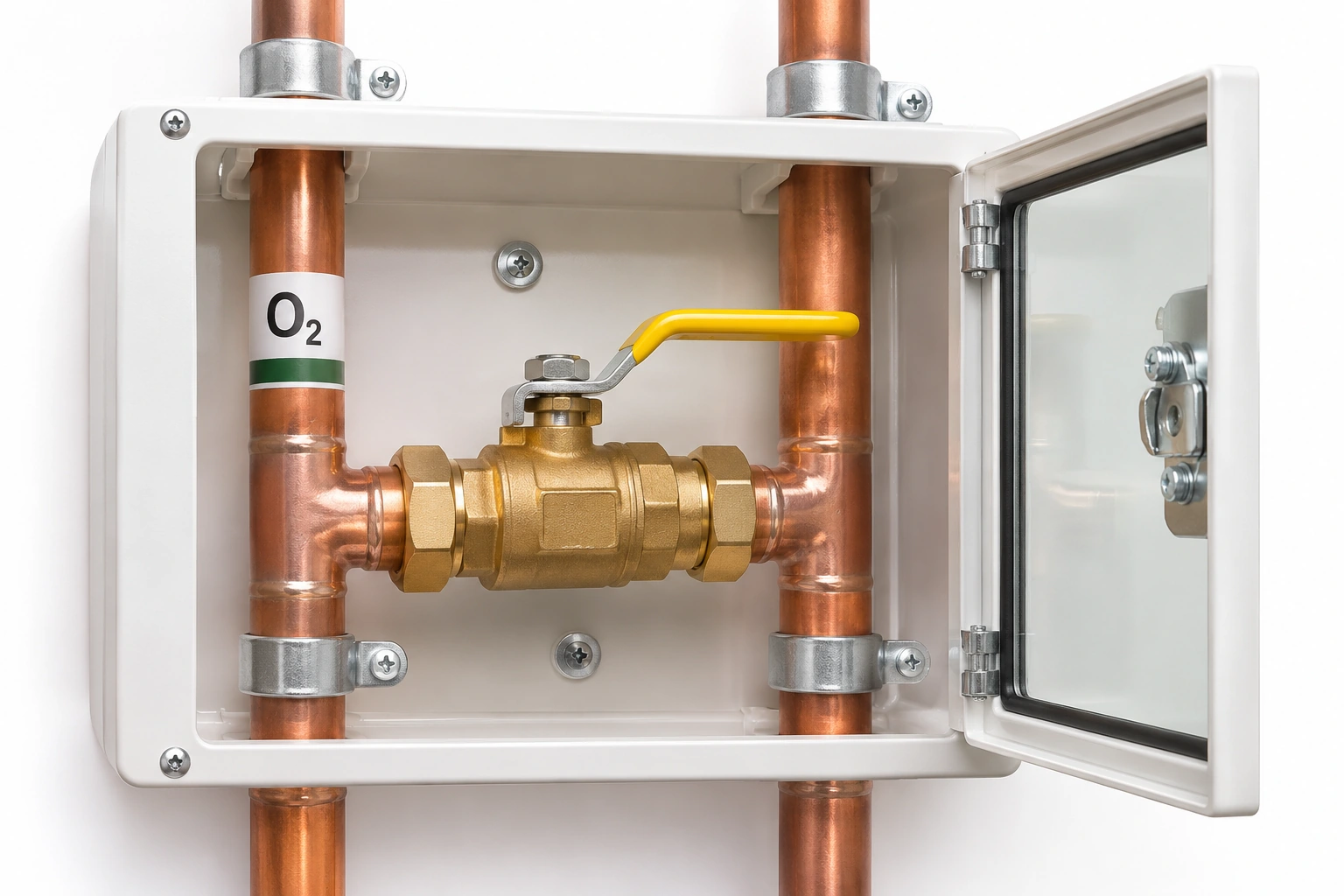
Replacing a valve box in a newly built, unoccupied wing and replacing one in a functioning intensive care department are very different projects. In an occupied hospital, the work may affect patients, clinical equipment, staff communications and multiple connected rooms—even if the replacement device is visually identical to the original.
A clinical-impact and permit register helps the project manager distinguish procurement readiness from permission to carry out work. It does not prescribe isolation, depressurization, bypass or reconnection procedures for a live MGPS. Those actions require the hospital's approved medical-gas operational governance and competent personnel.
Verify what the existing valve really serves
Begin with controlled current as-installed P&IDs, valve asset IDs, gas-specific branch information and the clinical room schedule. Assign the hospital's authorized technical team to reconcile any unclear or outdated drawings. A label showing “Ward B” is not enough if extensions may have changed the actual downstream coverage.
Record each affected gas separately. Oxygen, medical air and vacuum might have different boundaries in one shared cabinet. The site safety and clinical teams should approve the service impact rather than assuming all valve handles have identical coverage.
Separate design change from work permission
The project can have a technically acceptable new valve selected while still lacking permission to modify the installation. Track at least four independent approvals: engineering compatibility, clinical/service impact, the hospital's authorized work procedure and post-work acceptance.
The 2026 NHS HTM 02-01 includes an operational management part in addition to technical installation/verification guidance. SHTM 02-01 (2026) similarly separates operational management from technical evidence.
The project plan should refer to these applicable principles while following the actual facility procedure and adopted jurisdictional rules.
Use a planned-work dependency register
| Dependency | Required decision/evidence | Owner |
|---|---|---|
| Actual served zone | Verified gas/room coverage and affected terminals | MGPS design/estates |
| Clinical impact | Approved department consultation and risk controls | Healthcare authority |
| Proposed component | Exact gas, size, material, connections, evidence | Engineering/procurement |
| Work authorization | Applicable permit and competent personnel | Facility operational management |
| Service continuity | Approved contingency arrangement and responsibilities | Hospital and clinical team |
| Installation verification | Applicable specified site tests and records | Qualified verification personnel |
| Restoration/release | Required signed authorizations and affected areas | Healthcare operator |
A scheduling spreadsheet should not show “green / complete” for the overall project until each required authorization is in place.
Review material readiness without encouraging shortcuts
Before any authorized intervention, confirm that exact approved replacement models, fittings, equipment documents and any required manufacturer-compatible parts are available. A generic industrial ball valve or unknown adapter should not be used simply because delivery has been delayed.
Record the approved connection detail and whether retaining adjacent pipework changes the required verification scope. This can affect the procurement bill and the completion programme.
Do not let a supplier's “available now” claim override the gas-specific suitability and design acceptance gates.
Example: unforeseen shared supply
A refurbishment tender assumes a corridor box serves one unoccupied wing. A site inspection identifies a branch that also feeds a treatment room outside the planned work zone.
The correct management action is to stop the unresolved design/permit decision and update the clinical impact register. The article does not advise attempting a live-valve closure to confirm the relationship; any necessary testing is planned and performed by authorized specialists.
Control communication through named roles
Patients and clinical services are affected by medical gas availability, but procurement and construction teams should not make unilateral operating announcements or clinical decisions. Assign a hospital clinical coordinator, estates authority, design reviewer, competent contractor and verification lead.
Keep communication approvals and work authorization linked in the project record. A single contractor phone call is not a substitute for the hospital's agreed process.
Do not confuse installation completion with operational release
A new valve can be physically installed while commissioning, gas identity, zoning or other required evidence remains open. Track supply of equipment, installation, technical verification, defect closure, updated drawings and clinical return-to-service permission as separate milestones.
The published ISO 7396-1:2016 includes extensions and modifications of existing MGPS within its scope. For US projects, the adopted NFPA 99 edition and healthcare authority rules must also be reviewed.
Record every change in the handover file
If the replacement changes valve type, connection end, box dimensions, label/served-area mapping or alarm interface, update the relevant approved documents. Maintain the superseded revision, reason for the change, approving authority and any resulting acceptance evidence.
A maintenance team years later should be able to reconstruct precisely what was changed without relying on the memories of the contractor.
BWC Medgas component role
BWC Medgas can supply specified medical gas line valves and area valve boxes under an approved replacement schedule. It does not grant hospital permits or authorize the clinical use of a modified MGPS.
Send approved retrofit valve specifications to BWC Medgas.
Common questions
Is buying a matching-looking valve enough to authorize a retrofit?
No. The actual service, interface, clinical impact and site approval must be documented.
Does an installation completion note prove the area can be used clinically?
No. Required verified tests and healthcare authority release are separate.