
A medical gas project can lose its strongest evidence of workmanship when ceiling panels are closed and pipework becomes inaccessible. A later pressure or functionality test may not answer every question about installed material identity, jointing records, supports, sleeving or route segregation.
A first-fix/second-fix inspection plan makes these items explicit before they disappear behind finishes. The required hold points and acceptance tests depend on the governing code and hospital contract; this guide organizes responsibilities rather than specifying test pressures or operational instructions.
Understand the construction-stage distinction
“First fix” commonly covers installed pipework and associated building interfaces before final connections and finished components. “Second fix” may cover later terminal equipment, final connections and relevant finishing work. The precise definitions must be established for the project.
NHS Scotland's SHTM 02-01 (2026) publicly lists forms for first-fix carcass checks, second-fix checks, gas-specificity, pressure testing, alarms and completion records. NHS England's HTM 02-01 (2026) provides the healthcare framework for design, installation, validation and verification.
These form titles show why there is no single catch-all acceptance record.
Define hold points before work starts
Ask the project quality manager and medical gas engineering authority to agree which milestones require a recorded release:
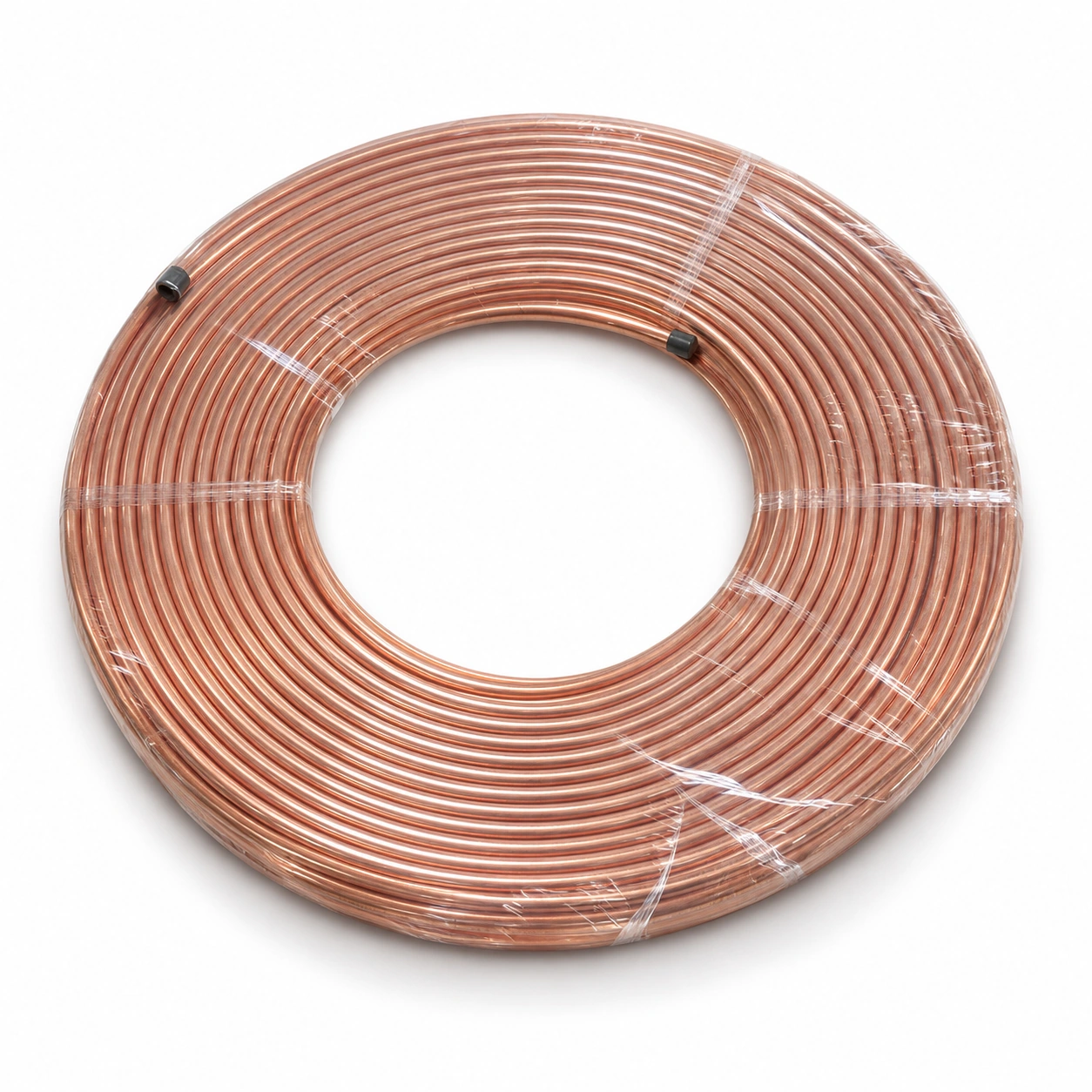
- Receipt and acceptance of the specified tube/fitting materials.
- Approved route, supports, sleeves and service identification.
- Applicable jointing evidence and work-area inspections.
- Required integrity/continuity/cross-connection checks at the prescribed construction stages.
- Approval before concealed pipework becomes inaccessible.
- Final terminal and valve interfaces.
- System-level verification and associated handover records.
A hold point should name the responsible witness and the document whose acceptance releases the next stage. Avoid generic boxes that a site supervisor can tick after concealment.
Create a transparent inspection and test plan
| ID | Inspection subject | Evidence/record | Release owner |
|---|---|---|---|
| IF-01 | Material receipt and service specification | Accepted lot and drawing reference | Contractor QA |
| IF-02 | Route, supports, penetration coordination | Approved as-installed inspection | MGPS/MEP reviewer |
| IF-03 | Jointing and pipework cleanliness controls | Procedure/work-area records | Designated competent reviewer |
| IF-04 | Applicable first-fix test/identification | Governing test form and results | Qualified verification party |
| IF-05 | Concealed-work closure | Signed hold-point release | Authorized project representative |
| SF-01 | Final terminals/valves and gas-specificity | Second-fix check and labels | Qualified verifier |
| CO-01 | Final system acceptance | Integrated test and facility handover | Authorized healthcare authority |
These IDs are illustrative tracking codes. Actual procedural requirements and testing limits must come from the adopted project documents.
Watch for false confidence in a pressure-test result
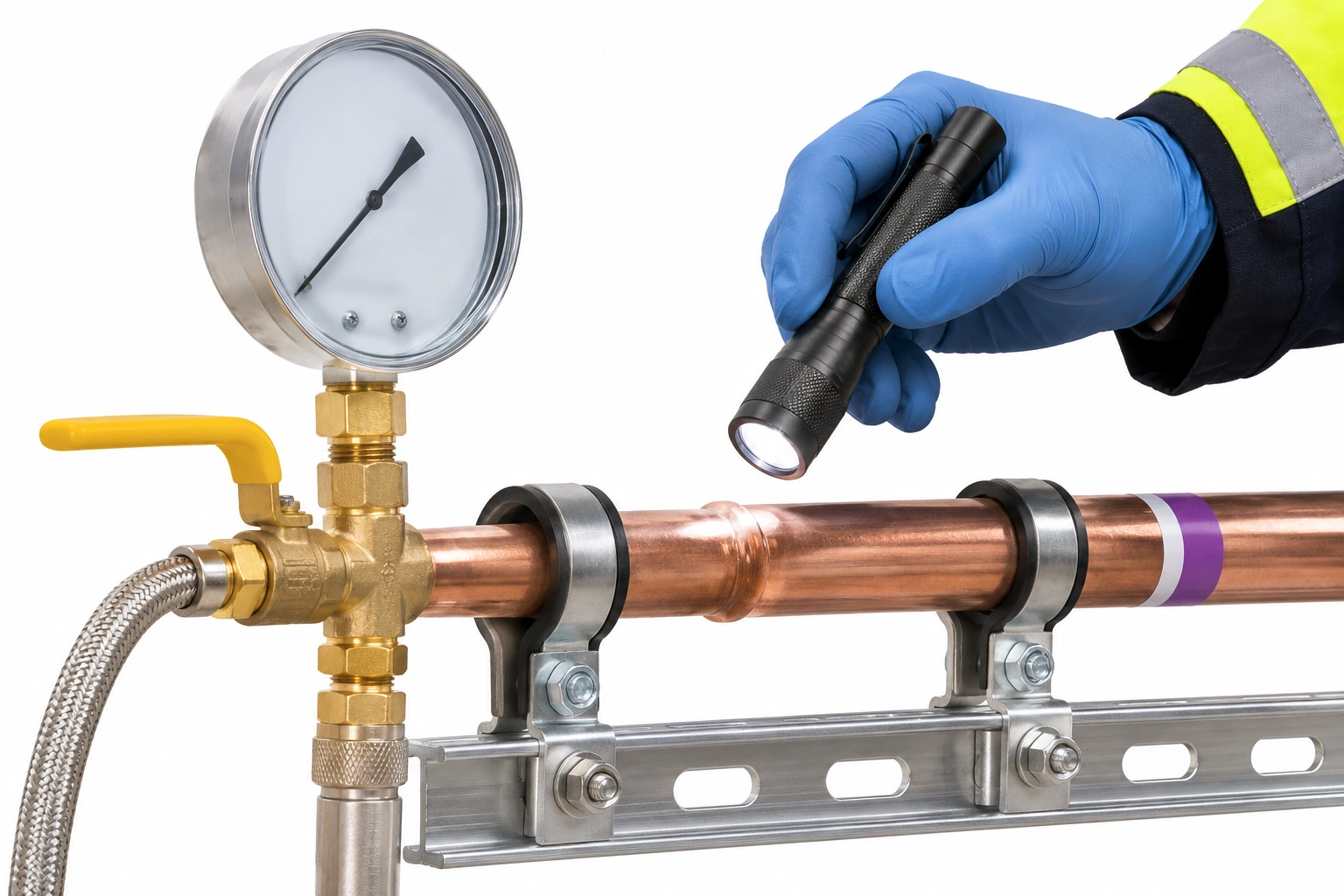
A pipe section that holds pressure under a particular approved test does not necessarily demonstrate that all gas labels, cross-connections, installed supports or terminal connections are correct. Those can require distinct verification steps.
Link every test record to the section under test, its boundary, instrument/calibration record where required, date, witnesses and associated drawing revision. A photograph of a gauge without location, time and acceptance context is weak evidence.
Do not use an online test pressure copied from a different country to set site acceptance criteria.
Coordinate multiple contractors
One subcontractor may install the main copper distribution, another the bedhead assembly and a third the area valve boxes. The plan should make clear who supplies each connection, which contractor owns the work record, and who verifies the boundary after the parts are integrated.
Without this interface register, both contractors can correctly say “our section passed,” while neither has evidenced the final connection.
Assign a single closure owner to each interface and note which inspection records are generated at factory versus in the installed system.
Example: ceiling closure requested early
The hospital contractor needs to close a ceiling to meet the construction schedule. A corridor copper main is installed, but a required first-fix inspection form is incomplete and the route drawing revision differs from the pipework installer’s marked-up copy.
The quality gate should remain open until the appointed parties reconcile documents and authorize closure. A revised programme date does not replace the required evidence.
This example does not direct how to pressure-test or manipulate any medical-gas pipeline.
Handle failed tests and corrective work
A failed or incomplete inspection should identify the affected work area, original requirement, observed result, disposition owner and reinspection/retest evidence. Keep the original failed record and the successful closure record both traceable.
A site can have multiple accepted stages and still have open nonconformities on another zone. Status must be represented at the right segment/zone level.
Prepare the handover index as construction proceeds
Map evidence to building, floor, service, pipework segment and valve zone. Collect testing, drawings, materials, installer qualifications and deviations continuously rather than reconstructing them at project completion.
The final acceptance belongs to the appointed healthcare authority under the relevant procedures. Component supplier declarations support, but do not replace, installed-system verification.
BWC component supply
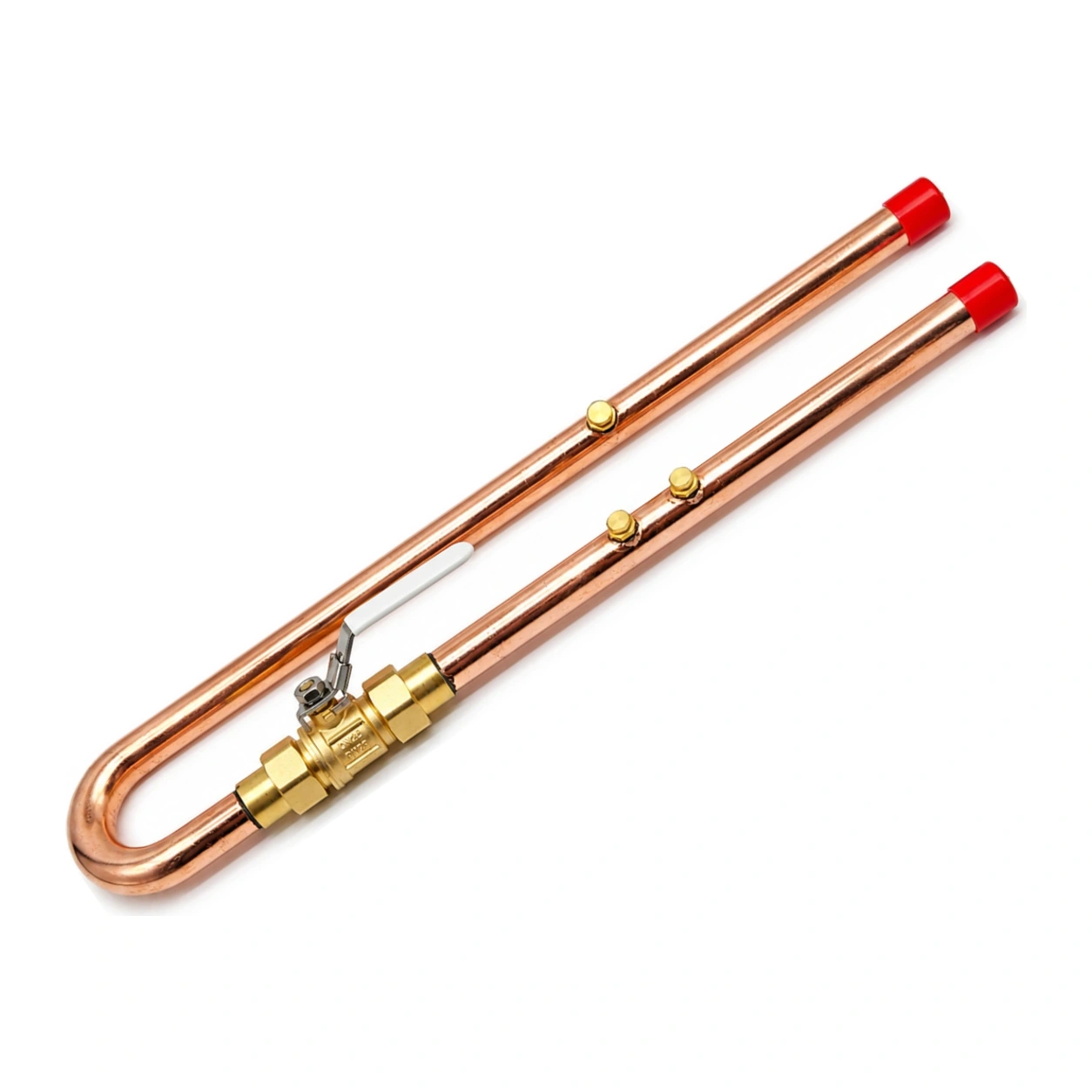
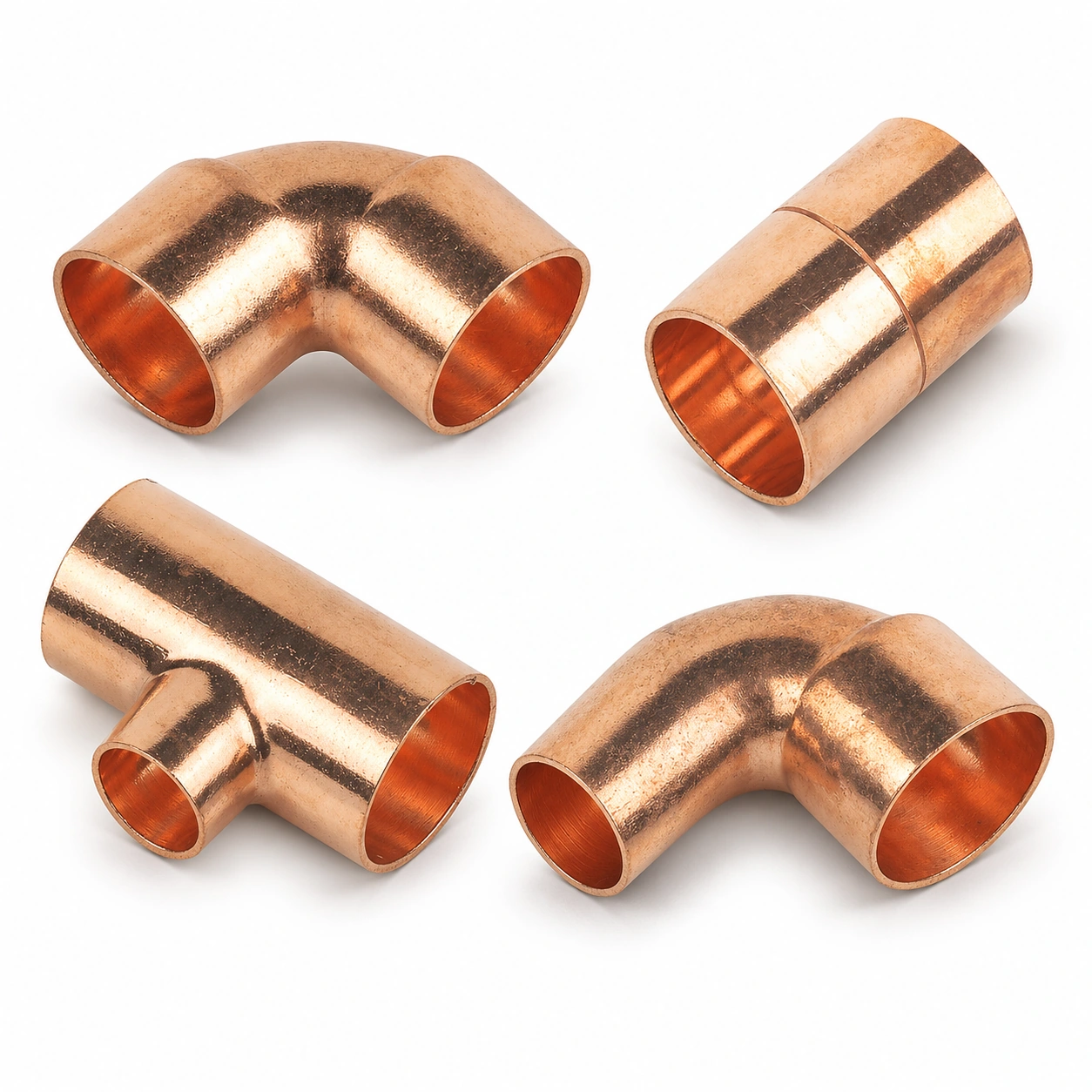
BWC Medgas can support the controlled material schedule for copper tube, elbows/tees and fittings and specified valves. Contract documents should separately name the installer and site verification parties.
Submit your approved pipework materials schedule to BWC Medgas.
Frequently asked questions
Does a final pressure test replace first-fix inspection?
No. Different stages address different installation and identification evidence.
Should a supplier's factory certificate be signed as the site's completion test?
No. Product/manufacturing evidence is separate from site installation and MGPS acceptance.