A medical gas pipeline can pass one engineering check and still be unsafe or unfinished for the intended clinical service. Integrity, gas-specificity, source interface, alarms and terminal gas identity are related but distinct verification subjects. A single line in a project spreadsheet reading “MGPS tested—pass” rarely provides enough traceability.
Use a verification evidence matrix organized by service, physical boundary and test purpose. Actual test methods, pressure levels, quality criteria and return-to-service permissions belong to the hospital's adopted code and competent verification process, not a generalized public article.
Create an acceptance hierarchy
First identify the entire project scope: source interfaces, main distribution, zones, line valves, final terminal equipment and any connected monitoring. Then define which test or verification evidence applies to each stage and boundary.
A hospital should be able to identify whether the record concerns:
- A physical pipework section before it is connected to other sections.
- Final installed distribution including valves and terminals.
- Gas-service identity or non-interchangeability.
- Required system integrity/performance under accepted conditions.
- Relevant supply quality and gas identity.
- Monitoring and alarm function.
- Sectional or final operational release.
Do not confuse the list of test categories with the actual procedure; specific acceptance criteria must be separately referenced.
Build the evidence matrix
| Record type | Scope ID | What it establishes | Responsible reviewer |
|---|---|---|---|
| Pipework installation/first-fix evidence | Section and drawing | Required installation-stage results | Contractor/verifier |
| Cross-connection/gas-specific check | Defined system/zone | Service relationships verified | Appointed verifier |
| Second-fix and terminal schedule | Room and terminal ID | Final connection and marking identity | Competent site parties |
| System integrity/performance | Approved test boundary | Required installed-system condition | Verification authority |
| Gas identification/quality evidence | Approved sample/test points | Intended gas verification as required | Qualified quality/verification parties |
| Monitoring/alarm record | Signal and receiving location | Required annunciation functions | Alarm/system verifier |
| Completion/release | Defined clinical area | Required evidence accepted by authorized party | Healthcare operator |
Keep each record with its governing form and requirement reference. The matrix does not claim all named checks are carried out in the same way across jurisdictions.
Use NHS test-form indexing as a model
The NHS Scotland SHTM 02-01 publication lists separate A-series forms covering first-fix pressure and markings, second-fix checks, terminal gas-specificity, cross-connection, identity/quality and completion matters. The 2026 NHS England HTM 02-01 supplies a separate set of editable B-forms for site-specific information.
The practical insight is separation and traceability, not copying British form numbers into a US or Australian contract. Each project uses the applicable accepted regime and its own document controls.
Identify the tested boundary precisely
An instrument reading without clear boundaries cannot prove which part of a large pipeline was assessed. Every test record should specify the relevant pipe section, service, building/floor, valves or terminal IDs included, drawing revision, instrument details if required, date, witnesses and approved result.
Where construction is phased, include the temporary or retained boundaries identified by the project authority. A test in one ward does not automatically cover another wing.
Protect gas-specificity at all interfaces
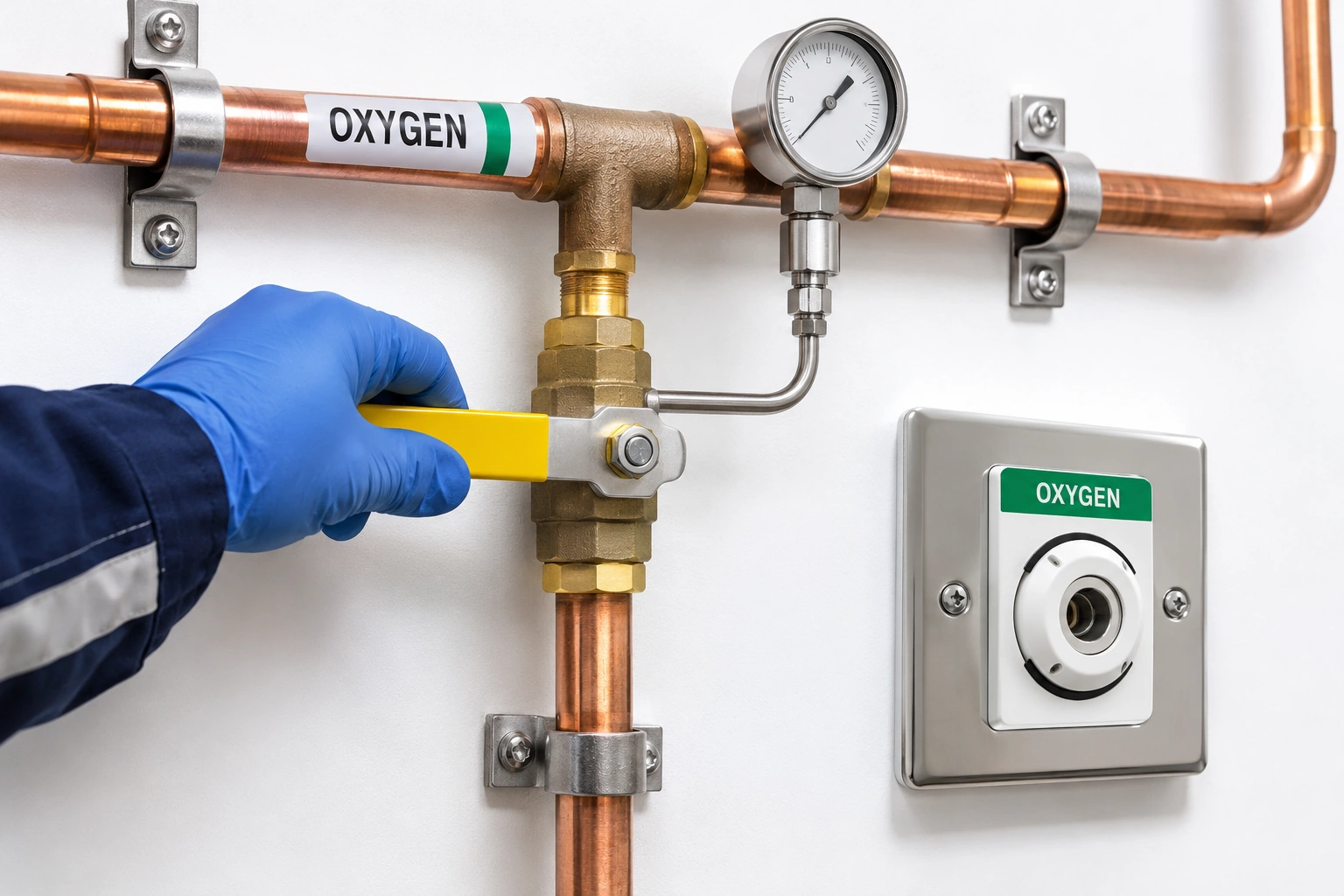
A pipeline can contain different services running adjacent to each other. Labels and colors assist identification but cannot replace the prescribed verification of actual connections and intended gas identity.
Include every relevant branch, terminal and interface in the accepted schedule according to the governing standard. If a source, valve box, bedhead or terminal is changed after a test, record which evidence needs competent review or repetition.
Do not tell site personnel to connect a random probe or intentionally feed the wrong gas as a test method.
Handle unsuccessful results without losing history
A failure should create an identifiable issue with the test ID, affected boundary, observed nonconformity, qualified response owner, corrective work reference and retest/closure evidence.
A report simply overwritten to say “pass” erases useful evidence. Preserve the original issue and its resolution, and confirm the as-built drawing and completion register are updated.
Different zones may be accepted at different times; keep release status granular enough to avoid implying clinical availability outside the accepted boundary.
Handover and operational authorization
The operator needs a clear map of the services and zones, final system diagrams, required test/quality records, alarm information and responsible personnel. Product certificates alone do not establish a completed MGPS.
ISO 7396-1:2016 establishes a system-level framework for testing, commissioning and documentation. AS 2896:2021 is an Australian standard addressing the defined non-flammable pipeline installation and testing scope. Local adoption, competent persons and hospital procedures determine the actual acceptance actions.
A project-management example
A new ICU wing has completed its material receipt checks, first-fix records and terminal schedule, but the documented gas identity evidence for one service is not complete. The project matrix must show the pending item and prevent that area's handover status from being confused with completion of unrelated construction activities.
The design and hospital authority determines how the outstanding verification is resolved. A product supplier cannot issue clinical authorization.
BWC Medgas relevance
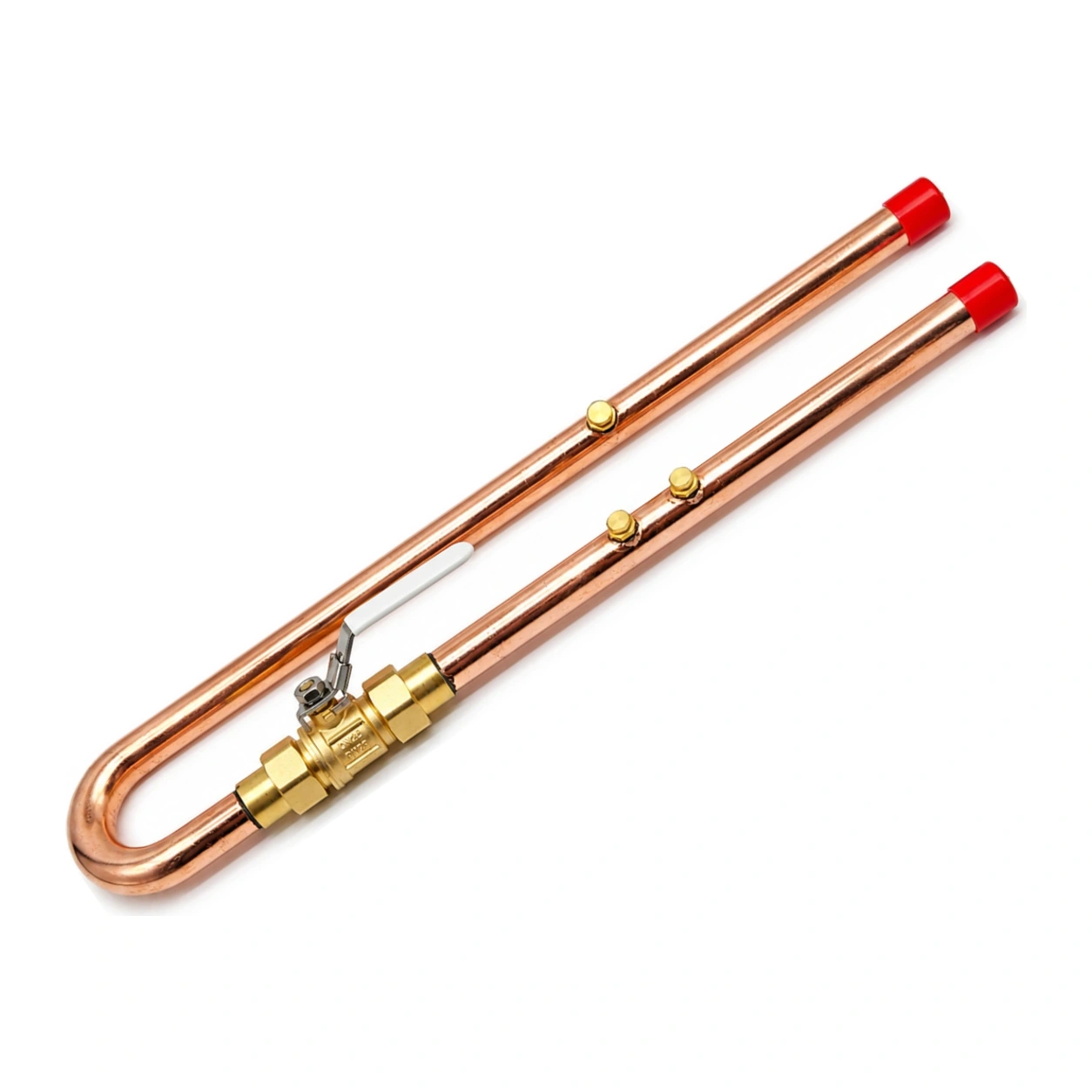
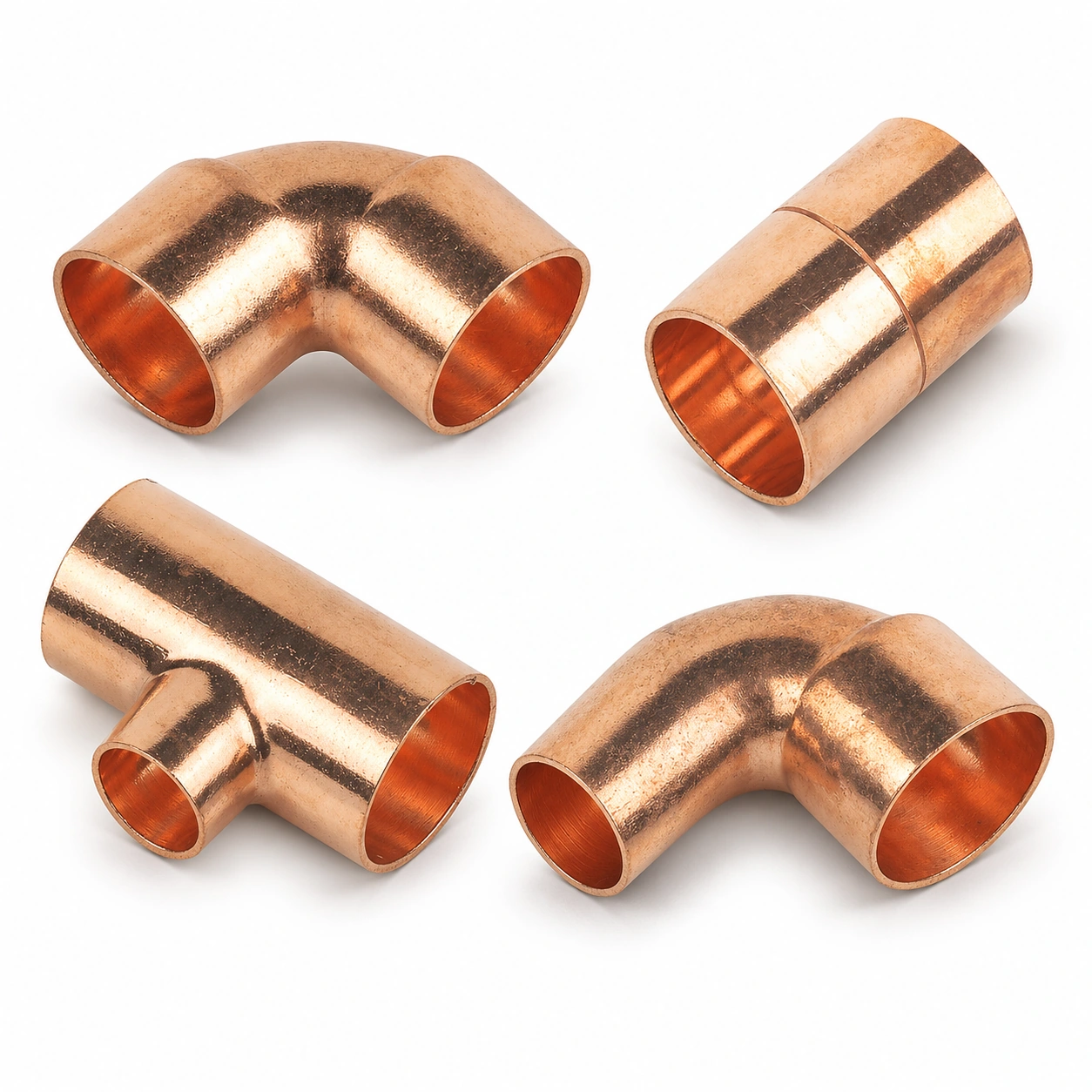
Specified copper pipework, fittings and medical gas valves can be quoted with the required product identification and documentation. BWC supplies component information; site verification remains a separate responsibility.
Send the approved component list to BWC Medgas.
Frequently asked questions
Is proof that a pipe is leak-tight the same as proof it carries the right gas?
No. They are different verification questions.
Does an as-built drawing by itself authorize patient use?
No. Completion and release are based on the required verified system evidence and competent authorization.