A properly specified AGSS is an essential control for anaesthetic gas exposure, but it cannot capture every possible gas release. Leaks from machine connectors, poor equipment sealing, vapour refilling and inadequate room ventilation can all contribute to occupational exposure even when an extraction unit appears to run correctly.
The facility needs a workplace exposure-control register linking capture equipment, general ventilation, maintenance and a suitable industrial-hygiene monitoring programme. This article is about workplace engineering and safety management, not staff self-testing or patient care instructions.
Use a hierarchy of complementary controls
[OSHA's guidance on waste anaesthetic gases](https://www.osha.gov/waste-anesthetic-gases/workplace-exposures-guidelines) describes source capture, effective room ventilation, good work practices, equipment maintenance and exposure monitoring as complementary measures. No single extraction-pump status light proves that all controls are functioning.
The [OSHA hospital surgical-suite resource](https://www.osha.gov/etools/hospitals/surgical-suite/waste-anesthetic-gases) also emphasizes appropriate scavenging equipment, leak correction and ventilation management. The hospital's occupational safety team should identify locally applicable exposure limits and monitoring protocols rather than importing an outdated published threshold as a universal rule.
Exposure is a personnel problem, not merely a plant problem
Area air readings can help investigate a room condition; personal exposure sampling estimates what a worker may actually breathe during assigned tasks. Point-source investigation identifies where gas is escaping.
A facility should not claim that low area readings necessarily establish every worker's exposure. Sampling strategy and interpretation belong to trained occupational hygiene professionals.
Exposure-control inspection matrix
| Control or evidence | What must be assessed | Responsible team |
|---|---|---|
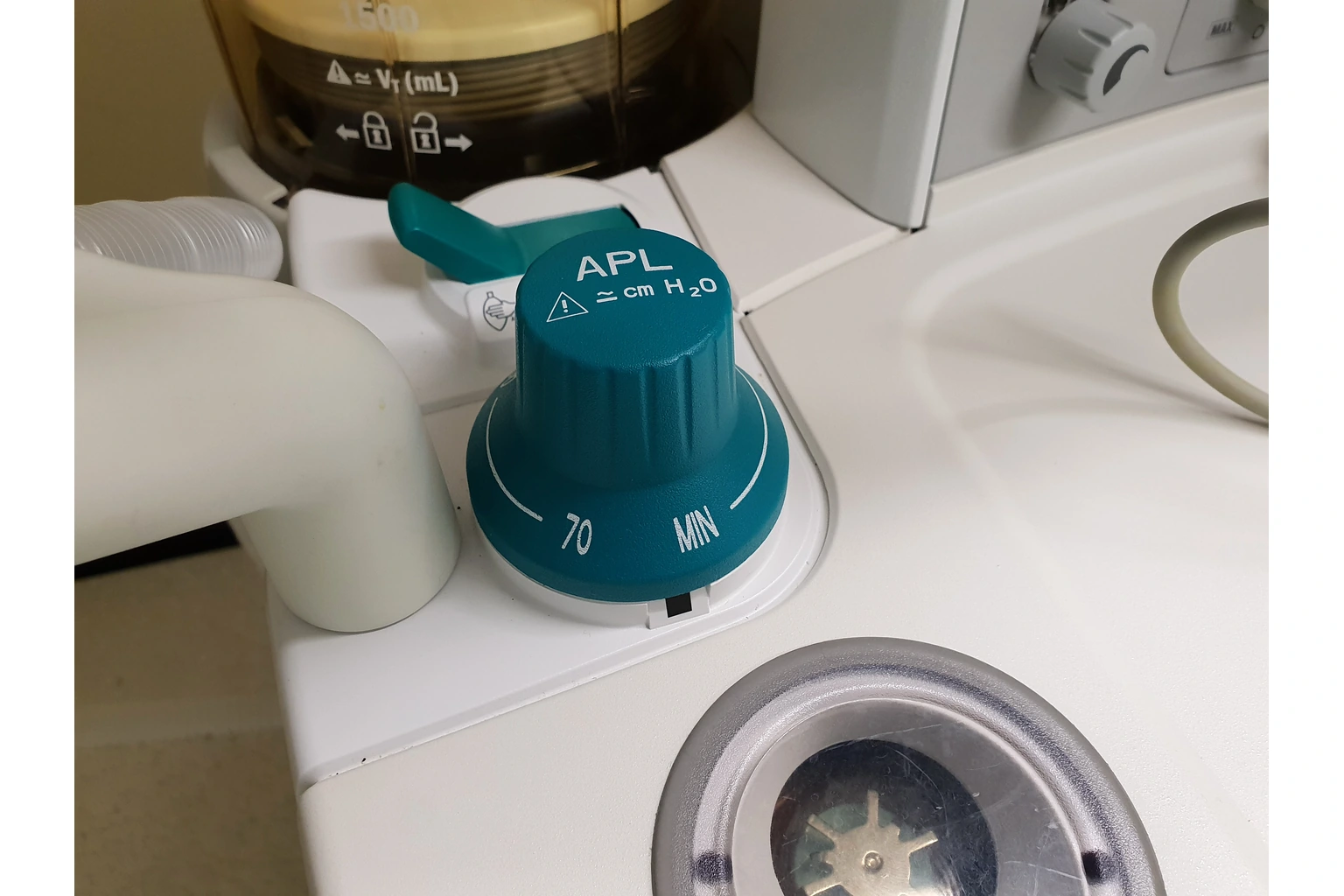
| Anaesthesia workstation | Approved waste-gas collection and receiving interface | Clinical/biomedical |
| Transfer assembly | Manufacturer-specified hose and connection condition | Biomedical engineering |
| AGSS disposal | Terminal and disposal performance at the design duty | MGPS/AGSS engineering |
| Room ventilation | Approved outdoor-air supply/exhaust arrangement | HVAC/estates |
| Leaks and spills | Recorded equipment deficiencies and incident patterns | Occupational safety |
| Exposure measurements | Personal/area/source method as appropriate | Industrial hygienist |
| Clinical practice | Relevant training and equipment checks | Anaesthesia leadership |
| Incident closure | Cause, action, retest and communication | Hospital safety governance |
This matrix is much more useful than a single annual note saying “AGSS maintained.”
Avoid confusing surgical smoke with waste anaesthetic gases
Anaesthetic vapours and nitrous oxide are not the same hazard as surgical smoke or plume. ISO 16571:2024 concerns evacuation of plume generated by medical devices; the AGSS disposal system has its own ISO 7396-2 scope.
A filter or smoke evacuator marketed for surgical plume must not be assumed to remove anaesthetic vapour effectively. Likewise, a dedicated AGSS outlet does not certify local smoke capture for electrosurgery. Where both hazards exist, each needs its appropriate engineering solution.
Example: exposure complaints despite a recently serviced plant
Operating-theatre staff report unpleasant symptoms. The AGSS pump has recent service records and no visible alarms, so maintenance initially marks the system as normal.
The hospital should use an approved combined investigation: review workstation leak and interface history, verify actual scavenging performance, inspect room ventilation and implement an occupational exposure assessment where indicated. The lack of a plant fault is not proof of safe staff exposure.
Monitoring programme design
Define what agents are present, where work occurs, relevant time-weighted exposure questions, the correct sampling method, equipment calibration, competent personnel and communication of results. Compare results only with the regulatory and occupational criteria adopted for that facility.
Measurements should be interpreted alongside clinical tasks and engineering operating states. A number gathered under an empty-room test may not reflect routine theatre practice.
Maintenance and training follow-through
Workstation interfaces, extraction equipment and ventilation systems require separate maintenance records. Assign ownership of defects and track verified closure rather than relying on repeated verbal reassurances.
Training should include recognizing missing or incorrectly connected scavenging equipment and reporting concerns through the hospital's approved patient-care and safety pathways. It should not empower unqualified personnel to alter plant pressure or electrical controls.
Procurement data that supports safety
Specify accessible test points, validated alarm and plant records, documentation for terminal equipment, manufacturer IFUs and appropriate maintenance arrangements. Contract the actual occupational hygiene service separately when it is not included.
BWC Medgas can provide selected medical-gas outlet and accessory components to approved drawings; workplace exposure monitoring and complete AGSS plant verification belong to the hospital's competent teams.
Send a specific AGSS component request to BWC Medgas.
Frequently asked questions
Does compliant AGSS performance guarantee zero occupational exposure?
No. Leaks, room ventilation and work practices remain important.
Is an electrosurgical smoke evacuator a direct substitute for AGSS?
No. The hazards and applicable product/system requirements are different.
Primary technical references
- [OSHA — Waste anaesthetic gases workplace exposure guidance](https://www.osha.gov/waste-anesthetic-gases/workplace-exposures-guidelines)
- [OSHA — Hospital surgical-suite controls](https://www.osha.gov/etools/hospitals/surgical-suite/waste-anesthetic-gases)
- ISO 7396-2:2007 — AGSS disposal systems
- ISO 80601-2-13:2022 — Anaesthetic workstation
- NHS England HTM 02-01 (2026)
- ISO 16571:2024 — Medical plume evacuation systems