
A medical gas pipeline system (MGPS) is the coordinated system used to supply specified medical gases and medical vacuum services throughout a healthcare facility. It is not simply a length of copper tube, a wall-mounted oxygen outlet or a cylinder manifold. Those are components or subassemblies within a larger engineered arrangement.
The published scope of ISO 7396-1:2016 covers the design, installation, function, performance, testing, commissioning and documentation of relevant medical gas and vacuum pipeline systems. The same scope identifies supply, pipeline distribution, control, monitoring and alarm systems, as well as preventing interchange between different gas or vacuum services.
What are the main parts of an MGPS?
For a technical introduction, it is useful to distinguish several functions rather than treating every item as one piece of equipment.
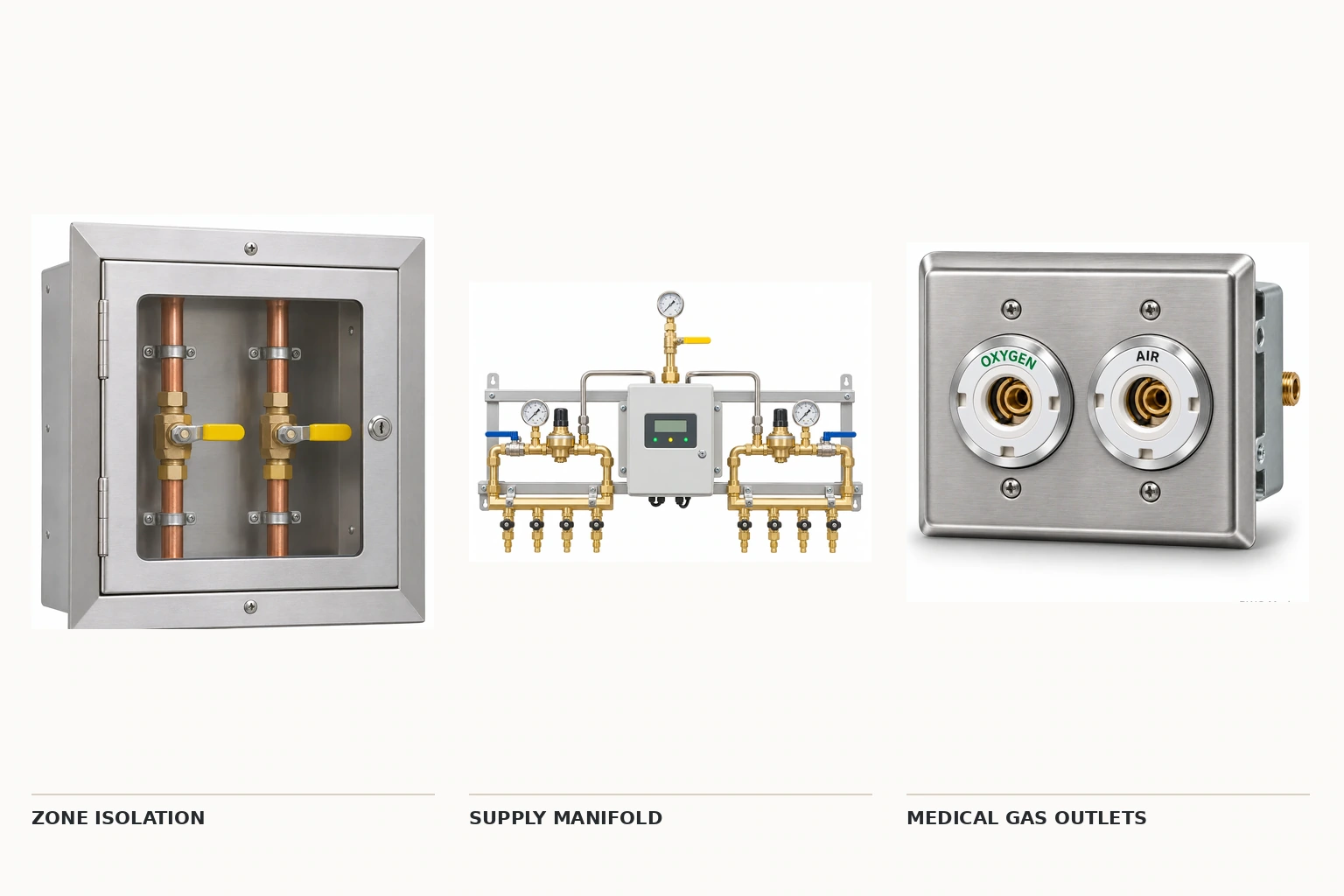
Supply arrangements. These provide the specified gas or vacuum service to the distribution network. A cylinder bank and a manifold are examples of equipment that can form part of a supply arrangement, but the actual source design is determined by the approved project.
Pipeline distribution. This carries the relevant gas or vacuum service to different clinical areas. Pipework, connections and line valves must correspond to the gas schedule and the system design. Copper tube and fittings should be specified as material items, not confused with the oxygen source itself.
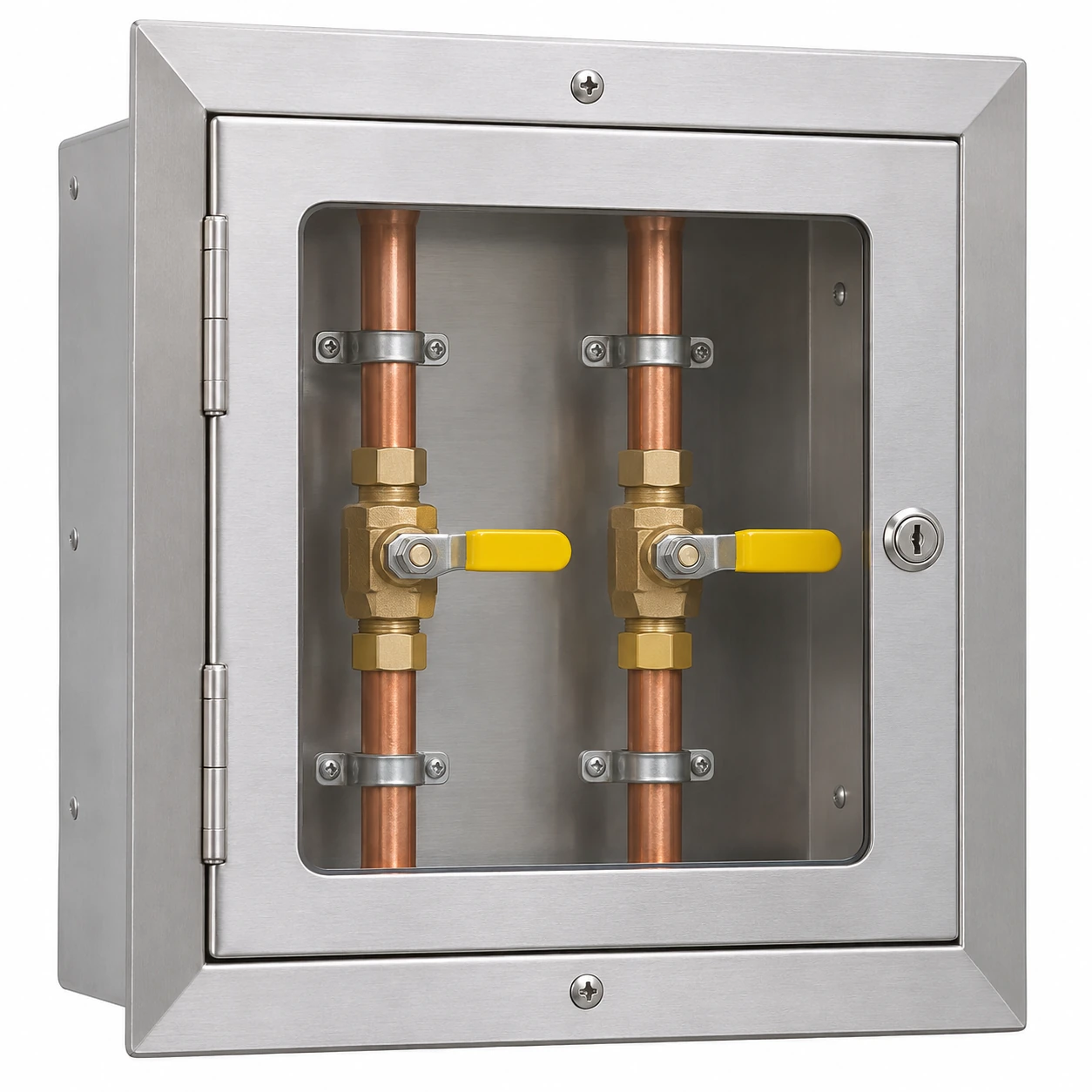
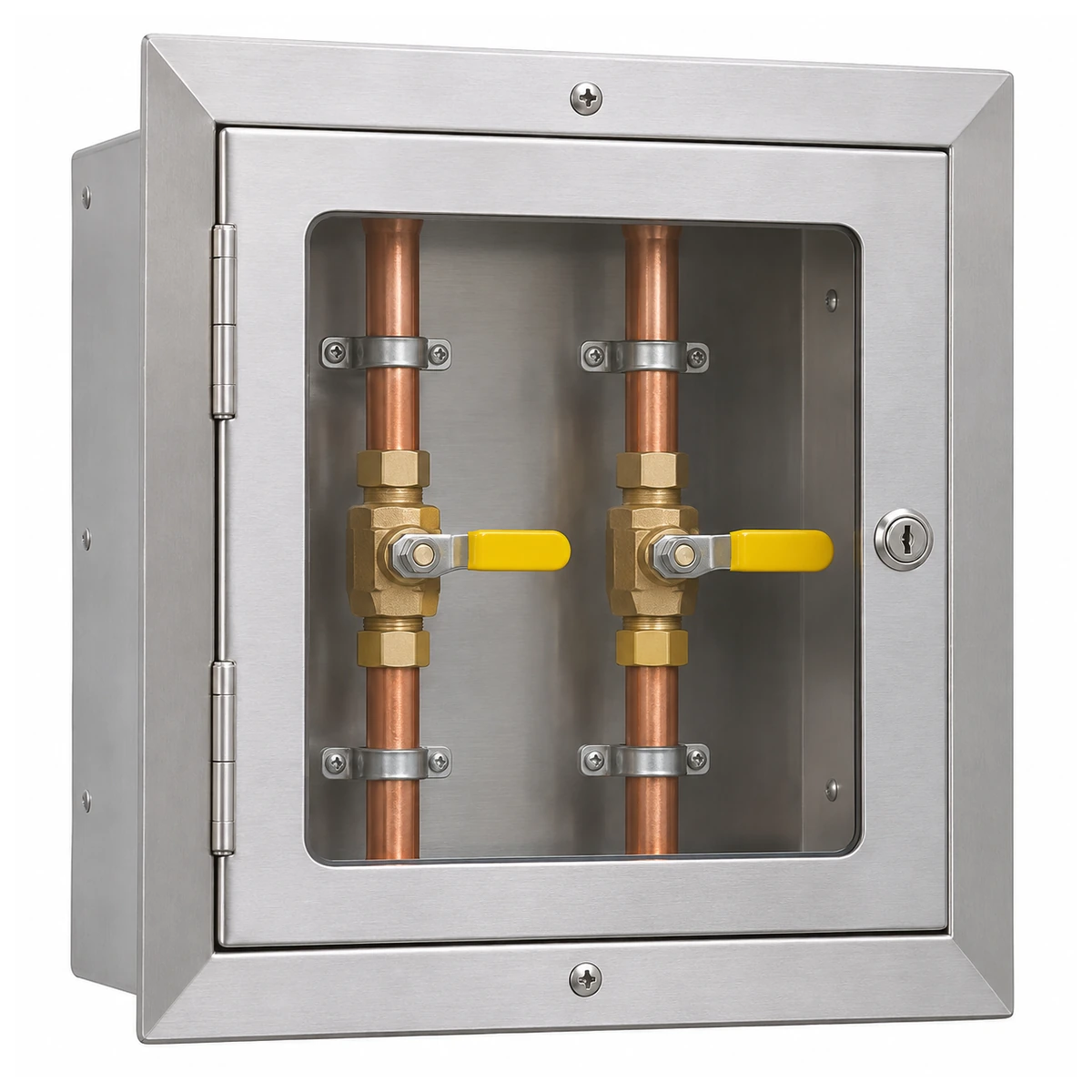
Isolation and control. Valves and area isolation arrangements provide a way to identify and isolate defined portions of the installed network. Their quantity and configuration depend on the project drawings.
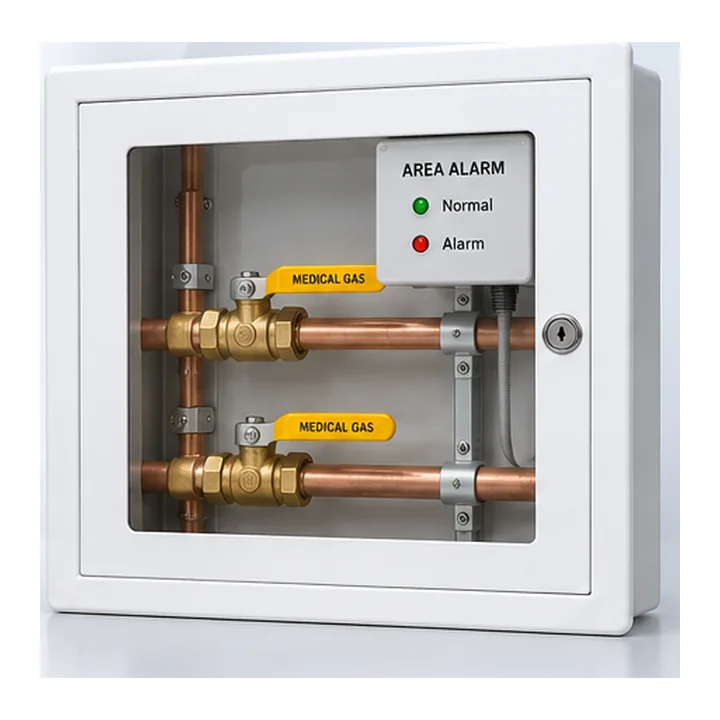
Monitoring and alarm functions. Medical gas pipeline systems also include monitoring and alarms within the scope addressed by ISO 7396-1. An alarm panel, an isolation valve and a pressure regulator have different purposes; one product does not automatically replace another.
Point-of-use terminal connections. Gas-specific outlets provide the intended interface at clinical use points. Their mating connection must correspond to the designated gas or vacuum service.
The distinction between these functions is useful when preparing a bill of materials for an MGPS project. The engineer establishes the system design; suppliers then identify which components and accessories they are offering.
Which gases and services can be included?
ISO 7396-1:2016 lists medical oxygen, medical air, medical vacuum and other specified gases and gas mixtures within its stated scope. The standard also addresses extensions and modifications to existing pipeline systems, not just entirely new installations.
That does not mean every hospital distributes the same services. The gas-service schedule and approved project documentation establish the actual requirements for each facility.
Is an MGPS the same as an anaesthetic gas scavenging system?
No. Anaesthetic gas scavenging disposal systems (AGSS) have their own technical subject under ISO 7396-2:2007. They should not be described as ordinary oxygen or medical vacuum distribution simply because both involve pipework and equipment used in healthcare.
The exact installed arrangement must be evaluated against the appropriate scope and adopted project requirements.
What information is useful before ordering MGPS components?
An equipment enquiry becomes easier to compare when it contains:
- The facility and clinical areas covered by the project.
- The gas and vacuum services shown on the approved design.
- A product schedule with clear quantities, models or equivalent functional descriptions.
- Terminal connector families and mating interface requirements where applicable.
- Zone valve, alarm and manifold configuration requirements.
- Medical copper tube dimensions, fittings and delivery format.
- Drawings and the specified applicable standards or contract references.
This is a procurement checklist, not an installation or commissioning procedure. Qualified project professionals remain responsible for the actual design and verification.
How BWC Medgas can support the component schedule
BWC Medgas supplies MGPS components including medical gas outlets, zone valve boxes, medical gas alarm interfaces, manifold components and degreased copper tubes and fittings.
Browse the BWC product range to identify the relevant components. Project contractors and distributors can send their gas-service schedule and bill of materials through the BWC Medgas enquiry form.
Common questions
Is a medical gas outlet itself a complete MGPS?
No. A terminal outlet is one of the system's final connection points. The full system also involves the relevant gas supply, distribution, control and monitoring functions.
Does ISO 7396-1 cover medical gas alarms?
Yes. Its published scope includes monitoring and alarm systems. The specific alarm arrangement and equipment specifications depend on the applicable project requirements.
Does an MGPS require the same products in every country?
No. A project's adopted standards, gas-service schedule and connection specifications determine which components and interfaces are appropriate. Do not assume interchangeability based on country labels alone.
Primary references
- ISO 7396-1:2016 — Medical gas pipeline systems, Part 1. Published scope for gas and vacuum pipeline systems, including supply, distribution, monitoring and alarm functions.
- ISO 7396-2:2007 — Anaesthetic gas scavenging disposal systems. Distinct subject and system scope.
- NHS England — HTM 02-01 Medical gas pipeline systems (19 August 2026). Healthcare engineering guidance covering design, installation, validation, verification and operational management.