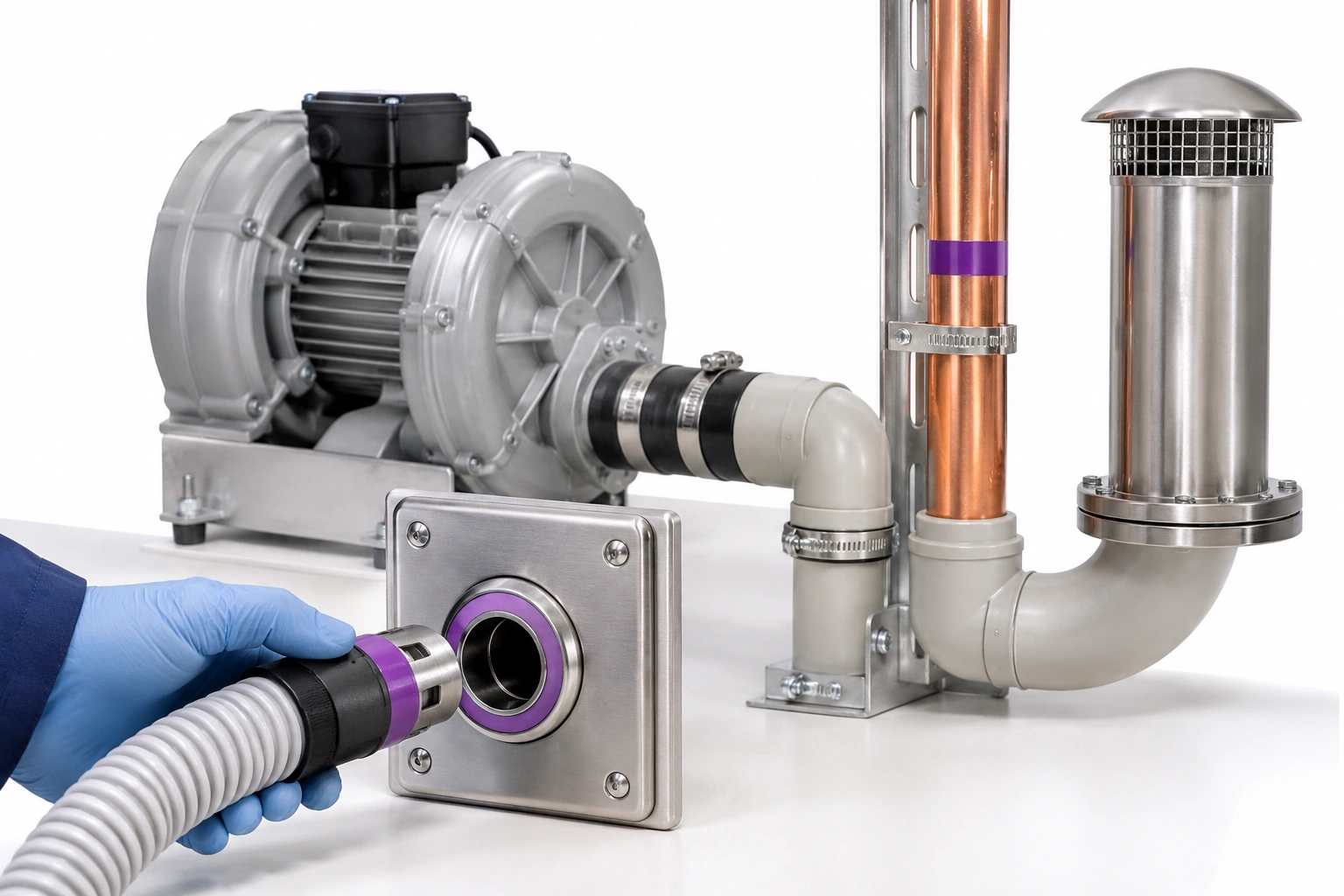
A successful AGSS equipment demonstration at a manufacturer does not prove that a renovated operating theatre has a safe, complete scavenging path. The installed system includes terminal units, distribution piping, a power device, final discharge and an anaesthesia workstation interface, all with different evidence and sign-off responsibilities.
A factory-to-site-to-clinical acceptance dossier is more useful than a one-line certificate stating “AGSS tested.” The dossier must be tied to the actual adopted project standards and qualified acceptance process.
Identify the 2026 Scottish test form correctly
The NHS Scotland SHTM 02-01 publication of September 2026 lists Form A17 — Anaesthetic gas scavenging system (AGSS) tests. The same publication lists other plant and medical-gas forms for their separate systems.
Form A17 should not be confused with A13 medical vacuum plant, A14 area alarms or A15 central alarms. Likewise, NHS England HTM 02-01 (August 2026) has its own published Parts A/B and related forms. The project must establish which version applies.
Separate component tests from site requirements
| Evidence item | Factory or manufacturer | Installed site/hospital |
|---|---|---|
| Power-device identity | Exact type, model and performance curve | Installed serial/asset record |
| Terminal units | Applicable ISO 9170-2 model and product data | Correct installed type and probe |
| AGSS piping | Manufacturer installation instructions where applicable | Routing, non-cross-connection and as-built evidence |
| Workstation interface | Approved receiving/transfer assembly | Connected compatibility at each intended station |
| Controls and alarms | Defined test outputs and status behavior | Actual receiving location and event mapping |
| Discharge | Device/discharge installation limitations | Approved outlet location and environmental review |
| Functional performance | Factory duty under declared conditions | System duty under installed accepted conditions |
| Operational release | Not a product manufacturer approval | Healthcare-authorized handover |
The matrix should be included in the procurement contract before shipment; post-installation arguments over scope can otherwise delay operating-room opening.
Apply the correct normative boundaries
ISO 7396-2:2007 covers the AGSS disposal system and its commissioning. ISO 9170-2:2008 covers terminal units; ISO 80601-2-13:2022 governs anaesthetic workstation components including relevant scavenging interfaces.
Older references to ISO 8835-3:2007 appear in historical documents, but that standard is withdrawn. Do not present it as the currently published equipment standard when preparing a 2026 technical dossier.
Establish a source-to-terminal witness index
For each test, record the drawing revision, equipment IDs, accepted method, competent tester, calibration references, physical test location, relevant design acceptance criteria, results and witnesses. Link the test to the correct theatre or terminal group.
Do not copy a universal flow rate, vacuum pressure or alarm setpoint into a public article. The approved system design and relevant manufacturer instructions determine permitted values and safe methods.
Example: two successful isolated tests, one untested interface
The extraction plant supplier presents an acceptable factory flow curve and the terminal manufacturer presents a conformance statement. The anaesthesia vendor arrives on site with a transfer/receiving component that has not been checked against the installed AGSS terminal type.
The final workstation-to-disposal function is not proven by the two isolated documents. Resolve the interface, record the authorized combined test and obtain sign-off from the relevant hospital parties.
Manage late site changes
If the construction contractor alters the pipe route or a controls vendor modifies fault mapping after the initial witness, document the change and assess which tests must be repeated. Keep original discrepancies and approved closure evidence.
A completed test certificate for an earlier layout is not a waiver for later work.
Commissioning and operation responsibility
The installer controls workmanship evidence; the qualified testing team records prescribed site checks; anaesthesia and biomedical personnel approve equipment interfaces; estates and hospital governance determine readiness for clinical operation.
Nobody should perform failure simulations that interrupt in-use anaesthesia services without an authorized clinical and engineering plan.
Handover checklist
Request as-built service maps, plant and terminal asset schedule, exact device connections, factory records, signed A17 (or locally adopted equivalent), controlled deviations, approved settings documentation, maintenance arrangements, spares, training and named responsible persons.
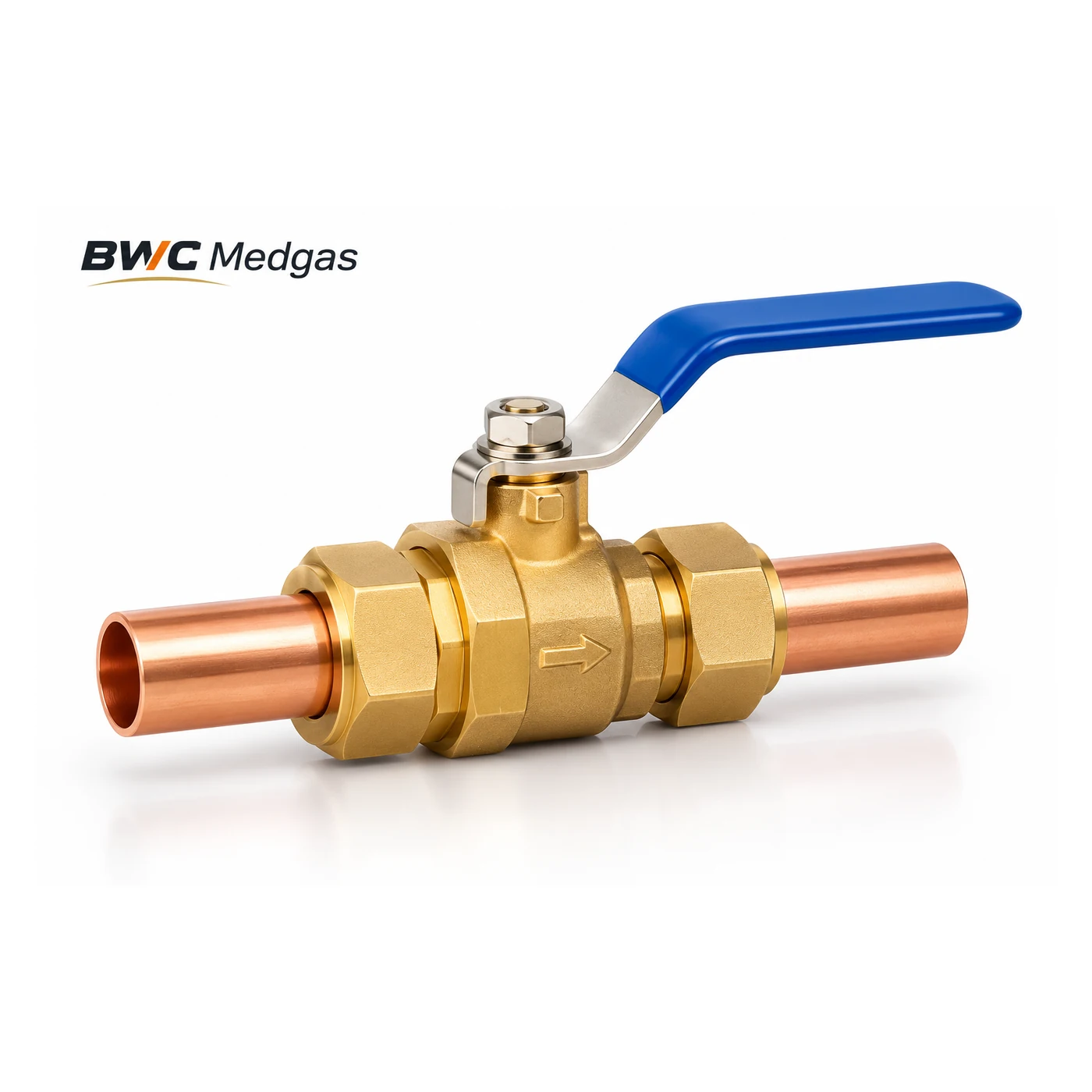
BWC Medgas provides selected AGSS-relevant outlet and installation components where model availability and suitability have been confirmed; BWC component delivery cannot replace AGSS plant commissioning.
Discuss manufacturer component evidence with BWC Medgas.
Frequently asked questions
Is a manufacturer's extraction blower FAT sufficient to release operating theatres?
No. The installed system and anaesthesia workstation interface need their own qualified acceptance.
Is the Scottish A17 form mandatory for all countries?
No. It is a Scottish healthcare guidance form; follow the requirements adopted for the specific project.