
A healthcare construction or major renovation project in Dubai may use the Dubai Health Authority's Health Facility Guidelines (DHA-HFG) as part of the design context. The most effective MGPS component enquiry therefore begins with the project's design documents—not a request for every item marked simply "UAE standard."
What does the DHA publish?
The Dubai Health Authority's Health Facility Guidelines provide planning, construction and engineering references for healthcare facilities. Their Part E focuses on engineering services, and Part E section 7 addresses medical gas system design.
The medical gas section describes a consolidated design framework for relevant new construction and major renovation projects under DHA licensing in Dubai. Its introduction refers to an engineering basis drawn from HTM 02-01 or NFPA 99, adapted to the Dubai project context.
This is not a universal technical rule for every healthcare project throughout the United Arab Emirates. Other emirates and facilities can have their own responsible authorities and project requirements.
The DHA's main index also recommends consulting its live website, since downloaded versions may become outdated.
Why does the specified design basis matter to a supplier?
HTM 02-01 and NFPA 99 come from different publishing and regulatory contexts. The project designer is responsible for identifying the applicable design basis, resolving conflicts and providing an approved component schedule.
For a component manufacturer, the correct task is to quote the valves, terminals, alarms and accessories described by that schedule. Advertising a generic "DHA-compliant" item without a defined model and project scope does not make the quotation comparable.
How should gas services and interfaces be recorded?
A practical Dubai medical gas parts list should separate the service from the hardware:
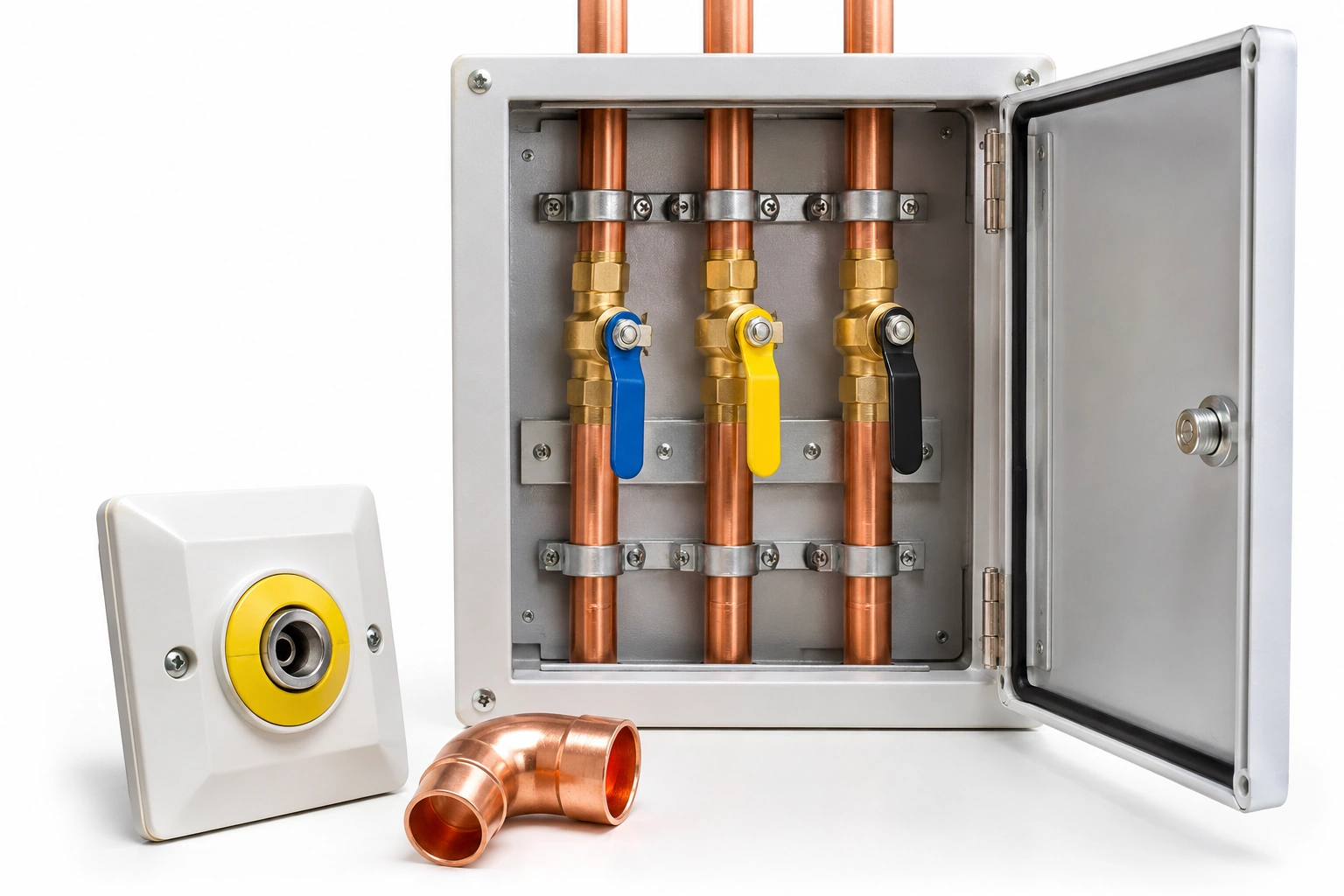
- Oxygen and other medical gas terminals: number by gas, interface family, mounting style and accessories.
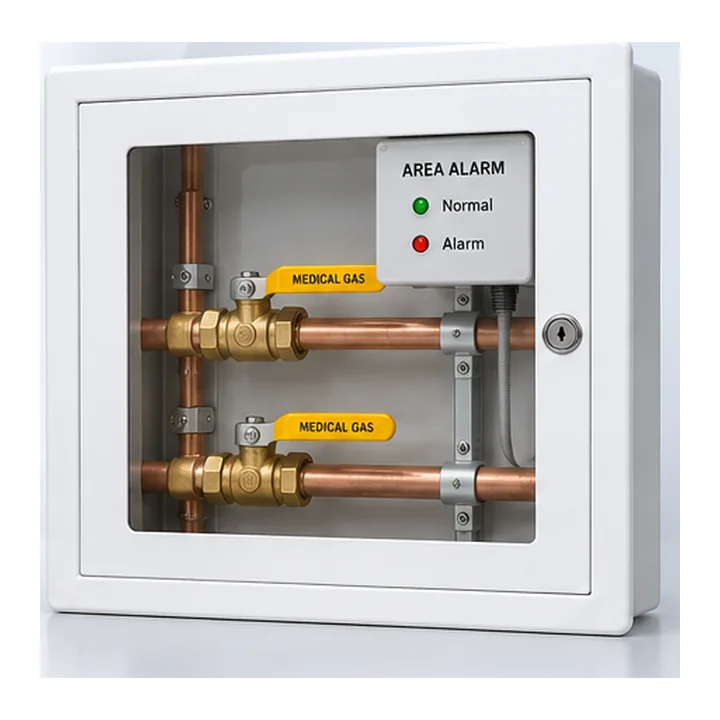
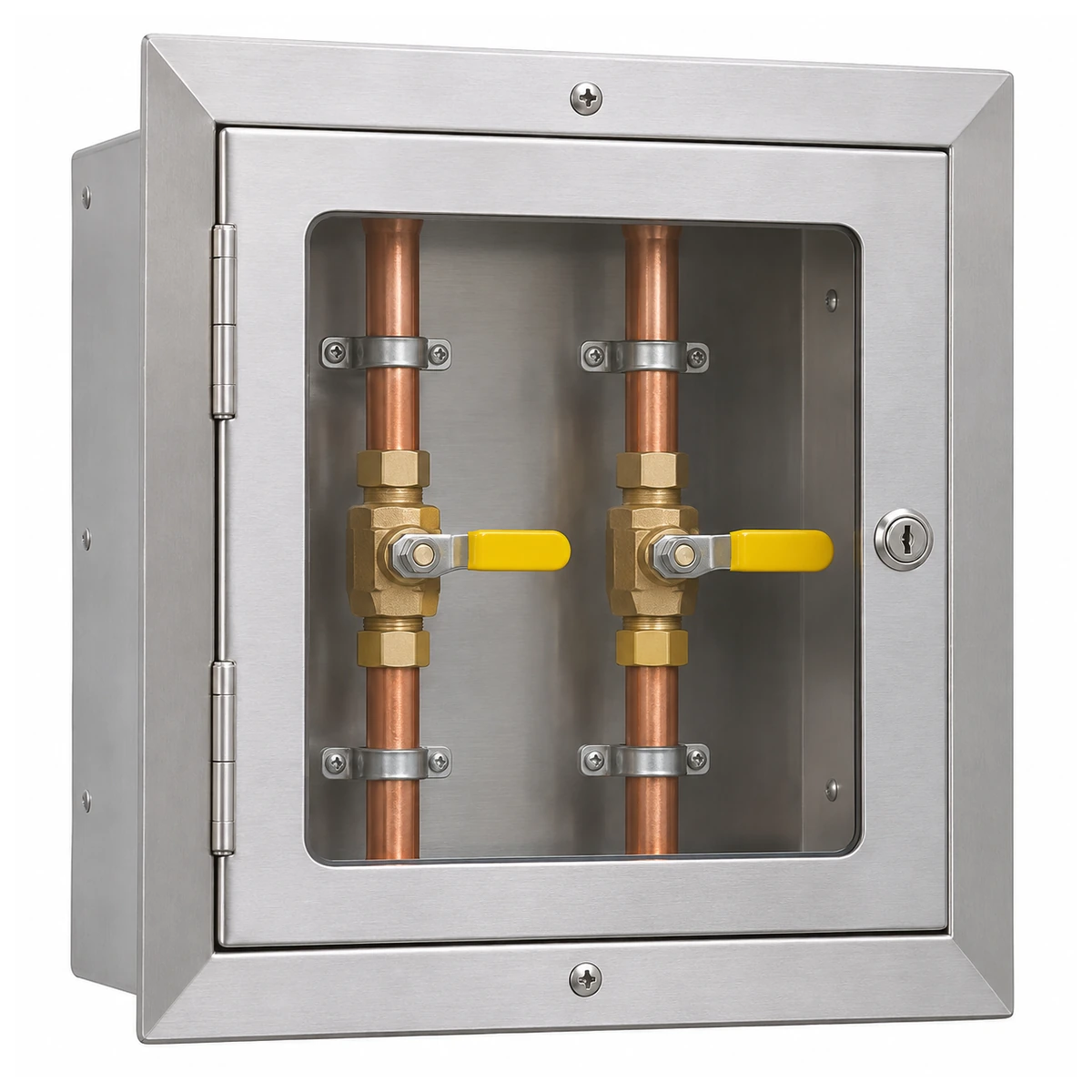
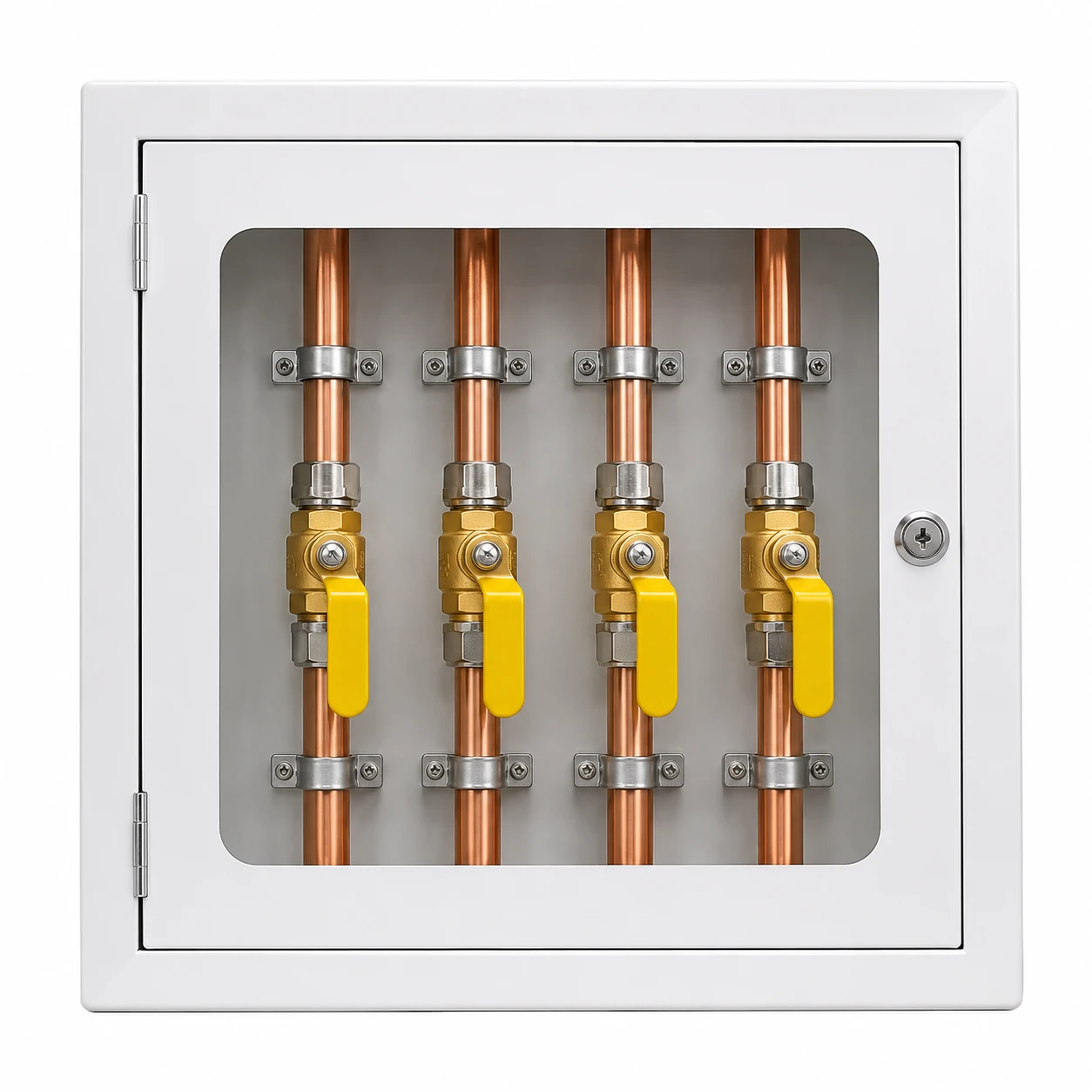
- Isolation valves / AVSUs: service assignment, valve count, connection size and enclosure layout.
- Alarm panels: monitored services, input/sensing arrangement and panel configuration.
- Manifold-related hardware: bank connections, gas service, pigtails, pressure interfaces and supply boundary.
- Copper pipe fittings: the specified sizes and fitting types in the approved materials schedule.
The complete engineering design and source-system selection are separate services from supplying these components.
What about hospital refurbishment?
A renovation enquiry should identify existing equipment and the portions scheduled for replacement. Terminal compatibility may depend on the currently installed probe and outlet family, and a replacement alarm may require particular wiring or signal details.
ISO 7396-1:2016 describes the broader scope of medical gas and vacuum pipeline systems, including the difference between supply, distribution, controls and alarms. It is useful for organising the equipment schedule without assuming one component satisfies the whole system specification.
How BWC Medgas can help Dubai contractors
BWC supplies medical gas outlets, zone valve boxes, alarm components, manifold components and copper fittings.
Please send the approved design-basis reference, service schedule, inlet/connector details and quantities. A well-defined list makes pricing faster and reduces ambiguity when several tender packages overlap.
Discuss your Dubai medical gas component schedule with BWC.
Common questions
Does the DHA design guideline apply automatically to Abu Dhabi?
No. The guidance identifies its DHA facility context within Dubai. The responsible project authority must be confirmed separately for other emirates.
Should a buyer specify "HTM or NFPA" without selecting one?
The engineering consultant should establish the appropriate project basis. A supplier should not guess from the country alone.