A hospital can have an accurate terminal count and an incorrect medical gas capacity assumption at the same time. Procurement lists answer how many points are needed; source and distribution calculations must answer what conditions the network must support.
This guide provides a transparent worksheet structure for project engineers and procurement teams. It intentionally does not prescribe pipe sizes, oxygen flow settings, diversity factors or source capacities. Those decisions require the approved clinical brief, applicable code, competent engineering design and verification.
Build a separate worksheet for each service
Oxygen, medical air, surgical tool air and medical vacuum are not one interchangeable capacity pool. Create a distinct calculation worksheet for each service. Link every line to a room schedule and distinguish patient-care duty, support equipment duty and any separately defined exceptional scenario.
At a minimum record:
- Project and service, drawing revision and calculation author.
- Clinical room group and number of positions.
- Device/use category and the approved design flow basis for each operating case.
- Number of simultaneously operating devices under each approved scenario.
- Duration of the operating case and any changeover/resilience assumptions.
- Pressure or vacuum performance criterion and the critical downstream location.
- Method and source for any diversity or coincidence assumption.
- Outstanding clinical or engineering approvals.
Do not hide a blanket diversity multiplier inside a single spreadsheet cell.
Define scenarios before applying arithmetic
Ask the clinical and estates teams which operating conditions matter: ordinary occupancy, expected high-acuity operation, temporary surge arrangements and a credible equipment/source failure case. The applicable design standard may treat these differently; an operating scenario is not necessarily a sizing scenario.
Separate connected load from coincident design load. A simple explanatory expression is:
Design demand for a particular case = sum of the required flow for the devices expected to operate in that case.
This is a calculation structure, not a code-compliant sizing formula by itself. Assumptions about which devices operate simultaneously, pressure losses, diversity and supply arrangements must be justified and reviewed.
A worked arithmetic example, not a design value
Suppose an engineer has already approved a hypothetical scenario in which:
- Four defined devices are each assessed at 30 L/min.
- Three other devices are each assessed at 10 L/min.
- No other devices operate in this illustrative scenario.
The arithmetic subtotal is 4 × 30 + 3 × 10 = 150 L/min. This says nothing by itself about hospital design capacity. It does not account for the complete installation, future connections, supply resilience, pressure requirements, losses, alternate scenarios or prescribed local factors.
The practical lesson is to show every input in a way another reviewer can reproduce. Never present those example rates as clinical device prescriptions.
Review the assumptions with clinical staff
A diversity assumption is only meaningful if the underlying usage pattern is credible. Common review questions are:
- Which room types are represented by this group?
- Is the assumption based on actual intended equipment use or copied from an old spreadsheet?
- Has the service mix changed, for example from general wards to more intensive care?
- What is the consequence if use is more simultaneous than anticipated?
- Is there a future extension reserved in the architectural brief?
- Who approves the final clinical demand basis, and where is that approval recorded?
ASHRAE and other design references may publish context-specific examples, but they must not be treated as universal system sizing rules. The local project design team must approve the methodology.
Separate capacity adequacy from component procurement
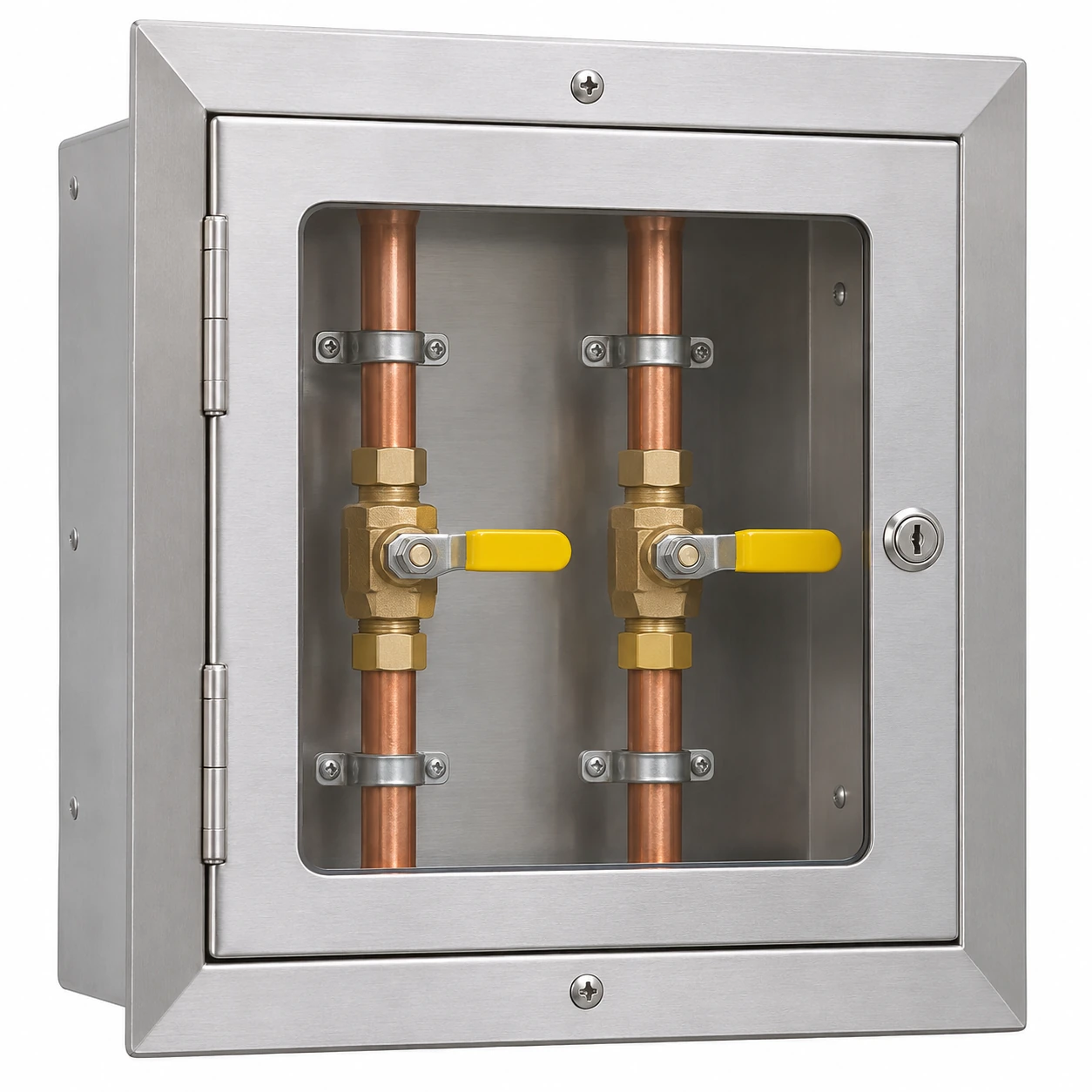
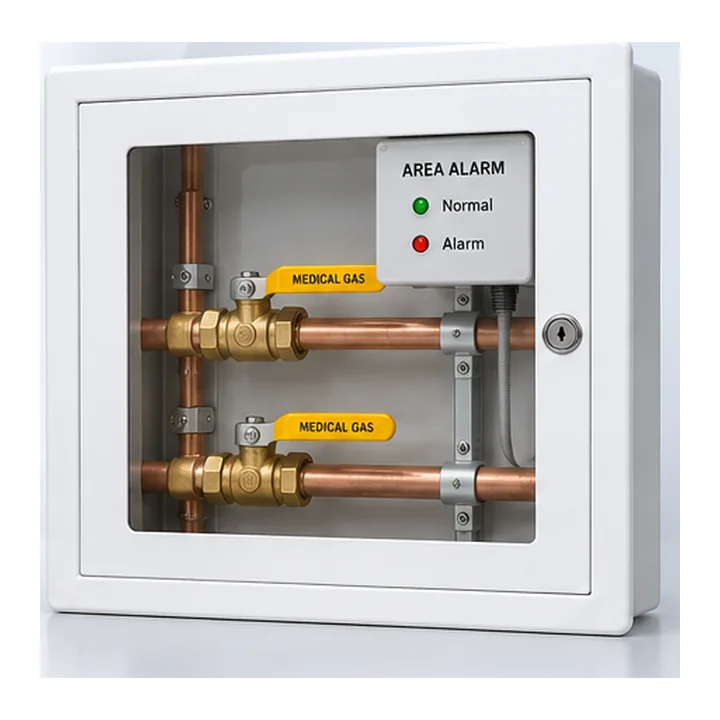
A zone valve box, medical gas outlet or manifold component may have a defined product operating envelope. That does not by itself prove that the complete facility can support the planned peak flow at its remote terminal.
The designer has to coordinate approved source duty, distribution and losses, isolation arrangement and required terminal performance. The purchaser should request the applicable product data for the exact offered component and compare it with the project duty.
Create a calculation review and change record
For each revision, retain the previous case, changed room/service quantities, new clinical demand assumption, source of the assumption, affected drawings and the approver. If a ward changes to an ICU, re-examine the demand basis instead of merely adding another outlet line.
A useful procurement hold point is to require an approved duty and service schedule before finalizing any performance-critical component requirement.
Frequently asked questions
Can I size an MGPS from beds multiplied by a typical flow?
No. Bed count alone does not define concurrent equipment use or the required performance of the system.
Is oxygen capacity the same as medical air capacity?
No. They are different services with separate demand, quality and system requirements.
How BWC Medgas fits into this work
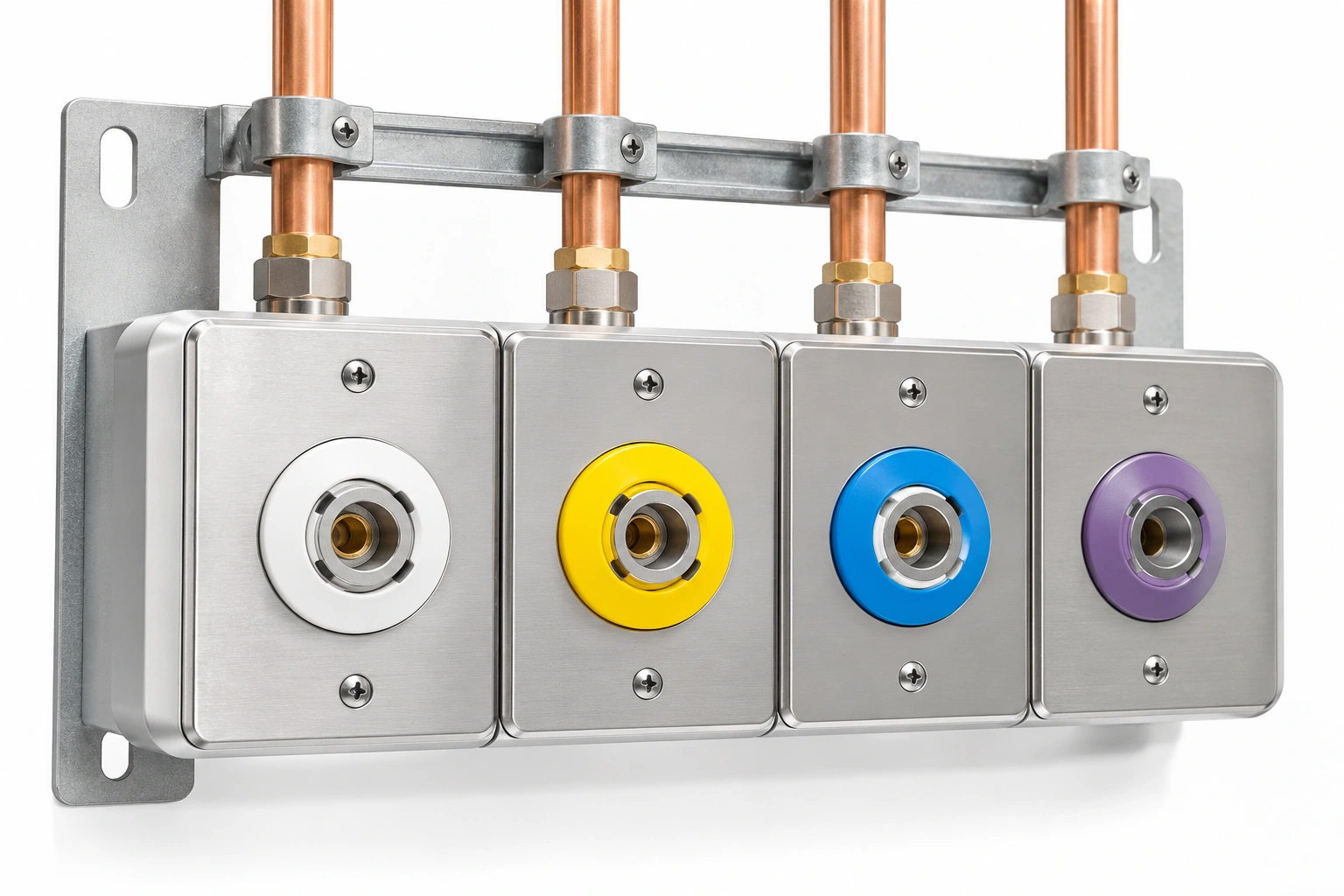
Once the designer defines the project duties and interfaces, BWC can discuss compatible outlets, regulators and flow-control equipment, manifold components and other supported hardware. A clear worksheet helps prevent a quotation against an incomplete system requirement.
Discuss the specified component list with BWC Medgas.