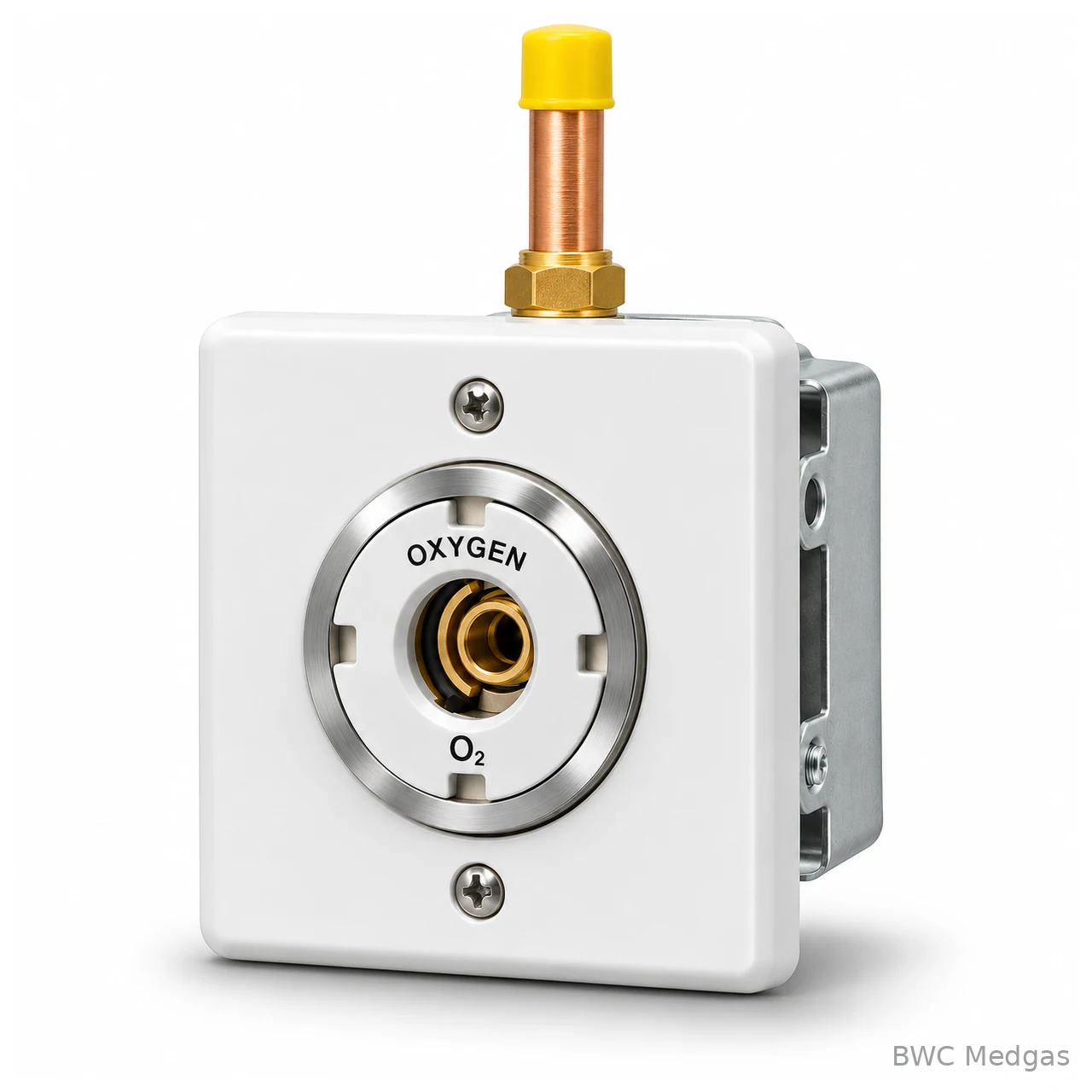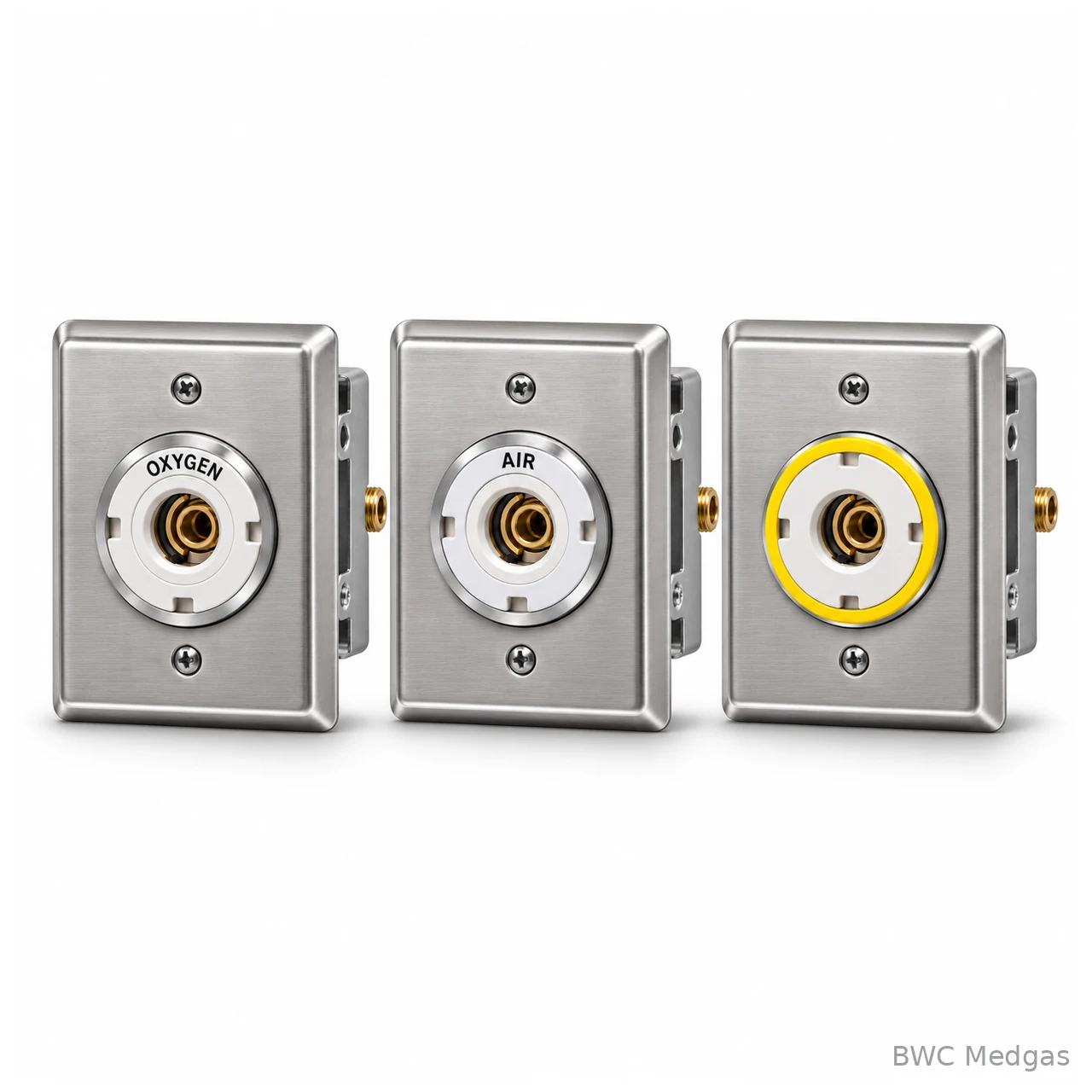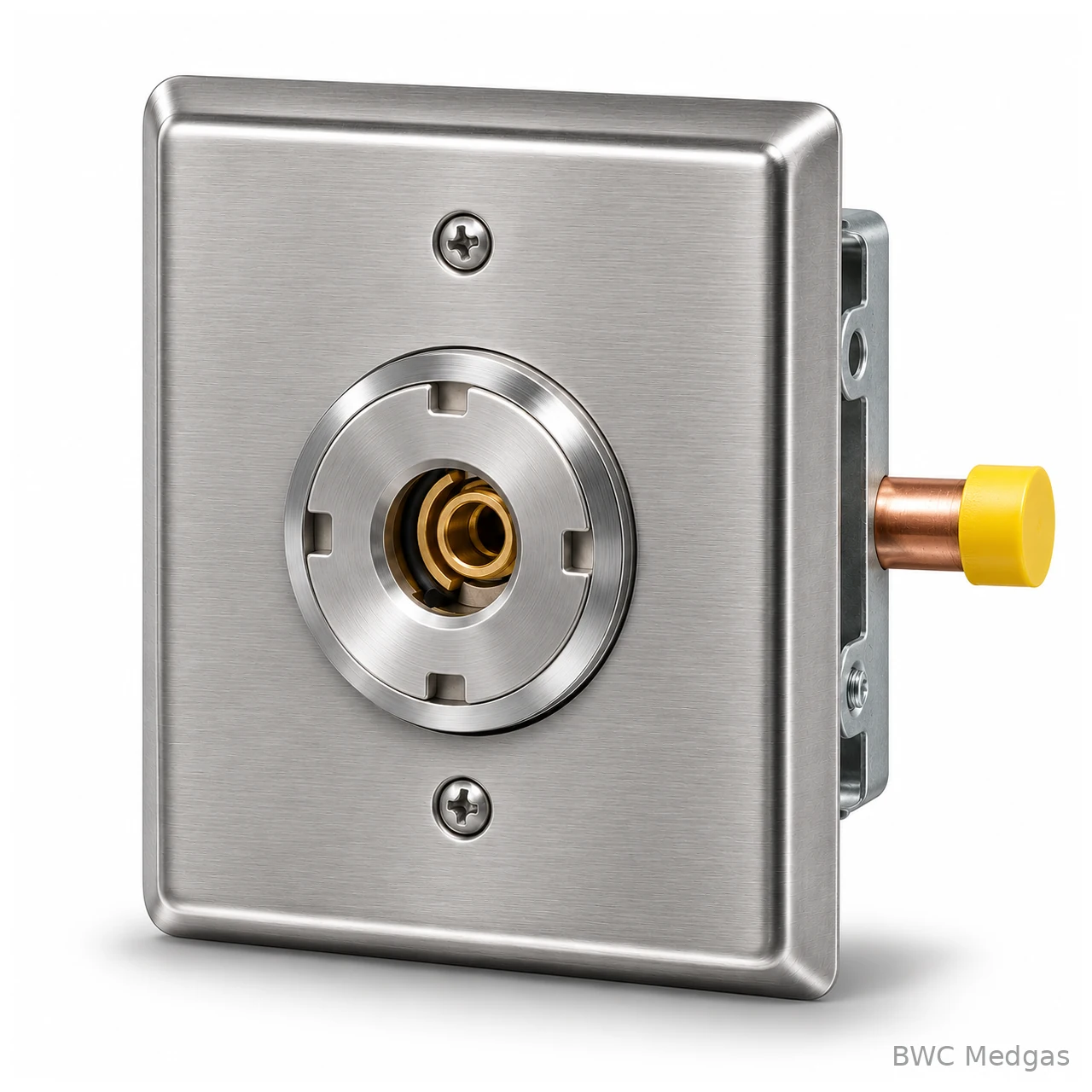
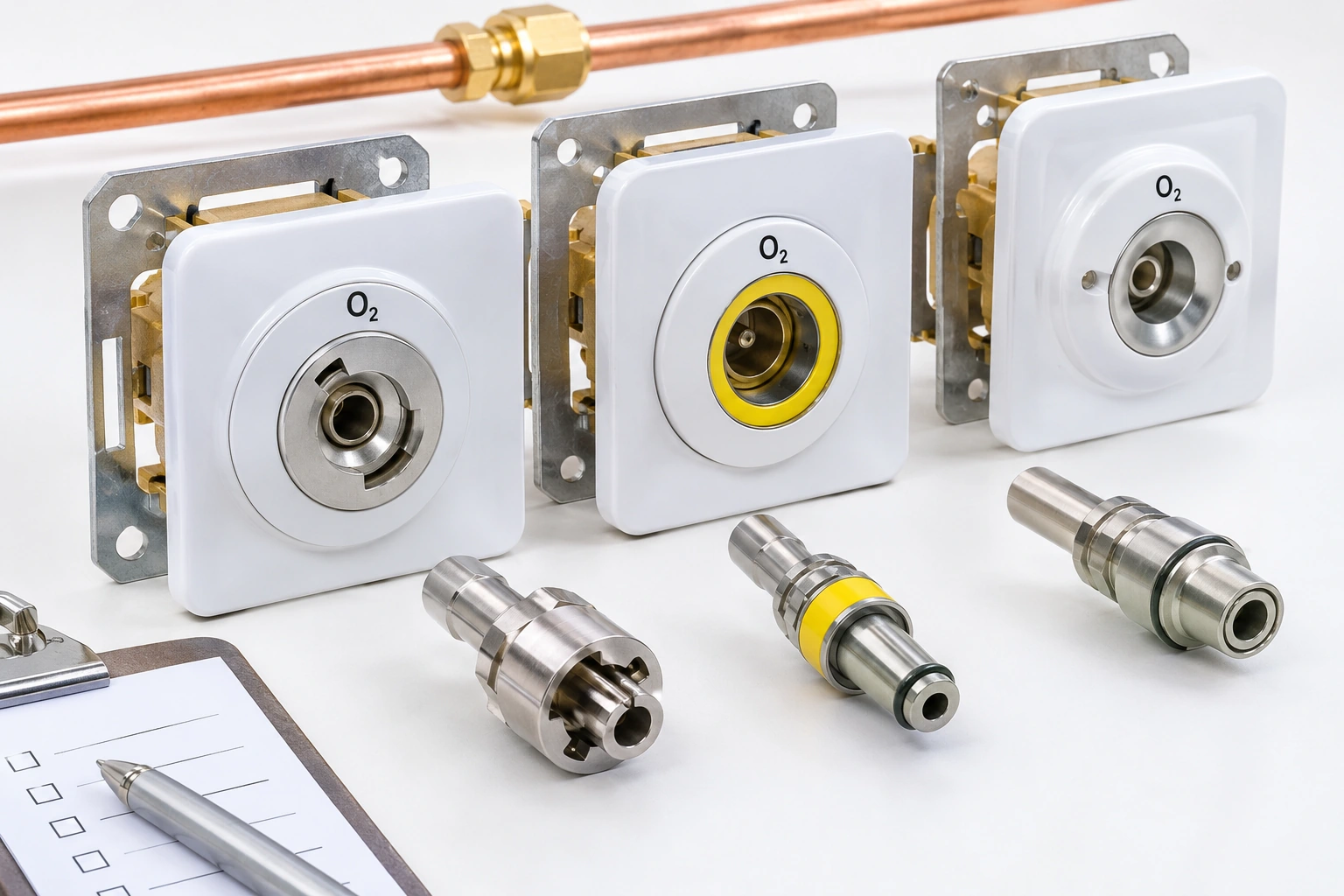
Hospital refurbishment often begins with an apparently simple request: replace a set of aging medical gas outlets. In practice, the existing terminal head, mating probe and installed wall assembly all influence the component that can be purchased.
For an international sourcing project in Europe, the most efficient approach is to collect a compatibility inventory before comparing product prices.
Identify the existing terminal and probe family
Projects may use different connection families, including British-style arrangements, German DIN connections and French AFNOR systems. These descriptions refer to different mating geometries; they should not be treated as equivalent.
ISO 9170-1:2017 covers gas-specific medical gas terminal-unit performance, but it does not specify the dimensions of every national probe and gas-specific connection point. The interface standard and the actual installed probe therefore remain important information in a replacement order.
The BWC Medgas outlet standards guide explains the principal families.
Distinguish front-unit replacement from whole-assembly replacement
A full outlet assembly may include a faceplate, terminal mechanism and rear or first-fix components. A quotation for a replacement front unit may have a different supply scope.
Check:
- Gas service and terminal identification
- Installed probe connection family
- Faceplate and mounting dimensions
- Rear connection and first-fix requirements
- Access constraints and installation orientation
- Quantity by room or ward
Use photographs as supporting documentation, not as the only evidence of connection compatibility.
Hospital ward extensions
An extension may need new outlets adjacent to an existing distribution arrangement. The design team should establish the approved connection and pipeline specifications for the added area. The purchasing team then aligns new terminal units, zone valve boxes and area alarms with those documents.
Matching the rest of the pipeline components
A terminal replacement schedule may be accompanied by requests for line valves, pressure indicators or pipework. Keep each category on a separate quotation line.
For pipework changes, itemize medical gas copper tubes by outer diameter and wall thickness and list the required copper fittings by type and size.
Procurement workflow
- Survey the installed outlet services and interfaces.
- Record the adopted system and connection references.
- Confirm the exact replacement scope.
- Prepare a quantity schedule grouped by gas and connector family.
- Specify any accompanying valve, alarm or pipework parts.
- Request a consistent supplier quotation with itemized configurations.
- Have the project team review product compatibility before ordering.
Frequently asked questions
Is one model suitable for all European hospitals?
European projects do not necessarily use one identical physical terminal connector. Identify the required system rather than assuming regional interchangeability.
Can a new DIN terminal connect to a British probe?
The correct mating geometry must be established; the interface families should not be assumed interchangeable.
Are terminal units and flowmeters included in the same item?
They are distinct products. List the wall terminal and its matching accessory separately when both are required.
Related technical guides
Browse medical gas outlets, the French AFNOR purchasing guide, the German DIN connection guide, and the hospital MGPS RFQ template.