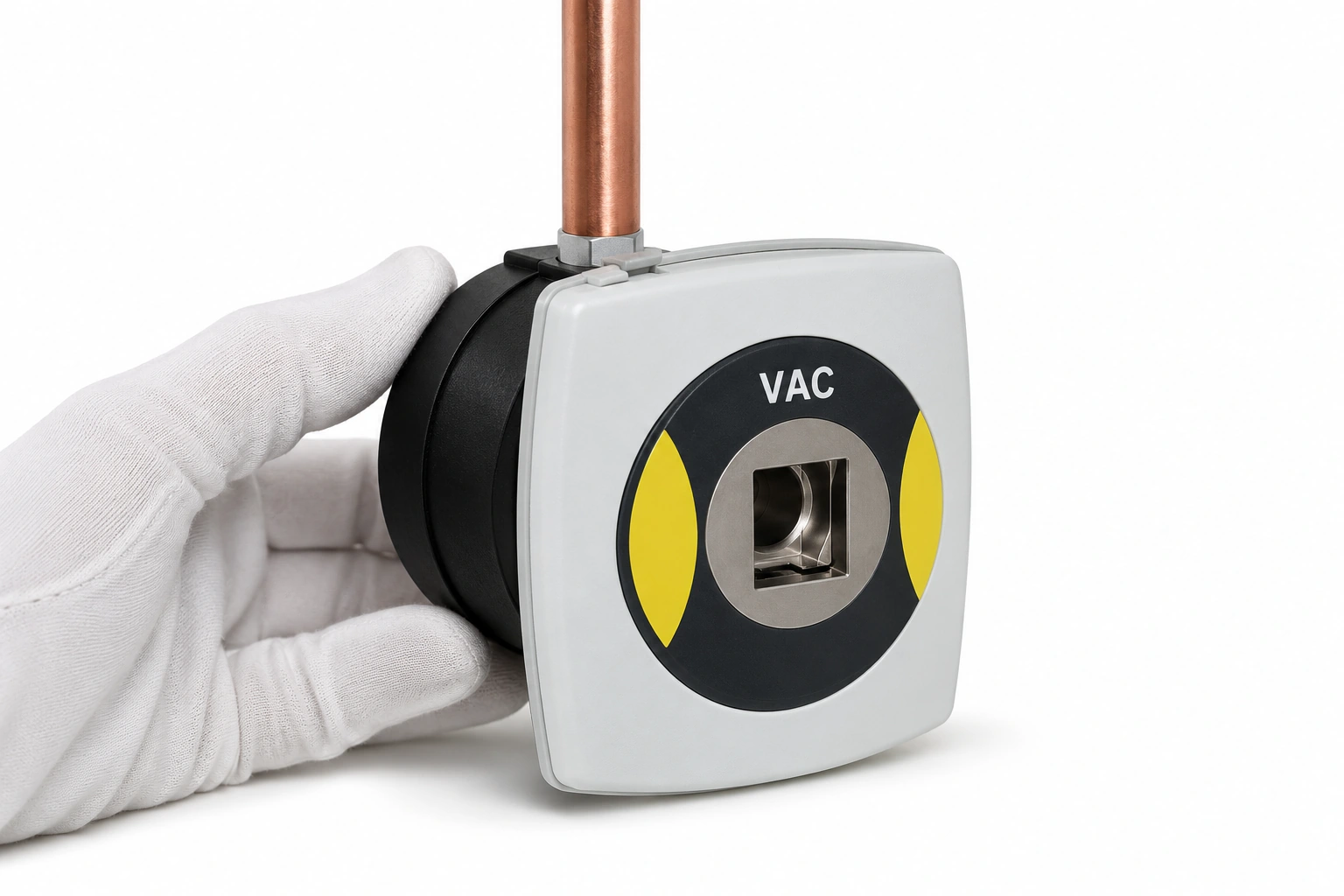
A German hospital's medical gas outlet specification often includes a DIN reference. That reference is important, but a replacement order still has to identify the actual gas service, mating connection, mounted configuration and physical dimensions.
The technical question for a German retrofit is not just “Is this a DIN outlet?” It is “Does this product match the terminal, probe and installation interface specified for this hospital?”
Which DIN edition is the published terminal standard?
DIN Media lists DIN EN ISO 9170-1:2020-09 as a current German standard: the German version of EN ISO 9170-1:2020, based on ISO 9170-1:2017. It replaces the earlier 2008 German edition of the terminal-unit standard.
The ISO 9170-1:2017 official abstract addresses gas-specific assembly, mechanical resistance, leakage, flow and non-interchangeability for relevant terminal units.
Importantly, the ISO document does not itself specify the dimensions of all probes or gas-specific connection points. Those can be determined through applicable regional or national connection specifications.
What can a DIN label establish—and what can it not?
A DIN reference indicates the technical standard family or national version being discussed. It does not, alone, prove that an outlet fits an existing hospital front plate or that every probe in a facility mates with it.
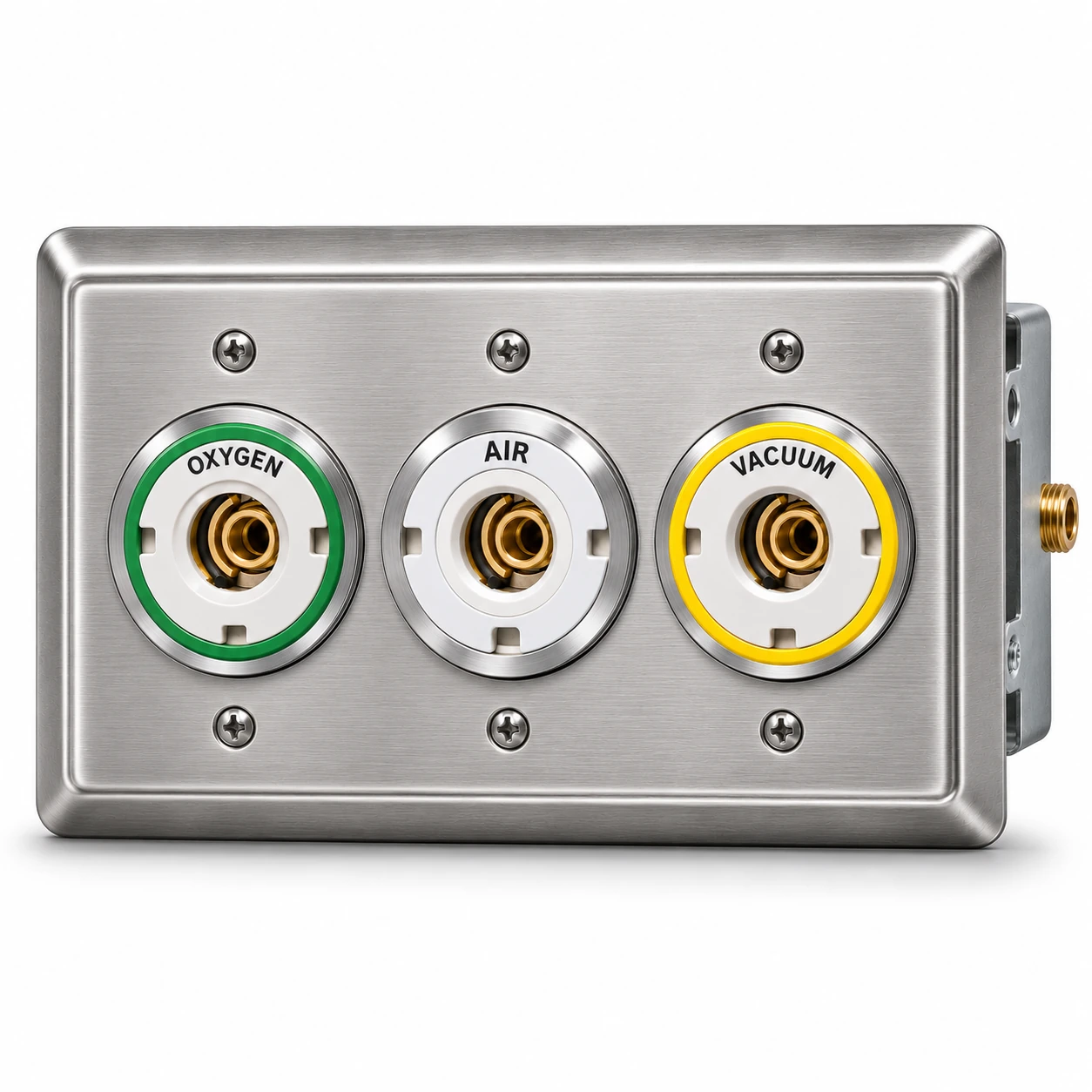
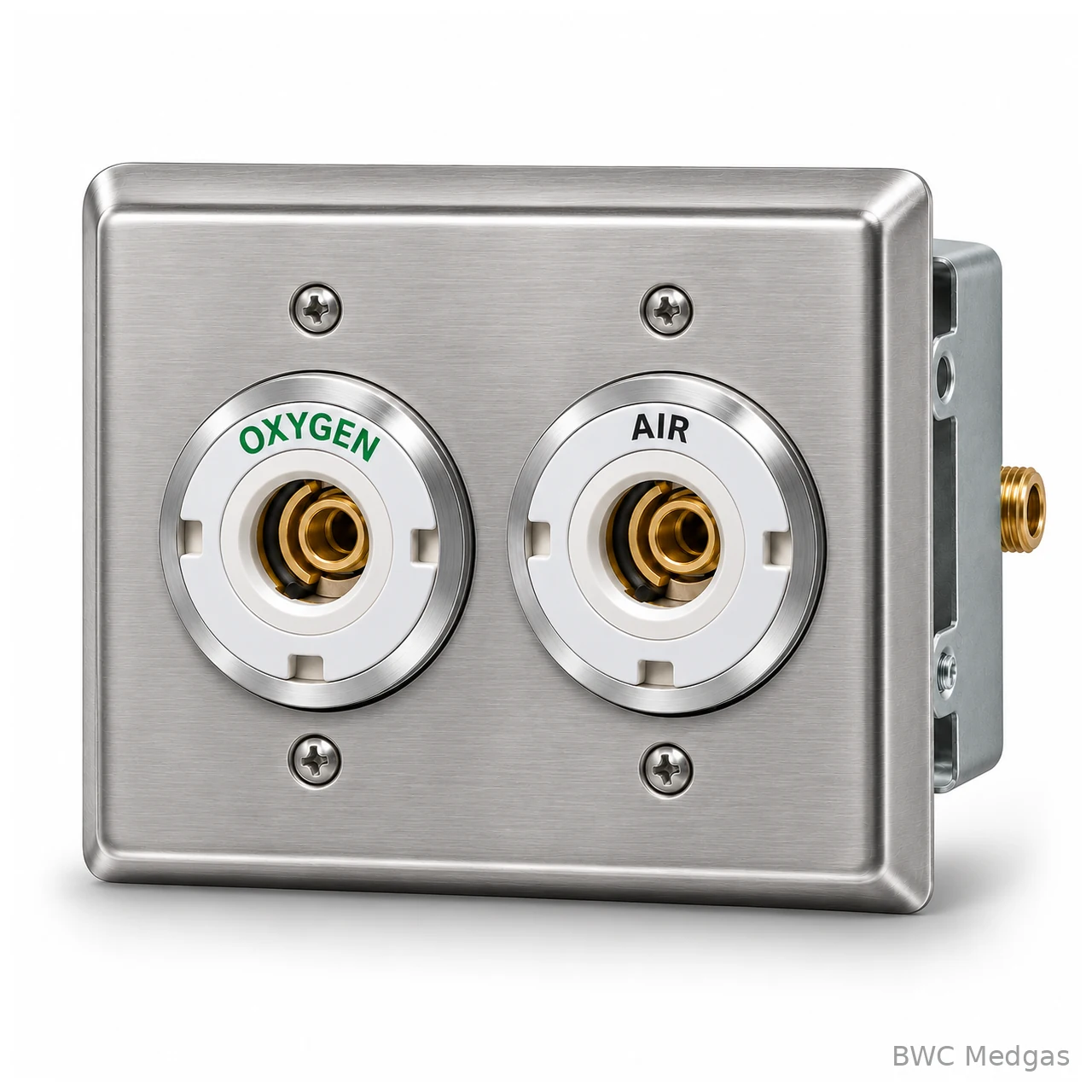
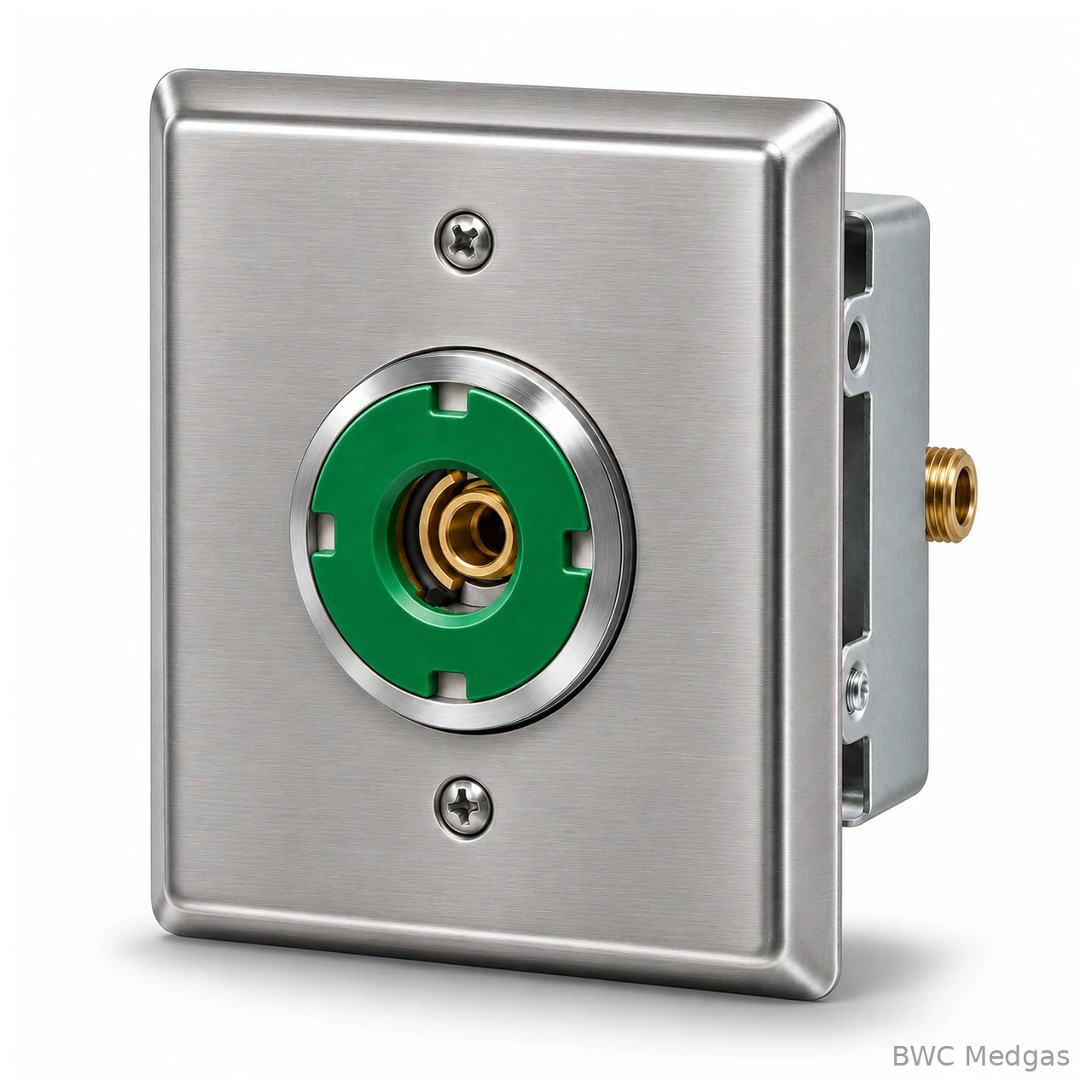
A supplier needs the exact model and interface requirements. Even where two outlets appear visually similar, the mating connector, gas identification, rear inlet and mounting format must be verified.
This distinction matters especially when a hospital replaces only selected outlets rather than an entire ward installation.
Which details should German contractors send?
A technically useful German medical gas terminal enquiry includes:
- The gas or vacuum service for every terminal.
- The full standard reference and edition required by the project.
- The existing terminal and mating-probe type or a manufacturer drawing.
- The wall mounting or bedhead faceplate arrangement.
- The rear pipe connection, fitting size and supplied accessories.
- A quantity breakdown by service and clinical area.
- Any installation documents the buyer must receive from the component supplier.
This is procurement clarification, not a technical procedure for working on an operating pipeline.
How does the terminal requirement relate to the pipeline standard?
The DIN engineering standards catalogue separately lists the German MGPS pipeline standard (DIN EN ISO 7396-1) and the terminal standard (DIN EN ISO 9170-1).
The existence of separate standards shows that the entire network and the point-of-use connector are not identical product scopes. A terminal quote should not be confused with a complete installed-system design.
Where BWC Medgas can help
BWC Medgas supplies medical gas terminal outlets and related valve and connection accessories. For German retrofit enquiries, send drawings or photographs showing both the existing outlet and the matching probe, plus the connector specification.
This enables a precise discussion of which BWC configuration may be suitable. Send the German outlet schedule to BWC.
Quick answers
Does DIN EN ISO 9170-1:2020 mean every product has the same probe dimensions?
No. ISO 9170-1's published scope expressly excludes defining every national and regional mating dimension.
Can a photograph alone prove full compatibility?
No. A photograph can help initial identification, but the project requires exact product and connection information.