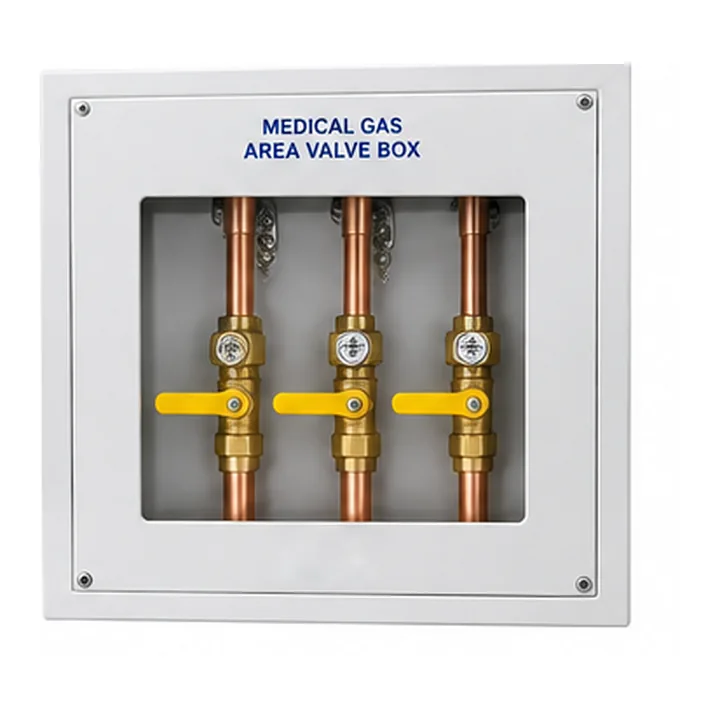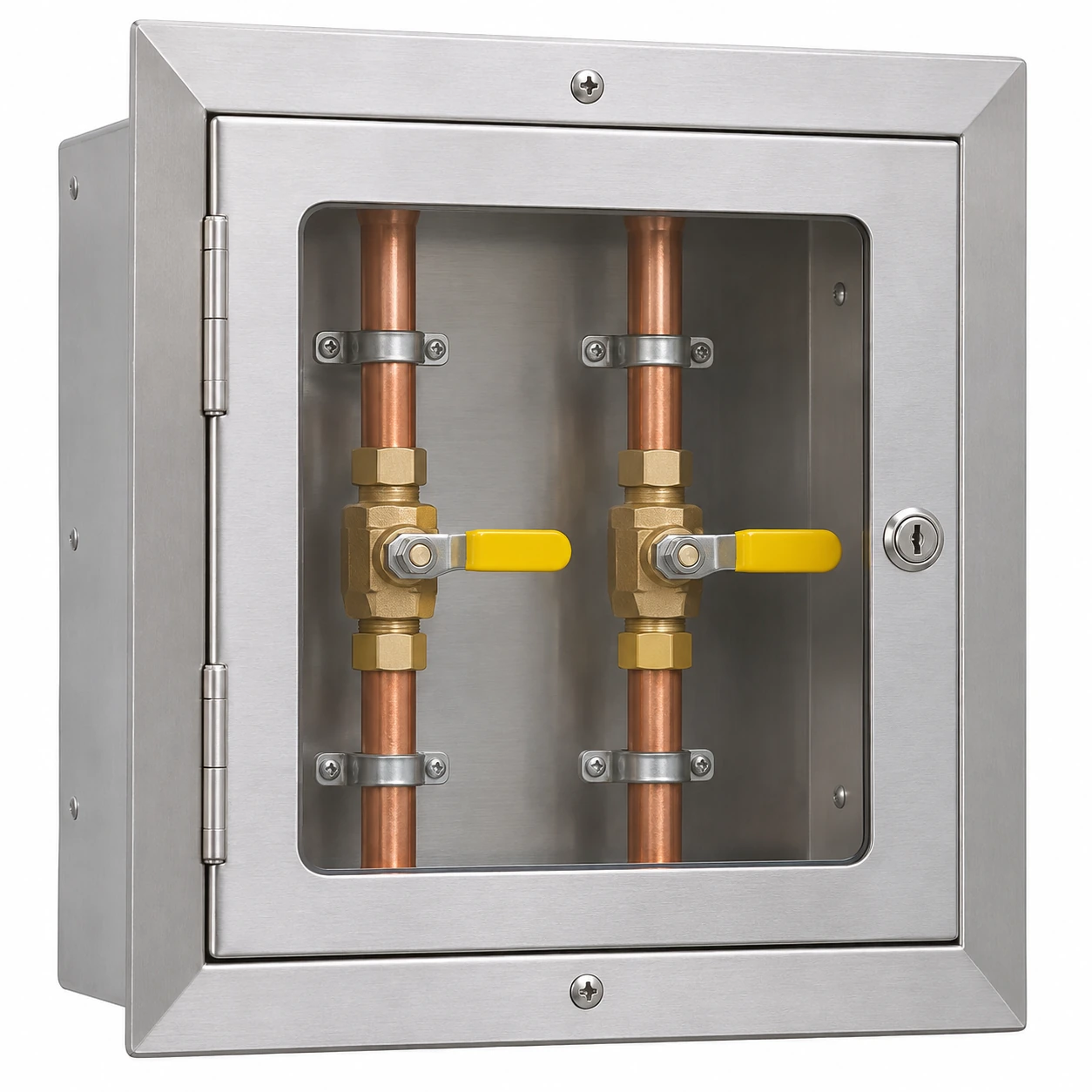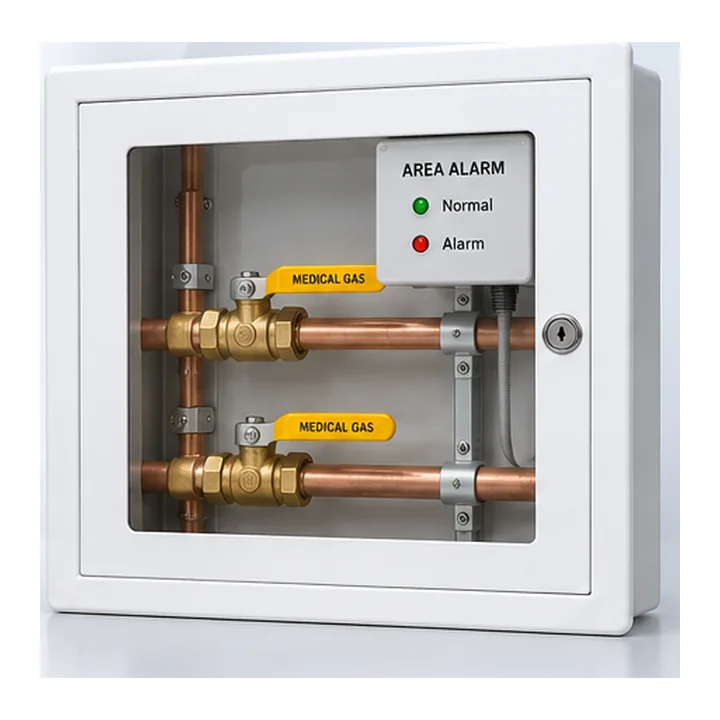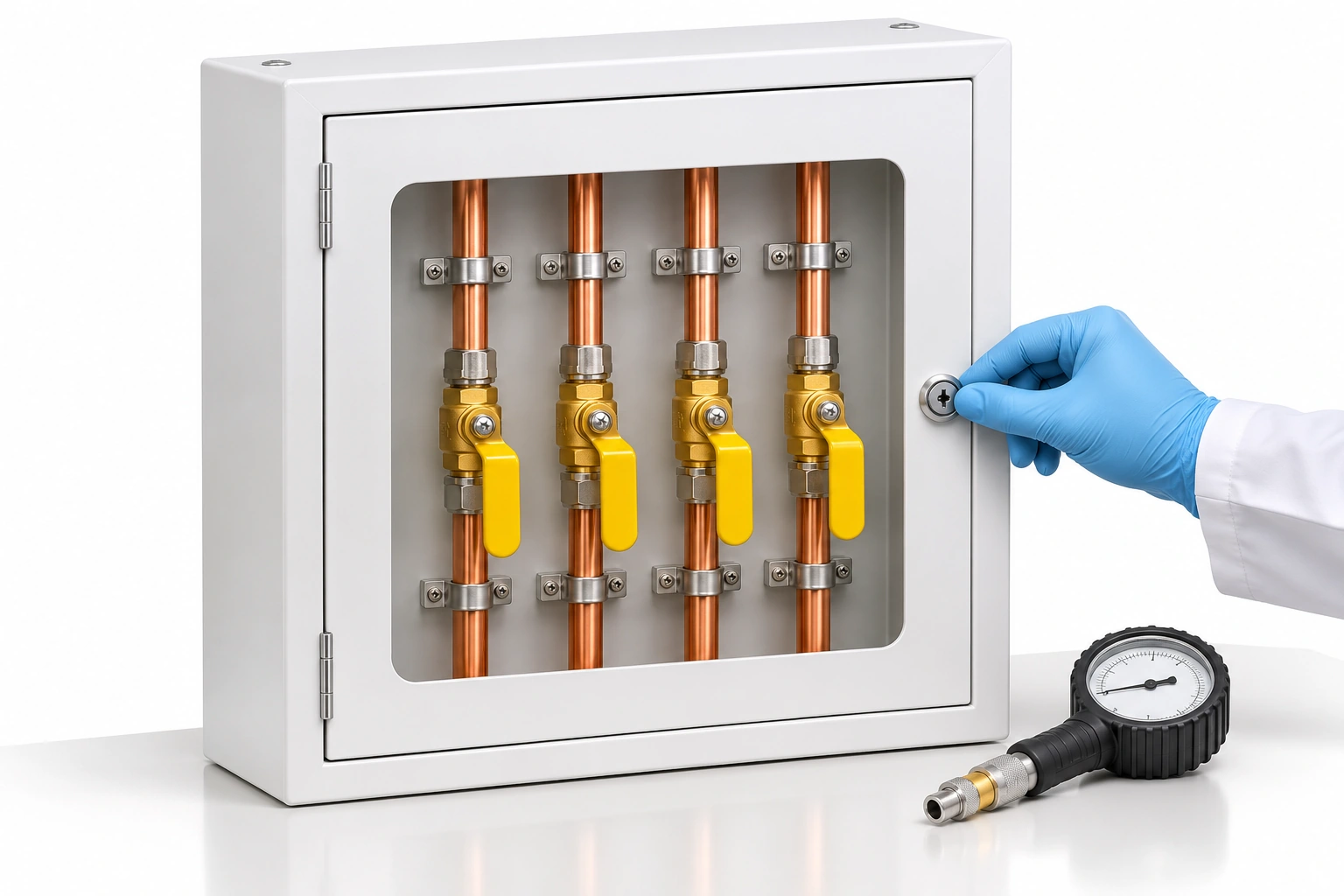
A manufacturer may submit a certificate that a finished area valve service unit (AVSU) was leak-tested before dispatch. A hospital project still needs evidence that the installed AVSU serves the approved rooms, has the intended gas-specific interfaces and is integrated correctly into the MGPS.
A FAT/SAT witness matrix prevents factory and site responsibilities from being collapsed into a vague “passed QA” statement. This guide is for planning documentation and witness responsibilities, not for operating or testing live high-pressure services.
Understand why the current Scottish form matters
The SHTM 02-01 (2026) lists Form A4 — Area valve service unit: zoning, closure and non-interchangeable screw thread (NIST) tests. It distinguishes these verification subjects from tests for line valve assemblies and from general terminal/unit system tests.
The latest English HTM 02-01 (2026) has its own design/commissioning and operational framework. Neither UK form automatically establishes the accepted procedure in a US or other overseas hospital. Identify the required national/local regime in the contract.
Freeze the product configuration
Before factory witness testing, record the ordered AVSU identity, gas services, number and model of valves, connection sizes, body construction, whether NIST provision is included, pressure indication components, monitoring/alarm interfaces and delivered accessory list.
A photograph of one catalogue model cannot be evidence for a different delivered configuration. If the assembly is supplied unmounted or includes separately boxed items, state the boundary of the factory test.
Prepare a two-stage acceptance matrix
| Requirement | Typical factory evidence | Site verification reference |
|---|---|---|
| Exact gas/valve/model identity | Assembly identification and drawings | As-installed equipment/zone record |
| Valve and enclosure configuration | Declared approved assembly/inspection | Correct installed position and access |
| Gas-specific connectors/NIST | Manufacturer model/conformity information | Applicable qualified gas-specificity checks |
| Closure performance | Approved factory functional/test report | Required installed-system test |
| Area zoning | Proposed service/room mapping information | Verified actual downstream boundary |
| Alarm interfaces | Device model and electrical description | End-to-end alarm tests where specified |
| Labels and handover | Marking and maintenance document | Final approved asset and zone labels |
“Applicable” should be defined by the appointed design/verification authority. This table is not an independent test method or universal checklist of mandatory tasks.
Define the boundary of every test
An AVSU may sit between pipework sections that were tested at different stages. Each acceptance record should state the exact valve/service, boundary or work area, documented procedure, instrument details where required, witnesses, result and revision.
A factory certificate for the valve component is not a site result. Likewise, an approved site pressure test for one area cannot automatically prove service zoning for a different branch.
Keep NIST terms precise
ISO 18082:2014 addresses non-interchangeable screw-threaded low-pressure connectors for medical gases (with its 2017 amendment). The presence of an NIST test/connection feature must be tied to the actual service, design and applicable project requirements.
Do not treat any generic threaded port in a cabinet as a compliant medical-gas test connection. Request the manufacturer's exact drawing and intended-use documentation.
Manage failed observations without rewriting history
For each unsatisfactory test or mismatch, record a deviation ID, equipment/zone affected, reason, accountable competent person, approved corrective action, relevant retest and formal closeout. Keep the original failed record in the handover trail.
A test result should not silently change from “failed” to “passed” after a supplier sends a different brochure. If the as-built system changes, the relevant design/acceptance documents must be reviewed too.
Example: a three-service cabinet in the wrong zone
The factory report identifies three intended gas valves and a matching panel. At site, the approved label schedule shows a different served-area boundary from the construction drawing. The response is a controlled zone survey and verification by competent parties; a successful factory valve test cannot resolve a topological error.
The hospital's operational release remains separate from the supplier's delivery acceptance.
Build the closeout dossier
Include the model/serial or lot identity, factory documents, approved dimensions and gas connector drawings, actual zone mapping, applicable A4 or local-equivalent verification, alarm integration evidence, deviations and closures, as-built drawings and maintenance instructions.
Tie all items to a single revision-controlled asset ID. This allows future maintenance to identify which unit and service a report concerns.
BWC Medgas products
BWC offers selected area valve service units and valve boxes, NIST-related line components and monitoring products. Final installed-system testing and hospital release are assigned to authorized project personnel.
Send the approved AVSU assembly and evidence schedule to BWC Medgas.
Questions from engineers
Does a factory leakage certificate verify the installed served-area boundary?
No. That requires separate qualified site evidence.
Can Form A4 be assumed mandatory in any country using similar boxes?
No. The adopted local code and project acceptance framework determine what applies.