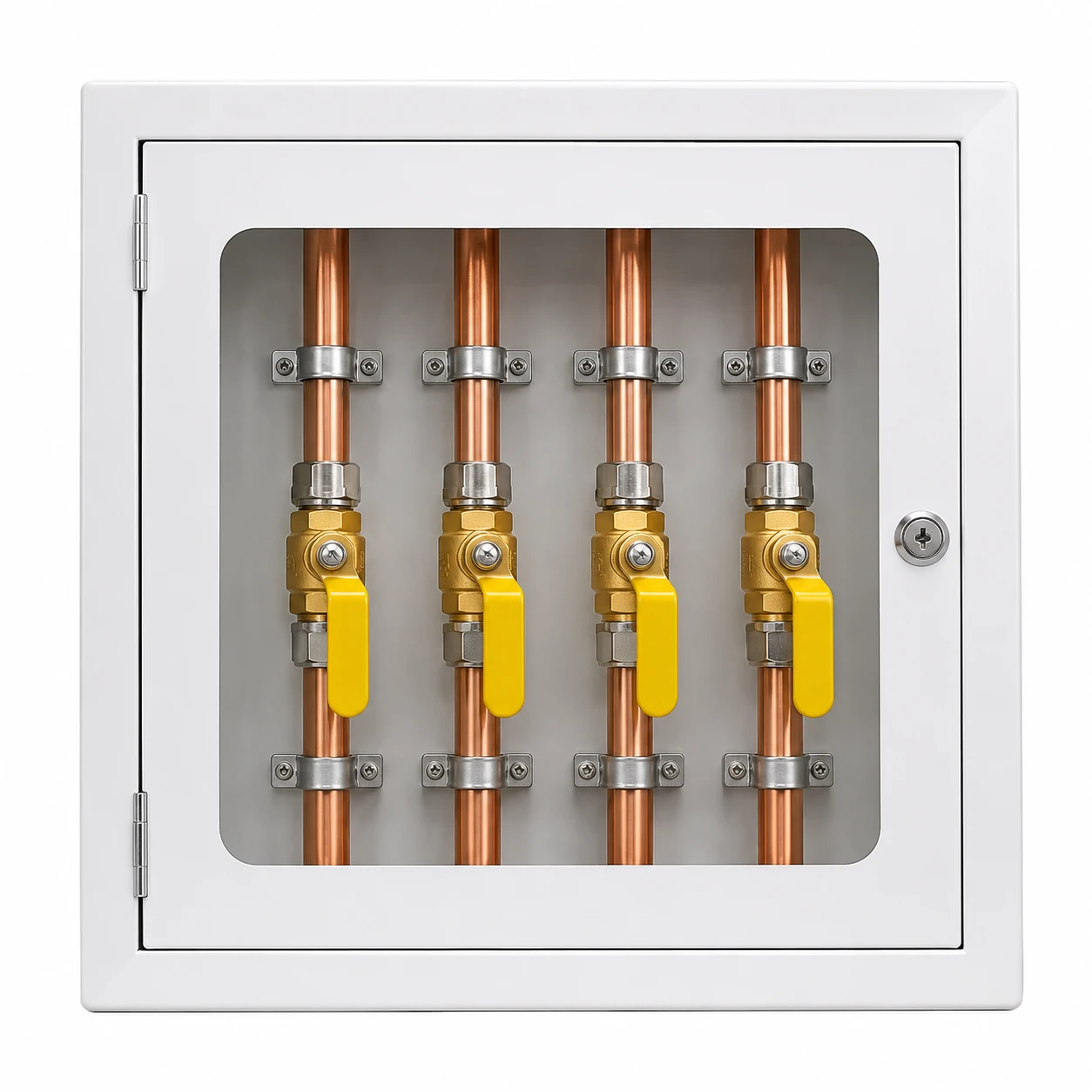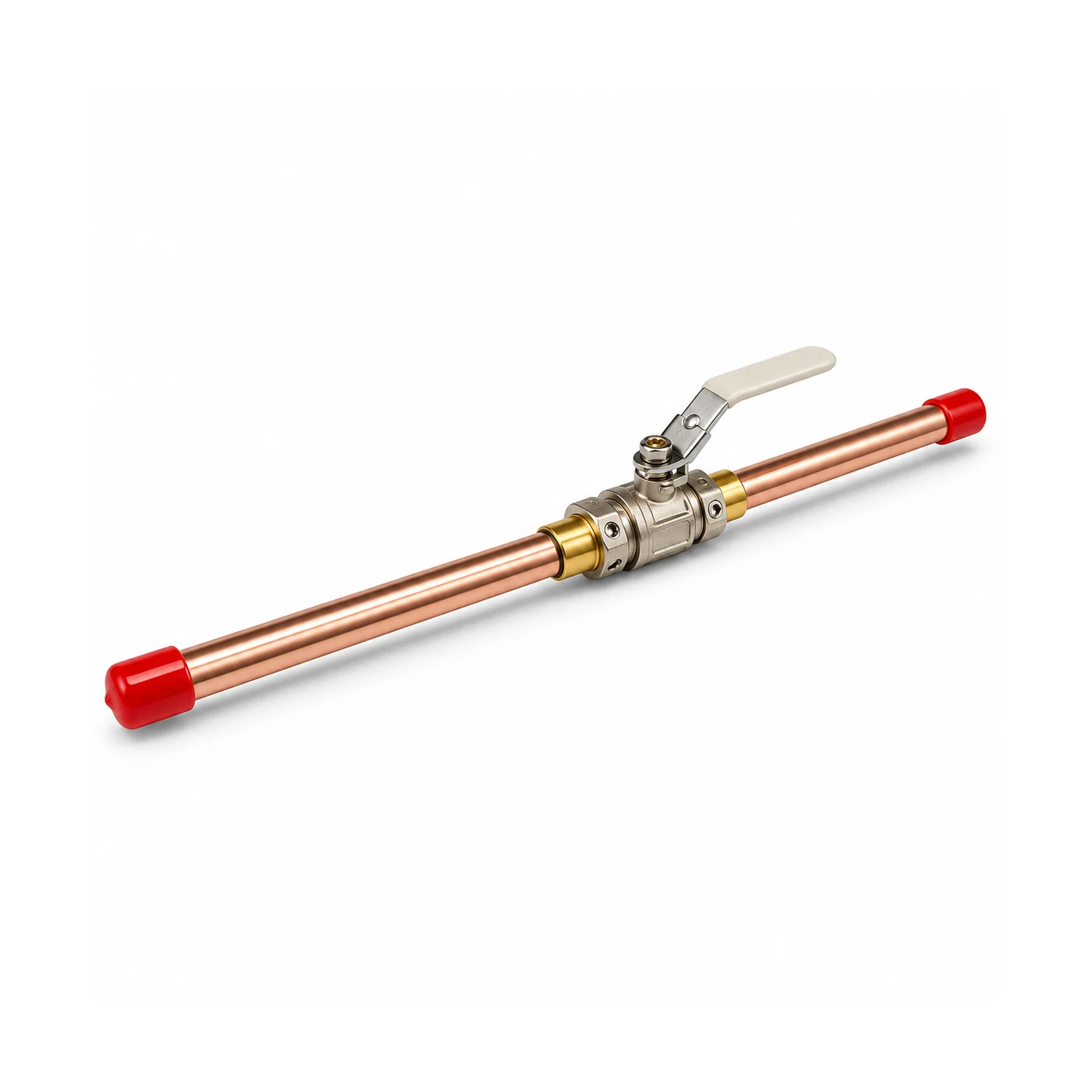

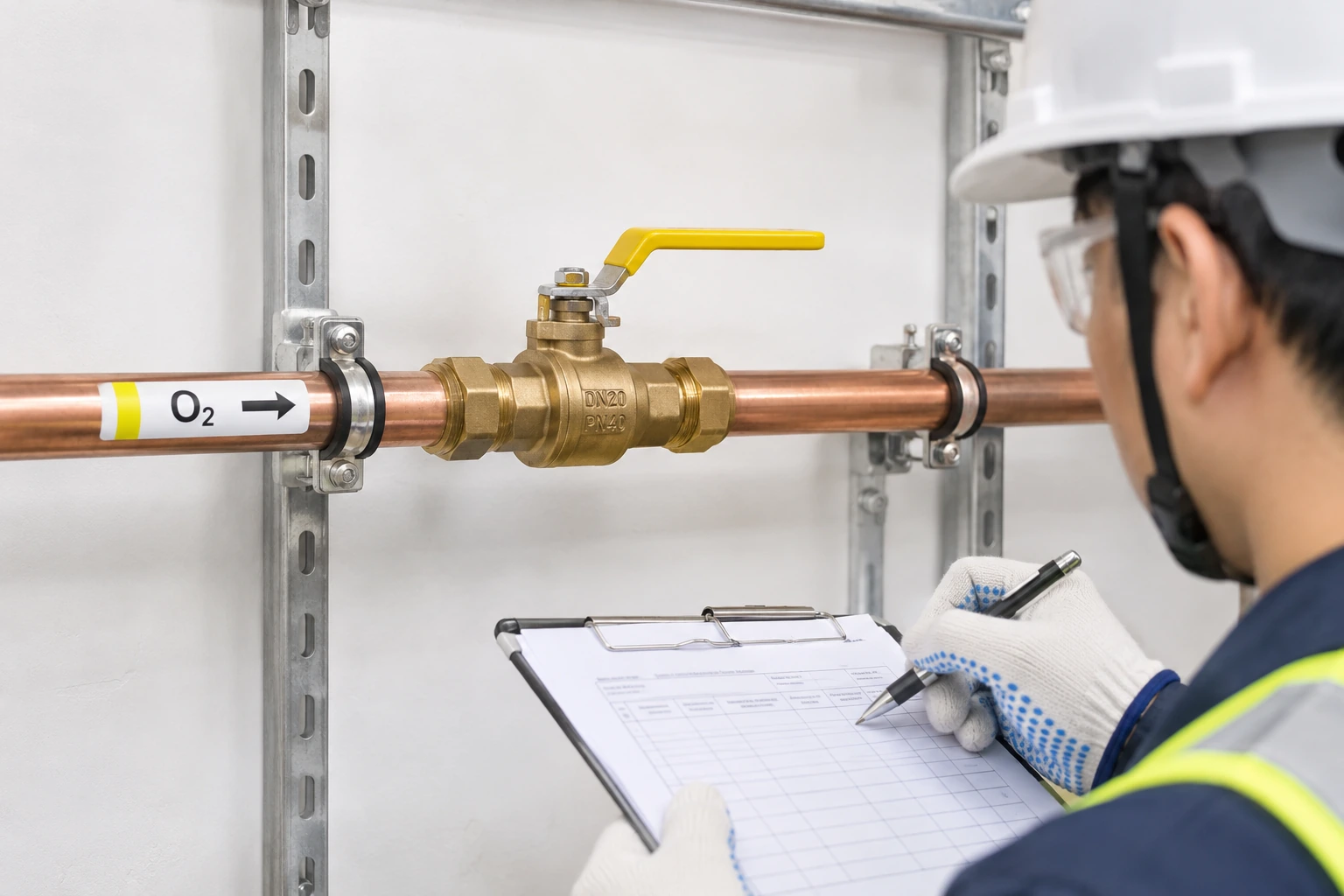
A line valve assembly (LVA) may control a substantial branch or a part of the medical-gas distribution network. It may look like a small valve with a label and lock, but its network role and acceptance requirements can differ from a departmental area valve service unit (AVSU).
For construction and hospital asset management, do not combine all valves into an “AVSU passed” register. Create an LVA-specific evidence trail, with the approved service, network boundary and function defined by the designer.
First establish the valve's system role
The appointed MGPS designer must determine whether each device is a source, main, riser, pipeline branch, service, area or other defined shut-off arrangement under the applicable project rules. Similar-looking ball valves can have different duties and operational authority.
The ISO 7396-1:2016 system scope includes shut-off valves and related pipeline control. The technical configuration and appropriate validation must follow the actual intended role, not the supplier's general description.
What the Scottish verification index shows
NHS Scotland SHTM 02-01 (2026) has a separate Form A5 for Line Valve Assembly and Line Valve — zoning, closure and NIST tests, as distinct from Form A4 for the AVSU.
This separation matters to the evidence register. One report should not be filed as proof for another valve and a different network boundary simply because the mechanical valve type matches.
Maintain a dedicated line-valve schedule
| Field | Example evidence | Reason |
|---|---|---|
| Asset tag | Unique LVA/line valve ID | Independent traceability |
| Gas and branch | Approved medical gas service and pipeline reference | Avoid service confusion |
| Valve role | Named function from the P&ID | Defines duty |
| Location/access | As-installed room/plant/riser reference | Inspection/maintenance |
| Upstream/downstream boundary | Verified network/service coverage | Operational effect |
| Configuration | Manufacturer model, size, ends, locking and NIST if applicable | Technical match |
| Acceptance record | A5 or adopted local equivalent | Verified result |
| Responsible authority | Designated test/release owner | Safety and governance |
A quantity-only schedule like “20 shut-off valves” lacks the information needed for replacement or operational support.
Define product and installation evidence separately
Factory evidence can include the manufacturer's product identity, material/service compatibility, technical duty, intended connection, relevant test report and model-specific instructions. Site evidence identifies the installed location, actual connections, zone relation and applicable qualified performance/gas-specificity verification.
A site acceptance process should link an observation to its valve ID and drawing revision. A product certificate does not prove an installed branch is correctly labeled or serves the intended rooms.
Consider locked or restricted access controls
Some line valves require controlled access or locking provisions under the adopted design. The hospital should record who is authorized, how keys or access are managed and which documentation is used for planned work.
Do not publish an operator procedure for closing a critical live valve. Any work affecting clinical gas availability is controlled by the facility's medical-gas permit and continuity system.
A lockable design must be specified as a function and documented product feature; a catalogue image of a padlock does not establish compliance.
Example: retrofit branch added after construction
An existing line valve appears on an old riser plan, but a later extension added a branch that changes its downstream coverage. Reusing the old A5 register without updating the zone record can produce an incorrect isolation assumption.
Require an approved change record and review of affected drawing, service map and acceptance evidence. The solution is a verified current boundary, not a new label based on the architect's room name.
Handover for future engineering work
Create an indexed package for each LVA: as-installed P&ID, valve tag and configuration, relevant product data, applicable zoning/closure/NIST test record, labels, deviations, maintenance instructions and authorized access details.
Use the same index when replacement parts are ordered. An LVA may have different end connections, bore and access requirements from a superficially identical industrial valve.
Procurement comparison
When comparing suppliers, specify approved gas, nominal connection dimensions, materials, cleanliness/oxygen compatibility evidence, location/role, locking and identification features, instrumentation ports if relevant, and detailed inclusion/exclusion of pipe tails and fittings.
Ask for exact part numbers and technical drawings. Do not award based on a generic “medical ball valve” photograph alone.
BWC Medgas supply boundary
BWC can discuss line valves and medical gas shut-off valves, area boxes and associated components. The appointed designer and hospital remain responsible for network role, installation and operational release.
Send your line-valve assembly schedule to BWC Medgas.
Frequently asked questions
Can the AVSU factory report cover a separate LVA?
Not by default. The exact component and accepted installed-system evidence must be identified.
Does a lockable handle replace a verified served-area map?
No. Mechanical access control and actual network isolation scope are different matters.