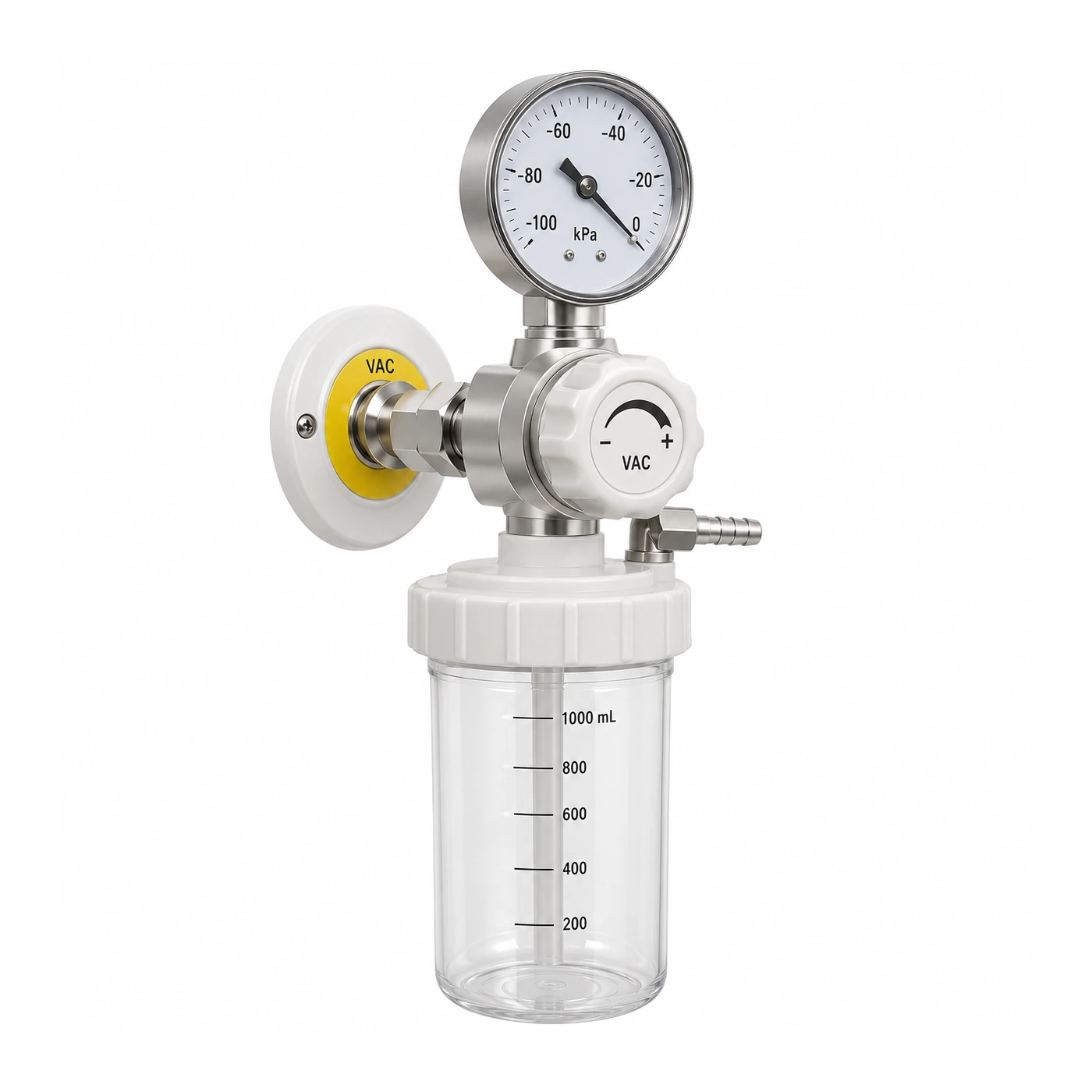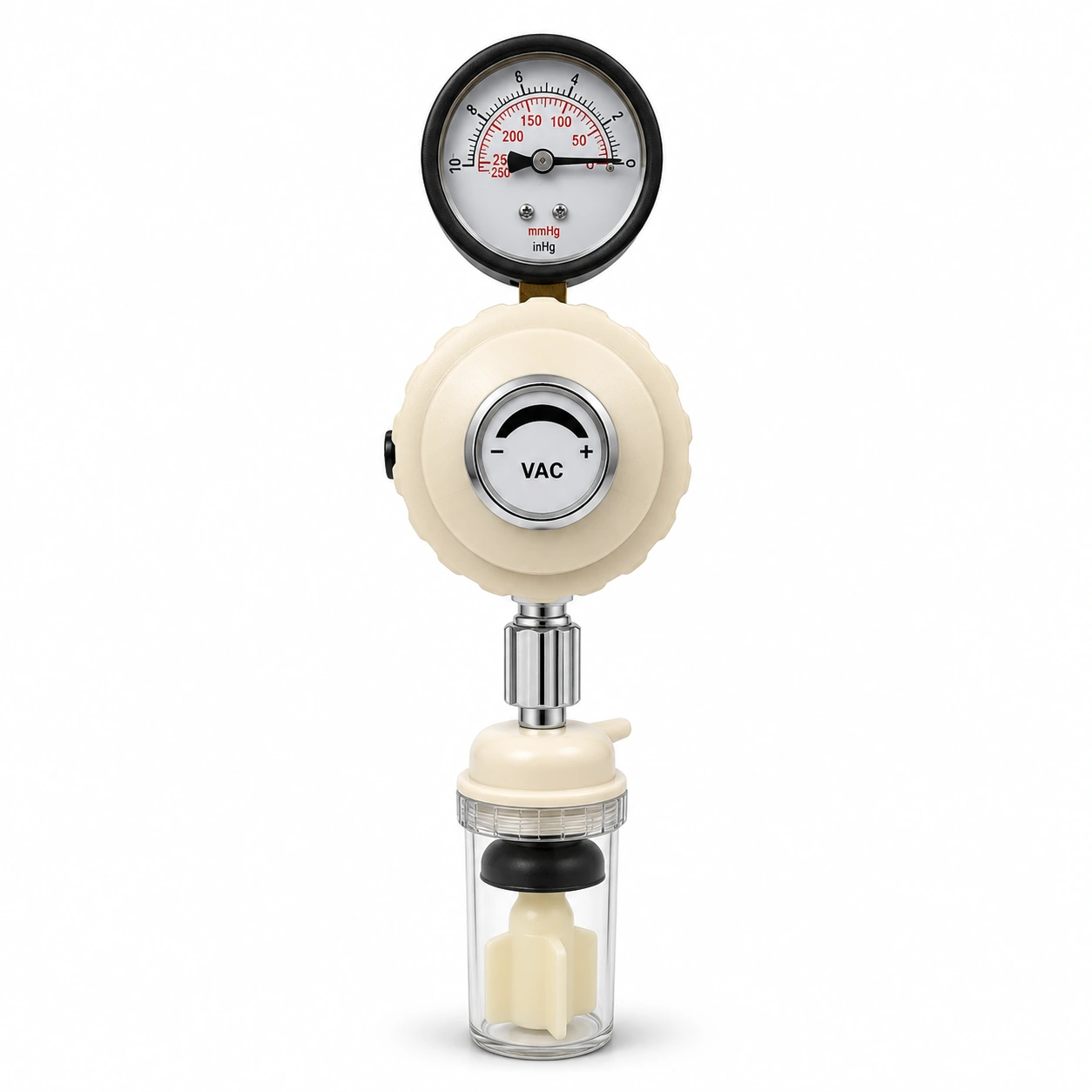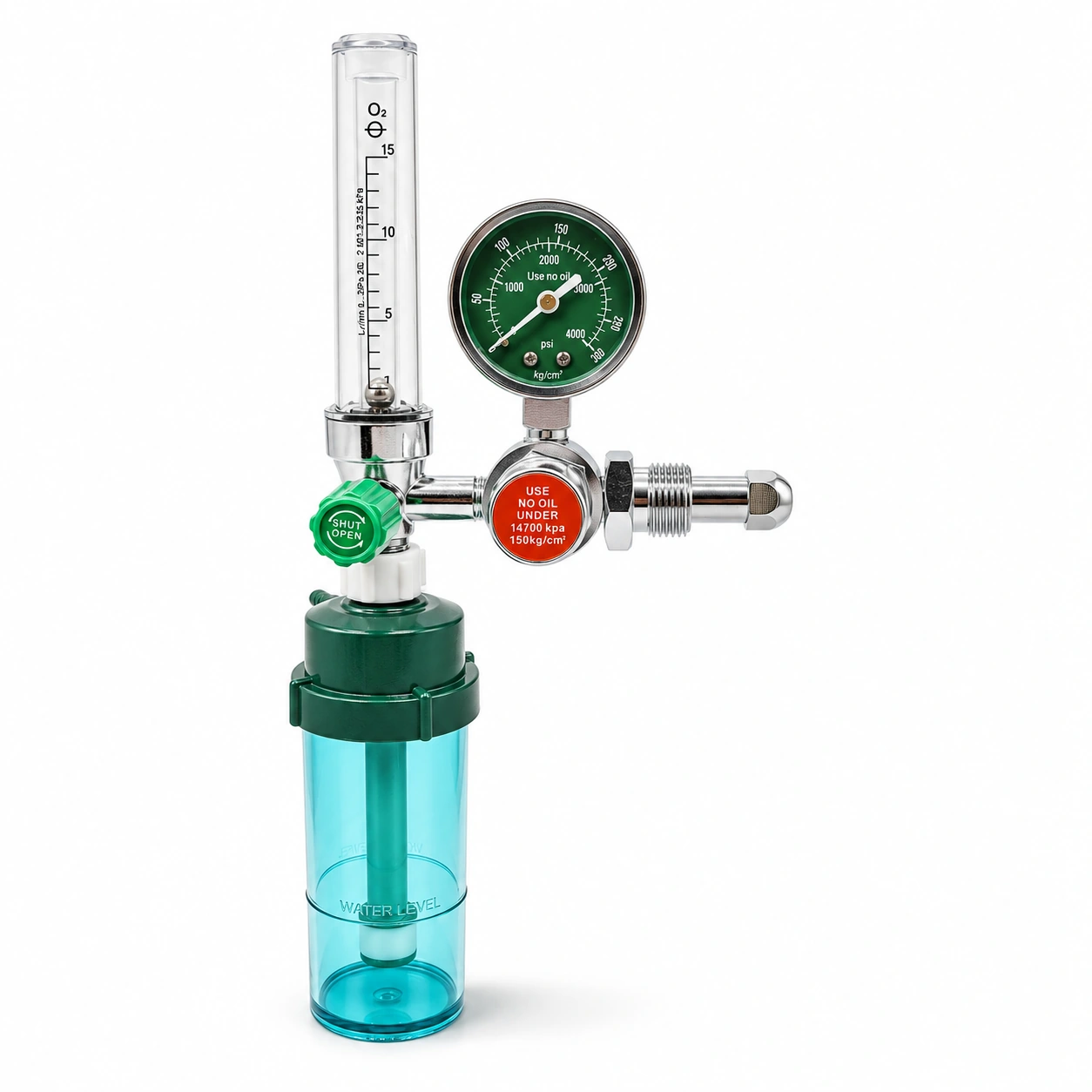

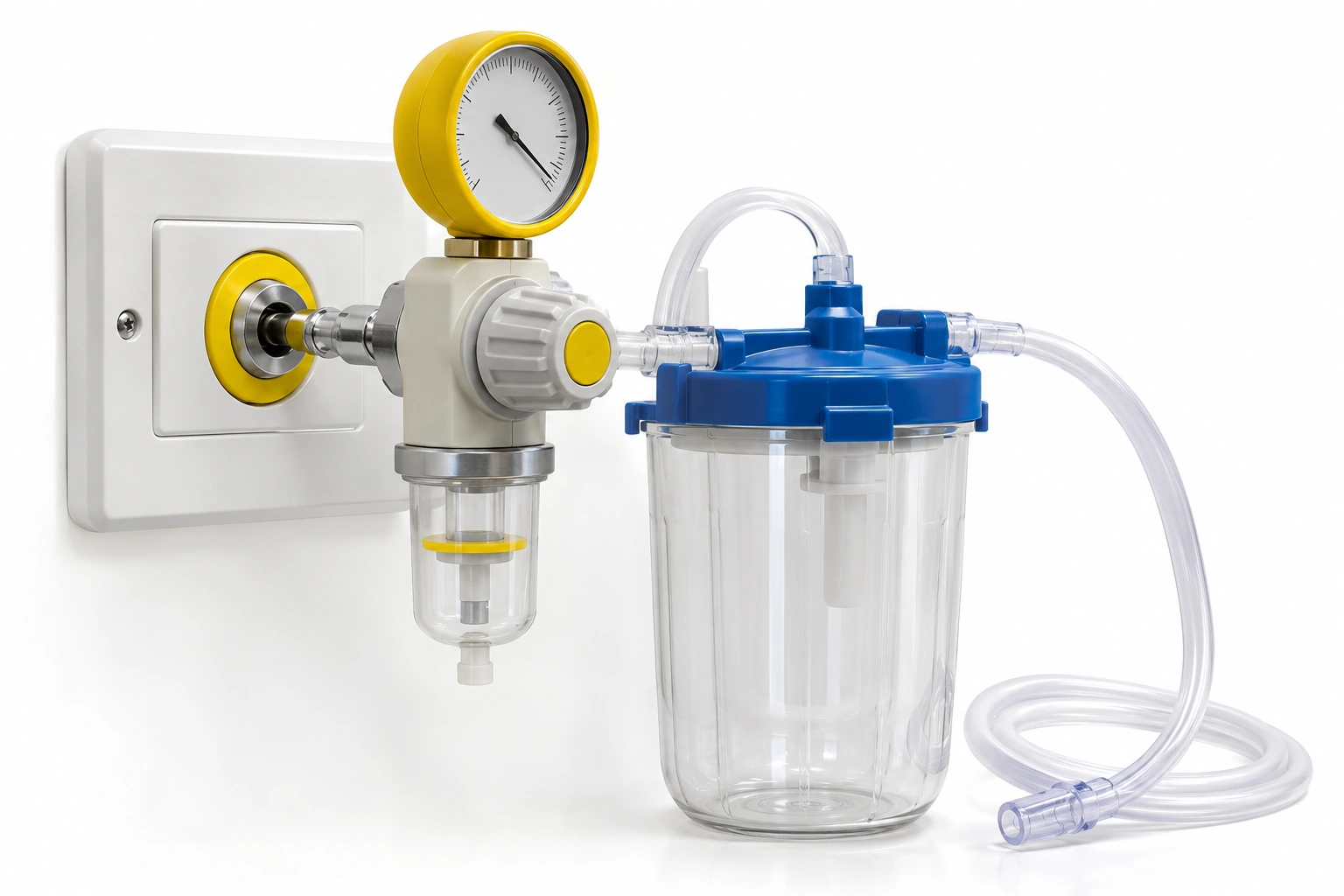
A wall-mounted vacuum outlet is a supply connection for approved suction equipment; it is not itself a complete patient-care suction device. A bedside arrangement may include a gas-specific outlet connection, suction regulator, collection vessel, protective elements and approved patient-side tubing. Procurement errors arise when these boundaries are collapsed into one catalogue item described only as “vacuum regulator with jar.”
The purpose of this guide is to create a device-level bill of materials and cleaning responsibility schedule. It does not specify patient suction settings or give clinical instructions for handling fluids.
Confirm the applicable product standard
ISO 10079-3:2022 covers suction equipment powered from a vacuum source or a positive-pressure source that generates suction, including eligible pipeline-connected devices. ISO 10079-4:2021 specifies general requirements common across applicable medical suction equipment, subject to its listed exclusions.
The central hospital vacuum pipeline has a different scope under ISO 7396-1:2016. A supplier's compliance statement for a suction regulator does not certify the pump plant or entire pipeline.
Build a complete bedside device schedule
| Component | Required information | Decision owner |
|---|---|---|
| Wall/point-of-use interface | Vacuum-specific terminal and compatible connector | MGPS/biomedical team |
| Regulator assembly | Exact type, range, indication and intended application | Biomedical engineering |
| Control mode | Manufacturer-supported adjustment/operation function | Clinical device approver |
| Collection vessel | Approved capacity, attachment, seals and marking | Biomedical/infection prevention |
| Overflow protection | Intended configuration and replacement criteria | Manufacturer/clinical policy |
| Tubing interface | Exact approved connector and patient-side pathway | Clinical equipment authority |
| Cleaning or disposal | Single-use/reusable and approved reprocessing IFU | Infection prevention |
| Stock identification | Model/revision, accessories and compatible spares | Stores and maintenance |
Do not claim all suction jars are autoclavable, reusable or appropriate for the same fluid volume. Only the exact manufacturer's validated instructions support that.
Understand the overflow boundary
Overflow protection may reduce the chance of fluids migrating toward parts of the suction system, but it cannot justify ignoring fill limits, cleaning, device orientation or manufacturer warnings. Some designs use filters, traps or mechanical shutoffs with different functions.
A component marketed as “anti-overflow” must be evaluated for its actual rated performance and replacement instructions. Do not assume it protects the entire hospital pipeline from every failure scenario.
Avoid treating a strong vacuum as a universal clinical preference
The need for suction depends on the patient's treatment and approved clinical device specification. Stronger vacuum is not intrinsically better or safer. Biomedical and nursing personnel must use the actual device instructions and clinical protocols.
A procurement document should specify the allowed class/range of equipment rather than publish one patient setting across surgery, intensive care and general wards.
Example: two superficially identical kits
A bidder includes a reusable jar, a vacuum regulator and an unspecified tubing connector. Another supplies a regulator but its jar is an optional separately priced accessory. The hospital must compare complete approved equipment, reprocessing compatibility, available spare seals and the exact vacuum outlet fit.
A cheap kit with the wrong interface or a collection vessel without accepted cleaning procedures does not satisfy the clinical purchasing need.
Trace cleaning and replacement
Maintain model/lot records for jars, liners, filters, regulators and reusable patient-side accessories. Assign who cleans, inspects, replaces and releases each part for use according to approved instructions and infection prevention policy.
A visible residue or damaged float/overflow mechanism should trigger a facility quality workflow, not unapproved field disassembly.
Distinguish clinic equipment from plant work
If a suction regulator seems ineffective, the cause may lie in the device, interface or medical vacuum network. Qualified personnel must separate those boundaries without improvising tests on patient-connected equipment.
The 2026 NHS England HTM 02-01 covers infrastructure operational management and illustrates why the healthcare facility needs a controlled interface between plant engineering and clinical equipment functions.
BWC component supply
BWC Medgas supplies selected medical vacuum regulators and suction-jar accessories against exact approved interfaces and model specifications. It does not prescribe patient suction values or authorize clinical use.
Send a device-level suction regulator and collection-jar schedule to BWC Medgas.
Frequently asked questions
Does a vacuum wall terminal include a patient-side suction regulator?
No. These are different product boundaries and must be specified separately.
Does an overflow protector make a collection jar maintenance-free?
No. Follow its exact device instructions and hospital infection-control procedures.