Medical vacuum upgrades rarely occur in an empty building. A healthcare facility may need to replace an aging pump control system, add new clinical rooms or repair branch distribution while patients continue to depend on functioning suction. Procurement and engineering teams therefore need a jointly approved programme that states precisely which clinical service remains available, who authorizes changes and what evidence restores each area to use.
This guide is a planning register. It does not give instructions to shut valves, move patient suction or install temporary gas systems without healthcare authorization.
Map the service boundary before planning work
Obtain approved source and distribution drawings, current terminal/ward schedules, area alarm and isolation maps, load/capacity calculations and hospital medical-gas management procedures. Site surveys should reconcile drawings with known equipment and maintain controlled changes.
ISO 7396-1:2016 covers modifications, replacements and extensions to medical vacuum pipeline systems as well as new installations.
Clinical impact and phasing register
| Work-package field | Required decision | Who signs |
|---|---|---|
| Affected area | Exact ward, room and terminal group | Clinical and estates leads |
| Current service | Approved available vacuum source and network path | MGPS responsible engineer |
| Work extent | Plant replacement, controls, pipeline or terminal work | Design authority |
| Clinical impact | Expected service availability and escalation | Clinical governance |
| Contingency | Hospital-approved alternative suction provision, if necessary | Clinical equipment team |
| Work authorization | Permits, infection control and contractor roles | Facility authority |
| Monitoring | Alarms and condition reporting during phases | Estates/clinical coordination |
| Acceptance | Defined source and terminal/network tests | Qualified verifier |
| Handover | Exact released zone, operating instructions and records | Authorized hospital operator |
Do not assume a portable suction unit substitutes for a central MGPS system in every ward or procedure. The clinical team must assess whether a particular alternative is suitable.
Separate technical and clinical approvals
Engineers may design the work and document a proposed switching sequence, but the hospital controls whether the timing and contingency are clinically acceptable. Treatment teams determine patient-care arrangements; a contractor's Gantt chart cannot substitute for clinical agreement.
A new source should not be declared ready merely because its motor starts or local controller displays a normal status.
Example: new wing changes the whole source demand
A planned outpatient addition includes several vacuum terminals, and the contractor proposes connecting them after hours. The design team finds that simultaneous demand at a distant branch may change the source load and distribution margins.
The project should update the load calculation, approved network schematic and relevant source/area alarm plan before allowing connection. The scope of retesting depends on what is actually changed.
Temporary arrangements require their own governance
If the hospital approves portable electrically powered suction equipment for a specific use, its product scope is governed by ISO 10079-1:2022 where applicable. That is not the same as full MGPS source compliance and does not make a patient-side device an engineered substitute for the central source.
Document model, intended use, power availability, cleaning, maintenance, clinical staff training and contingency responsibilities under the hospital's approved policy.
Track defects and return-to-service tests
For each phase, maintain site test records, gas/vacuum identity and labelling, source and zone alarm verification, affected terminal/branch tests, as-built diagrams, deviations and clinical release. The 2026 NHS England HTM 02-01 and Scottish SHTM 02-01 provide current UK project verification and operating context.
A successful initial test cannot replace a later check made necessary by modified software, source piping or connection paths.
Maintain clear contractor scope
Separate plant manufacturer, installer, commissioning verifier, clinical equipment supplier and hospital operating responsibilities in the contract. A supplier delivering vacuum regulators should not be described as the firm authorizing live source modifications.
Allow for access routes, service shutdown permissions, noise or infection-control restrictions and documentation handover as specific priced scopes.
Practical communications
Issue a controlled impact notification to all affected clinical and engineering roles before authorized work. Record who can request an operational decision, how alarm contacts are maintained, and who has formal sign-off authority.
Do not circulate vague instructions such as “vacuum not available in building” when only a specific tested zone is affected, or “all restored” without a signed boundary.
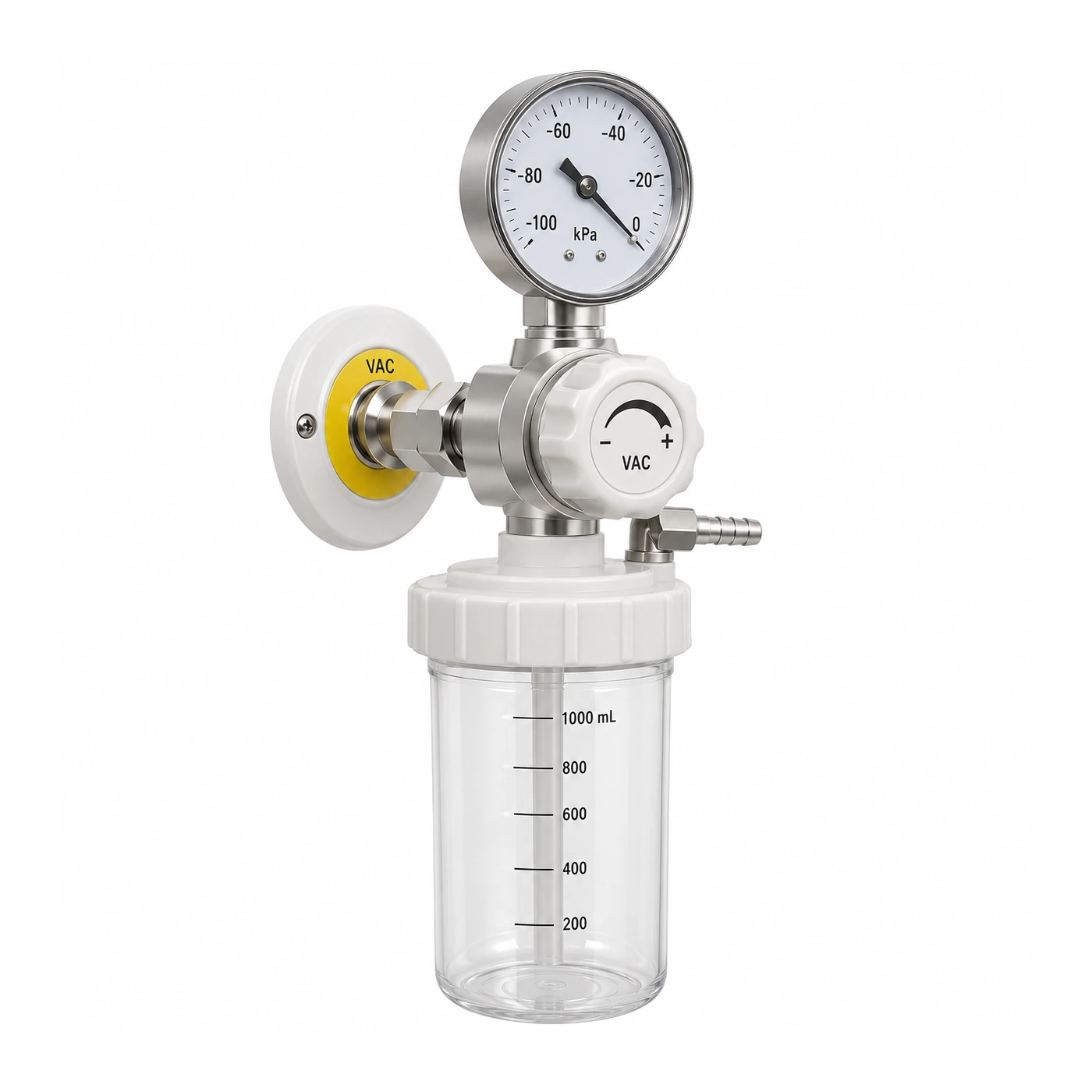
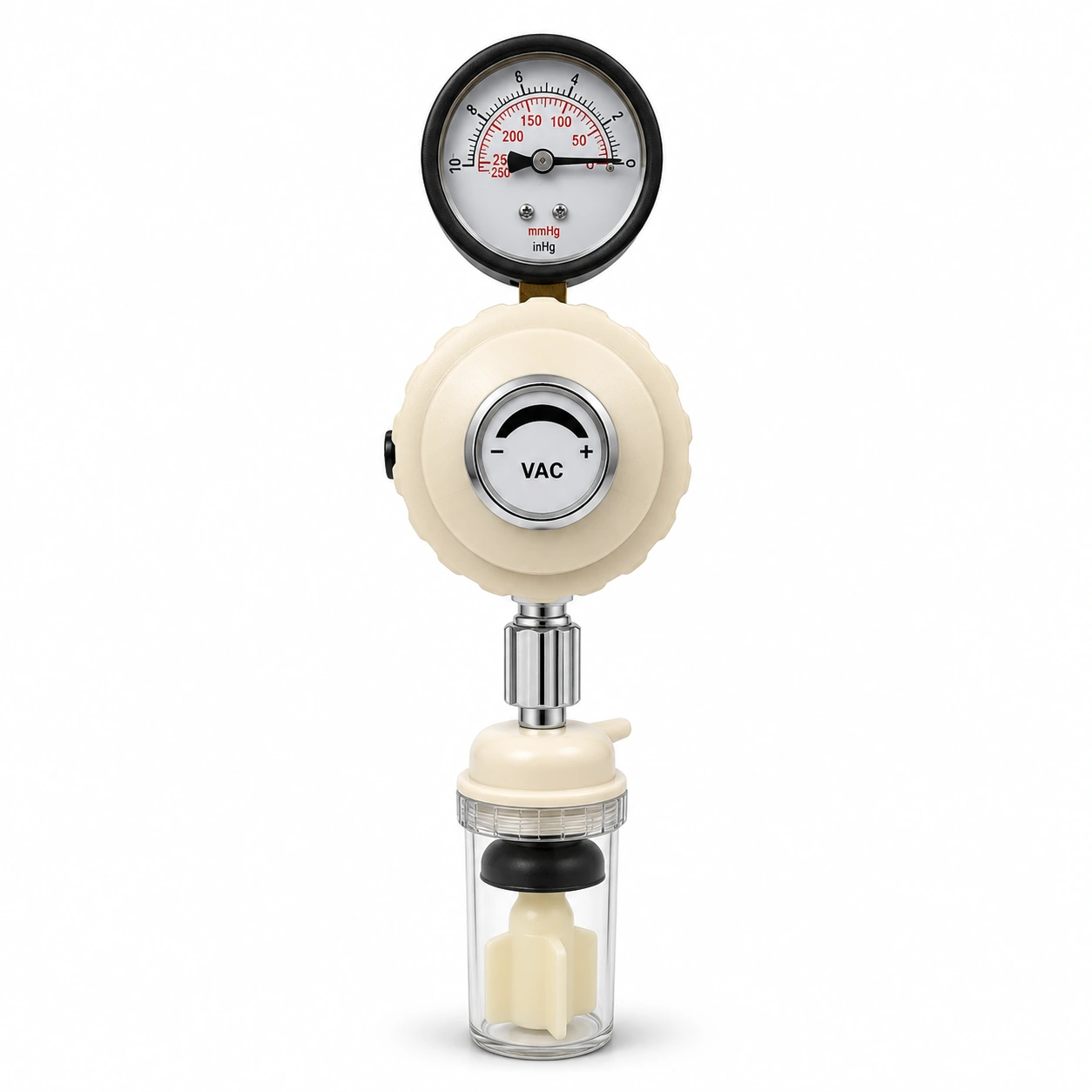
BWC Medgas can supply approved vacuum regulators, jars, gauges and zone accessories as part of the project component schedule. Full hospital retrofit design and clinical release belong to appointed specialist teams.
Send your approved retrofit component list to BWC Medgas.
Frequently asked questions
Can a portable suction machine be assumed equivalent to central medical vacuum for the whole ward?
No. Clinical suitability and independent product/system requirements must be reviewed.
Can contractors reconnect a modified ward after observing a normal plant reading?
No. The defined source/area/terminal verification and operating release are separate decisions.