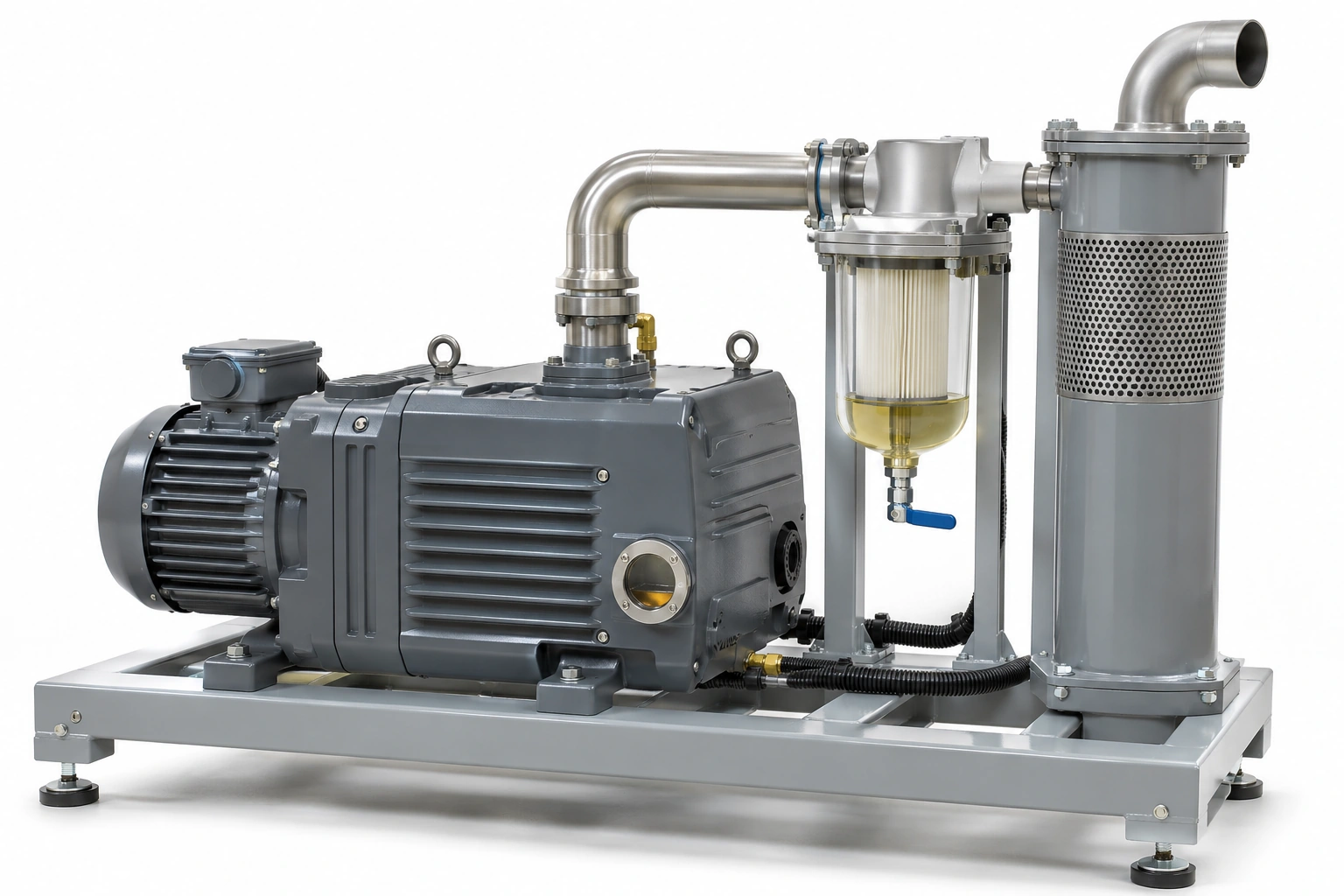
Medical vacuum source proposals can use different pump technologies and different service philosophies. An oil-sealed rotary-vane design, a dry pump and other suitable technologies may have distinct maintenance schedules, oil-management arrangements, exhaust requirements and performance curves. A buyer should never assume one technology is universally cleaner, safer or more economical without project-specific evidence.
The right starting point is an operating-duty and lifecycle comparison, not the impression created by a polished pump-room photograph.
Separate technologies from operating capability
ISO 7396-1:2016 covers the complete medical vacuum pipeline system and associated source requirements, rather than mandating that every hospital use the same pump construction. Require exact manufacturer model data and confirmation of suitable intended medical-vacuum system use.
Some lubricated pumps have oil-separation and lubricant maintenance requirements. Dry designs avoid certain oil-related tasks but may have other serviceable items, heat or operating limits. The comparison should be made under the same vacuum demand and site constraints.
Pump-technology evaluation schedule
| Review area | Ask about oil-sealed design | Ask about dry design |
|---|---|---|
| Verified delivered flow | Flow at required inlet vacuum and site conditions | Same operating points |
| Maintenance burden | Oil, filters, separation and seals | Manufacturer-defined service parts |
| Containment | Oil carryover and discharge provisions | Discharge/particulate provisions |
| Heat and ventilation | Installation temperature and cooling | Same site design boundary |
| Noise and vibration | Measured data for the specified arrangement | Same installation basis |
| Failure/availability | Duty/standby strategy and alarms | Same reliability obligations |
| Lifecycle support | Consumables, repair intervals, spare modules | Consumables, service access, spares |
| Evidence | Model-specific data and installed verification | Same quality and testing record |
Do not present one vendor's service interval as a rule for all pump types.
Exhaust is a design decision, not an afterthought
A vacuum pump discharge must be assessed for routing, contamination, nuisance, noise, weather exposure and environmental/healthcare requirements. The plant supplier and appointed designer determine the correct exhaust system and allowed installation location.
Do not connect a medical vacuum pump's discharge to building ventilation or anaesthetic gas scavenging merely because nearby ducts or pipes are convenient. ISO 7396-2:2007 covers anaesthetic gas scavenging as a separate system, with its own non-interchangeability boundary.
Check maintainable space and service logistics
Ask for accurate equipment dimensions, lifting/removal clearances, local service availability, consumable replacements and maintenance records. A large plant in a narrow equipment room may be difficult to service even if it appears to fit its floor-plan footprint.
A tender should specify what temporary or standby capability is required while a unit is serviced. No online guide should authorize isolation or interruption of suction in an occupied hospital.
Pressure and throughput language
A quoted maximum vacuum under negligible flow does not prove the intended working throughput. Require the manufacturer's operating curve, inlet and ambient conditions, control strategy and losses introduced by necessary filtering and distribution.
When suppliers use different units, convert only with the correct absolute/gauge basis, reference temperature and measurement conditions. Do not assume a single nominal m³/h figure is a complete comparison.
Example: cheapest equipment, expensive service
Bid A has a lower capital price but requires frequent specialist visits and a service kit with a long lead time. Bid B costs more upfront but provides an accepted local maintenance plan, actual duty curves and predictable spare-part support. The hospital should compare lifecycle cost and technical eligibility separately.
Include energy use at the representative load profile, downtime implications and consumable handling, but do not fabricate a calculated return on investment without the site's actual hours and tariff.
Factory and site verification
The 2026 HTM 02-01 and SHTM 02-01 distinguish source plant acceptance from full network and operational verification. A manufacturer's pump shop test does not establish the complete hospital vacuum system's delivery or correct alarms.
Retain a controlled evidence index showing manufacturer model, selected pump duty, installed controls, discharge arrangements, maintenance scheme, site witness tests and authorized acceptance.
BWC component position
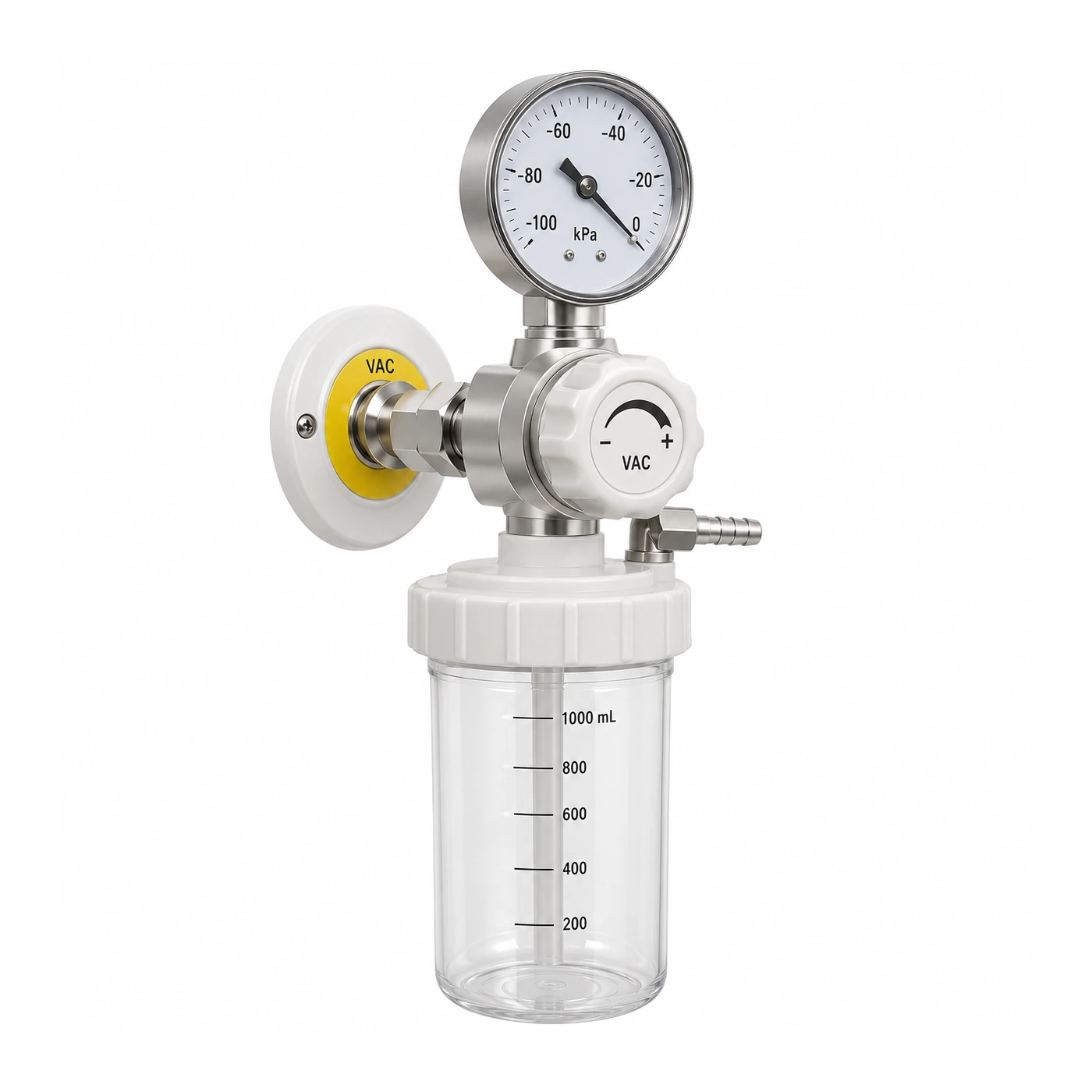
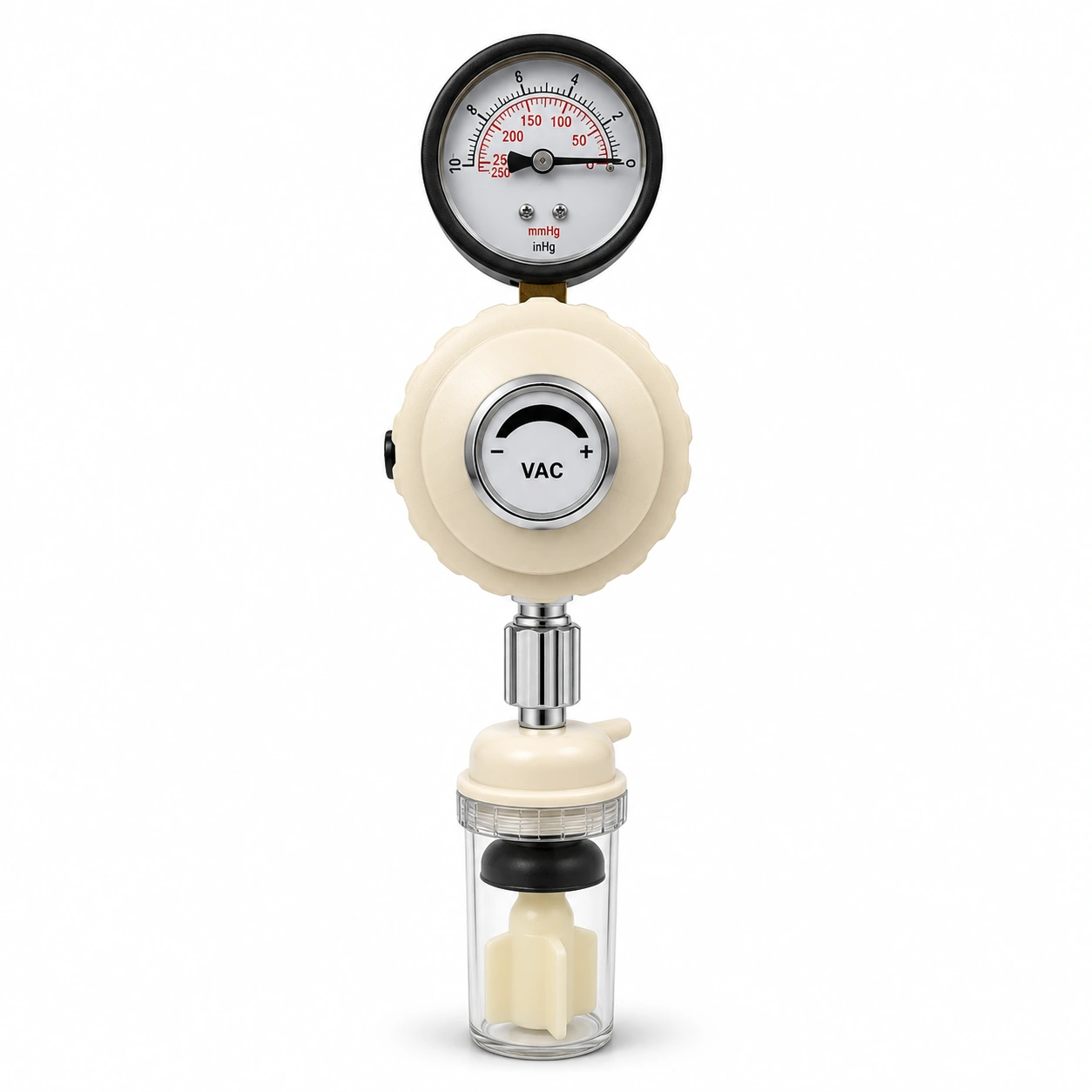
BWC Medgas supplies selected vacuum regulators, collection accessories and gauges for defined installation interfaces; it does not claim to manufacture these complete vacuum pump plants. The hospital's appointed specialist decides pump architecture.
Send the approved suction regulator and accessory requirement to BWC Medgas.
Frequently asked questions
Is an oil-free pump automatically superior for every medical vacuum application?
No. Intended use, performance, exhaust, maintenance and system reliability must all be evaluated.
Can the highest theoretical vacuum determine the best pump?
No. It says little about useful delivered flow at the approved operating point.