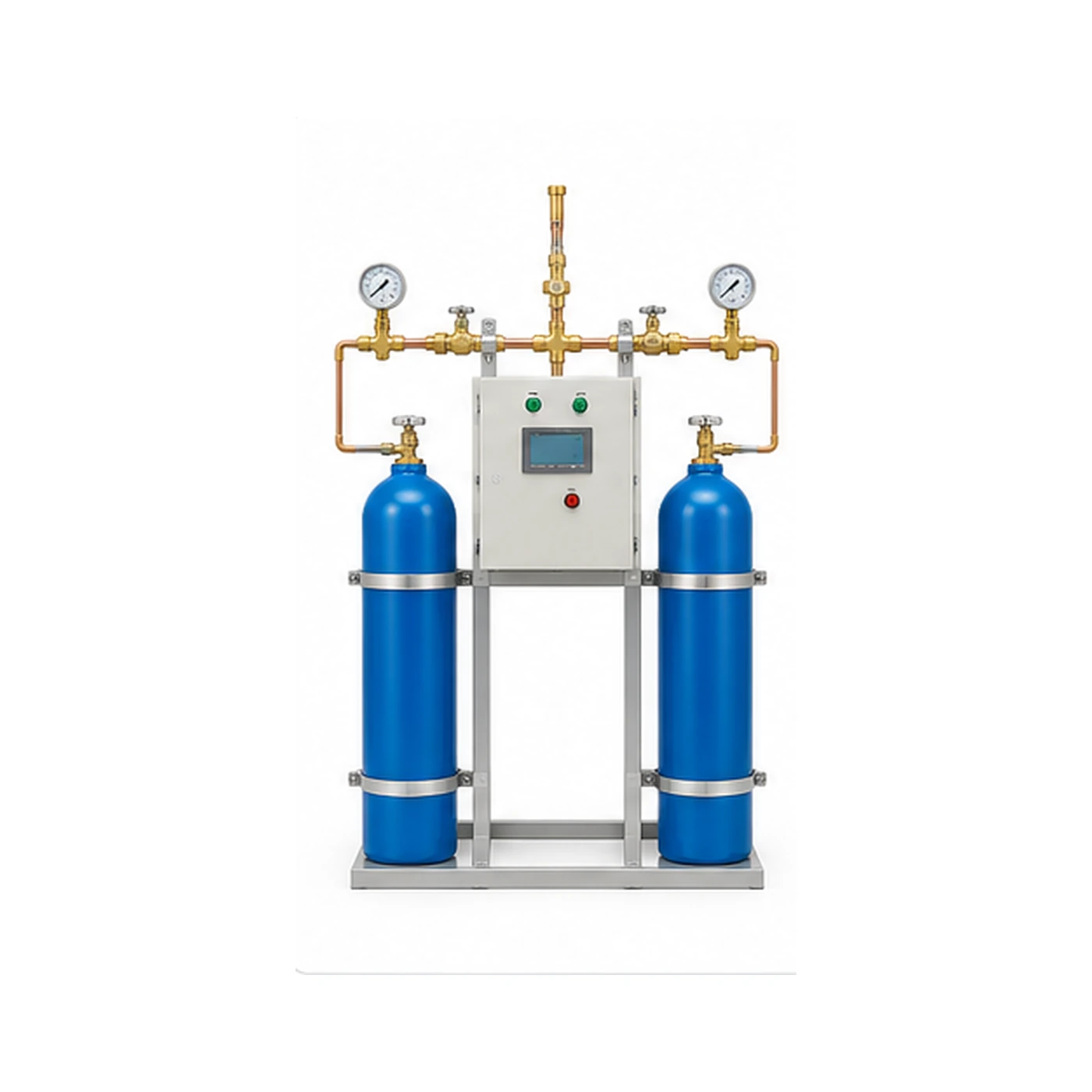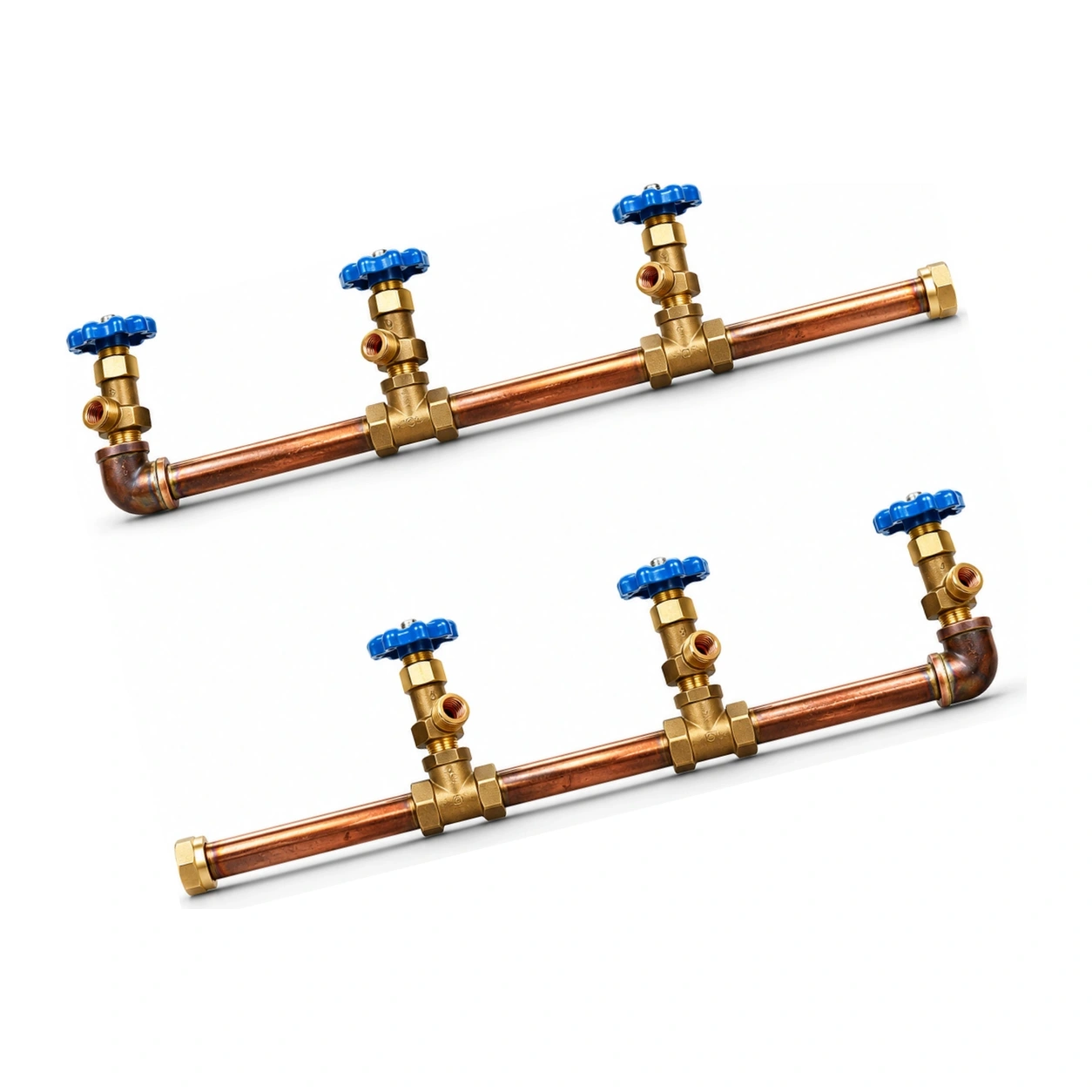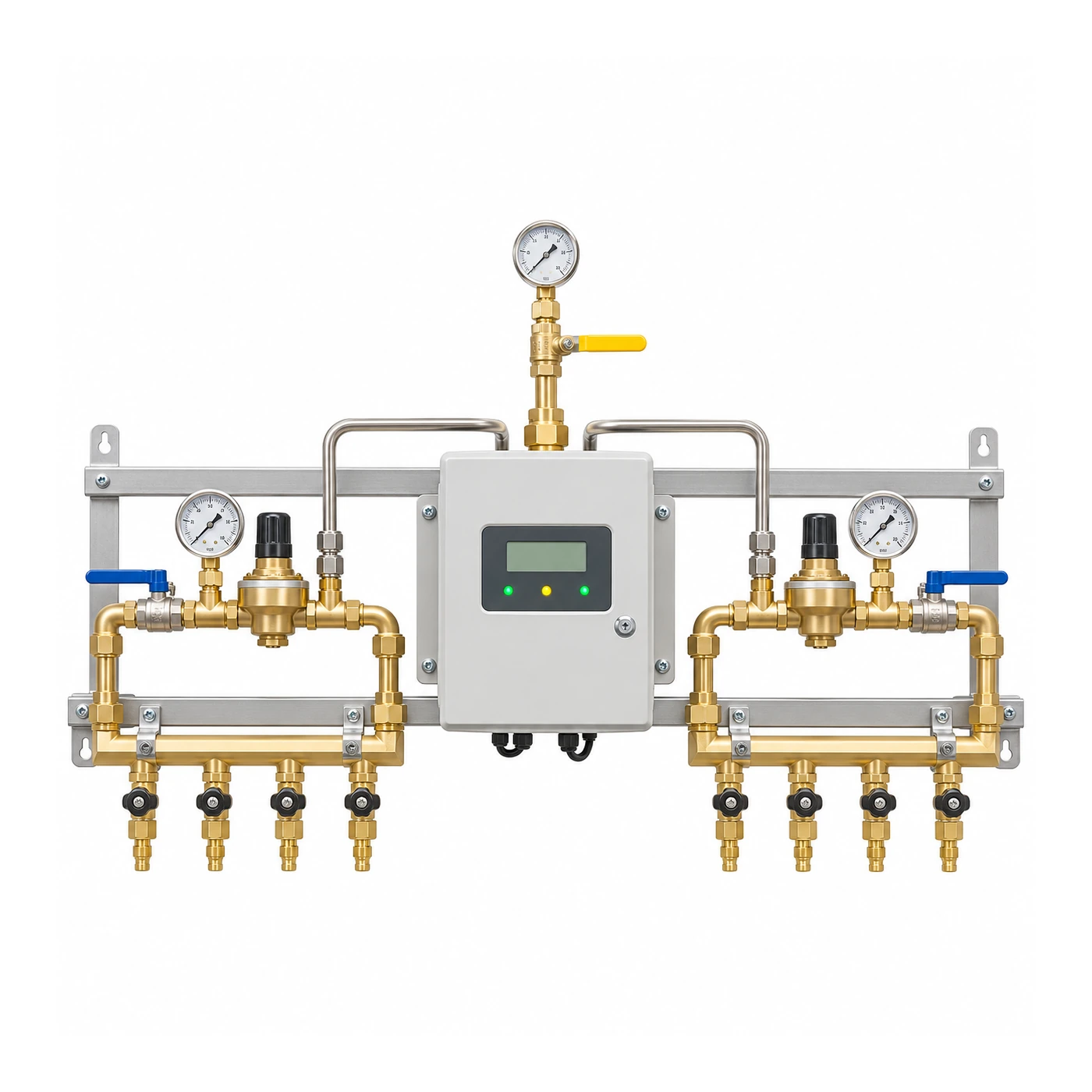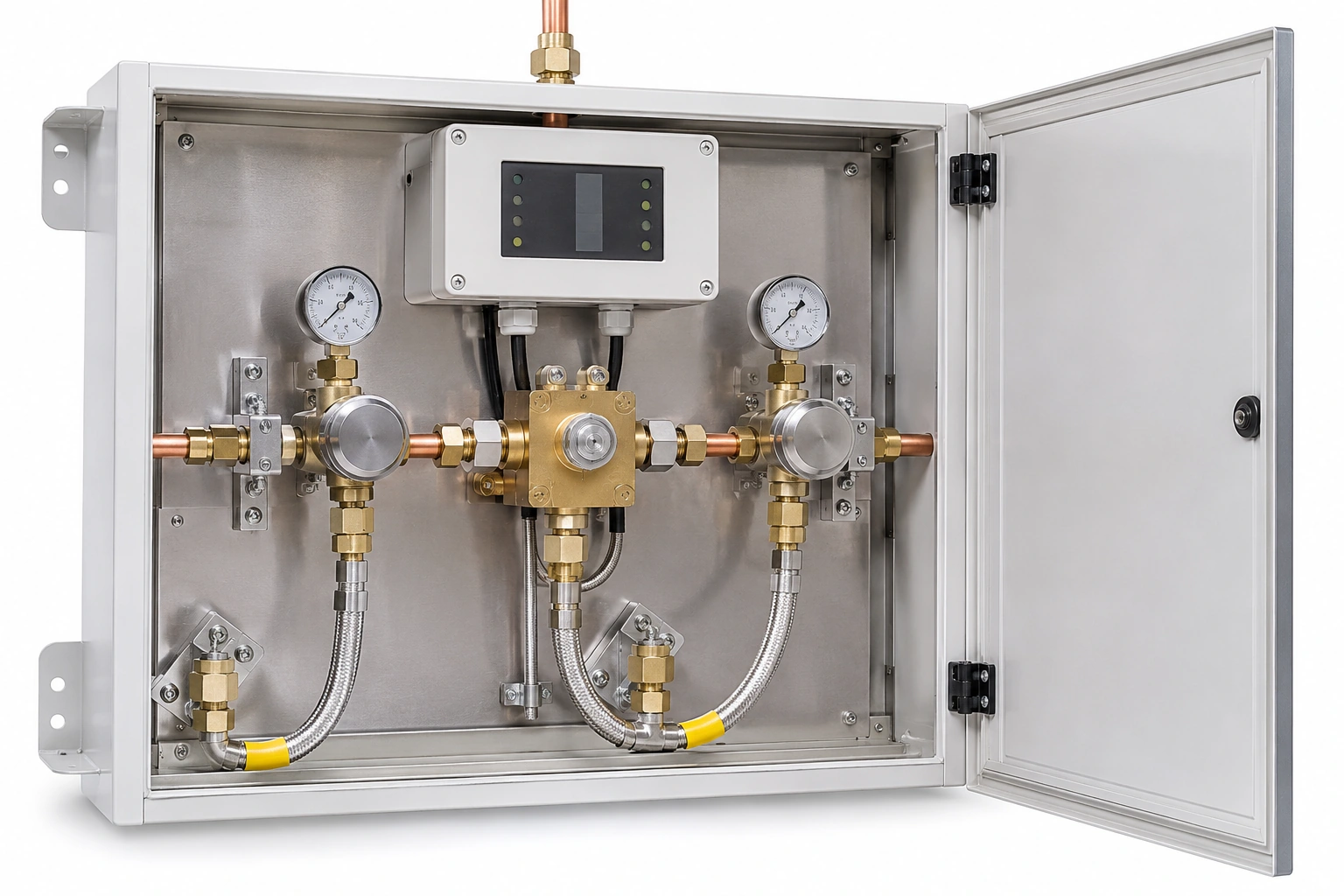
An older hospital manifold may have been purchased when the cylinder supplier, building layout or technical standard edition was different. A proposed “like-for-like” replacement could therefore alter the cylinder connector, source capacity, alarm signaling, regulator class or room access requirements—even if it has the same number of banks.
A replacement compatibility plan makes the project a controlled design change rather than an assumption that a new cabinet can be mounted in the same place. The actual intervention must be managed under the healthcare operator's approved medical gas safety and permit arrangements.
Survey the complete existing arrangement
Begin with a controlled survey request, carried out by the authorized competent team. Collect the installed P&ID, source function, medical gas service, cylinder/valve interface, bank quantity, current operating requirement, mounting dimensions, monitoring connections and recent maintenance history.
Identify any undocumented alterations or component substitutions. Do not infer the connector family from the gas name, paint color or a dated brochure.
Keep the surveyed information separate from unverified legacy drawings. Assign unresolved items to a person who can close them with authoritative evidence.
Compare old and proposed functions
Use a side-by-side compatibility worksheet:
| Attribute | Existing assembly | Proposed assembly | Approval needed |
|---|---|---|---|
| Medical gas/service | Verified field record | Declared intended use | Design authority |
| Source-system role | Approved system schematic | Proposed scheme | Source designer |
| Cylinder valve family | Survey and drawing | Manufacturer drawing | Gas supply/design |
| Pigtail/header | Verified part | Exact offered model | Technical approval |
| Regulation duty | Approved source requirement | Certified performance | Design authority |
| Alarms/changeover | Actual signal map | Functional schedule | Controls/hospital |
| Dimensions/access | Verified room plan | Manufacturer envelope | Estates/MEP |
| Acceptance evidence | Current records | New FAT/SAT plan | Verification owner |
A matched photograph in a sales PDF has no place in the “approved” column.
Reassess demand rather than copy the old model
Hospital services and consumption may have changed since original installation. The design authority should confirm gas demand, source duty and required resilience before deciding that the same bank count is adequate.
A new controller can add useful indications yet still fail to address an insufficient source duty. Conversely, a technically larger manifold might introduce spatial or maintenance problems in the existing room.
Record all accepted changes against the approved design basis.
Include operational continuity and permitted phasing
Work on an existing medical gas source may affect patient-care services. The healthcare operator must control the effect through its appointed competent people, permits and clinical contingency arrangements. The construction sequence and any restrictions on source availability require formal approval.
The project plan should distinguish equipment received, installation complete, site verification complete, operational handover accepted and old equipment decommissioned. These events should not be treated as one “replacement date.”
This article intentionally avoids procedures for changing live cylinder banks, venting lines or adjusting pressure.
Review physical and controls interfaces
New bank layouts may change wall supports, access/clearance needs and the arrangement of pressure indications. Alarm contacts may be electrically different even when the new panel carries the same label.
Demand exact I/O descriptions, power requirements and dimensional drawings. The controls contractor should document how the new source state is reflected at required medical gas alarm locations and how that result will be verified.
Treat standard references as edition-specific
ISO 10524-2:2018 addresses manifold and line regulator requirements, ISO 21969:2009 addresses high-pressure flexible connections, and ISO 7396-1:2016 addresses the broader medical gas supply system. The international standard editions and local adoption have to be documented for the project.
A modern replacement may require a design review against current accepted rules even if the original installation used an older scheme.
Procurement and handover checklist
Request:
- Approved existing-system survey and connection schedule.
- New product configuration and model-specific technical dossier.
- Clear list of retained, removed and replaced parts.
- Project duty and gas-service approval record.
- Changeover/alarm interface comparison and revised drawings.
- Installation/verification responsibility matrix.
- Approved site testing, deviation closure and operational release records.
- Updated maintenance and spares register, operator training as required.
Use the same list to evaluate vendors; otherwise an attractive assembly price can hide the cost of interface works.
Where BWC fits
BWC can quote specified manifold replacement components, regulators and alarm units. The hospital and appointed designers/contractors determine system suitability and operational approval.
Send a verified existing/new manifold interface schedule to BWC Medgas.
Frequently asked questions
Does the same number of banks prove a replacement is equivalent?
No. Capacity, regulator performance, cylinder interfaces, alarm integration and applicable rules may differ.
Does “factory pre-tested” authorize direct connection into a live hospital source?
No. Site-specific safety governance, installation verification and clinical operational authorization remain essential.