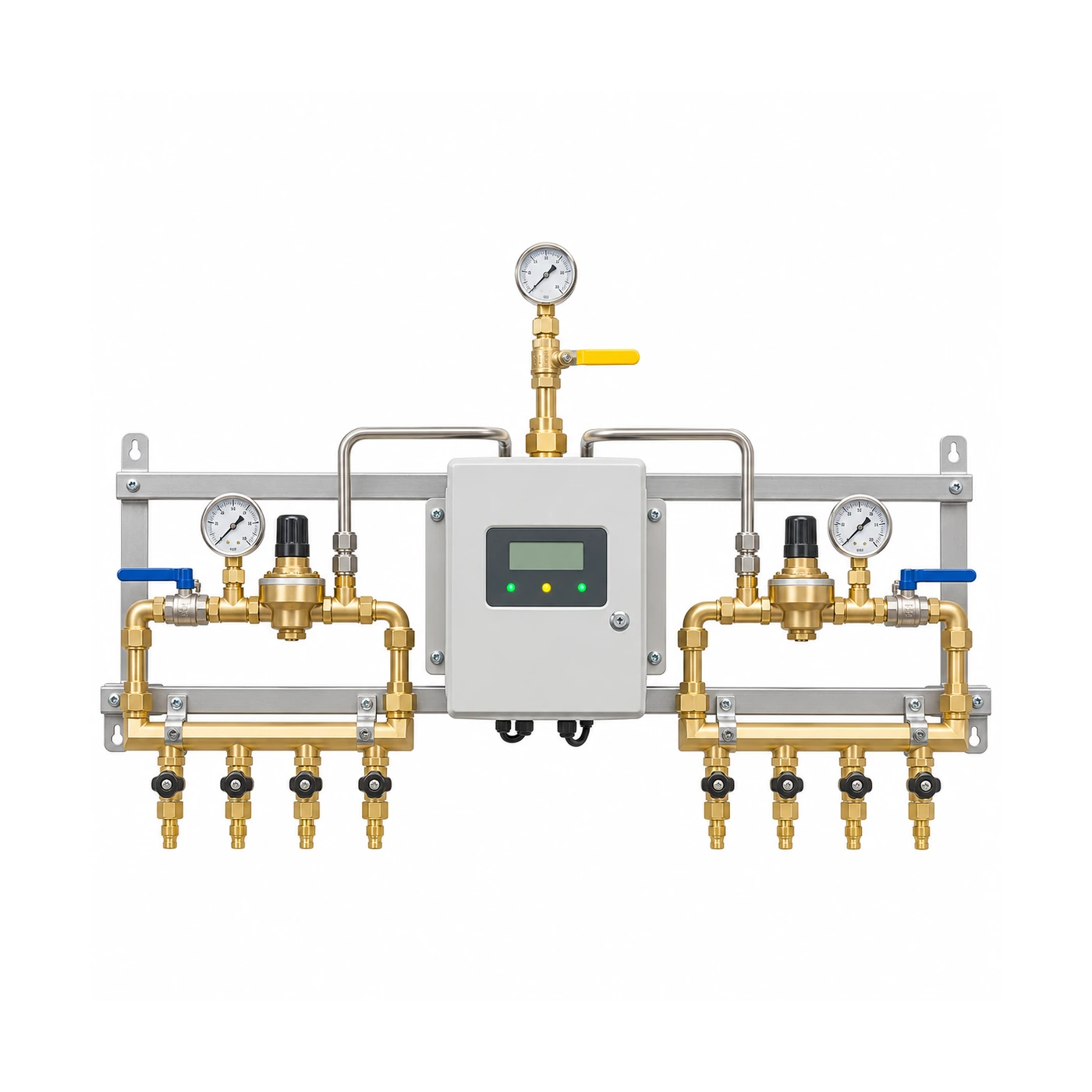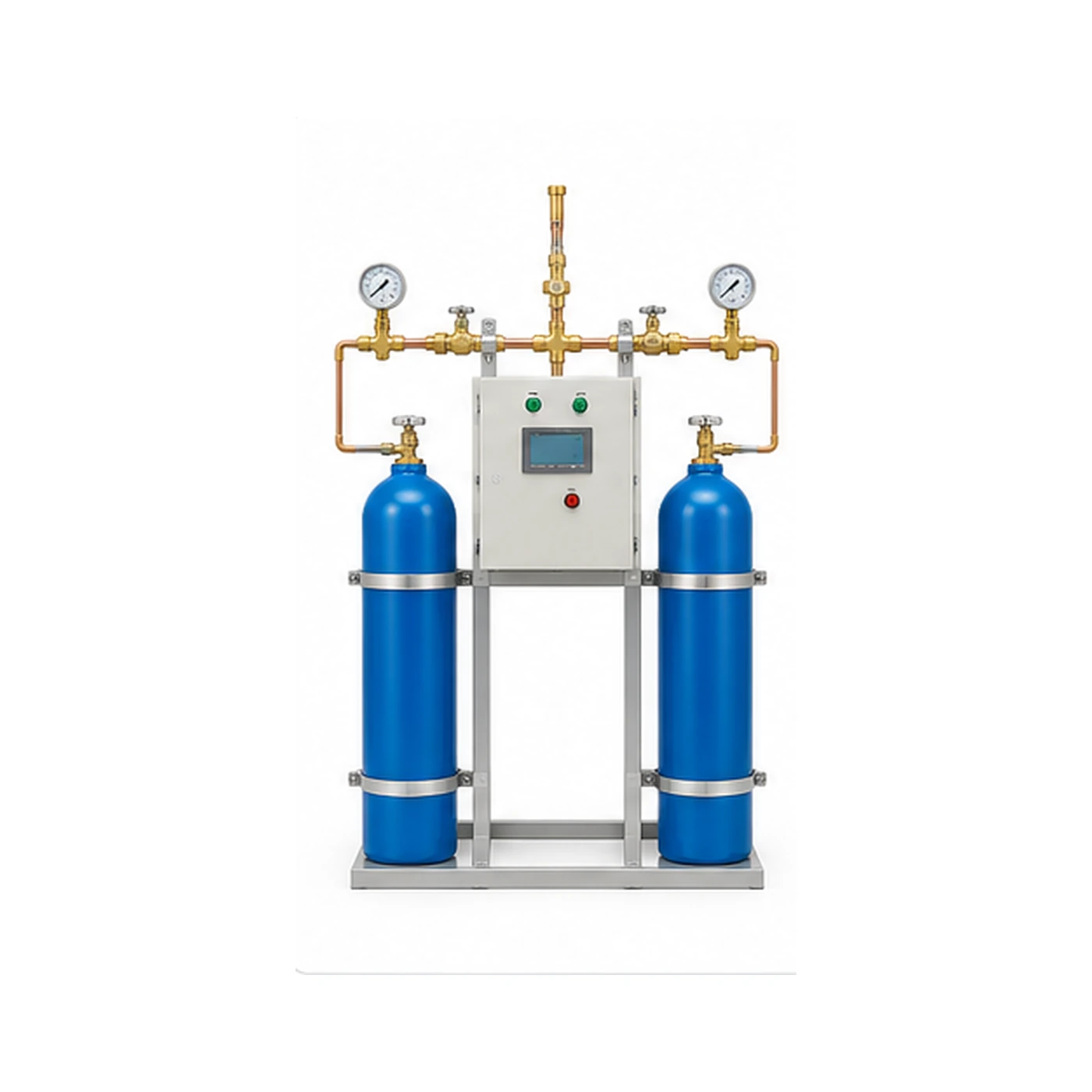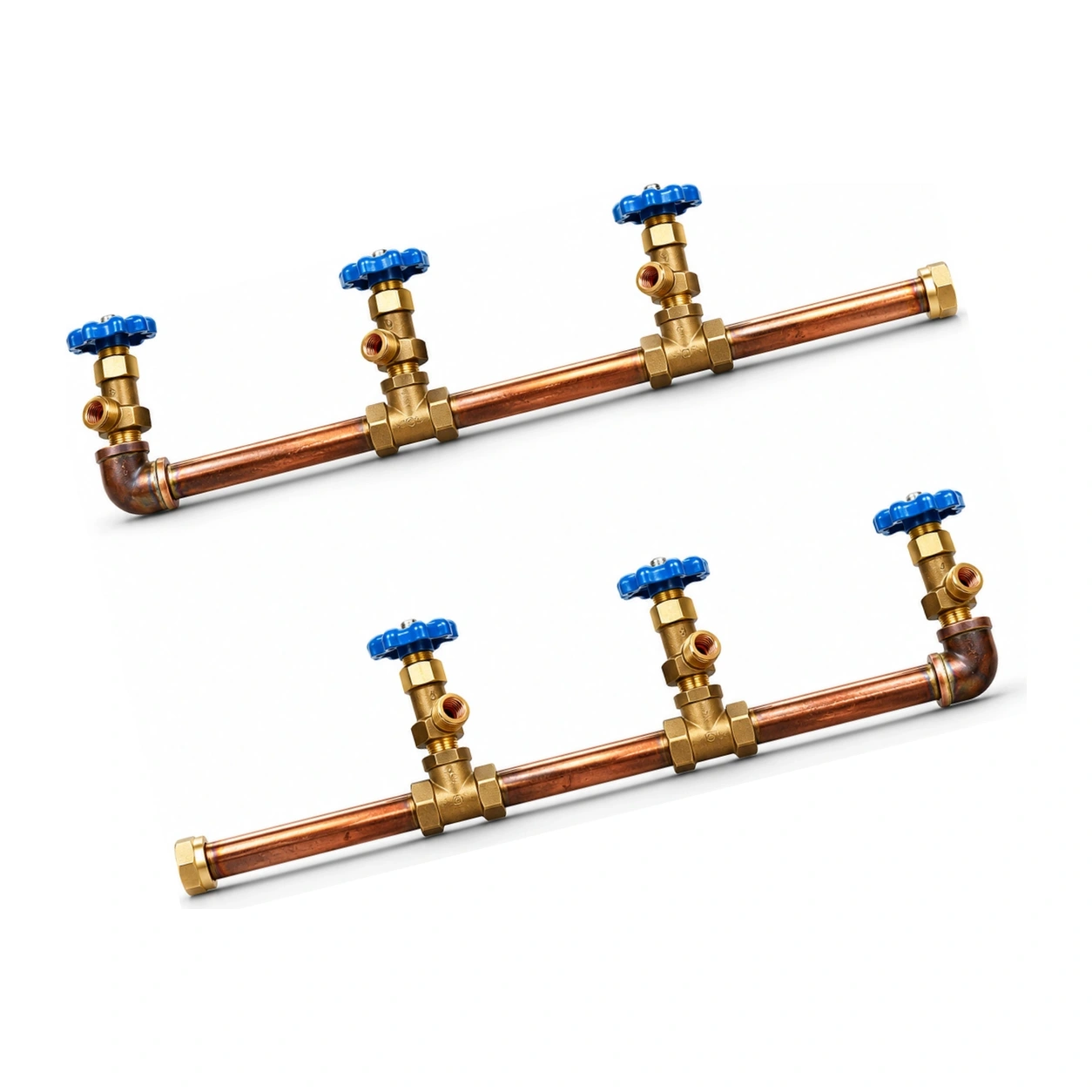

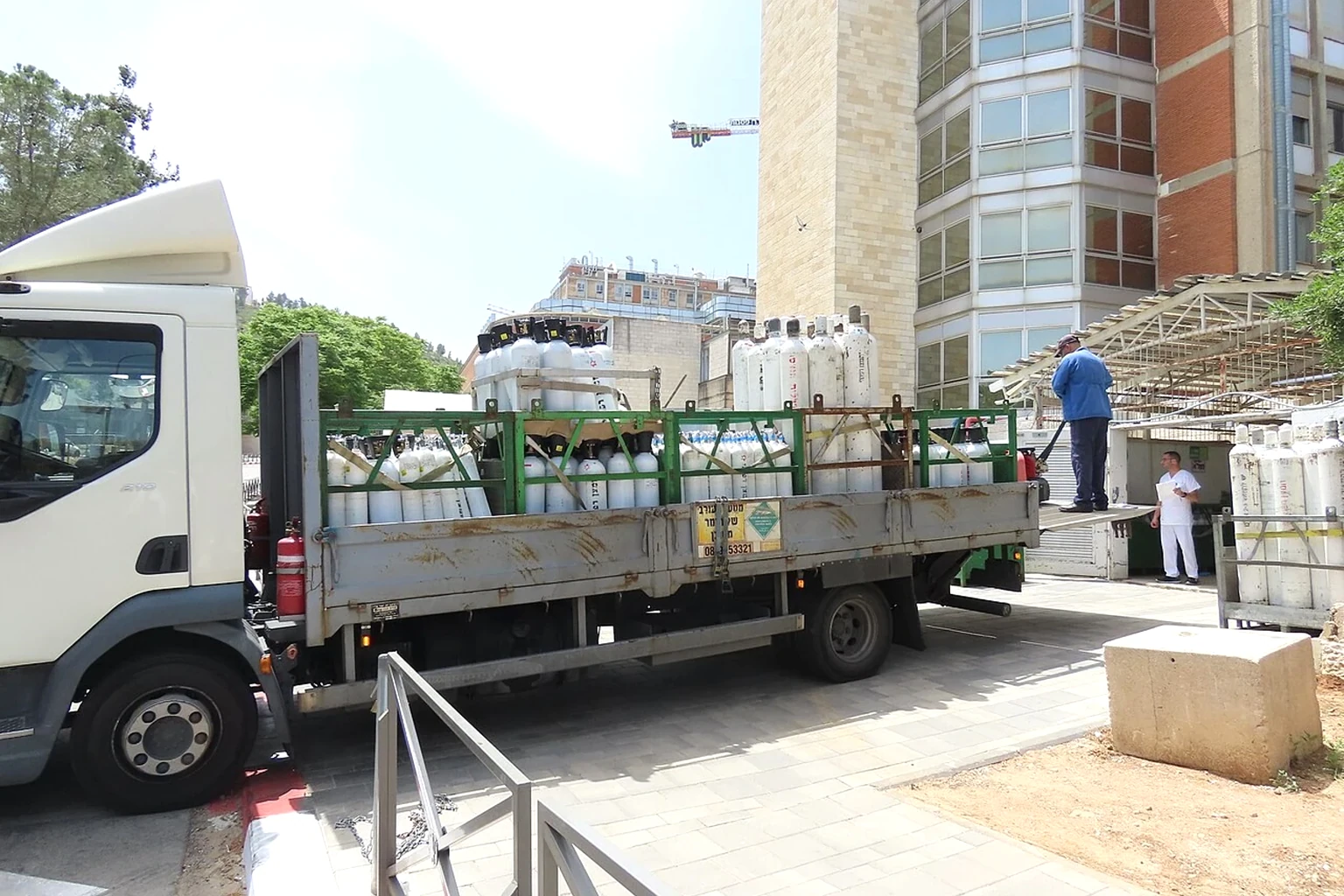
A new medical gas manifold can be installed and technically documented yet become difficult to operate because the regional gas supplier delivers cylinders with a different connection specification, does not guarantee the exchange schedule or excludes handling services from the contract.
The complete purchasing decision should therefore include a cylinder-supplier interface schedule. Its purpose is to align gas logistics with the approved manifold arrangement without turning a component supplier into the hospital's medicinal-gas operator.
Treat the cylinder fleet as a technical input
For each medical gas service, document the approved product, cylinder capacities, specified nominal fill conditions, supplier fleet type and exact valve/connection drawing. Include ownership, inspection status responsibility and identification method.
Avoid ordering a manifold based on a generic photo or a verbal promise that “our standard bottles will fit.” The gas supplier may use different valve families or cylinder bundles in different regions.
The manifold supplier needs the approved information on the actual cylinders that will be delivered, especially for pigtails and header connections. Where the hospital plans dual sourcing, each proposed supplier's delivered interface must be evaluated explicitly.
Separate gas supply from equipment scope
An agreement may involve several distinct items:
- Provision of certified/authorized medicinal gas and its release documentation.
- Rental or ownership of cylinders and associated deposits.
- Delivery of full cylinders and pickup of empty cylinders.
- Handling and movement within the approved hospital premises.
- Supply and maintenance of manifold components and pigtails.
- Inspection of relevant site equipment under the contract.
- Call-out and emergency replenishment service.
- Incident notification, traceability and documentation.
Ask bidders to state included/excluded items line-by-line. A low price for gas alone is not directly comparable with a comprehensive logistics agreement.
Define availability in measurable terms
The contract should record normal delivery windows, verified replenishment lead times, weekend/holiday coverage, supplier escalation contacts, expected full-cylinder stock reconciliation and any agreed emergency arrangements. Clarify whether time commitments are binding, best-effort or limited by transport restrictions.
Create a performance register comparing ordered, confirmed, delivered and accepted usable cylinders. An invoice quantity is not necessarily the same as usable stock in the hospital.
Check whether cylinder acceptance and product quality information remains accessible when suppliers change staff or systems.
A practical quote comparison
Suppose Supplier A charges less per cylinder exchange but requires a deposit, separate transport and a fixed return window. Supplier B charges more but includes delivery, empty retrieval and after-hours support. Evaluate the yearly model using expected exchanges, applicable rentals, logistics and contingency cost, keeping assumptions visible.
This does not imply that either bid is universally preferable. The facility needs to evaluate compliance with its operational and resilience requirements before ranking total cost.
For every quoted configuration, retain the source of assumed demand and the actual contracted service terms.
Flag a dual-supplier compatibility trap
A hospital plans to procure replacement cylinders from a secondary company during a disruption. The secondary supplier proposes a different cylinder valve connection. Even if the gas name is identical, neither the hospital nor a manufacturer should assume adapters or modified pigtails are acceptable.
The right decision is a project-approved compatibility review, including the ISO 21969 high-pressure flexible connection scope, the designated gas identity and the exact manifold model. Do not encourage makeshift connector changes.
Link supply records to the bank status plan
The hospital's approved MGPS operating procedures govern bank replacement and source status, not the commercial exchange contract. However, the supply contract must provide inputs those procedures depend on: stock availability, replacement lead time and reliable communication.
Define how the purchasing team informs the responsible estates personnel when a delivery is delayed or a cylinder shipment is rejected, rather than expecting frontline staff to discover it during a critical event.
Documentation to retain at contract award
- Approved medical gas and cylinder/valve specification.
- Delivery and acceptance locations.
- Supplier authorization and gas quality/release evidence as required locally.
- Cylinder ownership and deposit terms.
- Normal and abnormal service response commitments.
- Compatible manifold connection schedule.
- Warranty/maintenance boundary for pigtails and other accessories.
- Traceability, recall and incident reporting procedure.
- Named contract and facility escalation contacts.
The WHO health-facility oxygen system technical specification supports a structured approach to medical oxygen source/storage procurement. ISO 7396-1 addresses the overall supply system, while the contract governs the actual delivery responsibilities.
BWC Medgas product scope
BWC can quote selected manifold pigtails and components or gas regulators against approved connection drawings. BWC is not the hospital's contracted medicinal-gas filler, delivery provider or operational authority.
Discuss the required manifold component list with BWC Medgas.
Frequently asked questions
Can cylinders from two suppliers be treated as equivalent if their labels name the same gas?
Not without verifying the complete approved product and connection specifications.
Does an automatic manifold eliminate the need for inventory and replenishment contracts?
No. Automation does not manufacture or deliver replacement medical gas.