A repeated medical gas alarm should not be dismissed as a “nuisance” simply because the measured source pressure looks normal at a different time. A true supply event, inaccurate transducer, communication failure and alarm-recipient fault can all appear as similar messages to clinical staff.
The 2026 NHS England HTM 02-01 Part B and 2026 Scottish SHTM 02-01 Part B place operational management in a controlled governance framework. ISO 7396-1 addresses monitoring and alarm functions; the [Joint Commission's maintenance strategy guidance](https://www.jointcommission.org/en-us/knowledge-library/support-center/standards-interpretation/standards-faqs/000001340) treats medical gas alarms as part of the high-risk piped-system inventory.
Four distinct alarm layers
| Layer | Typical evidence | Why it must be distinguished |
|---|---|---|
| Measured process | Source or line pressure/vacuum and relevant gas service | Identifies possible genuine physical event |
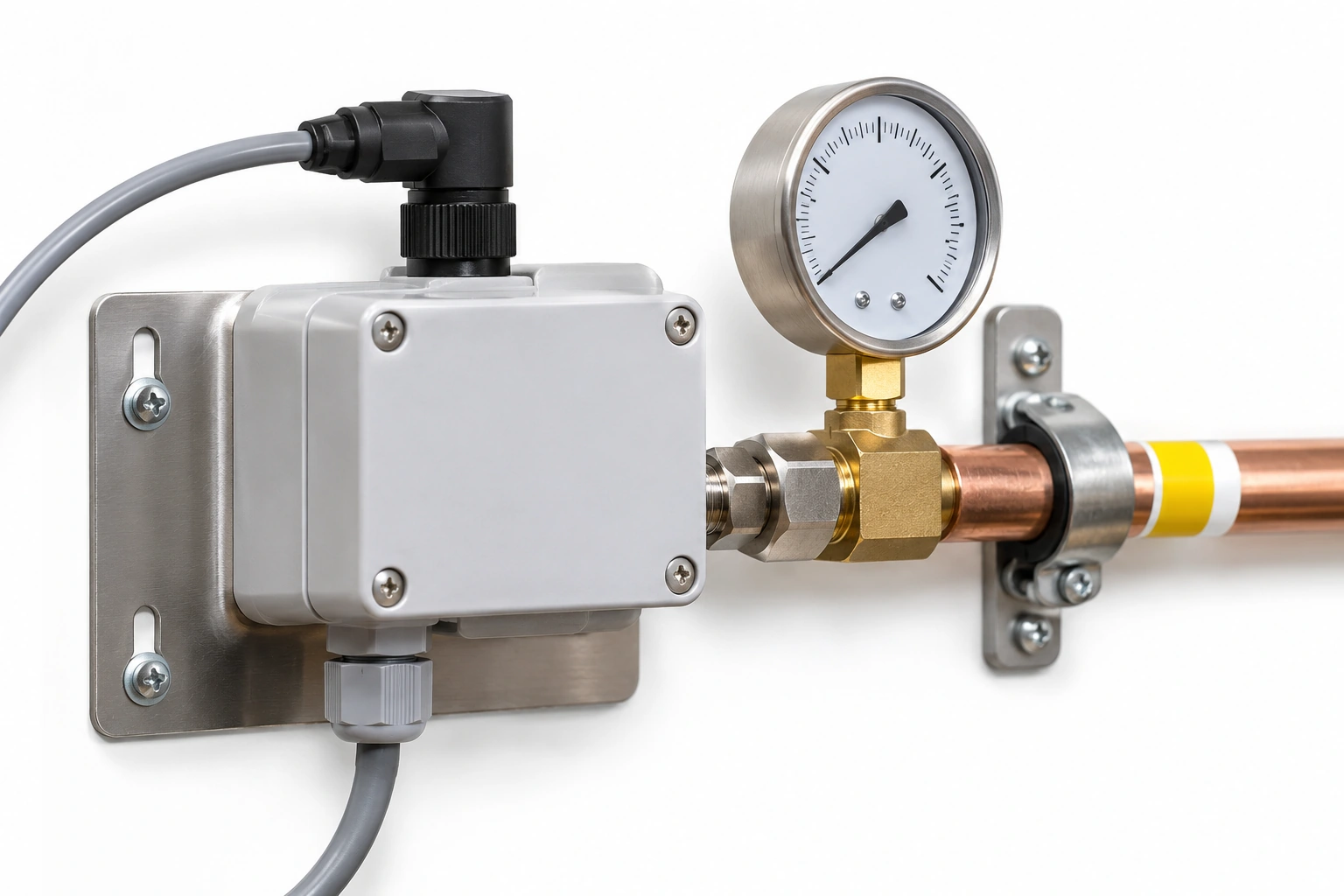
| Sensor/transducer | Model, measuring range, calibration status and fault history | Distinguishes measurement from actual process |
| Alarm processing | Input mapping, threshold logic, power/fault handling and configuration revision | Reveals processing or wiring issues |
| Annunciation/response | Area/master panel, receiving station, acknowledgement and staff response | Proves a warning reaches the right people |
A fault indication at a monitoring panel is information about the instrument chain, not proof that the gas system itself is safe. Both questions require separate resolution.
Capture an event sequence
For each incident, record the earliest available message, gas/service, source or zone, first displayed state, receiving panel, acknowledgement and contemporaneous process information. Preserve the time sequence across logs; do not let technicians reset multiple devices before copying fault codes and event data.
A troubleshooting worksheet can group events into confirmed process alarms, suspected instrument faults, communication/receiving defects, and unclassified events pending investigation. Avoid assigning “false alarm” until competent evaluation has established that conclusion.
Review a cause-and-effect matrix
For every alarm input in the approved design, the matrix identifies the triggering event, expected area and central indications, latching or acknowledgement expectations, fault responses and nominated personnel. After a component change, compare the as-installed configuration with the controlled matrix. The completed panel must do more than illuminate a lamp during a generic self-test.
| Matrix field | Required trace |
|---|---|
| Input identifier | Physical sensor, actual zone and service |
| Expected output | Area/master receiving point and displayed message |
| Test authority | Person permitted to perform an end-to-end test |
| Clinical precautions | Permit and notification where tests may affect staff response |
| Result | What was actually observed and by whom |
| Exception | Fault, retest and authorisation before release |
Worked example: a medical air low-pressure warning
A ward shows an intermittent medical-air alert, but the plant-room gauge later appears stable. Possible explanations include a brief genuine pressure dip that the plant gauge missed, a faulty area transducer, changed settings or a communication problem. The correct first step is to align time-stamped observations and compare the expected signal path, not silence the alarm.
Qualified staff can then execute the approved diagnostic and witness plan with the necessary clinical communication. Unauthorised signal bridging or arbitrary alarm-threshold alteration can hide a later real supply failure.
Maintenance record and parts compatibility
When replacing a sensor, preserve its pressure range, measurement reference, gas compatibility, electrical interface, mounting, signal output and alarm logic. A newer display panel alone does not establish compatibility with existing transmitters.
BWC Medgas offers selected medical gas alarm system components, zone valve box assemblies and pressure gauges for specification-driven replacement.
Discuss a model-specific alarm component enquiry with BWC Medgas.
Close the fault properly
Record the confirmed cause, corrective work, retested affected signals, restored recipients, reviewer, next observation window and any residual limitations. Keep the original failed test in the record. A normal panel screen after a reset is not a substitute for an evidenced repair and approved return-to-service decision.