The first response to suspected hospital oxygen supply loss is not indiscriminate valve operation. The priority is patient safety, clinical escalation and identifying which part of the supply chain is affected. Engineering troubleshooting must be coordinated with the clinical command structure and the site's emergency response procedure.
Both the 2026 English HTM 02-01 Part B and 2026 Scottish SHTM 02-01 Part B address operational management. The [Joint Commission's 2026 medical gas maintenance guidance](https://www.jointcommission.org/en-us/knowledge-library/support-center/standards-interpretation/standards-faqs/000001340) reinforces the need for safe, reliable source, distribution, outlet and alarm performance; its risk-based approach has direct relevance to emergency preparedness.
Recognise the incident without inventing a cause
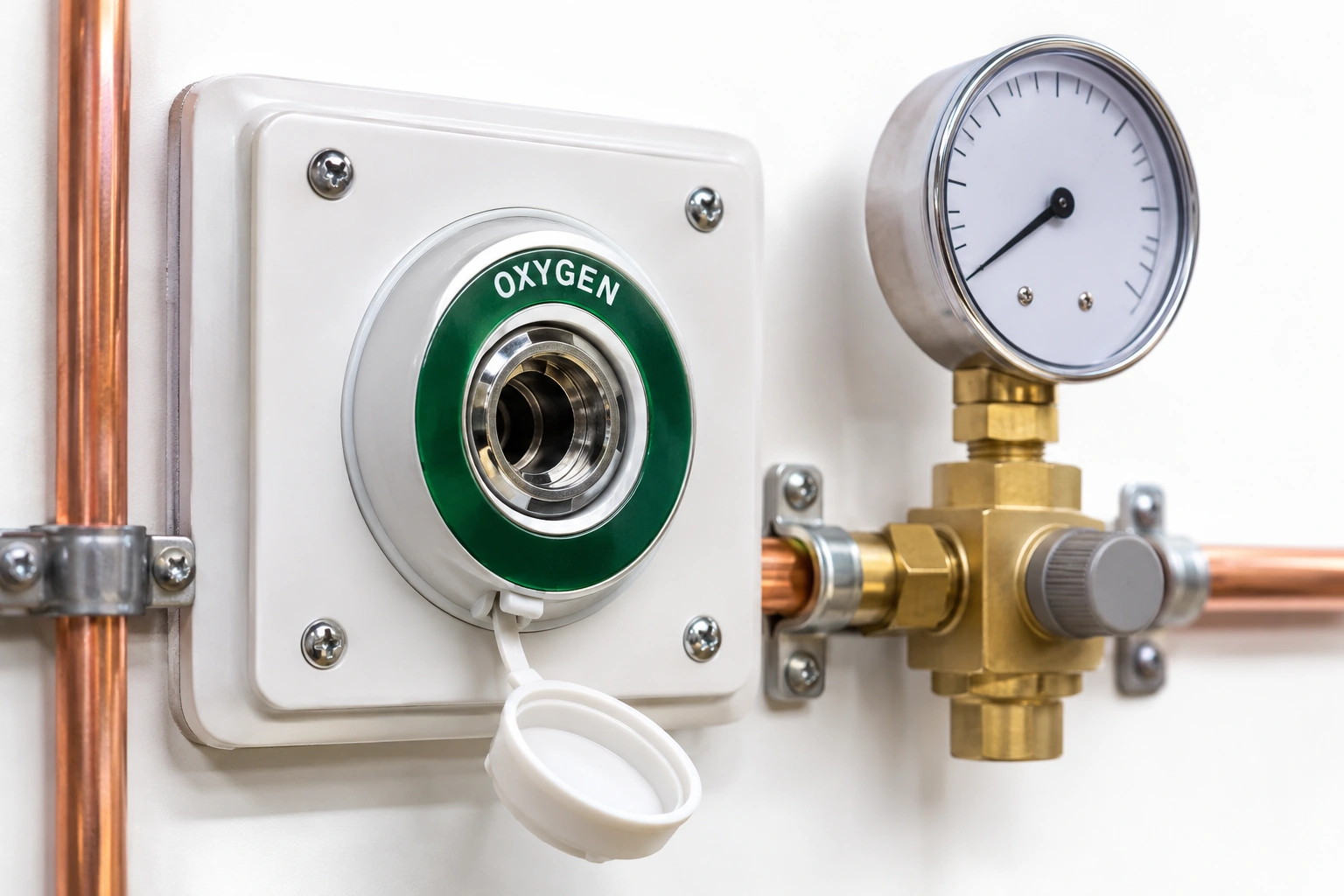
A low-pressure indication at a bedside does not prove that the bulk oxygen source is empty. It may represent a source failure, an isolated distribution zone, a pressure-control fault, an instrument error or an issue local to a clinical device. Record observations separately from conclusions.
| Observation | Immediate coordination question | Evidence to preserve |
|---|---|---|
| Central source alert | Has the nominated response team been contacted? | Alarm message, timestamp, source status |
| Multiple area alarms | Which zones share the affected upstream supply? | Zone map and alarm sequence |
| One clinical room | Are other correctly identified outlets affected? | Location, device and local observations |
| Unexpected source changeover | Is standby supply within the authorised contingency plan? | Source log and changeover evidence |
| Repeating alarm after recovery | Was the underlying cause investigated? | Incident log and recurrence record |
A technician should never infer supply safety from a single pressure gauge when multiple independent alarms and clinical observations contradict it.
Clinical escalation before engineering experimentation
The responsible clinician or incident team determines patient care actions under the hospital's emergency plan. Engineering staff provide clear confirmed observations: service involved, extent known, alarms present, redundancy status and which restrictions may apply. All temporary oxygen provision must follow local clinical and engineering procedures.
Do not improvise connections between unrelated gas systems or assume portable cylinders can serve a ward without an engineered demand and monitoring assessment. The hospital should train for these scenarios before an event.
Protect the evidence chain
Capture the first alert time, acknowledgement, clinical notification, equipment state, changes in status, approved actions and recovery confirmation. Retain the data even when the cause is an obvious loose connection. A complete sequence helps distinguish a one-off failure from an unresolved system trend.
For hospitals under US workplace rules, [OSHA's compressed-gas hospital guidance](https://www.osha.gov/etools/hospitals/central-supply/compressed-gases) also reinforces proper cylinder handling and associated hazards. Do not confuse safe cylinder logistics with proof of clinical oxygen delivery capacity.
Source, zone and endpoint review
An engineering investigation can follow an observation map without giving unqualified staff a live-system operating procedure:
- Source: confirmed available supply, reserve arrangements, recent refill/plant work and associated alarms.
- Distribution: current zoning documents, pressure trend, line-valve status records and work permits.
- Endpoint: clinically reported loss of function, outlet and connected-equipment records, gas/service identity.
- Monitoring: independent readings, alarm communication path and timestamp consistency.
The responsible engineer determines what controlled tests are permissible after clinical stabilisation. A retrospective leak test is not an emergency substitute for providing patient care.
Worked example: partial oxygen pressure loss
A surgical unit reports declining oxygen pressure while neighbouring wards remain normal. Several staff propose opening or closing a nearby line valve. Correct incident management instead escalates to the named authority, confirms the real affected zone and existing permit/isolation state, and activates the approved clinical contingency. Any deliberate system intervention requires authorised competence and a verified plan.
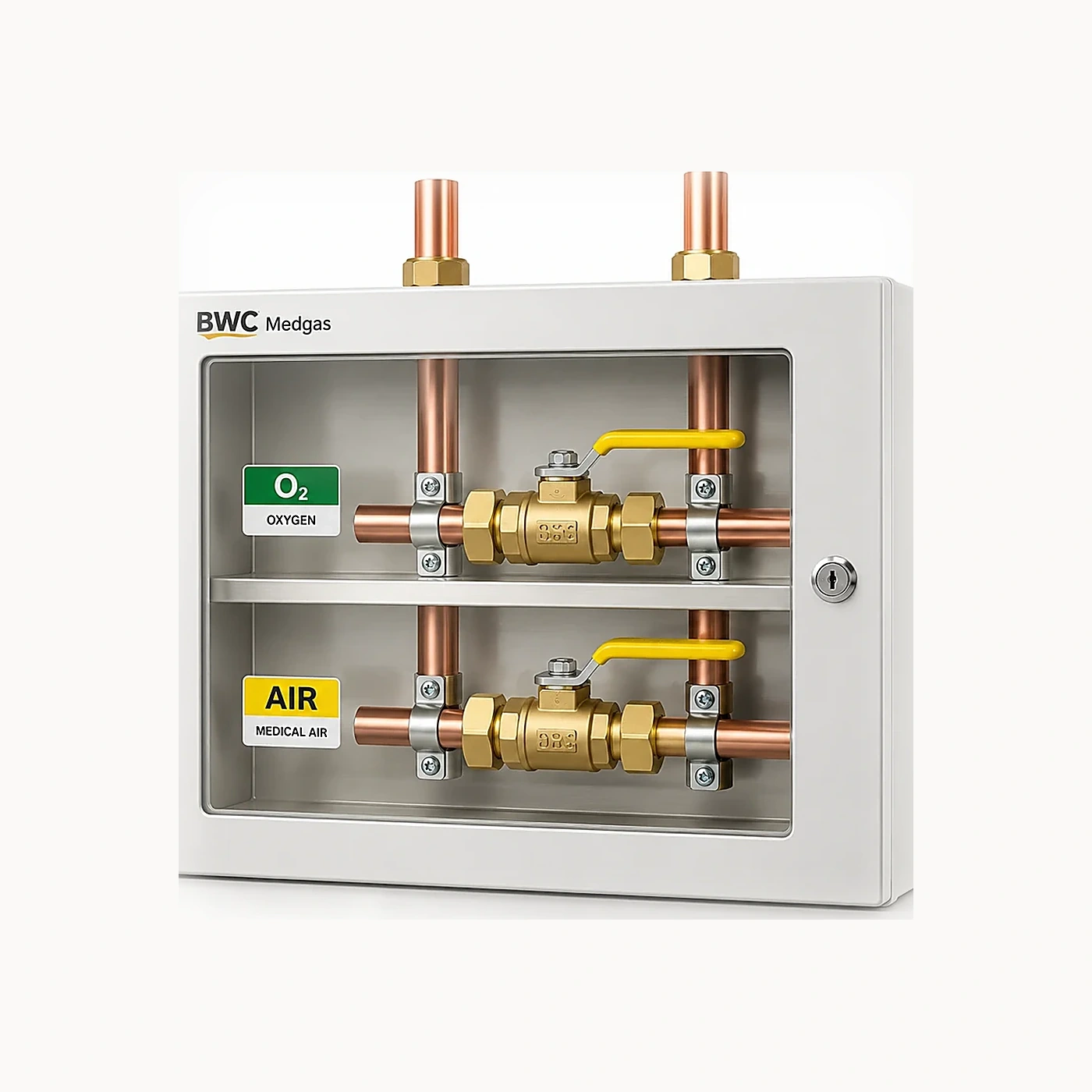
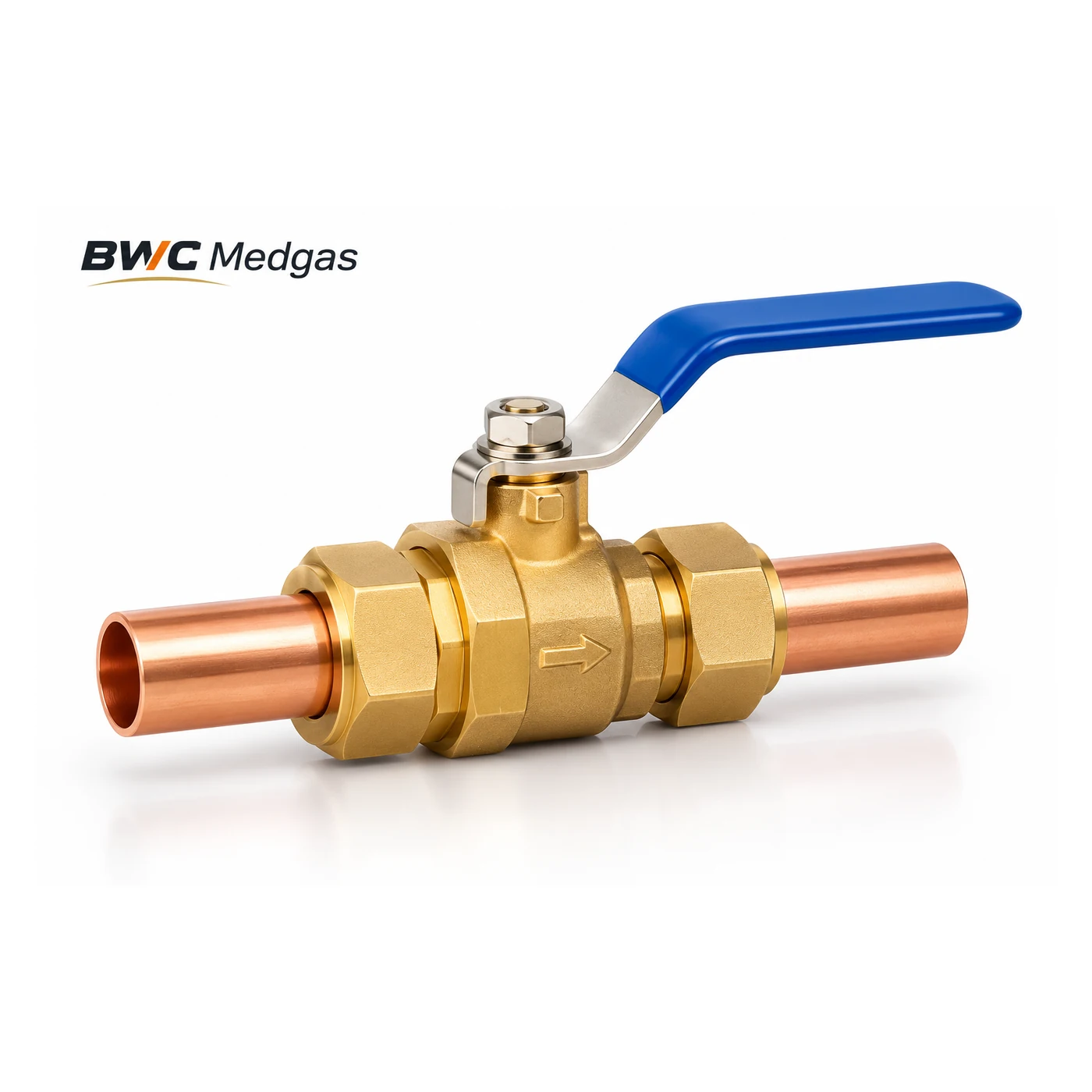
If an inspection establishes the need for replacement, procurement may involve oxygen-compatible valves, pressure controls or alarm components, matched to the verified fault and approved design.
Discuss an identified replacement component with BWC Medgas.
Recovery and learning
Closure requires independent confirmation that the relevant area has met the hospital's return-to-service criteria, not just an alarm disappearing. Document the released zones, remaining restrictions, corrected failure mechanism and follow-up checks. Escalate repeated supply events into the maintenance risk register so the next incident is less likely.