Hospital medical gas maintenance becomes fragile when incidents are closed with vague work orders such as “alarm reset,” “valve changed” or “checked OK.” Those descriptions do not allow the next engineer to understand the original event, the reason for the repair or whether the affected clinical service was safely restored.
The [Joint Commission's 2026 medical gas maintenance strategy guidance](https://www.jointcommission.org/en-us/knowledge-library/support-center/standards-interpretation/standards-faqs/000001340) requires a risk-aware approach to source, distribution, outlet and alarm maintenance. Its [competency guidance](https://www.jointcommission.org/en-us/knowledge-library/support-center/standards-interpretation/standards-faqs/000001020) discusses the need for facilities staff and contractors to demonstrate appropriate qualifications and practical knowledge. Local roles, procedures and permits should follow the relevant 2026 England or Scotland medical gas guidance.
The complete incident chain
A sound fault record makes six linked stages discoverable:
- Detection: original clinical report or source/area alarm, with timestamp and affected service.
- Containment and escalation: clinical communications, permitted contingency, incident leader and restrictions.
- Diagnosis: observations, measurements, assumptions excluded and confirmed failure mechanism.
- Correction: authorised work order, old and new parts, manufacturer revision, drawings and changed settings.
- Verification: identified system boundary, qualified tests, witnesses and approved service release.
- Prevention: maintenance-programme change, spare-part control, training or follow-up surveillance.
Keep the original event and failed tests visible after repair. A good CMMS record is an evidence trail, not a clean-looking list of closed tickets.
Minimum CMMS fields
| Data group | Practical field | Purpose |
|---|---|---|
| Asset | System, gas/service, exact location, unique ID | Correlate repeat events |
| Impact | Clinical zone and services affected | Understand severity and escalation |
| Event | Timestamp, alarm/source, observed values | Preserve chronology |
| Work authority | Permit ID, qualified personnel and scope | Distinguish approved work from informal intervention |
| Part traceability | Old/new models, lot/serial where available | Control compatibility and recalls |
| Verification | Required test, actual result, witness and date | Establish service recovery |
| Closure | Approver, open restrictions and follow-up task | Avoid hidden incomplete works |
Use a controlled drawing/revision reference so the work record remains meaningful after a building extension or department move.
Root cause is not the same as the failed component
A pressure transducer may fail, but why did the organisation repeatedly encounter the same issue? Consider installation environment, maintenance method, wrong spare specification, configuration control, patient load and alert-recipient behaviour. A component root cause and a management-system root cause can both exist.
For example, if an oxygen alarm fails to reach a staffed station because its signal was reassigned during a refurbishment, swapping the display screen may not solve the actual issue. The corrective action must close the configuration and end-to-end verification gaps.
Example: recurring outlet leaks across several wards
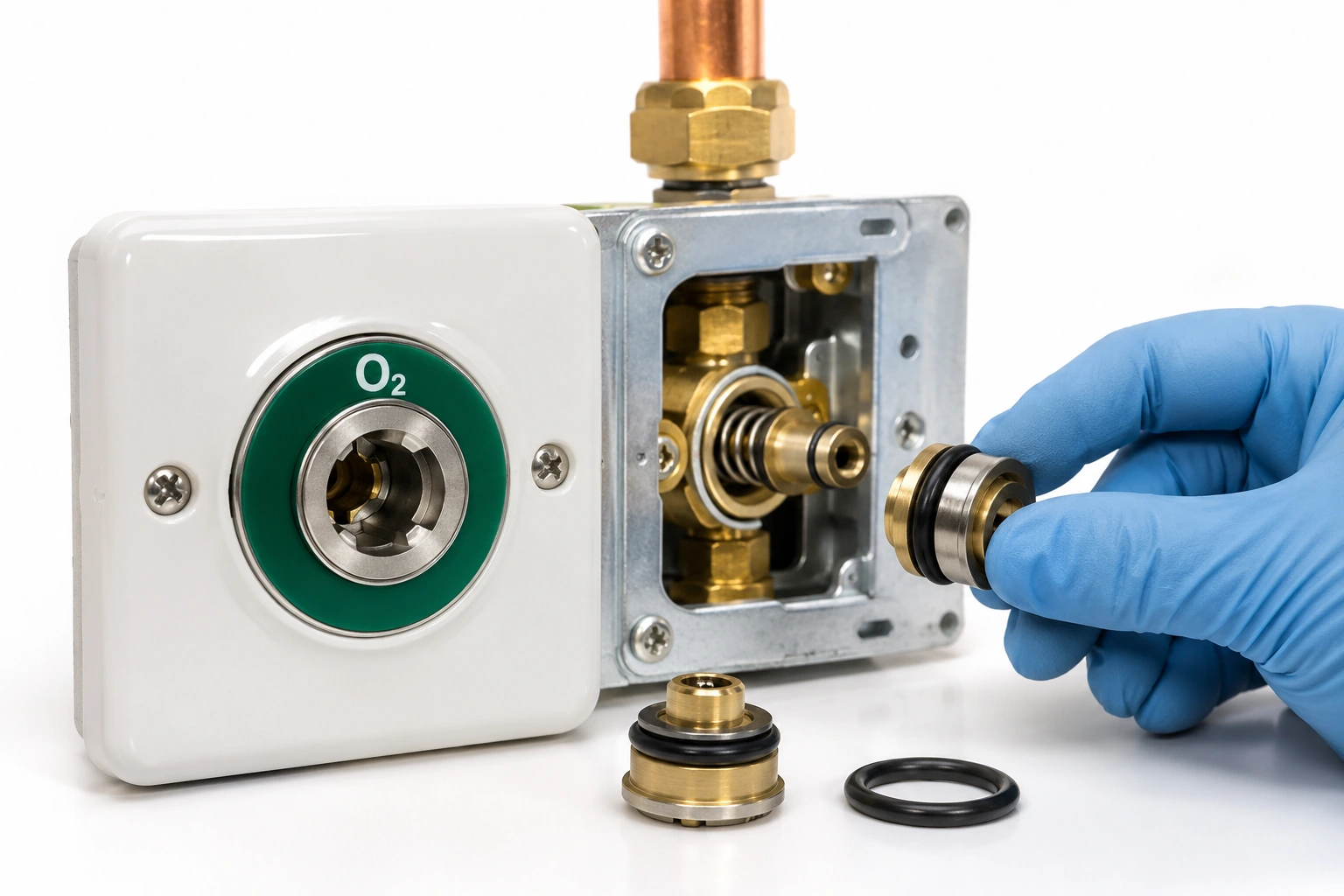
A hospital replaces the same model of terminal-unit seal repeatedly in unrelated rooms. The CMMS should group failures by model, installation date, location and service history. A trend may indicate an unsuitable kit, a specific revision, accessory mismatch or maintenance technique. A qualified review can distinguish these possibilities, then decide whether an asset-wide preventive measure is necessary.
ISO 7396-1 frames installed system performance, while individual outlets, regulators, valves and alarms have their own product/interface requirements. Do not treat a supplier receipt as an operational acceptance certificate.
Create a controlled spares cross-reference
For each spare, retain the approved part/model, gas service, interface drawing, known compatible revisions, storage and cleanliness requirements, quantity, minimum local stock rationale, last procurement and relevant quality evidence. Use a separate review to approve substitutions.
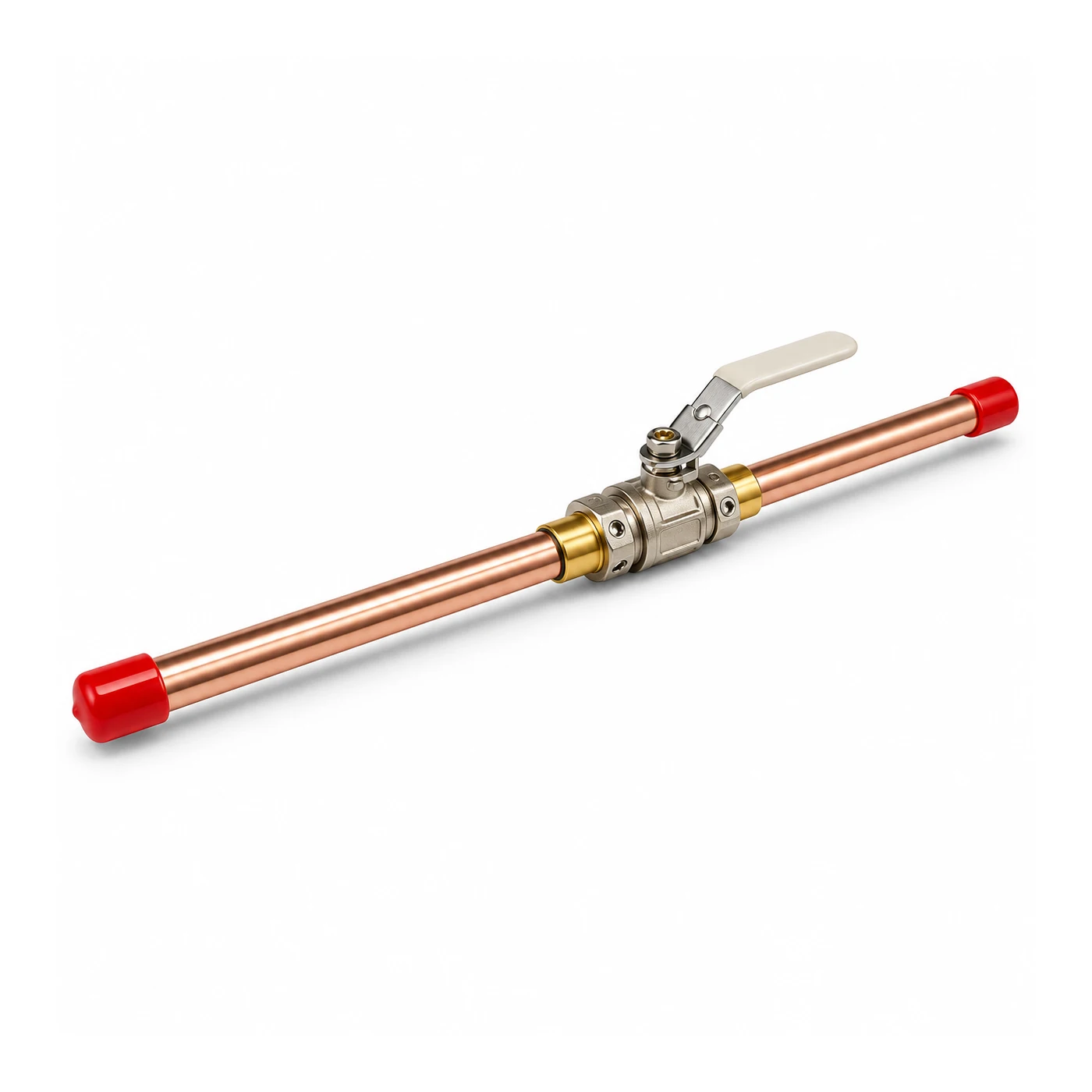
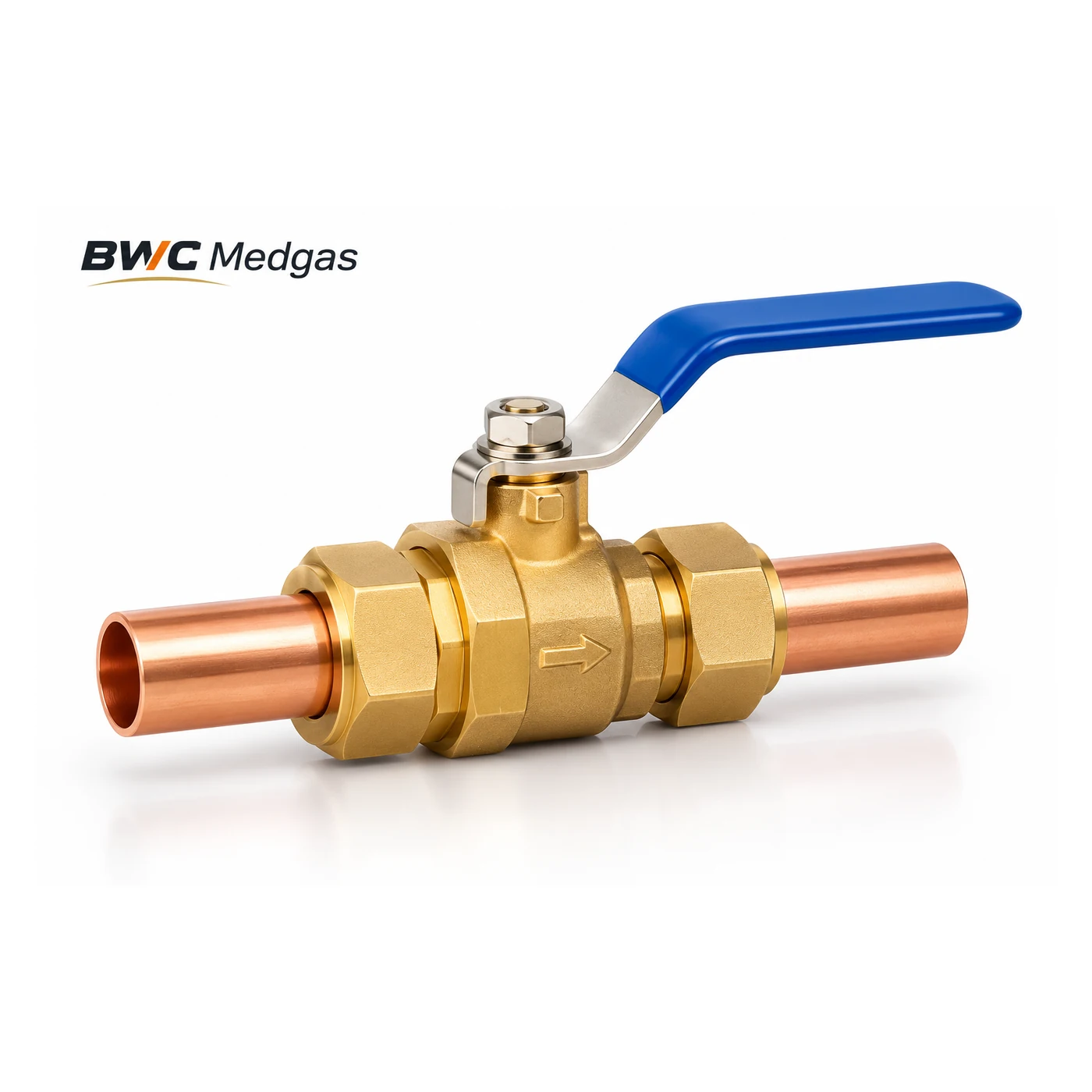
A few common spare categories include terminal units, valves and zone boxes, regulators and gauges, and alarm components. BWC Medgas can help prepare a component comparison against an authorised hospital spares register.
Send a controlled MGPS spare-part schedule to BWC Medgas.
Close the learning loop
At a quarterly reliability review, rank recurrent defects by clinical impact and unresolved cause. Assign corrective-action owners and check whether each intervention reduced recurrence. Preserve incident timelines, spare revisions and maintenance schedule changes so future teams can make informed decisions even after original technicians have left.