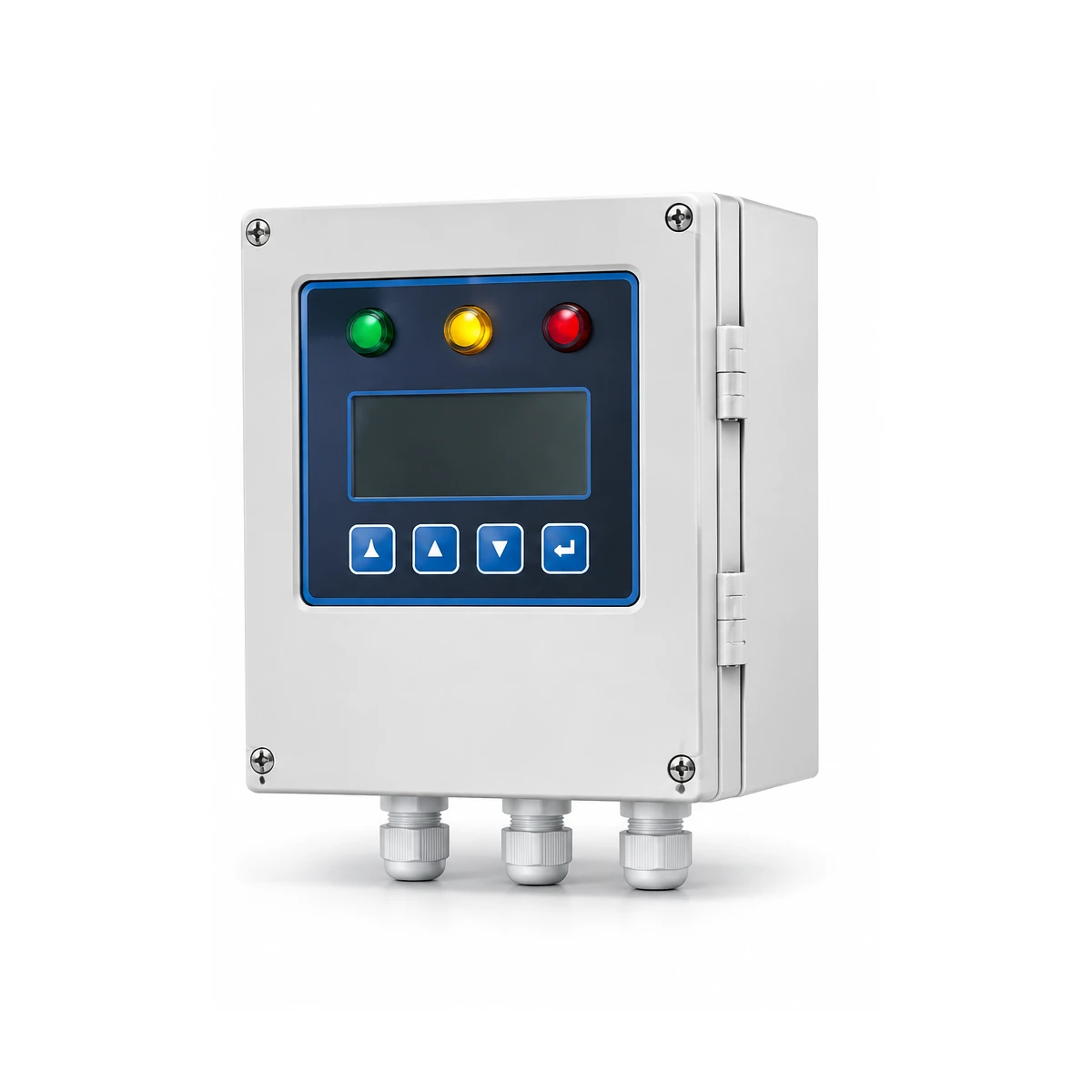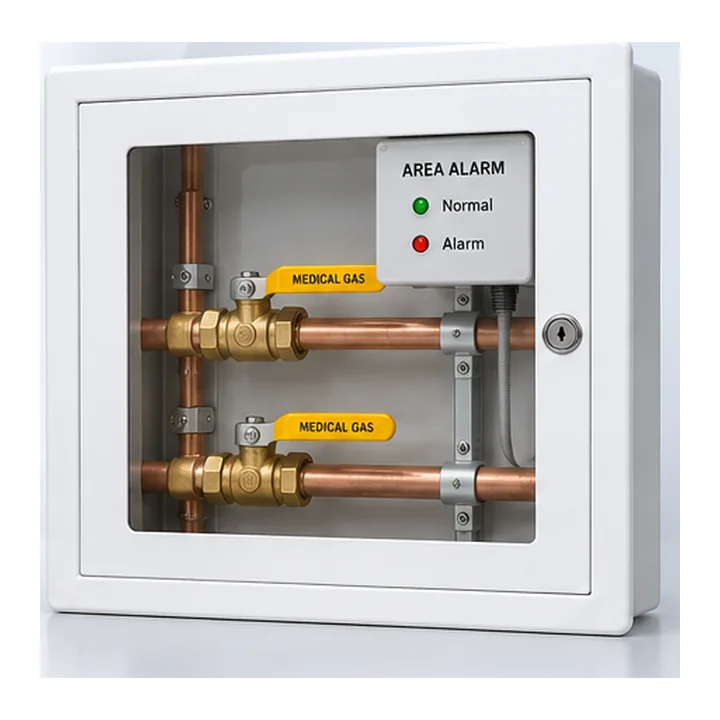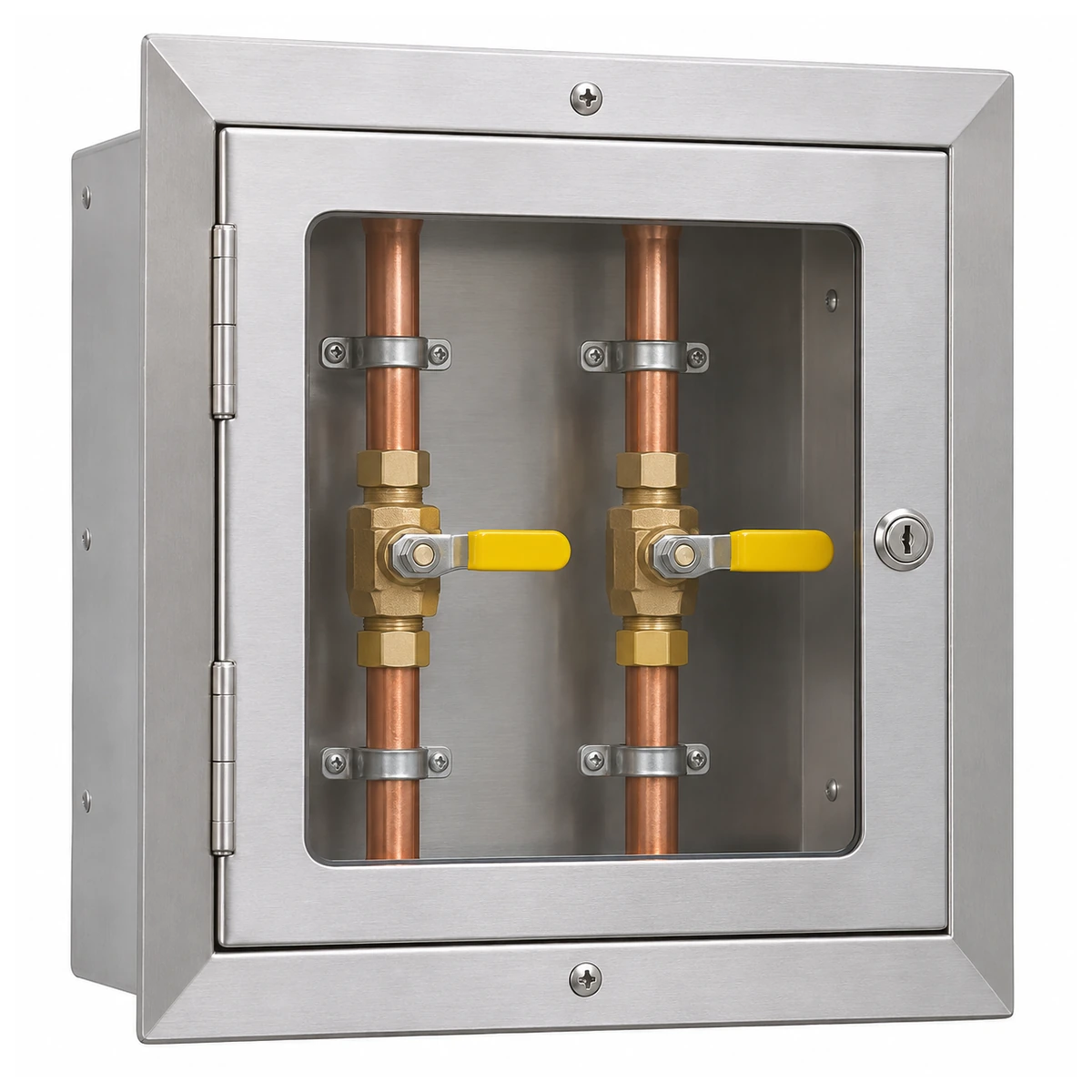

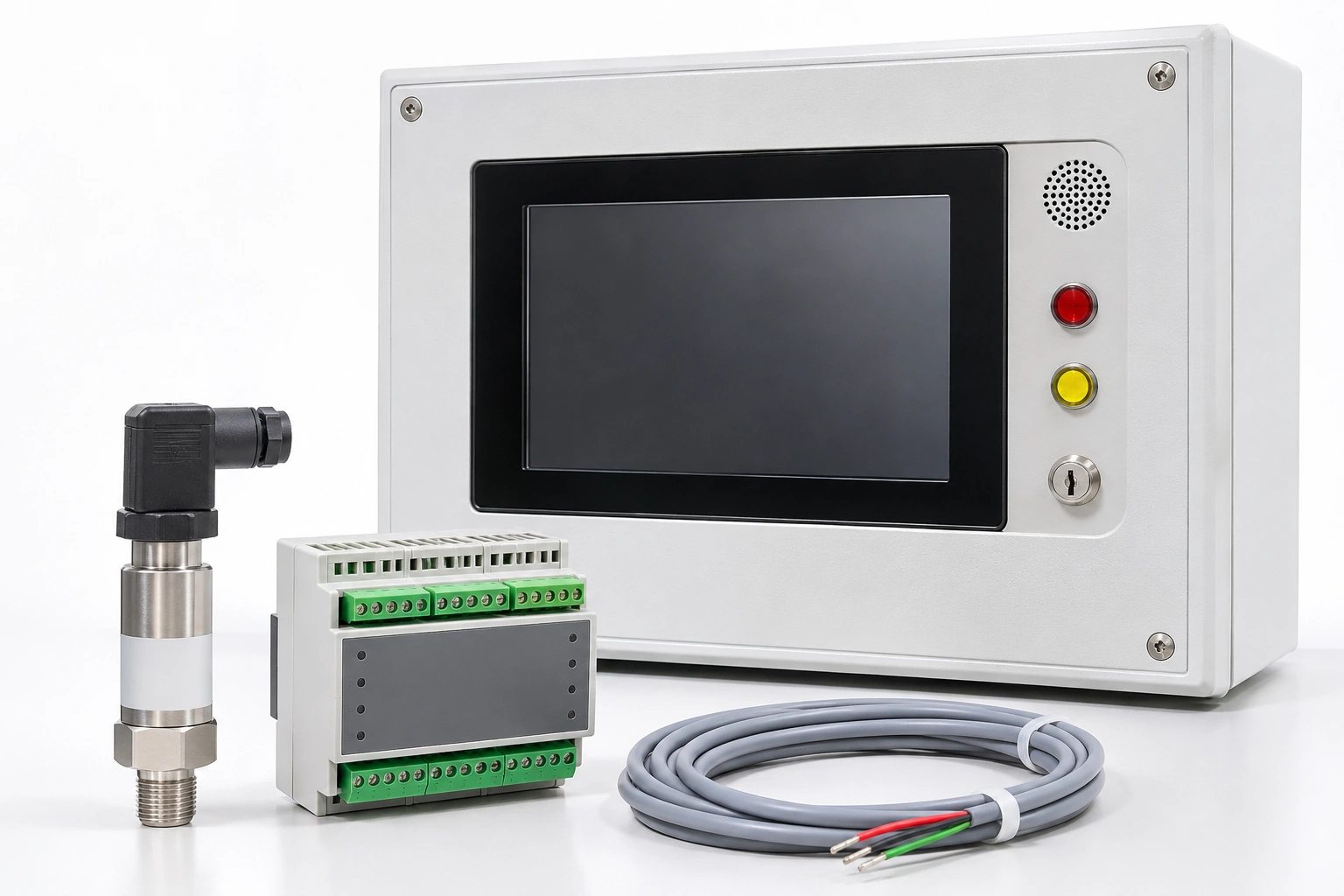
Two bidders may quote a “hospital medical gas alarm system” with similar-looking displays while supplying very different functional scopes. One price may cover only panels; another includes sensors, source interfaces, field wiring, repeaters, software configuration, tests and spare modules.
A technically sound procurement decision separates mandatory system functions from optional presentation and integration features, then compares like-for-like evaluated cost. The lowest controller price may not be the lowest reliable installed-system cost.
Freeze the functional scope first
The hospital must issue current source and pipeline drawings, approved gas-service schedules, panel location plan, required alarm conditions, point list, intended interfaces and the applicable MGPS/national code.
ISO 7396-1:2016 addresses control, alarm and monitoring within the pipeline system. HTM 02-01 (2026) and SHTM 02-01 (2026) provide applicable healthcare project guidance where adopted. For US work, specify the locally governing edition of NFPA 99.
A vague description of “one 10-inch alarm display” is not a substitute for the functional specification.
Build a normalized bid matrix
| Line item | Supplier offer must say | Technical review |
|---|---|---|
| Area/central function | Actual specified receiving functions and locations | Correct scope |
| Source and zone inputs | Complete tagged point count by service | Matches I/O matrix |
| Sensors and accessories | Exact model, range, power and material suitability | Approved measurement |
| Displays and indicators | Required visual/audio/fault behavior | Adopted standard |
| Communication paths | Included gateways, cables, licenses and repeaters | Architecture/availability |
| Power/fault protection | Actual supplied hardware and scope | Resilience assessment |
| Factory documentation | Model/configuration-specific tests | Product QA |
| Site tests and training | Scope, witness and deliverable records | Contract responsibility |
| Data, maintenance, spares | Record/export support and lifecycle terms | Estates support |
| External BMS/SCADA | Separately priced, approved status-only or other interface | Safety/OT review |
If the offer leaves required functions “by others,” explicitly assign those duties and costs before comparing totals.
Use a technical gate before price
First verify that each bid covers the adopted system's required alarm conditions, receiving points, signal quality/fault handling, medical gas service suitability, installation interfaces and evidence obligations.
An offer should not gain a “compliant” rating solely from marketing statements about ISO or CE. Obtain exact model documents and a traceable compliance matrix matching individual requirements.
Demonstrate a commercial comparison
Illustrative numbers only, not market quotations:
Bid A: panels USD 2,400 + required sensors USD 800 + approved site engineering USD 750 + additional configuration/document support USD 450 = USD 4,400.
Bid B: integrated equipment and sensors USD 3,350 + comparable site engineering/document support USD 850 = USD 4,200.
The resulting gap is USD 200 before shipping, taxes and other equal-scope costs. This arithmetic does not establish technical compliance; a missing mandatory alarm function cannot be cured by a cheaper price.
Compare lifecycle support, not only screen features
Evaluate manufacturer documentation, long-term configuration access, replacement sensors, supported firmware, serviceable panels, spare part availability, alarm record export, network/security updates and obsolescence arrangements.
A proprietary cloud dashboard may add recurring service costs or dependence on internet access. Assess it as a separate layer rather than silently building it into the required medical gas warning capability.
[NIST SP 800-82 Rev. 3](https://csrc.nist.gov/pubs/sp/800/82/r3/final) provides operational technology security context when remote monitoring and IP networks are involved.
Separate FAT, SAT and healthcare operational acceptance
Factory tests may establish controller outputs and the supplied product's configured functions. Site verification must cover actual sensors, channel mappings, receiving points, fault handling, relevant gas/zone identity and as-installed documentation.
The Scottish SHTM 02-01 (2026) lists distinct A14 area alarm and A15 central alarm forms. These cannot be replaced by a generic factory software screenshot.
The contract should specify who designs, performs, witnesses and signs the required tests, and who may release equipment for healthcare operation.
Handle changes after procurement
A hospital may extend a ward, change a source or add a remote alarm receiver. The supplier contract should define supported I/O expansion, configuration control, necessary approvals, revised documentation and retest responsibilities.
Do not assume spare unused software channels mean the entire installation can be safely expanded without engineering review.
A decision record fit for audit
Keep the requirements and responses matrix, approved exclusions, normalized cost sheet, drawings, product documents, risk review, test plan, award decision and later variations together. An independent reader should be able to explain why the chosen solution meets the defined hospital task.
BWC Medgas quotation scope
BWC can discuss selected medical-gas area alarm panels and related components and supply interfaces with zone valve boxes. Requests should include complete I/O and functional requirements; hospital-wide alarm system engineering and commissioning remain project responsibilities.
Send a detailed technical and commercial alarm RFQ to BWC Medgas.
Frequently asked questions
Is screen size a good proxy for alarm system capability?
No. Correct signal coverage, indications, supervision, receiving locations and tests matter more.
Can a lower price compensate for missing clinical alarm functionality?
No. Mandatory requirements need technical acceptance before commercial ranking.
Primary technical references
- ISO 7396-1:2016 — MGPS alarm and control requirements
- NHS England — HTM 02-01 (2026)
- NHS Scotland — SHTM 02-01 (2026), A14/A15
- NFPA 99 — Healthcare alarm requirements
- [NIST SP 800-82 Rev. 3 — OT integration risk context](https://csrc.nist.gov/pubs/sp/800/82/r3/final)