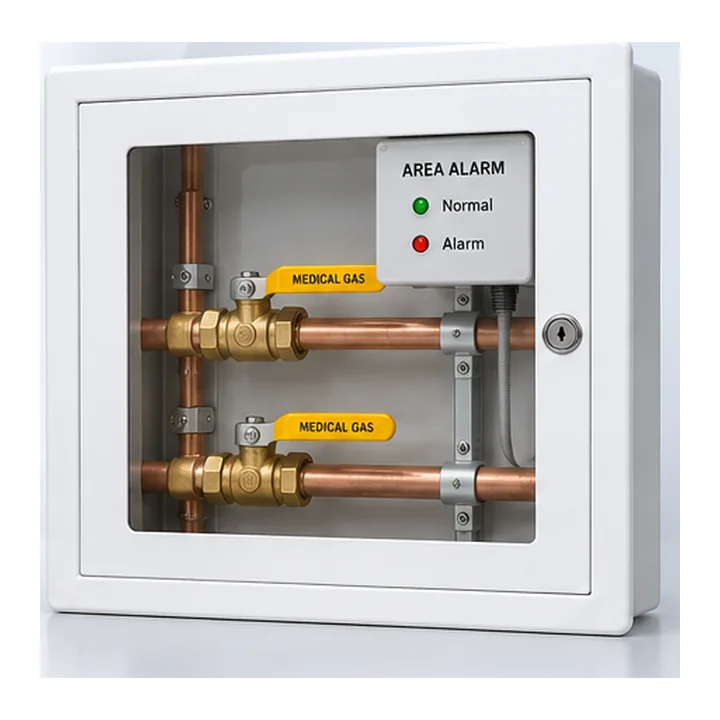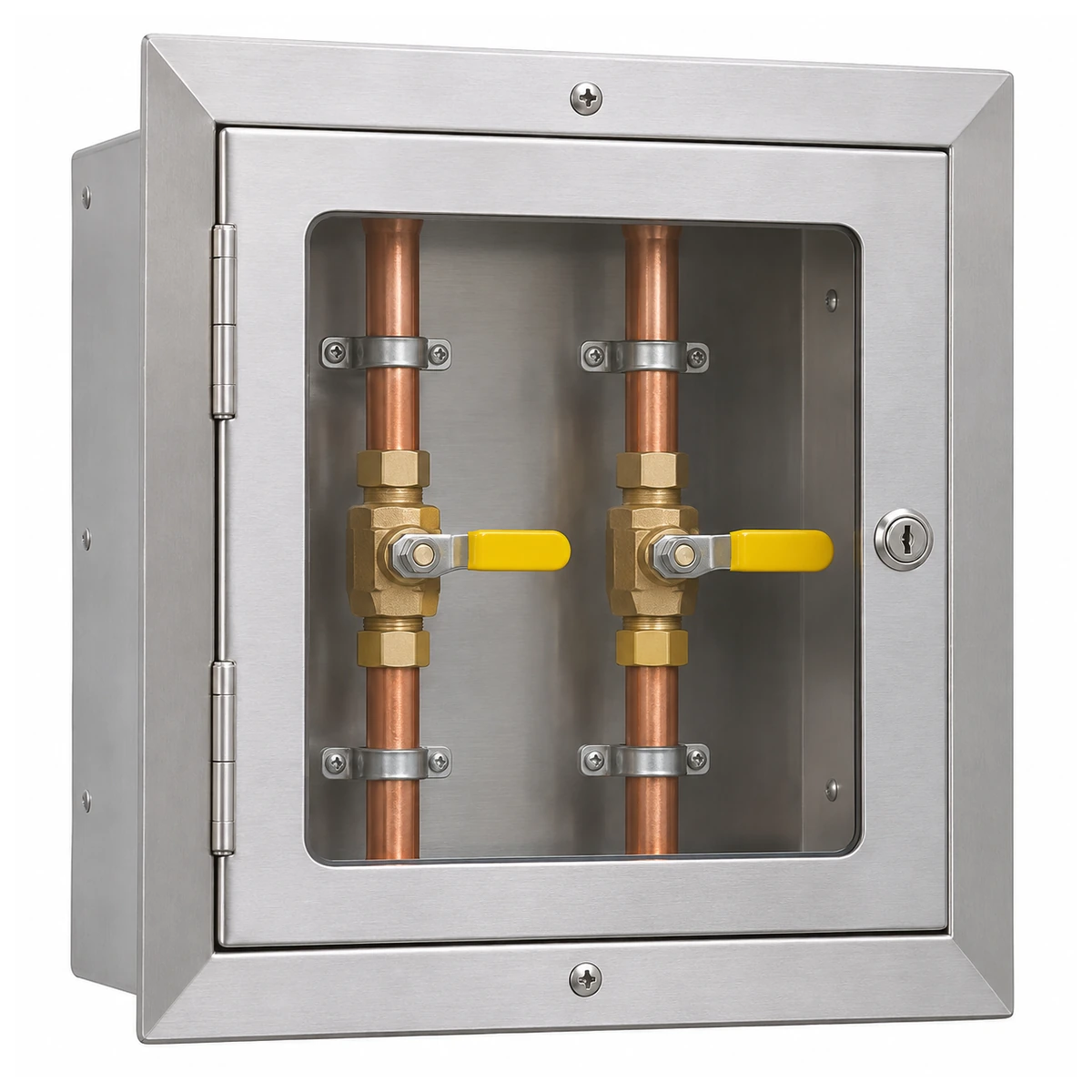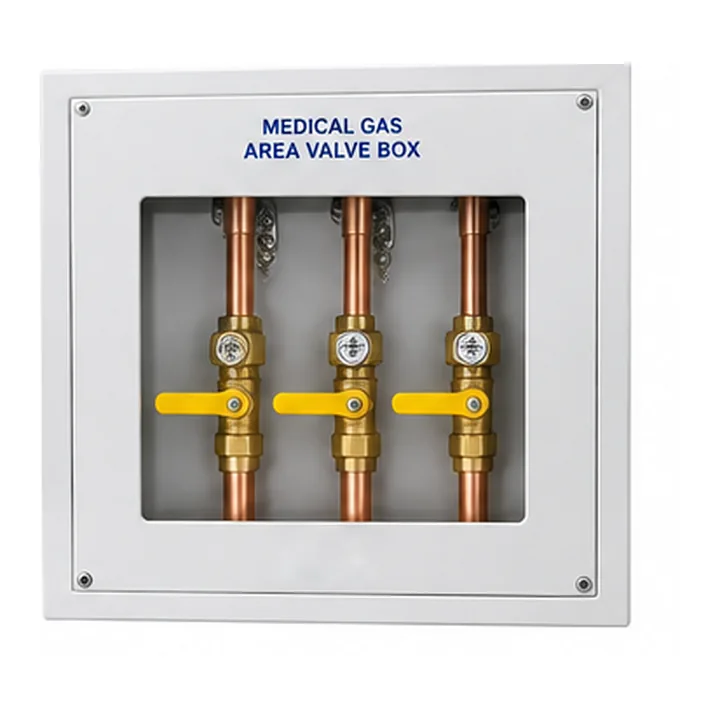
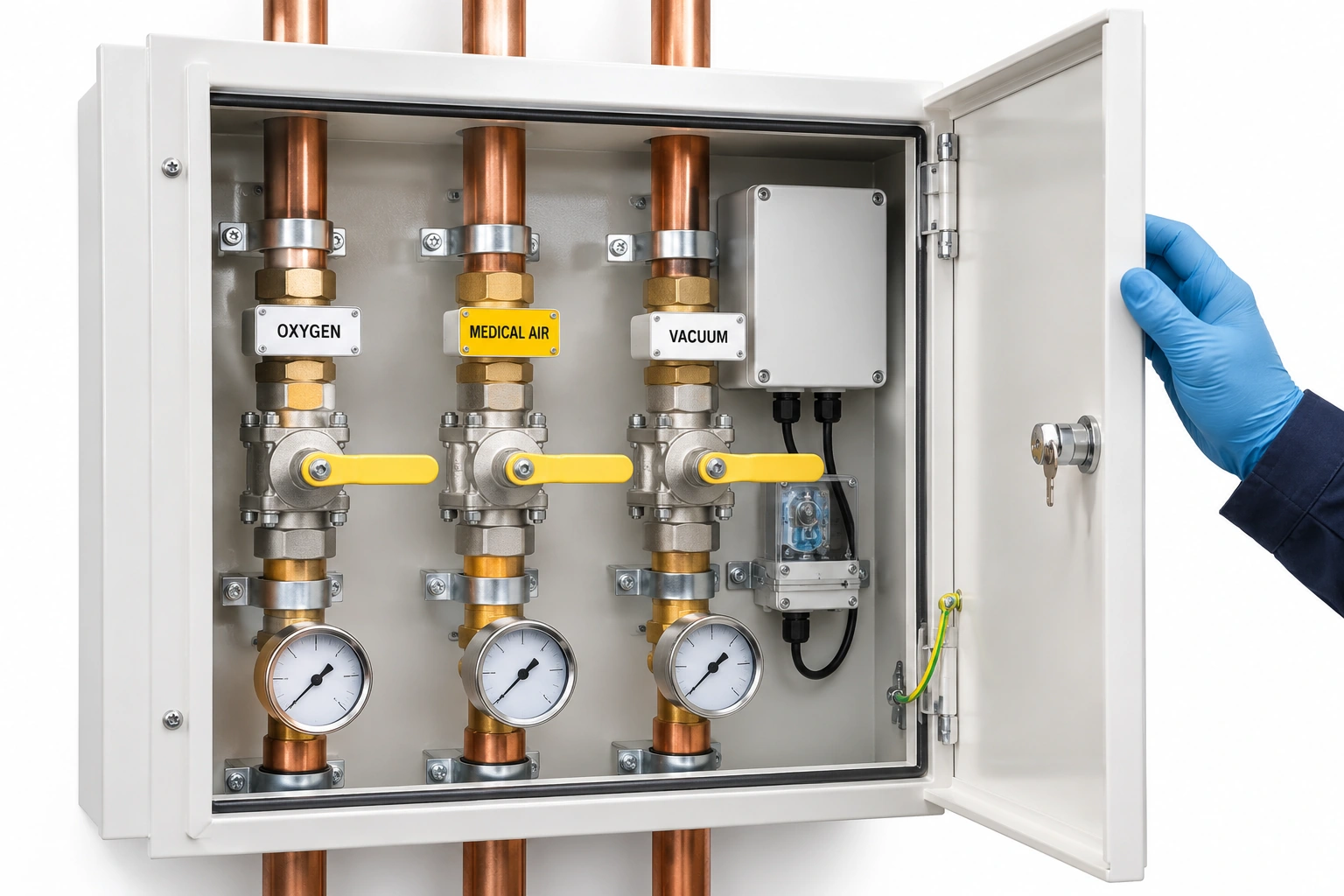
A hospital's zone valve box may remain untouched for years while the surrounding ward changes function and the original manufacturer model becomes obsolete. When damage or a pressure indication issue is reported, a maintenance order labelled “repair oxygen box” rarely provides enough information for a safe or efficient response.
A gas-specific asset and defect register links each installed valve, enclosure, indicator and monitored service with accepted documentation and authorized intervention records. This is an asset management guide, not an instruction to operate or rebuild medical-gas equipment.
Register the box and its individual services
Assign one asset ID to the complete enclosure and separate internal device IDs to each service/valve as needed by the facility. Record building, location, approved served area, upstream network reference, cabinet manufacturer and model, valve sizes/end connections, lock/access features, gauges/sensor ports and alarm interfaces.
Some assemblies are modular. Two similar cabinets may have different gas combinations or component layouts, so do not assume a common spare list from a shared faceplate appearance.
The ISO 7396-1:2016 system context includes valves, monitoring and documentation; product-specific manufacturer instructions and the adopted healthcare regulations guide maintenance responsibilities.
Use an inspection form that does not invite unsafe intervention
| Item | What can be recorded under an approved plan | When to escalate |
|---|---|---|
| Location and access | Presence, visibility and obstruction observations | Access restricted |
| Asset/service labels | Legibility and match to approved records | Unknown/mismatched identity |
| Enclosure/door | Visible damage or missing components | Security or integrity concern |
| Gauges/indicators | Reported anomaly without adjustment | Possible inaccurate monitoring |
| Alarm interface | Logged abnormal status or lost communication | Qualified alarm review |
| Maintenance history | Last authorized task, references and status | Overdue/undocumented |
| Spare support | Exact model and approved part availability | Obsolete or uncertain fit |
The facility determines which observations are appropriate for routine inspection and which require specialist technical checks.
Distinguish reporting from diagnosis
A clinician may report a stuck cabinet door, a dented label, a warning at the area alarm or a valve handle that seems abnormal. The first work order should preserve the actual reported observation and context.
Do not diagnose a valve seal or pressure sensor solely from a generic symptom. The competent technical investigation must identify the exact affected service and part, determine risks and document disposition under the hospital process.
Model-specific spares matter
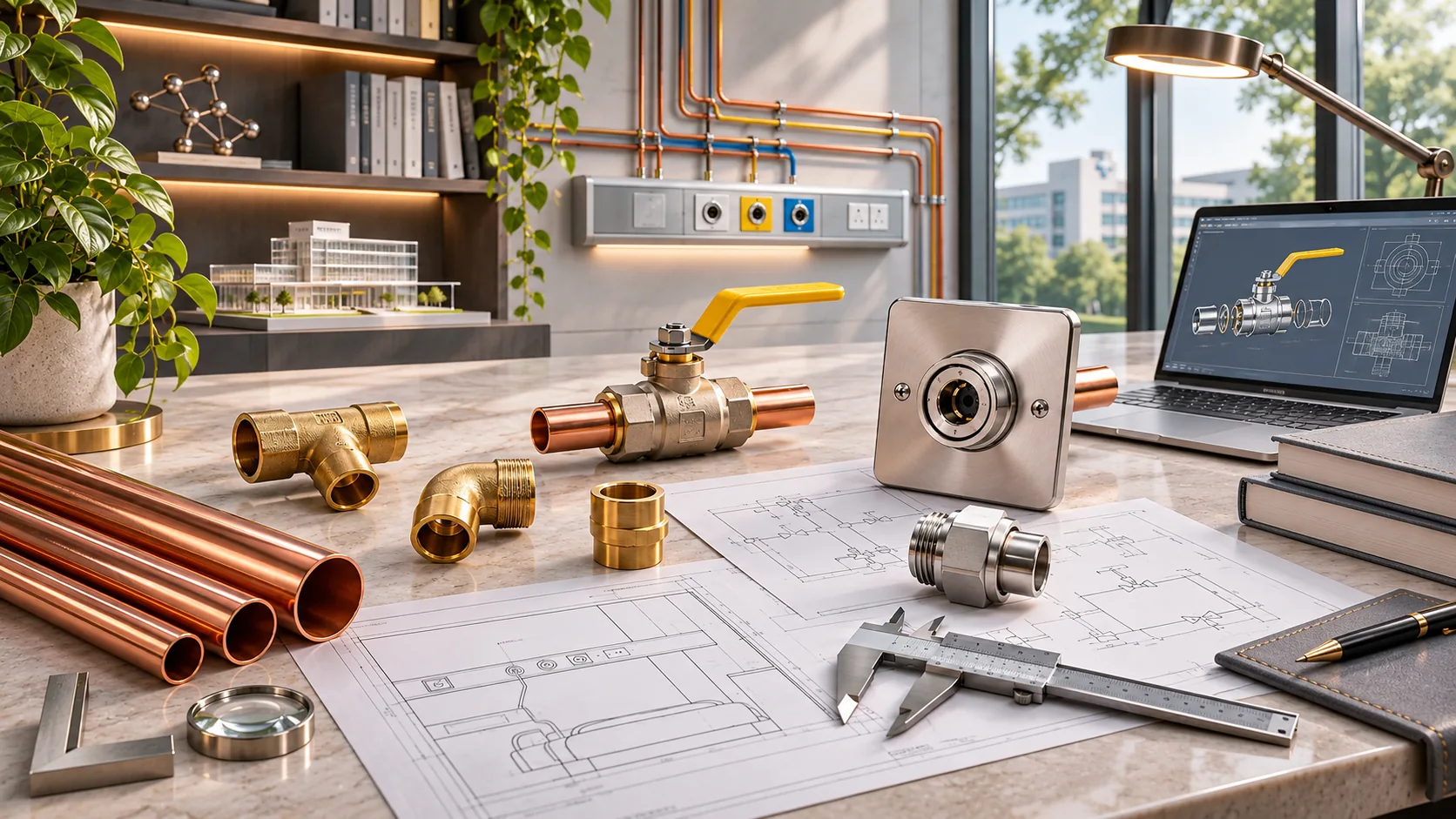
A lockable line valve, a standard ball valve and an integrated box can have different service parts. Record manufacturer part number, gas compatibility, exact assembly revision, material, end connections and relevant approvals for each spare.
A visually similar seal or actuator should not be substituted without a formal compatibility decision. An approved alternative may require installation document changes and new verification evidence.
Keep obsolete products in a separate status from current products to avoid accidentally reissuing unsupported parts.
Plan service continuity for maintenance
Any work that can affect clinical gas supply must be authorized and controlled through the hospital's medical-gas operational procedure. The maintenance planner should track required clinical coordination, approved method, competent people, verification and release dependencies—without publishing live isolation instructions.
NHS HTM 02-01 (2026) and SHTM 02-01 (2026) address MGPS operational management. The [Joint Commission guidance on NFPA 99](https://www.jointcommission.org/en-us/knowledge-library/support-center/standards-interpretation/standards-faqs/000001338) highlights the continuing importance of accessible zone valves in US healthcare facilities.
Trend recurring problems
Review defect records by model, service, ward, installation age, component batch and repeated condition. A rising count of sensor faults might indicate several possible causes, not automatically a manufacturer defect.
Keep evidence of authorized investigations, any root cause, affected product IDs and resulting corrective/preventive actions. This allows the hospital to decide whether a planned replacement programme is needed.
Work-order status should reflect safety stages
Useful statuses include reported, triaged, assigned, work authorized, repair/replacement completed, prescribed verification recorded, and operationally released. These are separate events.
Do not close the entire record because a spare was delivered. Documentation and site verification are required as defined by the authorized project and hospital procedures.
Example: replacement gauge from the wrong kit
A work order references a gauge that appears visually equivalent to a different gas-service model. The parts clerk should hold the proposed substitute until the authorized engineer verifies the specified pressure/vacuum service, connection, measurement basis and manufacturer part.
A matching panel hole is not proof that the indicator belongs in the intended service.
Procurement planning and warranty
Ask suppliers for exact replacement model support, estimated lead times, approved materials and connection drawings, service instruction availability, warranty and engineering change notices. Compare lifecycle support rather than valve price alone.
BWC Medgas supplies selected medical gas zone valve boxes, line valves and pressure indication/monitoring products under exact component specifications.
Send the approved asset/spare requirements to BWC Medgas.
Frequently asked questions
Does a physically undamaged cabinet mean all its valves are functioning correctly?
No. The applicable manufacturer maintenance and system verification rules govern condition and performance assessments.
Can a lockable line valve be serviced by using an industrial valve repair kit?
Not without verifying the actual approved model, gas suitability and repair process.
Primary technical references
- ISO 7396-1:2016 — Medical gas system components and management
- NHS England — HTM 02-01 (2026), Part B
- NHS Scotland — SHTM 02-01 (2026)
- [Joint Commission — NFPA 99 medical gas valve accessibility context](https://www.jointcommission.org/en-us/knowledge-library/support-center/standards-interpretation/standards-faqs/000001338)