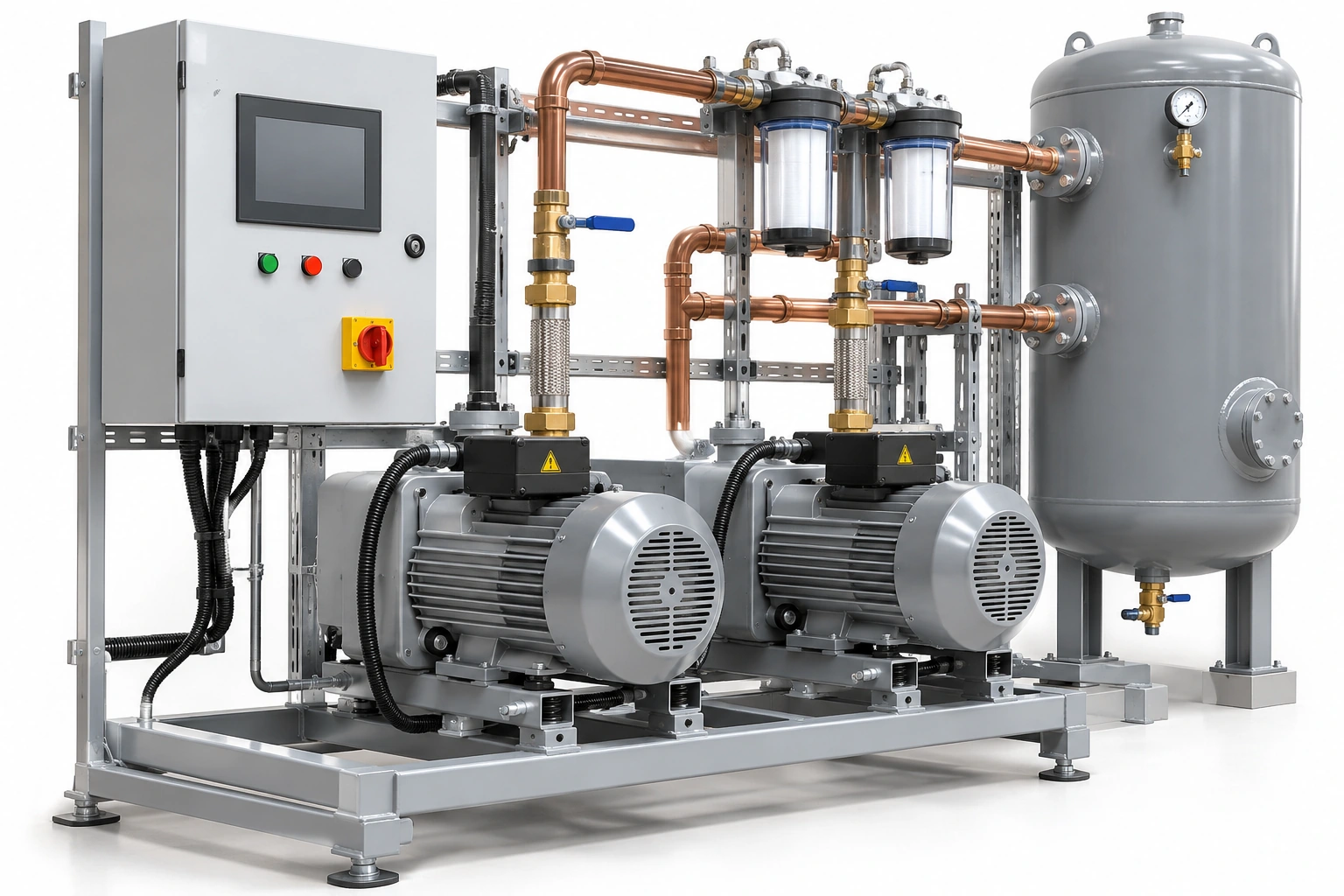
An equipment manufacturer can show that individual vacuum pumps meet their laboratory performance specifications, yet the completed hospital source may still be inadequately documented. Installation affects receiver connections, filtering, discharge paths, controls, piping and alarms; these must be captured by a separate acceptance process.
The appropriate deliverable is a factory-to-site verification matrix linking each piece of evidence to the installed system. This article provides a document framework rather than test pressures, valve operations or clinical system startup instructions.
Use the correct edition of the Scottish test forms
The NHS Scotland SHTM 02-01 publication dated 23 September 2026 lists Form A13 — Medical vacuum plant test, Form A14 — Area alarm panel test, and Form A15 — Central alarm panel test. These are distinct test boundaries, not one combined product certificate.
NHS England HTM 02-01 (2026) has its own updated Part A, Part B and editable B-forms. A hospital project must identify which country's accepted documents and forms govern; a Scottish form number must not be represented as a universal legal requirement.
Prepare an evidence plan before factory shipment
| Requirement | Factory evidence | Site/operational evidence |
|---|---|---|
| Model and train identity | Pump, receiver and filter schedules | Installed asset tags |
| Rated duty | Manufacturer performance tests/curves | Project-defined source duty |
| Controls | Controller logic and panel configuration | Actual plant state and interface verification |
| Alarms | Supported outputs and simulated behavior | Receiving location and event identity |
| Installation | Manufacturer clearances and connections | As-built piping, discharge and power |
| Documentation | Manufacturer manuals and certificates | Signed commissioning dossier |
| Deviations | Factory nonconformities and disposition | Site defect, corrective work and retests |
| Release | Product boundary acceptance | Authorized hospital use decision |
A successful product demonstration does not authorize connecting a new or altered medical vacuum source to an operating hospital without the controlled process.
Distinguish plant, distribution and patient-side devices
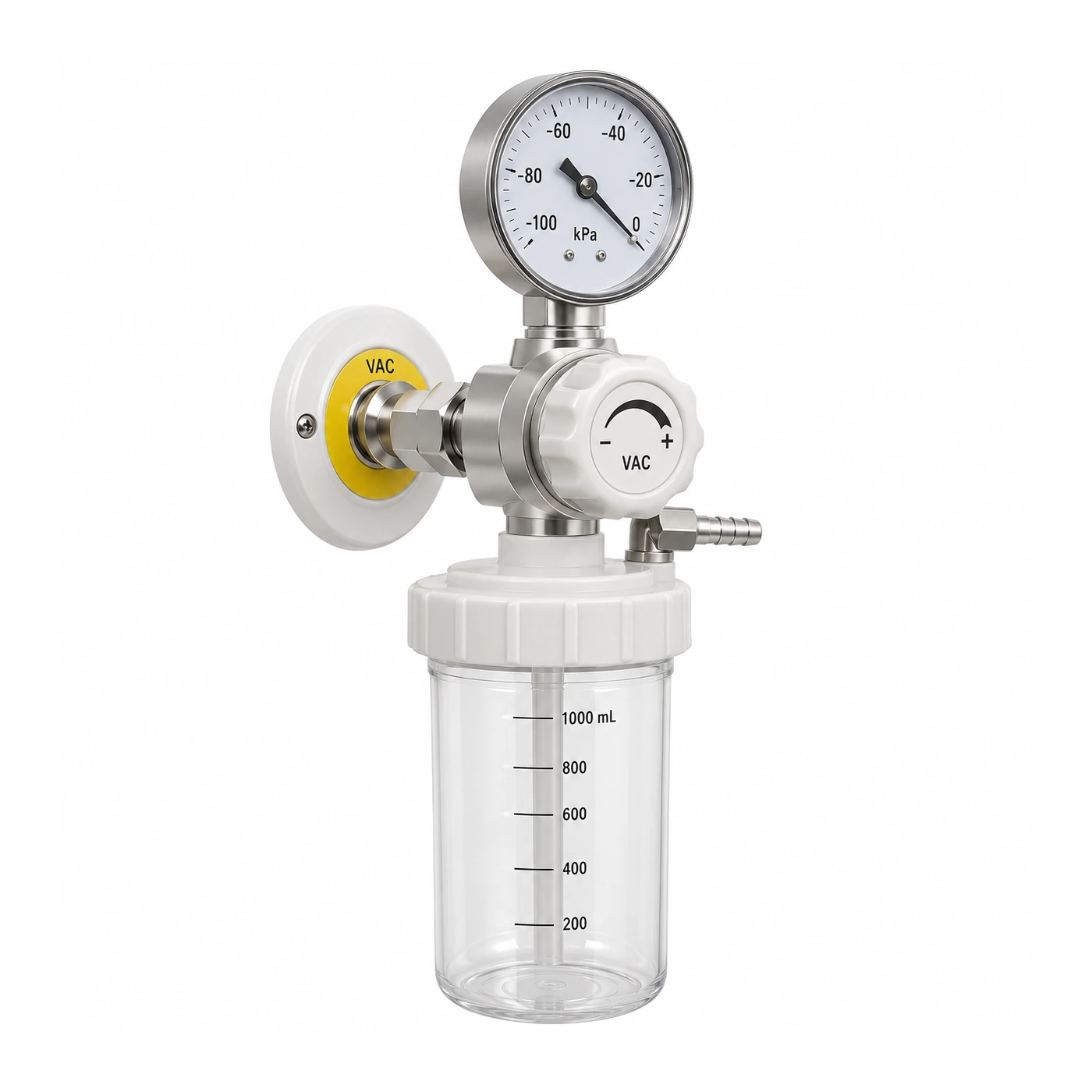
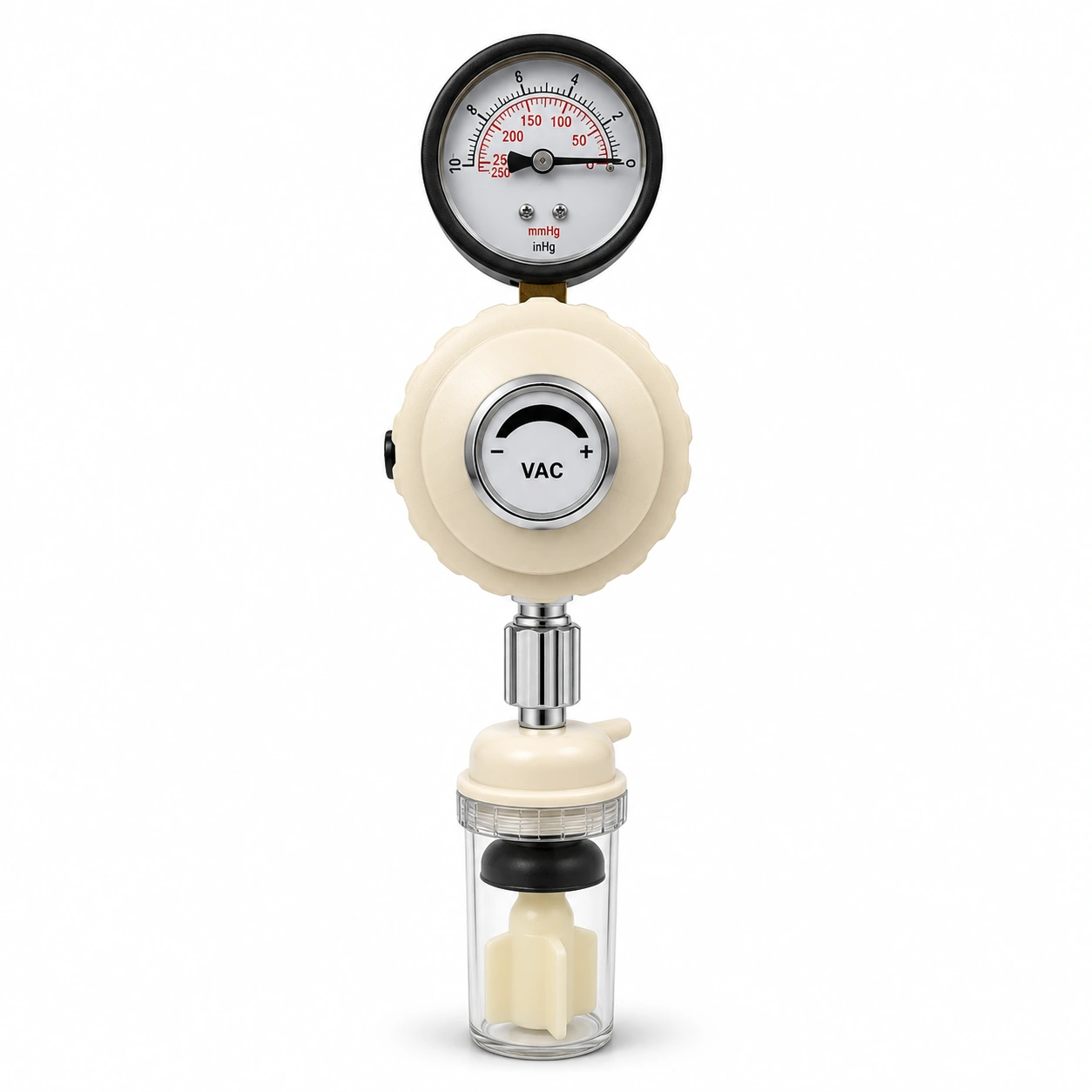
ISO 7396-1:2016 covers the complete medical gas/vacuum pipeline and installed-system verification. ISO 10079-3:2022 concerns separate suction equipment powered by a vacuum or positive-pressure source. Evidence for the suction regulator at a bedside cannot substitute for the plant's source verification, nor vice versa.
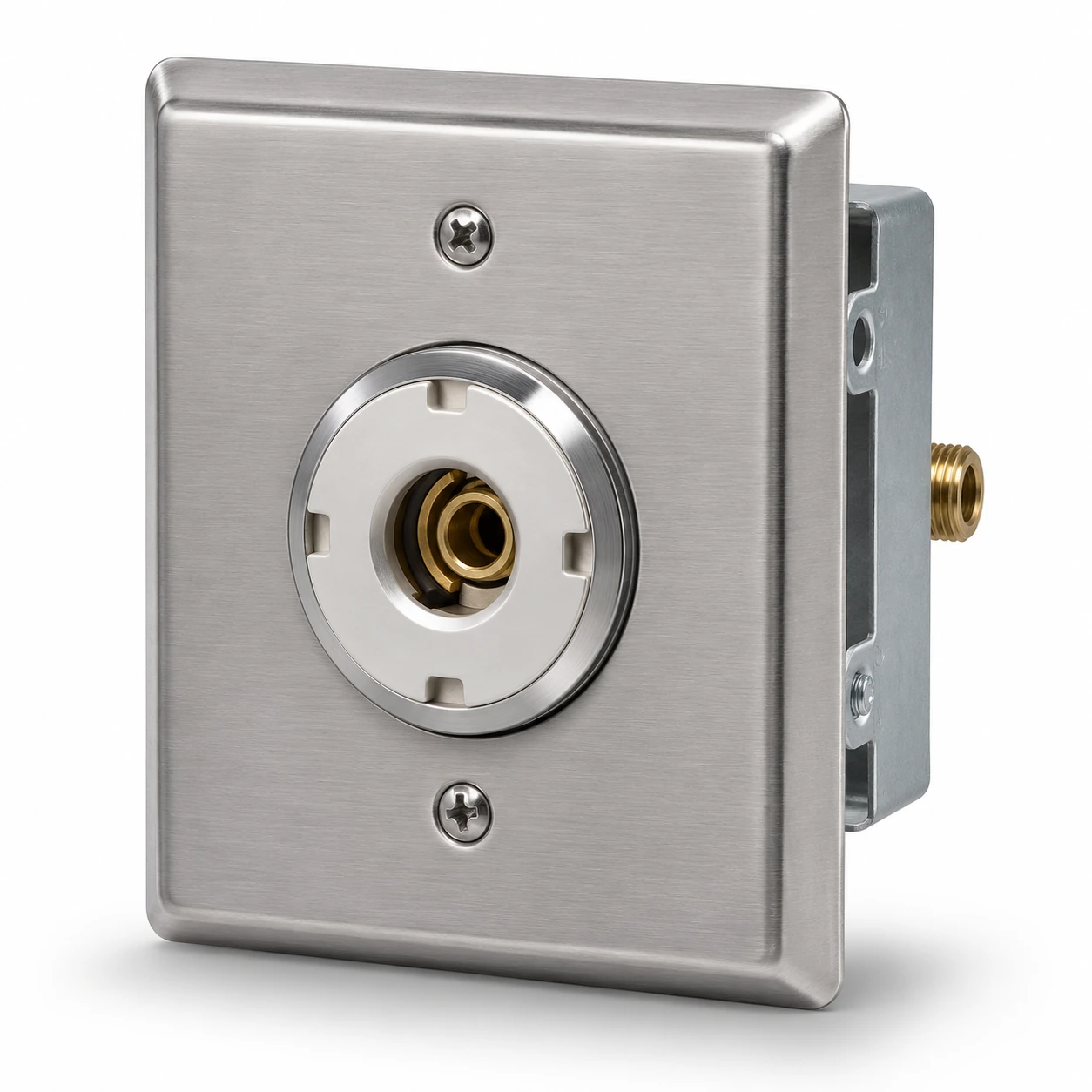
Reference the actual terminal/ward test records where the source handover relies on the installed distribution boundary.
Make each site test traceable
For each required test, record the controlling procedure, qualified team and witnesses, equipment under test, valid instrument calibration, location, approved acceptance criterion, observed results, deviations and sign-off.
Do not paste a static generic kPa value into every form. Clinical continuity and method selection are the responsibility of the healthcare operator and competent MGPS professionals.
Example: missing central alarm mapping
The plant controller passes a manufacturer's FAT, but the actual hospital central alarm displays a generic “mechanical fault” for several different source events. The right action is a controlled source-to-receiver mapping review and applicable site retest.
A supplier's screenshot of a functional controller does not prove the proper signal has reached the nominated staffed location.
Close deviations before claiming acceptance
If the contractor repairs a connection or changes controller software after a witness test, identify the affected test coverage and determine the required authorized retest. Keep the original failure and corrected result with version and date, rather than deleting an unfavorable record.
A staged hospital expansion should define the exact accepted service boundary and unresolved items; an “entire hospital passed” statement may overstate the scope.
After handover: maintain a usable asset file
Retain manufacturer models/revisions, installed pump/receiver/filter serials, approved load calculations, control software, alarm point list, accepted source and network test references, maintenance plans, training and operational contacts.
The same file supports future procurement of compatible spare parts without relying on a photograph of the pump station.
Where BWC participates
BWC Medgas can quote selected suction regulator, gauge and collection components against the accepted gas-specific system and clinical interface. A complete vacuum plant FAT/SAT is not included in BWC component supply.
Discuss the component documentation and exact model requirements with BWC Medgas.
Frequently asked questions
Is a factory pump test sufficient for hospital vacuum plant handover?
No. Site installation, sources, distribution/alarm interfaces and operating release require their own approved evidence.
Does SHTM A13 replace area and central alarm test records?
No. The Scottish edition distinguishes those as A14/A15.