Hospital teams sometimes describe a vacuum alarm as “pressure too high” while another department calls the same event “vacuum too low.” Depending on the instrument's pressure reference, both may describe a loss of suction. If the register omits sign convention or measurement basis, even a technically correct number can be dangerously misinterpreted.
A measurement-and-alarm identity matrix should connect each sensing point to its physical pressure meaning and approved operational response. The aim is traceability, not publishing pressure thresholds for clinical use.
Three pressure descriptions are not synonyms
Absolute pressure is referenced to a theoretical perfect vacuum; gauge pressure is referenced to surrounding atmospheric pressure. Many vacuum gauges display a negative gauge value, while other instruments show the magnitude of the vacuum as a positive number.
At the same physical point, a decreasing absolute pressure can correspond to increasingly negative gauge pressure and a stronger vacuum indication. A software sign change without approved scaling and a clear label can invert the apparent status.
Convert units only after the measurement reference is known. kPa, bar and inHg can express various pressure measures, but their labels alone do not establish whether values are absolute or relative.
Build a pressure-point inventory
| Required field | Engineering question | Evidence |
|---|---|---|
| Asset/point ID | Which exact device and installation point? | Source/network P&ID |
| Measured quantity | Absolute pressure, gauge pressure or defined vacuum magnitude? | Sensor model sheet |
| Units | kPa, bar, inHg or other accepted scale? | Panel configuration |
| Sensor range | Does it cover valid and abnormal conditions? | Manufacturer rating |
| Alarm semantics | Which physical condition triggers each approved event? | Functional specification |
| Signal path | Plant, central or area receiving channel? | I/O matrix |
| Fault indication | How does missing sensor data appear? | Failure-mode plan |
| Witness evidence | Who verifies displayed value and its correct meaning? | Commissioning record |
Do not place a normal operating number from an unrelated medical vacuum product in a hospital alarm settings document.
Sensor position matters
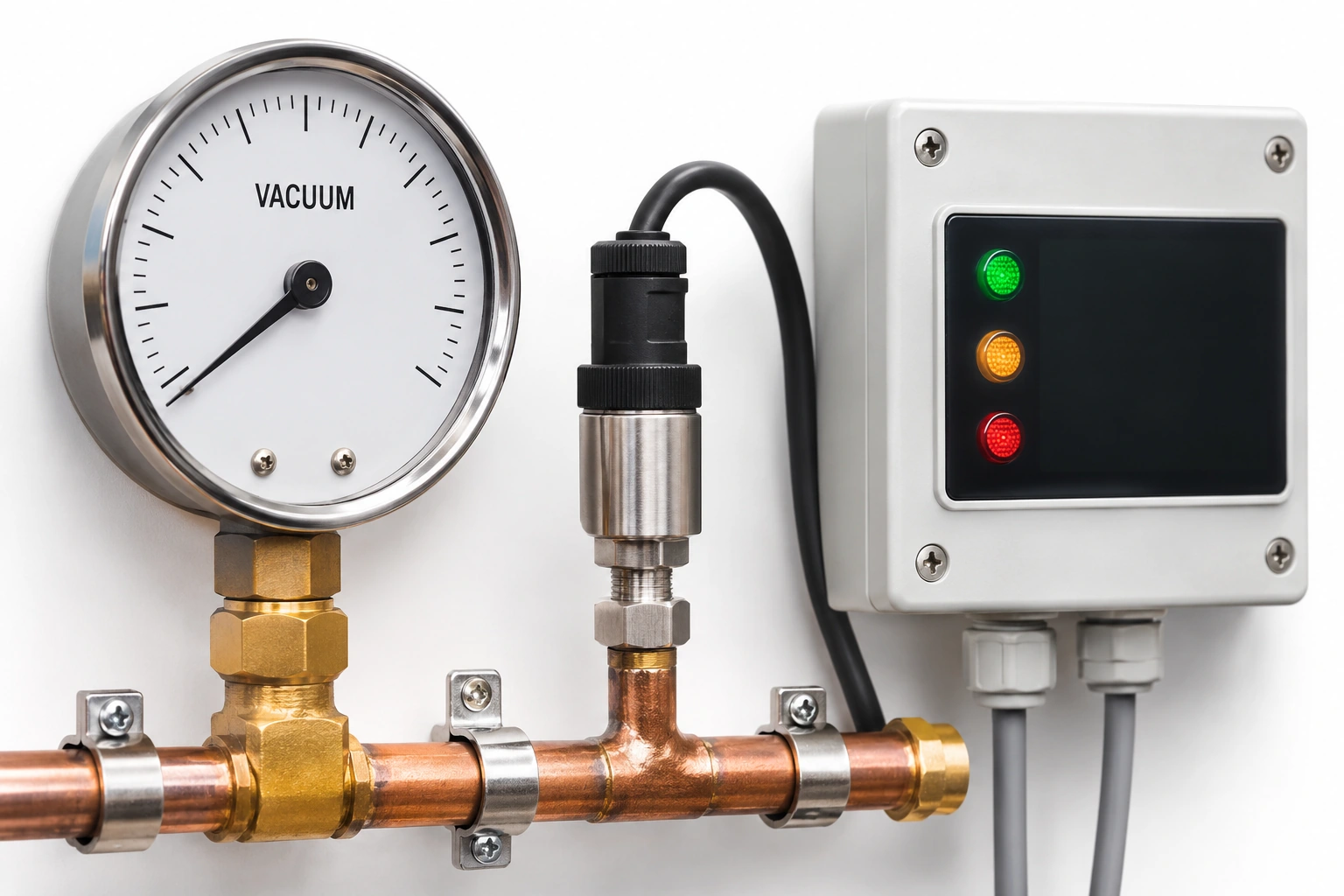
A plant receiver sensor and a distant clinical area sensing point may report different conditions and serve distinct operational purposes. The central controller's numeric vacuum display cannot automatically prove that the nearest suction regulator receives adequate function.
ISO 7396-1:2016 covers MGPS vacuum system monitoring and alarms. The 2026 Scottish SHTM has separate medical vacuum plant and area/central alarm test evidence, reinforcing why source and receiving functions require distinct records.
Example of an inverted normal/abnormal message
One supplier's controller reports vacuum as positive magnitude, while the hospital alarm schedule describes negative gauge pressure. A link translator sends the correct number with an incorrect label, so a dashboard appears normal while the human interpretation is ambiguous.
The qualified design team must reconcile the physical quantity, indicated units, event text and test cases and approve the mapping. Simply repainting the display does not prove the alarm will work.
Keep instrument calibration separate from system acceptance
A transducer calibration certificate demonstrates a measurement characteristic under stated test conditions. It does not establish installed pipe connection, correct service identity, source-to-panel mapping or clinical zone receipt.
Retain the sensor model/serial, calibration basis, approved scaling, firmware mapping revision, receiving panel location and witness tests in one joined reference chain.
Fault and communication status
Sensor cable damage, a failed power supply, network loss or stale data may require its own approved indication. A system that freezes its last “normal vacuum” number should be reviewed for the correct fault behavior.
Do not test faults by disconnecting a live clinical alarm or interrupting suction outside a formally authorized programme. A qualified test method is part of the project documentation.
Practical procurement requirements
Require vendor data on pressure reference, measurement range, units, accuracy and conditions, outputs, controller scaling, gas/service labels, alarm thresholds defined by the designer, fault states and event logs. Evaluate the actual installed point list before purchasing only by channel count.
The 2026 NHS England HTM describes system engineering and operational management; final project limits and adoption differ by jurisdiction.
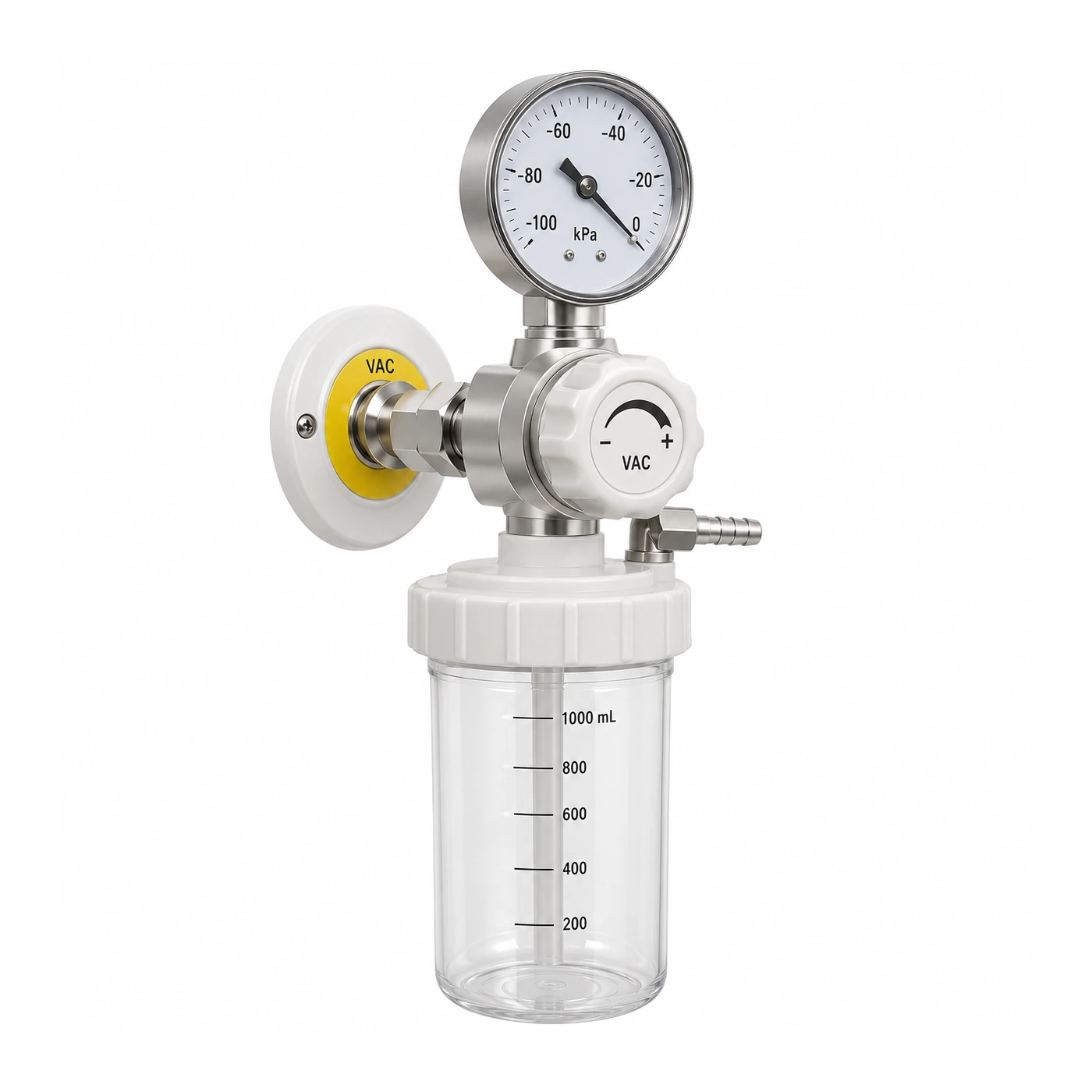
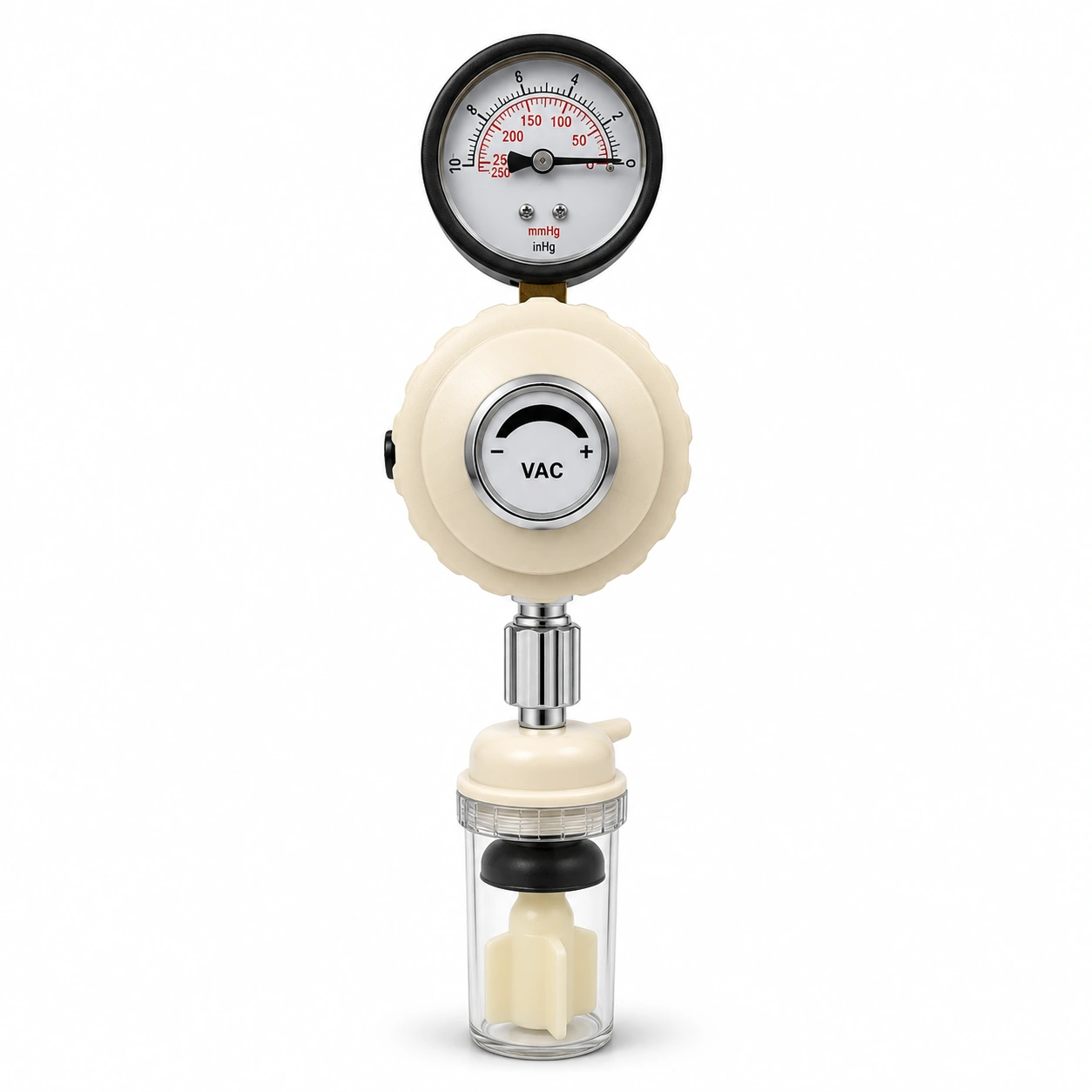
BWC Medgas can supply selected vacuum indication and suction-regulating components. Requesting the correct measured-quantity convention helps prevent ambiguous orders.
Send the approved vacuum pressure and monitoring schedule to BWC Medgas.
Frequently asked questions
Is a more negative gauge pressure always a larger absolute pressure?
No. Understand the physical reference before comparing values.
Does a calibrated sensor prove that every vacuum alarm has been commissioned?
No. Installed location and end-to-end alarm tests require separate acceptance.